
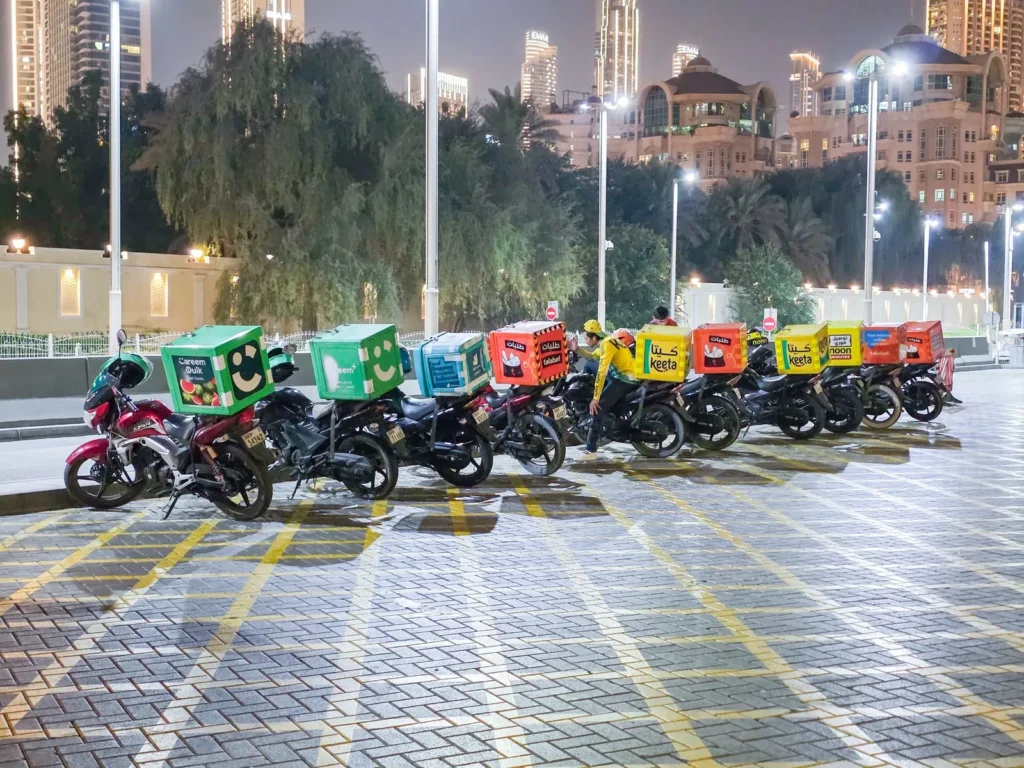
China’s retail sector is defined by one metric: minutes. A consumer in Shanghai opens an app, orders a bottle of baijiu, a smartphone charger, a bouquet of flowers, and a carton of milk. Within 30 minutes, the items arrive at her door.
This is quick commerce, a model that has reshaped consumer expectations, reconfigured supply chains, and ignited a fierce platform war among Alibaba, Meituan, JD.com, and a constellation of niche players.
The Chinese market has moved far beyond food delivery. Instant retail now touches nearly every category, driven by dense rider networks, urban dark stores, and AI-powered demand prediction. For global executives, China’s 30-minute delivery battlefield offers a preview of where on-demand retail is headed and what happens when speed becomes the ultimate currency.
Context: Why Quick Commerce Took Off
China already had a massive food delivery industry when COVID‑19 normalized home‑based shopping. Ultra‑fast delivery services began with meals but quickly expanded into fresh produce, personal care, consumer electronics, and even medicine.
Riders can complete eight to nine deliveries per hour thanks to specialized pick‑up zones, cloud kitchens, and delivery lockers. Food delivery giants already had routing algorithms and scale; adding non‑food categories leveraged existing infrastructure.
The market grew rapidly: according to the Chinese Academy of International Trade and Economic Cooperation (CAITEC), China’s instant retail market could exceed 2 trillion yuan by 2030.
People’s Daily reports that delivery usually takes just 20–30 minutes, and each front‑end warehouse serves customers within a 3- to 5-kilometer radius, resetting consumer expectations to “within the hour.”
Traditional e‑commerce players such as JD.com and Alibaba viewed this shift as existential; analysts noted that the sector grows 2.5 times faster than conventional ones
Players and Their Advantages
Meituan: The Logistics Powerhouse
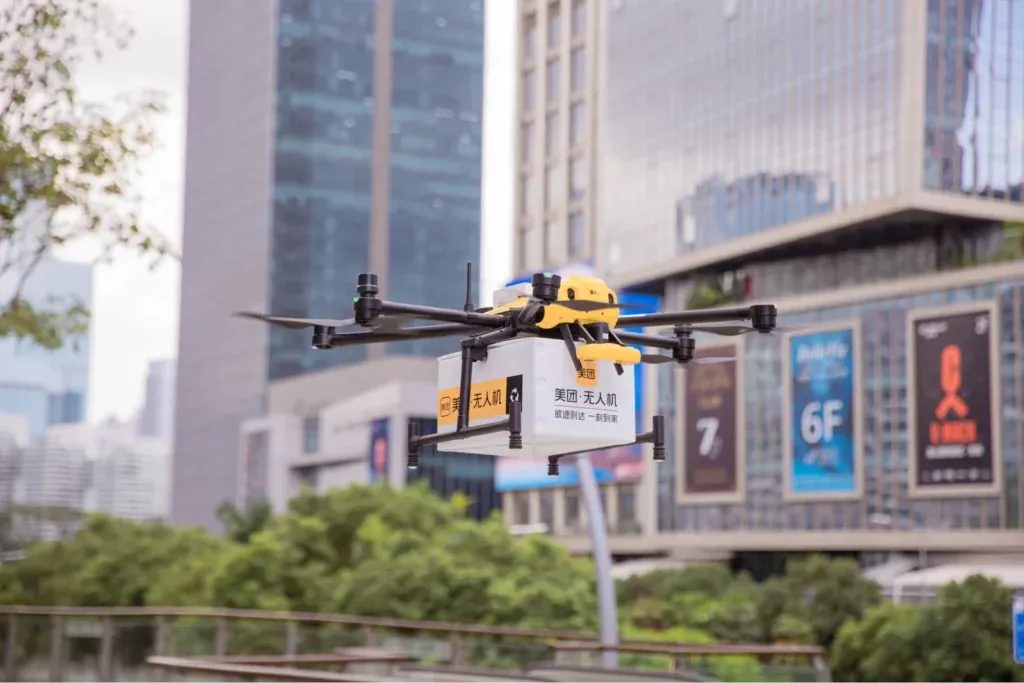
Meituan dominates food delivery with more than 70 million daily orders. It built a franchise network of full‑time riders and refined routing systems that prioritize rider familiarity with neighborhoods. Meituan offers four delivery models—ranging from flexible freelancers to full‑time exclusive couriers—to match order profiles with appropriate capacity.
Its on-demand delivery service also invests upstream through tools like KuaiLu for supply chain optimization, POS systems for restaurants, and Raccoon Kitchen for cloud kitchens. Pinhaofan, its group‑buying meal program, contracts restaurants to produce standardized dishes at low prices; Meituan subsidizes losses to build rider density and user frequency.
Since 2018 Meituan has built a network of more than 50,000 lightning or micro‑warehouses across China. These instant retail dark stores stock high‑frequency consumer goods and enable deliveries in under 30 minutes.
Micro‑warehouses fall into three types:
- General merchandise outlets with thousands of SKUs
- Specialized warehouses for categories such as pet supplies or beauty products
- Brand warehouses, where international brands store inventory close to consumers
Meituan also provides the Morning Glory system, an operating platform for third‑party merchants that integrates inventory management, sourcing, and multi‑platform sales.
Alibaba: Leveraging Taobao and Qwen
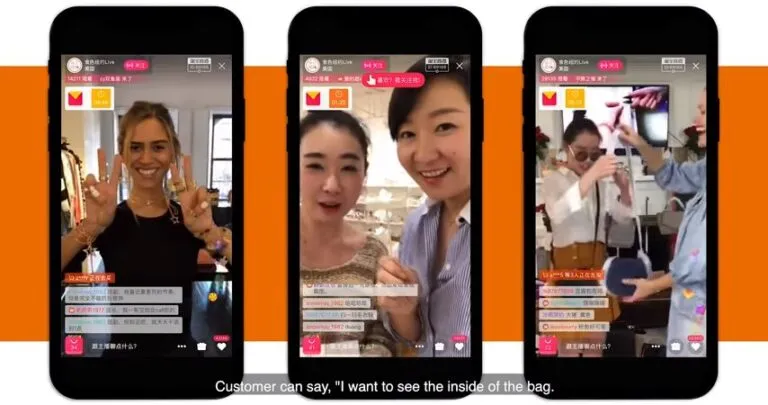
Alibaba’s challenge to Meituan started in 2025. It merged Ele.me’s operations with Taobao’s on-demand delivery platform to create Taobao Flash (Shangou). Unlike Meituan, Alibaba can tap into Taobao’s one‑billion‑plus users, its relationships with brands, and its open‑source AI capabilities.
The company announced a 50‑billion‑yuan subsidy program and integrated on-demand delivery apps directly into the Taobao search bar. By July 2025, Taobao Flash reported over 80 million daily orders and a 100 % surge in non‑food categories. Live‑streaming, search, and social media on Taobao feed traffic into local merchants, making on-demand delivery an extension of e-commerce rather than a standalone service.
Alibaba’s AI assistant Qwen illustrates how technology could reshape demand generation. Qwen surpassed 100 million monthly active users by January 2026 and integrates voice‑activated shopping, travel, and payment tasks.
During Lunar New Year 2026, Alibaba launched a $400 million campaign in which Qwen gave away vouchers; within 9 hours, it processed 10 million milk tea orders. This demonstrates how large language models can funnel traffic to on-demand delivery app experiences.
JD.com: Logistics Meets Retail
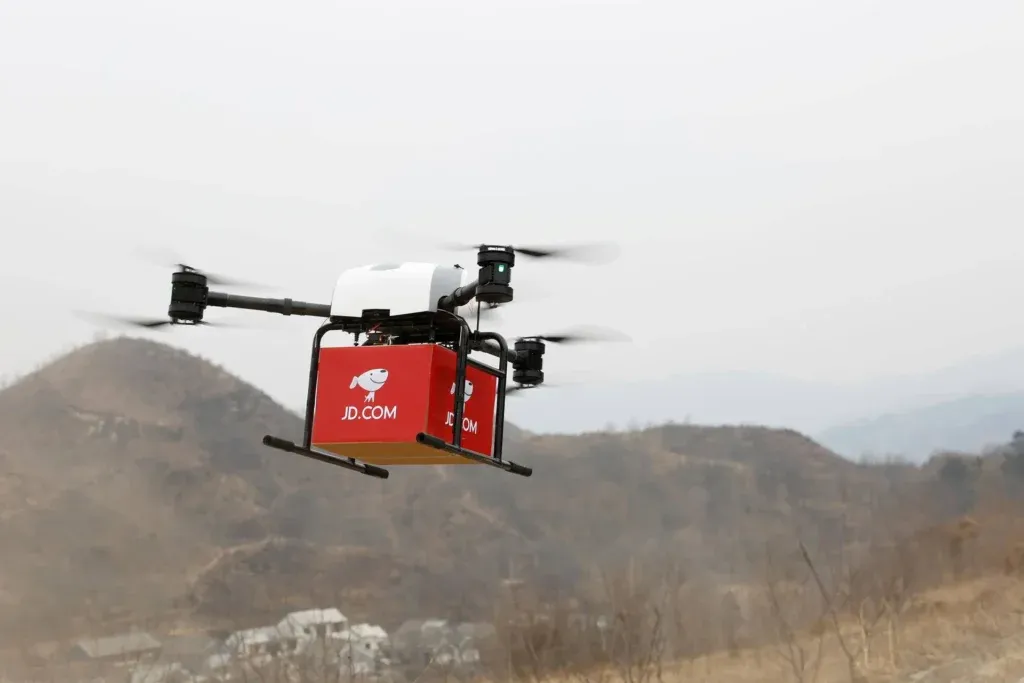
JD.com, historically known for next‑day delivery of electronics and appliances, entered instant commerce with JD Takeaway in February 2025.
By integrating its Dada courier subsidiary and 1,600 warehouses, JD boasted 25 million daily orders by June 18, 2025, and aims to deliver electronics and home appliances within half an hour.
JD’s approach emphasizes quality control and authenticity; it is popular among higher‑income consumers and premium merchants. JD offers low or zero commissions to merchants and hires full‑time riders, echoing Meituan’s model.
Other Players
Pinduoduo, via Duoduo Maicai, leads grocery delivery in China through next‑day community group buying, while platforms like SF Intra‑city provide neutral third‑party logistics with over 1.46 million annual active riders and revenue of RMB 22.9 billion in 2025.
Pure grocery specialists such as Dingdong Maicai and Missfresh focus on fresh produce and operate store‑warehouse hybrids.
Membership‑based retailers like Freshippo and Sam’s Club China integrate big box stores with on-demand delivery logistics to promise 30‑minute fulfillment, adding variety and higher margins to the category.
Beyond Groceries: The Expanding Scope of Quick Commerce
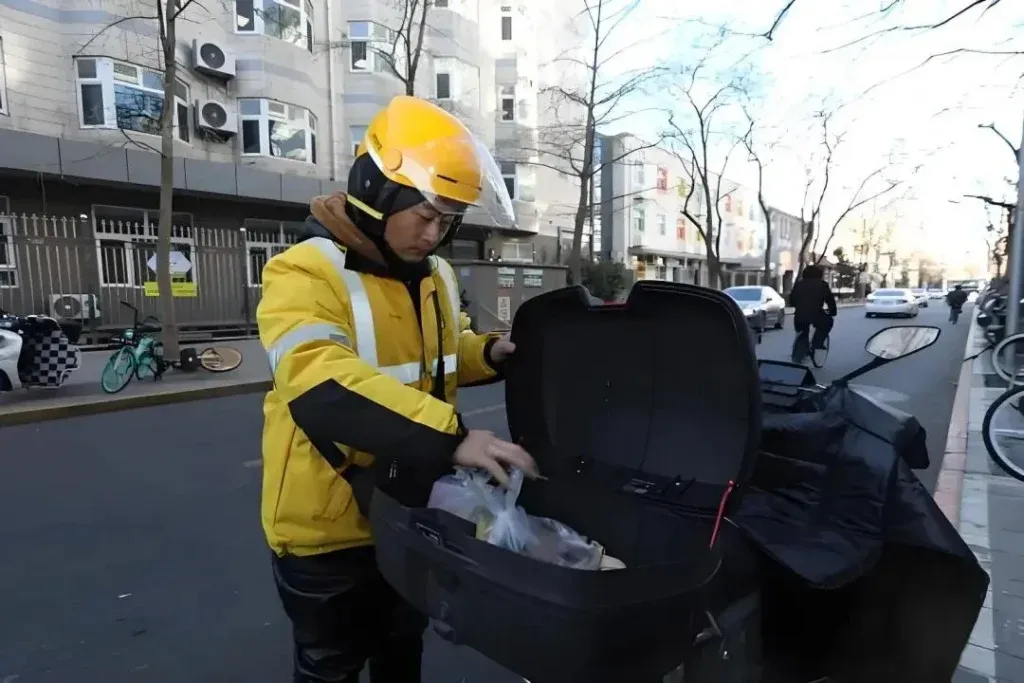
China’s quick-commerce battlefield no longer centers solely on food delivery. The scope now includes electronics, luxury samples, toys, office supplies, and emergency pharmaceutical delivery. On-demand delivery apps like Meituan and Ele.me have added instant retail tabs that surface nearby stores selling anything from designer sunglasses to printer ink.
The variety reflects a deeper shift: consumer patience has collapsed, and expectations for instant retail delivery time have reset to 30 minutes across an expanding set of categories. For brands, instant retail systems have become a necessary channel, not an experiment.
Multinational corporations like L’Oréal and Procter & Gamble now treat instant delivery as a separate P&L inside their China e-commerce teams, with dedicated inventory pools and promotional calendars for grocery delivery in China and beyond.
Innovation on Supply, Demand, and Rider Sides
Supply‑side innovation
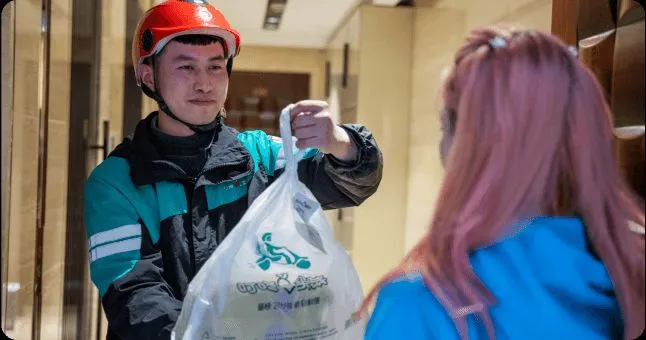
Meituan treats restaurants like factories, standardizing operations and guaranteeing purchase prices through programs like Pinhaofan. On the retail side, micro‑warehouses represent the instant retail systems equivalent of ghost kitchens.
They operate 24/7, hold thousands of SKUs and are optimized for picking speed rather than foot traffic. In addition to platform‑owned warehouses, third‑party operators manage shared warehouses for multiple brands, using software from Meituan or Alibaba to connect to multiple platforms.
Membership stores provide another layer of supply innovation. Freshippo (Hema) under Alibaba and Xiaoxiang Supermarket under Meituan blend offline stores with micro‑fulfillment centers, delivering groceries within 30 minutes while allowing in‑store browsing.
Sam’s Club China leverages Walmart’s global supply chain and requires membership fees, combining warehouse‑club value with local expectations for instant retail delivery.
Demand‑side innovation
Beyond search‑driven intent, platforms are using live streaming, short videos, and personalized coupons to generate discovery‑based demand. Meituan’s Shenqiangshou packages restaurant meals for live streaming and newsfeed channels, converting browsing into orders. It’s God’s Coupon system segments users by behavior and delivers personalized coupons.
Taobao Flash leverages live‑commerce influencers and mini‑games to direct traffic to local merchants. Qwen’s voice interface reduces friction by letting users say “help me buy” to purchase items from multiple apps.
Rider‑side innovation
Rider productivity is the cornerstone of profitability. Meituan categorizes couriers into four tiers—priority freelancers, full‑time exclusive riders, part‑time riders for peak periods, and overflow freelancers—to align order characteristics with labor flexibility.
Experienced couriers familiar with building layouts can nearly double productivity compared with new riders. Platforms also train riders in customer service, temperature control, and safe driving.
In the future, autonomous delivery vehicles and drones may complement human riders, but China’s dense city layouts and variable building access still favor two‑wheelers.
Strategic Relevance for Global Executives
China’s instant commerce battle offers lessons for retailers and platforms worldwide:
- Density is destiny. High order density enables low delivery costs and supports a broader product assortment. Brands considering on-demand delivery logistics should focus on clustering customers and inventory to maximize rider productivity.
- Platform integration matters. Meituan’s integration with in‑store services, search, and POS systems creates cross‑platform synergies. Alibaba’s seamless integration with Taobao and Qwen demonstrates that on-demand delivery apps can act as a shopping gateway rather than a separate channel. In regions where super‑apps are emerging, cross‑service integration can capture more data and loyalty.
- Regulatory compliance will shape competition. Subsidies can accelerate adoption but invite scrutiny. China’s regulators now emphasize rational competition and anti-innovation measures. Markets with similar consumer protection frameworks may see similar interventions when subsidies for on-demand delivery services distort pricing.
- Profit requires category mix and membership. Low‑ticket items like bubble tea drive volume but generate losses. Higher‑value categories—electronics, beauty, and health products—combined with membership fees and brand partnerships, offer a path to margin. Platforms need to nurture loyalty programs, subscription packages, and exclusive deals to mitigate subsidy burn.
- AI and conversational commerce are coming. Qwen’s 100‑million‑user milestone shows that AI assistants can shift consumer behavior. Voice and chat interfaces may soon become the primary way to order groceries or book services. Brands should invest in AI‑ready product catalogs and think about how to surface SKUs in conversational search.
What’s Next?
Looking ahead to 2026 and beyond, China’s quick commerce market will likely consolidate around Meituan and Alibaba, with JD playing a focused premium role.
The sector will expand into more non‑food categories and integrate with offline retail, particularly through store‑warehouse hybrids. Regulators will continue to push for fair competition and limit subsidy warfare.
At the same time, AI‑powered search and voice agents will reshape traffic distribution and advertising models. For businesses outside China, understanding these dynamics now will provide a competitive edge when similar instant retail solutions emerge in their own markets.
Learn More from Ashley Dudarenok
China’s quick-commerce race shows how quickly consumer expectations, retail infrastructure, and platform strategies can change. For global leaders, the bigger question is how these shifts will affect brand growth, customer engagement, and digital transformation in their own markets.
Ashley Dudarenok helps executives understand China’s retail innovation, consumer behavior, AI adoption, and platform ecosystems through keynote speeches, boardroom briefings, workshops, and strategic advisory sessions.
Book a consultation with Ashley Dudarenok to explore what China’s quick commerce playbook means for your business and how to apply the right lessons before the next wave reaches your market.
Frequently Asked Questions about Quick Commerce
1. What is quick commerce in the Chinese market context?
Quick commerce in China refers to hyperlocal fulfillment of everyday goods within 30 minutes, powered by dark stores, dense rider networks, and real-time inventory systems.
2. How fast is instant retail delivery time in China’s major cities?
Instant retail delivery time averages 28-30 minutes in cities like Shanghai and Shenzhen, with some platforms achieving 15-minute drop-offs from neighborhood dark stores.
3. Which companies lead on-demand delivery in China?
Meituan, Alibaba (Ele.me and Taobao instant commerce), JD.com (JD Seconds Delivery), and Dingdong Maicai dominate on-demand delivery, each with distinct infrastructure strategies.
4. What are dark stores, and how do they support quick commerce?
Instant retail dark stores are small, customerless fulfillment centers in urban areas. They hold fast-moving goods for rapid picking, cutting last-mile delivery to minutes.
5. How did the SAMR regulation change the on-demand delivery service industry?
The SAMR regulation curbed predatory subsidies and pushed platforms toward anti-innovation competition, shifting focus from price wars to supply chain and AI efficiency.
6. Can you order non-grocery items through on-demand delivery apps?
Yes. Chinese on-demand delivery apps now deliver electronics, cosmetics, baby products, pet food, and office supplies from local stores within the instant commerce framework.
7. How does Alibaba instant commerce use AI agents?
Alibaba instant commerce demonstrated an AI agent ordering via the Qwen milk tea campaign, where an agent handled product search, promotion negotiation, and checkout autonomously.
8. What products does instant retail or quick commerce deliver besides food?
Beyond food, what products does instant retail or quick commerce deliver include alcohol, stationery, beauty products, toys, emergency medicine, and smartphone accessories.
9. Is on-demand delivery logistics profitable in China after the subsidy war?
Profitability is improving as on-demand delivery logistics operators streamline dark store placement, use AI for order batching, and exit subsidy-driven price competition.
10. How does JD Seconds Delivery differ from Meituan’s quick commerce model?
JD Seconds Delivery relies on self-operated lightning warehouses and integrated logistics to offer brand-controlled fulfillment, while Meituan uses gig riders and a marketplace of local stores.