
Digital Actors in China have moved from novelty to a boardroom issue. In 2026, China’s entertainment platforms are no longer treat AI as a side tool for posters, subtitles, or light editing. They are building full production systems around digital humans, synthetic actors, AI-generated content, and new creator economies.
This shift lands at a powerful moment. China’s film market rebounded in 2025, with annual ticket sales rising nearly 22 percent to about 51.83 billion yuan, according to China Film Administration data reported by Xinhua. Animation took nearly half of the year’s box office, which tells global executives something important: Chinese audiences reward strong emotional IP, not technology for its own sake.
That is why Digital Actors in China are strategically important. They sit at the intersection of production efficiency, platform economics, audience trust, actor likeness rights, and human storytelling.
Digital Actors In China And The Platform Race
China’s AI in the entertainment industry story is platform-led. Unlike Hollywood, where guilds, studios, streamers, agents, and legal teams often operate in separate lanes, China’s leading video platforms can integrate IP, traffic, production tools, creator accounts, monetization, and fan communities into a single ecosystem.
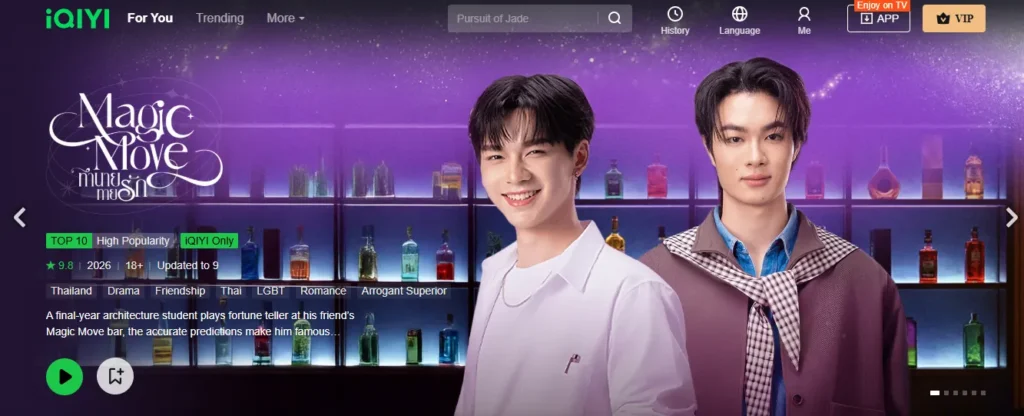
iQIYI’s Nadou Pro shows this clearly. In April 2026, iQIYI announced Nadou Pro as a professional AI production platform that integrates nearly 70 AI agents across scriptwriting, directing, visual design, editing, and other workflow stages. The company said creators can access its IP library, talent network, digital assets, distribution, and monetization systems through the platform.
This is the real business story behind AI filmmaking in China. The goal is not only cheaper production. The bigger play is to turn platforms into infrastructure for a new generation of studios, small teams, solo creators, and IP operators.
By late May 2026, iQIYI said Nadou Pro had onboarded more than 10,000 active creators in under one month of commercial use and had supported over 100 iQIYI original productions. The update also referenced nearly 30 model capabilities and almost 70 AI agents in use or planning across the production chain.
What Nadou Pro Reveals About AI Filmmaking
Nadou Pro matters because it frames AI filmmaking as a systems issue. It is not one tool that creates a scene. It is a workflow layer that can guide ideation, character design, scene setting, storyboarding, editing, and commercial collaboration.
For executives, this changes three things.
First, production capacity becomes more elastic. A small team can test concepts that once required a full studio setup. This supports mid-form dramas, micro dramas, animation, brand films, and advertising content.
Second, platform content strategy becomes more decentralized. iQIYI has described a shift toward giving creators more autonomy, revenue sharing, account tools, and access to IP assets. That points to a future where Chinese streaming platforms compete on creator infrastructure as much as exclusive titles.
Third, quality control becomes harder. When AI tools expand the supply of stories, audiences face more sameness, more synthetic performance, and more content fatigue. That is where human storytelling regains value.
AI Actors Are Useful, But Audience Trust Is Fragile
The AI actors ” get attention because it sounds disruptive. It suggests lower costs, always available screen talent, controllable faces, and fast localization. For some formats, that is commercially attractive. Brand explainers, fantasy worlds, animation, interactive IP, and low-risk testing can benefit from virtual actors and digital humans.
China is already testing the boundaries. iQIYI’s April 2026 announcement of the AI Artist Library claimed that more than 100 artists had been onboarded for a program that uses authorized multimodal data to build digital avatars.
Several actor studios soon denied AI-related authorization requests, including those associated with Zhang Ruoyun, Wang Churan, Li Yitong, and Yu Hewei. iQIYI later framed the library as matchmaking infrastructure rather than a finalized roster of contracted AI performers.
This matters because AI actors rely on trust before they rely on pixels. If fans believe a platform is unclear about consent, the issue quickly becomes a reputational one. In China’s fan economy, it can spread fast across Weibo, Douyin, Xiaohongshu, Bilibili, and Douban.
Consent, Likeness, and AI in Entertainment and Copyright Law

The 2025 Measures for Labeling of AI-Generated Synthetic Content cover text, images, audio, video, virtual scenes, and other AI-generated information. They require explicit labels that users can perceive and implicit labels in file metadata. The measures took effect on September 1, 2025.
In AI, entertainment, and copyright law, labeling is only one layer. The harder questions involve actor likeness rights, voice data, performance style, consent in AI, data reuse, compensation windows, and takedown rights.
- If a performer approves one project, can the synthetic performance train another model?
- Can a digital version appear in new genres, new markets, or new languages?
- Who controls derivative clips?
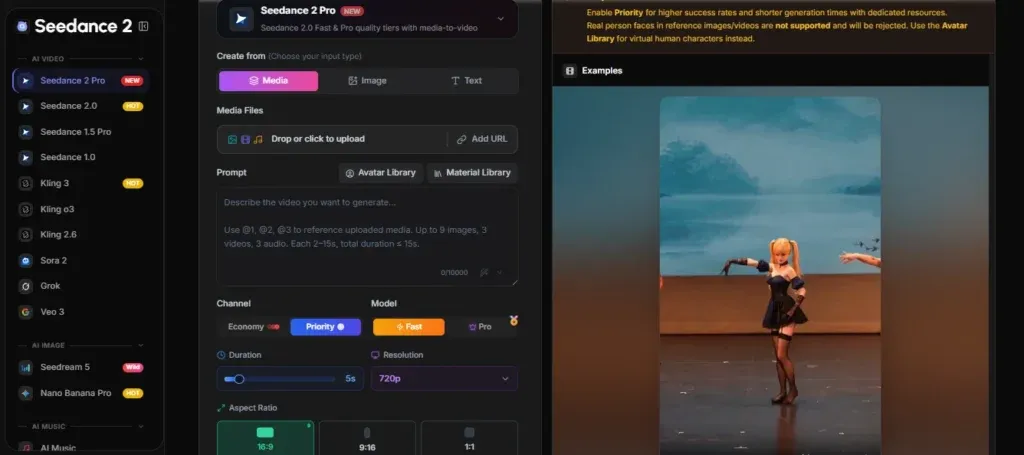
The global backlash around ByteDance’s Seedance 2.0 shows how quickly this becomes international. Reuters reported that ByteDance launched Seedance 2.0 in February 2026 for professional film, e-commerce, and advertising production.
AP later reported Hollywood criticism over alleged copyright infringement and unauthorized use of actor likenesses, while ByteDance said it was strengthening safeguards.
The Best AI in Entertainment Examples Still Need A Human Core
The most useful AI in entertainment examples in China are not only tool launches. They are audience reactions.
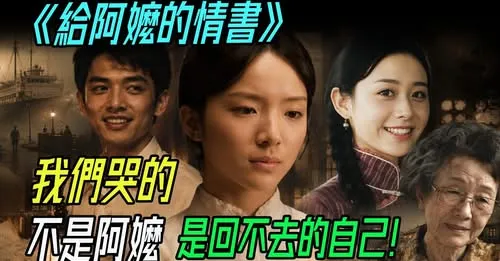
Look at Dear You, whose Chinese title translates as “Love Letters to Grandma.” The film is almost entirely in the Chaoshan dialect and became an unexpected success at the 2026 box office and on Douban. It earned 143 million yuan by May 12, with Maoyan projecting 300 million yuan by the end of its run. It also had an average rating of 9.1 on Douban at that point.
The World of Chinese reported that Dear You was made on a modest 14 million yuan budget, used a mostly novice cast, and drew heavily from real interviews and local memory. Its appeal came from emotional realism, regional texture, family bonds, dialect authenticity, and lived cultural detail.
This is the lesson for generative AI in entertainment: China’s audience does not reject technology. They reject emptiness. Synthetic media can create scale, but local dialect films like Dear You prove that authenticity still travels.
AI Actors in Movies and the Limits Of Synthetic Performance
The debate around AI actors in movies often focuses on cost. That is too narrow. Real acting carries social memory. Chinese dramas work when the audience reads subtle emotional cues: hesitation before filial duty, silence during family conflict, regional speech rhythms, status anxiety at the dinner table, or shame hidden behind politeness.
A synthetic performance can simulate a face. It struggles with cultural subtext unless guided by writers, directors, actors, dialect coaches, editors, and local researchers. This is where creative labor becomes more valuable, not less.
The strongest AI-generated film projects in China will likely leverage AI in production while preserving a human creative spine.
Claims about the first AI-generated film may make headlines, but investors should ask better questions:
- Does the story hold their attention?
- Are rights clear?
- Can audiences trust the characters?
- Can the IP expand across formats without backlash?
What Global Leaders Should Learn From China
The future of AI in entertainment will not be decided by tools alone. China shows that platforms can industrialize AI filmmaking faster than traditional studios expect. It also shows that consent, labeling, and audience trust can become commercial risks overnight.
Treat AI as production infrastructure, not brand positioning. Build rights management before launch. Use digital humans for suitable formats. Keep real writers, actors, cultural advisors, and audience researchers close to the process.
The next phase of AI in entertainment will favor companies that combine speed with taste. China’s platforms are moving quickly, but Chinese audiences are still voting for feeling, memory, dialect, family, humor, and emotional truth. That is why Digital Actors in China are not replacing human storytelling. They are forcing every entertainment company to define what only humans still do best.
Work With Ashley Dudarenok on Digital Actors In China and China Entertainment Strategy

Ashley Dudarenok helps global leaders understand China’s fast-changing consumer, technology, and entertainment landscape with clarity and commercial depth. For teams exploring Digital Actors in China, AI content strategy, digital humans, or China platform innovation, her insights turn complex market shifts into practical business direction.
Book a consultation with Ashley Dudarenok to translate China’s AI entertainment shifts into a practical strategy for brand, content, innovation, and leadership teams.
FAQs
1. What are Digital Actors In China?
Digital Actors in China are AI-driven or digitally created screen performers used in entertainment, advertising, livestreaming, gaming, and branded content. They can include digital humans, synthetic actors, virtual idols, and AI-assisted replicas of real performers.
2. Are AI actors legal in China?
AI actors can be used in China, but platforms must manage labeling, consent, data rights, likeness rights, and content review. China’s 2025 AI labeling rules require visible and metadata-based identification for AI-generated synthetic content.
3. How are Chinese streaming platforms using AI filmmaking?
Chinese streaming platforms are using AI filmmaking for script assistance, storyboarding, visual design, editing, digital asset creation, virtual characters, and creator tools. iQIYI’s Nadou Pro is one major 2026 example of full-pipeline AI production infrastructure.
4. Will virtual actors replace human actors in China?
Virtual actors may grow in low-risk areas such as content, animation, brand campaigns, and interactive IP. Human actors still convey emotional realism, fan trust, cultural nuance, and performance depth, all of which remain vital in Chinese dramas and films.
5. Why did iQIYI’s AI Artist Library face backlash?
The backlash came after TechNode reported that several actor studios denied AI-related authorization following iQIYI’s AI Artist Library announcement. The issue highlighted the need for clearer consent, compensation terms, and likeness governance.
6. What does AI in entertainment mean for brands entering China?
AI in entertainment gives brands faster content testing, lower production barriers, and new digital spokesperson options. The risk is reputational damage if synthetic content feels deceptive, culturally shallow, or unclear about consent.
7. Can an ai generated film become successful in China?
An AI-generated film can gain attention, but commercial success still depends on story quality, IP strength, audience trust, rights clarity, platform support, and emotional connection. China’s market rewards technical novelty only when the story works.
8. What is the biggest risk in AI in entertainment and copyright law?
The biggest risk in AI in entertainment and copyright law is unclear authorization. Actor likeness, voice, performance data, training data, and derivative works require contract language covering scope, duration, territory, compensation, and withdrawal rights.
9. Can virtual actors become celebrities in China?
Virtual actors can become recognizable IP in China if they have strong design, consistent personality, interactive fan touchpoints, and platform support. Long-term celebrity status still depends on story attachment and audience emotion.
10. What is the future of AI in entertainment in China?
The future of AI in entertainment in China will likely blend platform tools, small creator teams, synthetic media, tighter labeling, and stronger rights controls. The winners will pair AI speed with human taste and cultural insight.