

DeepSeek released R1 in January 2025 with training costs a fraction of OpenAI’s o1. The team had fewer chips, lower-grade hardware, and US export restrictions limiting what they could buy. Their response was to rebuild the training architecture from scratch.
CATL launched five new battery chemistries the same year and now holds 39.2 percent of the global power battery market. NIO delivered 326,028 vehicles across three competing brands in a single year.
I’ve watched this pattern repeat across Chinese industries. The outputs look different, but the underlying China execution model is the same: constraints, integration, and feedback loops convert pressure into speed.
China Holds the Lead in Nearly 90 Percent of Critical Technology Sectors in 2025
A 2025 analysis by the Australian Strategic Policy Institute (ASPI), cited in Nature, assessed China’s leadership across technologies classified as strategically critical. China leads in nearly 90 percent of those areas. The categories span:
- Batteries
- Semiconductors
- Artificial intelligence (AI)
- New energy vehicles (NEVs)
- Advanced manufacturing
- Quantum technologies
DeepSeek provides the single clearest 2025 demonstration of how Chinese AI companies can turn technical constraints into architecture decisions. The Hangzhou-based company released R1 on January 20, 2025. Performance benchmarks placed it alongside OpenAI’s o1 and comparable top-tier global large language models (LLMs). The training cost was a fraction. Hardware was lower-grade and fewer in number than comparable Western builds.
The technical choices responded to specific constraints. Group Relative Policy Optimization (GRPO) removed the standard critic model from the training process, cutting memory requirements.
A Mixture of Experts (MoE) architecture activated only relevant specialist modules per task, distributing computation without proportionally increasing cost. A peer-reviewed paper in the National Science Review documented R1 as one of the most consequential AI advances of 2025.
Any executive building an AI strategy in 2025 should be working from what the future of AI looks like from China’s current technical position.
CATL’s Vertical Integration Model Explains Why Battery Innovation Compounds Annually
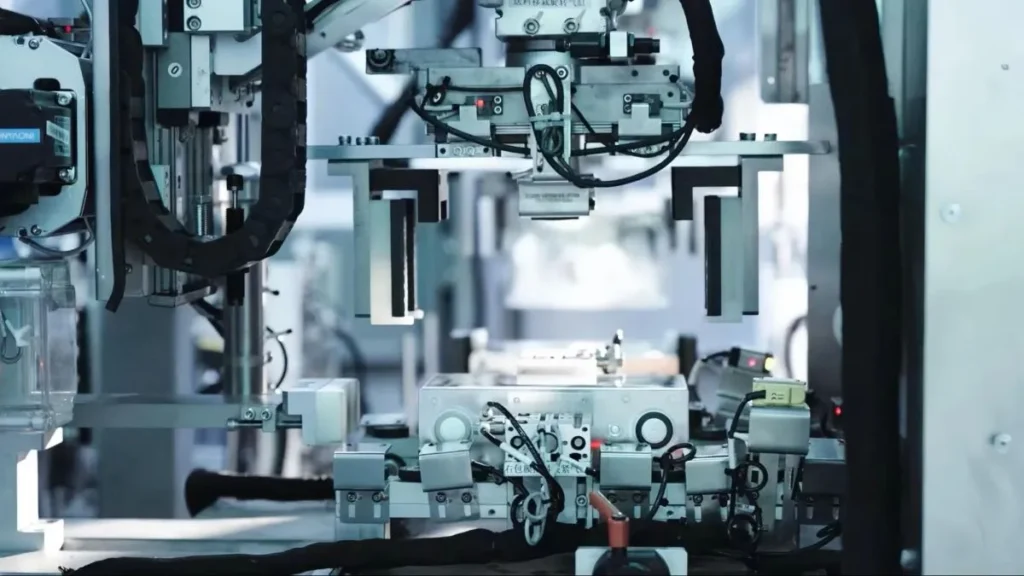
CATL’s 2025 annual report shows 661 gigawatt-hours (GWh) of lithium battery sales, up 39 percent year-on-year. Global power battery market share: 39.2 percent. Total patents including pending applications: 54,538. Research and development (R&D) personnel: 23,000 across six global R&D centers. Batteries installed in more than 24 million vehicles worldwide.
Five new battery technologies launched in 2025: the Shenxing Superfast Charging Battery second generation, the Shenxing Pro Battery, the Freevoy Dual-Power Battery, the Super Hybrid Battery, and Naxtra.
Naxtra is the world’s first mass-produced sodium-ion battery, launched at CATL’s Super Tech Day in April 2025. Sodium-ion chemistry carries lower raw material costs than lithium-ion alternatives, giving CATL pricing options that lithium-dependent competitors do not have.
In 2025, CATL also broke ground on a $6 billion battery integration project in Indonesia, covering nickel mining, battery materials, manufacturing, and recycling within a single facility. The Indonesia project extends the same vertical model beyond China’s borders.
The strength of the China battery supply chain explains why five new chemistries in a single year can move from technical decision to production reality. CATL controls lithium sourcing, cell chemistry, pack design, manufacturing, and battery recycling within one organizational structure.
Chemistry changes enter the production line directly. There is no external supplier to negotiate with, no procurement cycle to wait through. Battery companies that fragment those functions go through both every time they want to change anything.
Any executive running a product roadmap that depends on external supply chain coordination should measure what that dependency costs in calendar time.
China’s NEV Sector Runs on Product Cycles That Compress Global Automotive Timelines

At the 2025 Shanghai Auto Show, more than 35 competing plug-in hybrid electric vehicle (PHEV) and range-extended electric vehicle (REEV) models were launched in the same week.
Each manufacturer’s specifications had been adjusted to respond to what competitors were announcing simultaneously. Product decisions that would take most markets months of competitive analysis happened in five days.
CAAM data shows China sold 9.622 million new energy vehicles in the first eight months of 2025, up 37 percent year-on-year. That order volume means consumer signals reach manufacturers at a frequency and granularity that most automotive markets cannot generate.
NIO’s official delivery data shows 326,028 vehicles delivered in 2025, a 46.88 percent year-on-year increase across three brands: NIO, ONVO, and Firefly. ONVO’s L90 reached 43,439 cumulative deliveries within five months of launch.
China EV innovation is clearest in the way NIO treats its vehicles as software products. Over-the-air (OTA) software updates deploy on weekly cycles. Chinese consumer behavior in NEV buying feeds directly into firmware decisions and next-model hardware specifications.
Software development at Chinese original equipment manufacturers (OEMs) runs on weekly cycles. Hardware model cycles at Chinese OEMs: 12-18 months. Hardware model cycles at global OEMs: 2-4 years.
By the time a global OEM’s model reaches market, its Chinese competitors have run multiple software generations and a full consumer feedback cycle through their product teams.
How Consumer Feedback Loops at Scale Accelerate China’s Product Development Cycles
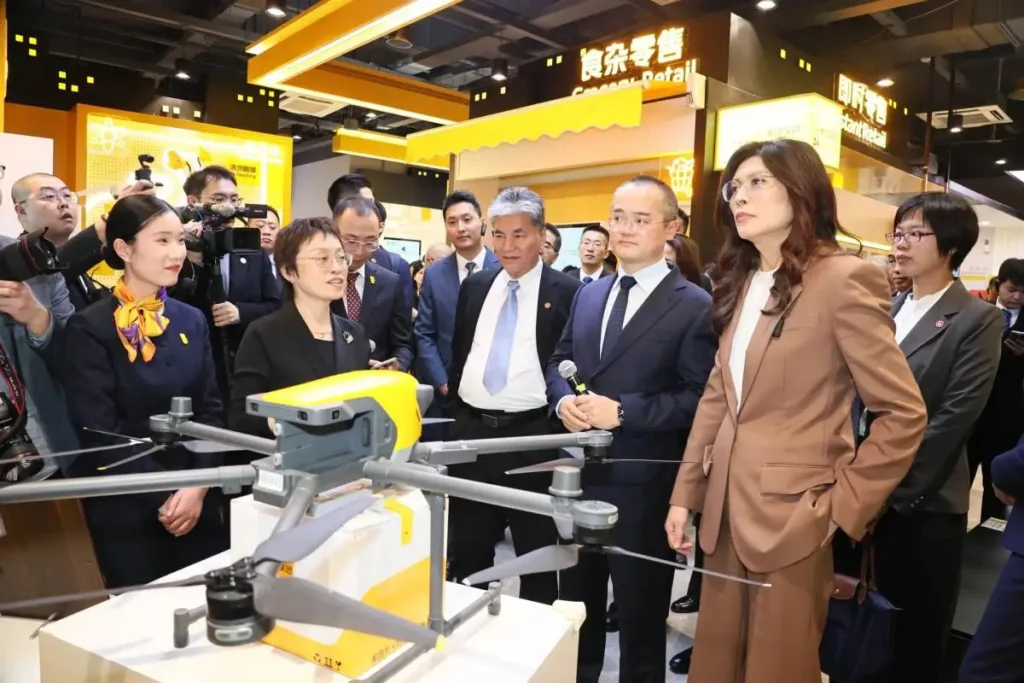
Meituan processed over 60 million food delivery orders per day at its operational peak in 2025. That volume produces granular, real-time demand data: location, category, timing, weather conditions, and price sensitivity.
Warehouse placement, courier density, and inventory levels adjust to live order patterns on rolling cycles. The logistics model is continuously updated by the data the orders produce.
Pinduoduo’s group-buying model runs a different version of the same mechanism. Purchase commitments arrive before goods are dispatched. Suppliers receive confirmed demand ahead of physical fulfilment. Volume decisions reflect actual orders, removing the forecast risk layer that conventional supply chains carry as a fixed cost.
NIO’s connected vehicle fleet generates OTA feedback on weekly cycles. Active vehicle data informs firmware updates and next-model hardware specifications. User community activity feeds product decisions directly.
Consumer trends in China reflect high digital purchase penetration across demographics. The retail technology infrastructure in China supporting these loops covers both e-commerce and physical retail environments.
Digital purchase activity generates the same feedback mechanism across categories beyond delivery and automotive. In markets producing this volume of real-time data, product decisions come from a week-old signal. Most other markets work from a quarter-old signal. The gap in product response time compounds across each generation.
What Global Companies Get Wrong When They Measure China’s Innovation Model
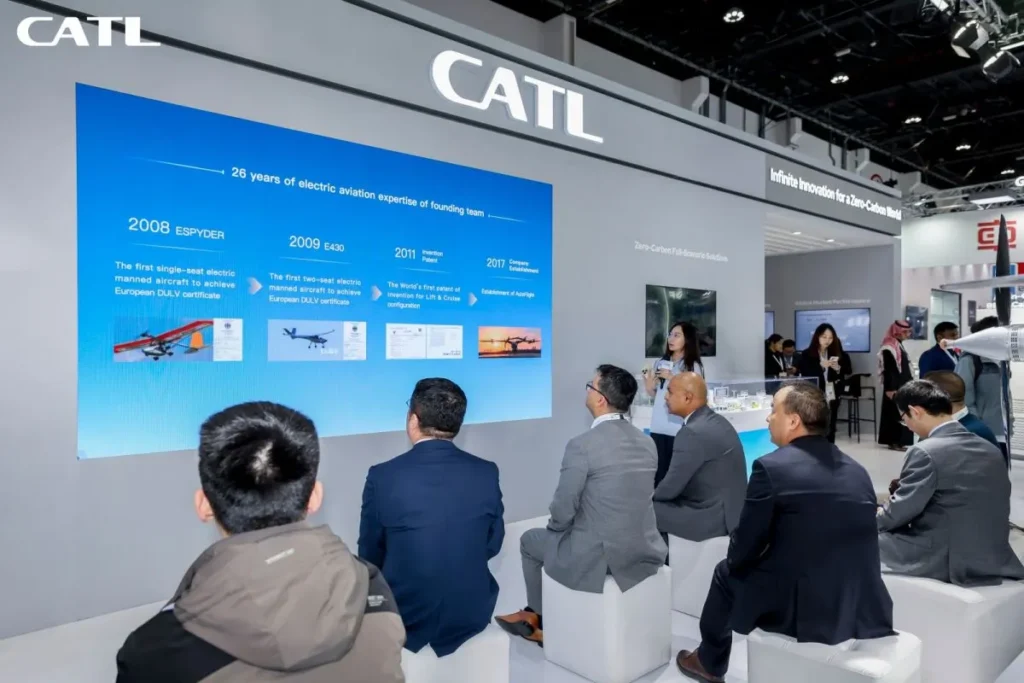
Three observations from working directly with global teams on China strategy.
First, measure time-to-market. Patent counts document intentions already deployed. CATL launched five battery technologies in 2025. DeepSeek launched R1 on January 20. NIO delivered 326,028 vehicles across three brands. Deployment timing tells you where competition is actually happening.
Second, vertical integration is a strategic option in any sector. The CATL model shows the specific output: vertical control over chemistry design, production, and recycling means each iteration cycle is shorter than a competitor’s who outsources any part of that chain.
Evaluate how much of your own design-to-deployment loop you control and at which points external coordination is adding calendar time.
Third, resource constraints in R&D produce different solutions from unconstrained development. DeepSeek rebuilt its training architecture under chip restrictions and matched performance benchmarks that well-resourced teams were hitting with significantly more hardware.
NIO built a weekly OTA update framework under competitive pressure from a market where software update speed is a purchase factor.
The teams I work with that adjust fastest track deployment cycles. Understanding China’s AI strategy is where most of them start.
How Should Your Business Respond to China’s Innovation Advantage?

As China’s innovation speed in batteries, AI, and new energy vehicles shortens competitive timelines, the executives adjusting fastest are those tracking the mechanism, not just the products.
Ashley Dudarenok is a China innovation speaker who works with global leadership teams to translate China’s technology and innovation advances into practical strategy and decision frameworks.
She helps organizations understand Chinese innovation strategy through the mechanisms of vertical integration, constraint-driven experimentation, and consumer feedback loops that are redefining innovation standards across global industries.
Invite Ashley Dudarenok as a China innovation keynote speaker to brief your leadership team on China’s innovation model and its competitive implications for your sector. Her sessions give leadership teams a concrete view of the mechanisms driving China’s execution speed and what they mean for their own product and R&D timelines.
Frequently Asked Questions About China Innovation at Scale
Below are key answers to questions global executives ask most when studying China’s innovation model, its mechanisms, and its competitive implications.
What Is China’s Overall Approach to Innovation Compared to Western Models?
China’s approach combines rapid deployment, integrated supply chains, and direct consumer feedback loops. Speed of iteration is the defining competitive characteristic across sectors.
In What Fields Do Chinese Innovations Extend Beyond AI and Batteries in 2026?
In 2026, China’s innovation advances spread across advanced manufacturing, commercial drones, humanoid robotics, and domestic satellite internet networks, with commercial deployments in each area.
How Does China’s Technological Innovation Differ from Japan’s or South Korea’s Approach?
Japan and South Korea focus on optimizing within established product categories. China’s companies rebuild categories from new technical foundations under competitive and resource pressure.
How Does China Encourage Rapid Experimentation Across Different Industry Sectors?
China’s domestic market scale means failures in one city or segment have limited consequences. Companies test formats and redeploy in adjacent markets within weeks.
What Is Business Model Innovation in a Chinese Context and How Does It Work?
Chinese companies monetize at the infrastructure level. Meituan monetizes delivery routing data. CATL monetizes battery recycling. The business model wraps around the operational layer.
What Does Operating Model Advantage Mean for Companies Competing Against Chinese Firms?
Operating model advantage means Chinese firms control pricing, iteration, and deployment within a single organization. That integration compresses timelines at every stage of the product cycle.
How Does Supply Chain Coordination Enable Faster Innovation in China?
Chinese manufacturers often have component suppliers within the same industrial cluster. Geographic proximity compresses the feedback loop between product design and component availability.
What Is System Rebuilding and How Does It Apply to China Tech Innovation?
System rebuilding means designing a new process from its base architecture. DeepSeek applied it to AI training. CATL applied it to battery production and supply chain design.
What Are the Global Competition Implications of China’s Execution Speed at Scale?
Companies competing against Chinese firms in batteries, AI, and manufacturing face shorter product cycles. China’s iteration speed compresses the competitive response window for global peers.
What Should Leaders Study First to Understand China Innovation and Technology?
Start with deployment timelines in sectors where China leads: batteries, NEVs, and AI. Time from prototype to commercial availability is the most reliable performance indicator.