
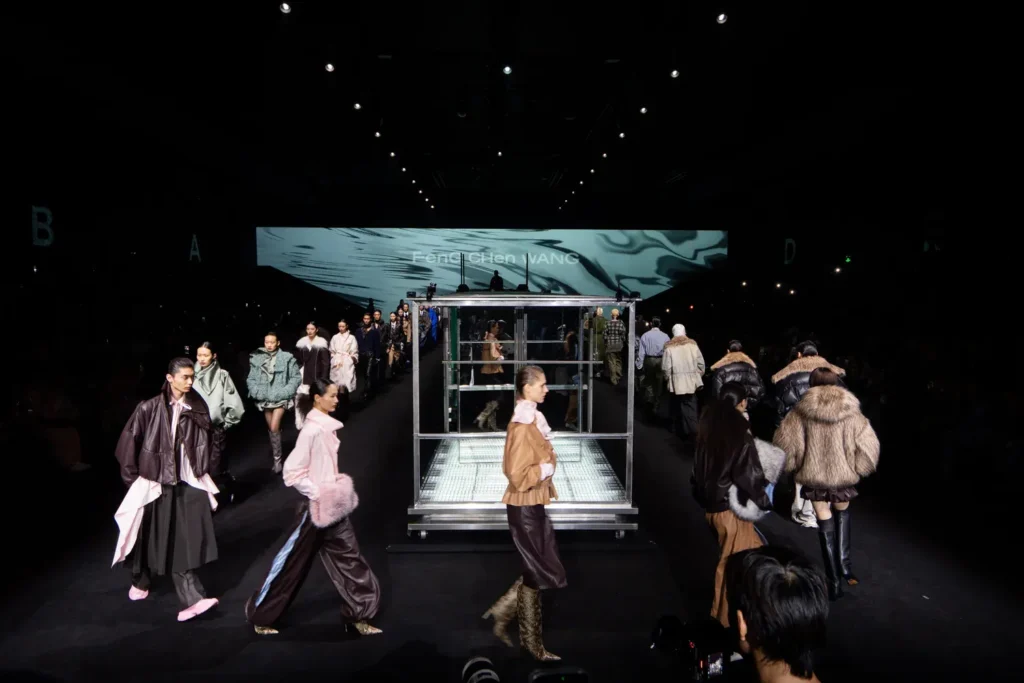
Chinese designer brands face a difficult scaling question: how can a creative language travel across markets, categories, and partners without losing its origin? Feng Chen Wang offers a clear answer. Her label has turned technical deconstruction, Chinese craft, and modular design into a recognizable system.
That system reached an important point in 2026. The brand celebrated its tenth anniversary at Shanghai Fashion Week, introduced its first complete womenswear line, appeared again on the official Paris menswear calendar, and launched its first capsule with Barbour. Each move extended the business through the same creative logic.
Who Is Feng Chen Wang?
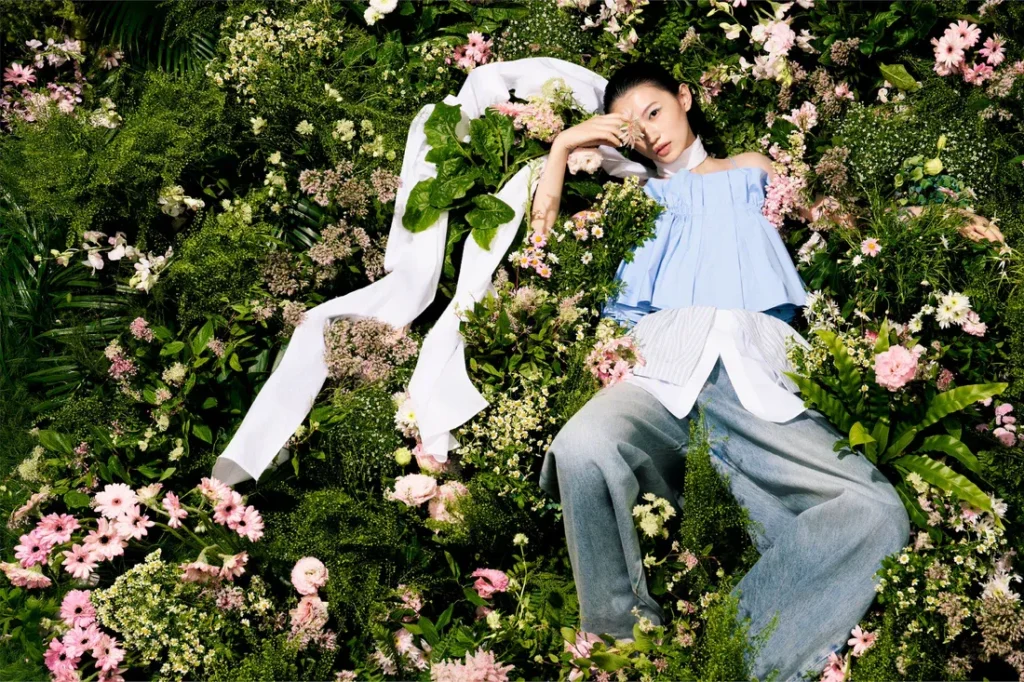
Ten years ago, a young graduate from the Royal College of Art in London launched a menswear label that would quietly reshape how the global fashion industry views Chinese design. Today, Feng Chen Wang stands as one of the most commercially viable and creatively distinct independent Chinese designer brands to emerge from the mainland.
The brand’s ascent from Shanghai Fashion Week to Paris Fashion Week Men’s – and into the collaboration portfolios of Converse, Barbour, Canada Goose, Nike, and Audi – tells a strategic story about craft-led innovation, cultural storytelling, and the changing economics of global fashion.
A China Luxury Forecast report released in January 2025 by MDRi found that Feng Chen Wang places in the top three brands with the highest awareness and purchase rate among surveyed consumers, with 17% having purchased the brand.
Wang’s work is now shaped by two creative centres. She splits her time between London and Shanghai. London connects the label to the European calendar. Shanghai keeps cultural references and the domestic fashion community close.
This dual base supports East-West design. Chinese philosophy enters the garment through material, structure, and narrative. International audiences can read the silhouette before they know every reference. The label has built a credible global Chinese fashion brand while retaining its cultural identity.
How Technical Deconstruction Defines Feng Chen Wang Clothing
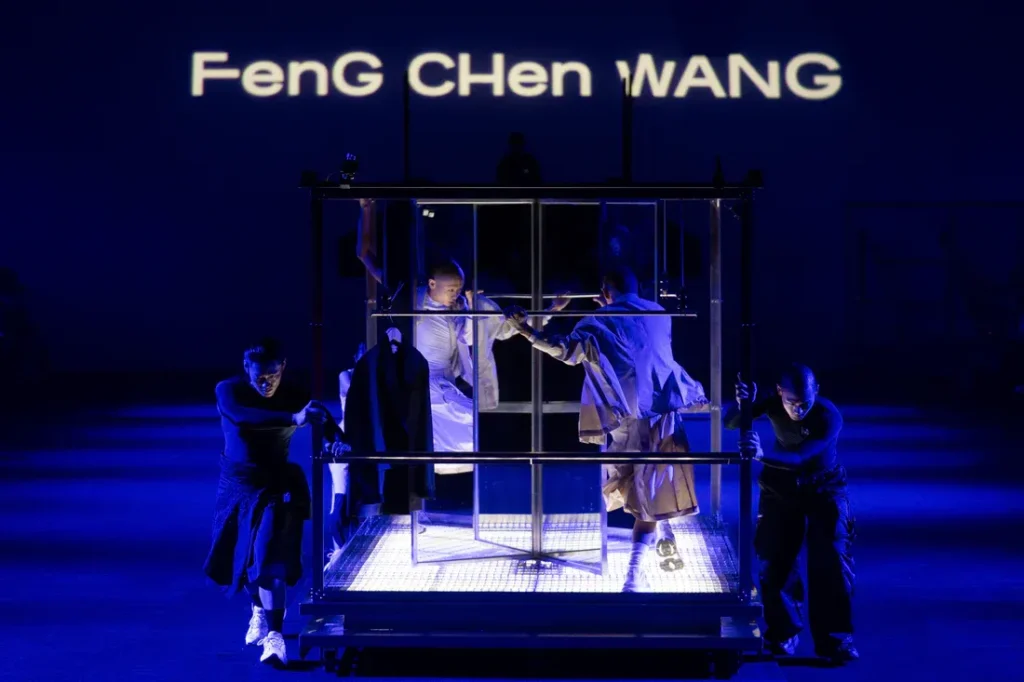
Technical deconstruction is the brand’s operating code. Wang breaks familiar garments into components, changes their proportions, and rebuilds them with visible layers or multiple wearing options. The result may look experimental, yet the design still has a practical relationship with the body.
The label’s current shop shows how that code moves across categories. Listings include a 2-in-1 zip hoodie, deconstructed denim jackets, 2-in-1 trousers, wrap skirts, and plant-dyed shirts. The current product selection connects Feng Chen Wang denim, tailoring, dresses, and outerwear through the same structural vocabulary.
A Feng Chen Wang jacket can therefore act as a brand signature even when the fabric or season changes. Split panels, enlarged volumes, raw edges, detachable elements, and layered construction make the item identifiable before a prominent mark appears. This reduces dependence on the Feng Chen Wang logo as the main source of recognition.
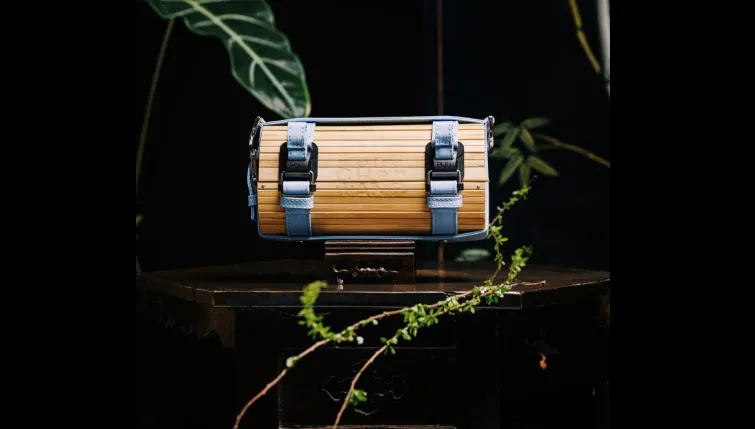
The bamboo bag, one of the brand’s signature accessories, exemplifies this philosophy. For the Autumn/Winter 2025 collection, the bamboo bag featured painterly, multicolored effects reminiscent of traditional Chinese ink painting.
Chinese Craft Gives Deconstruction Cultural Depth
Botanical Dyeing Turns Process into Product
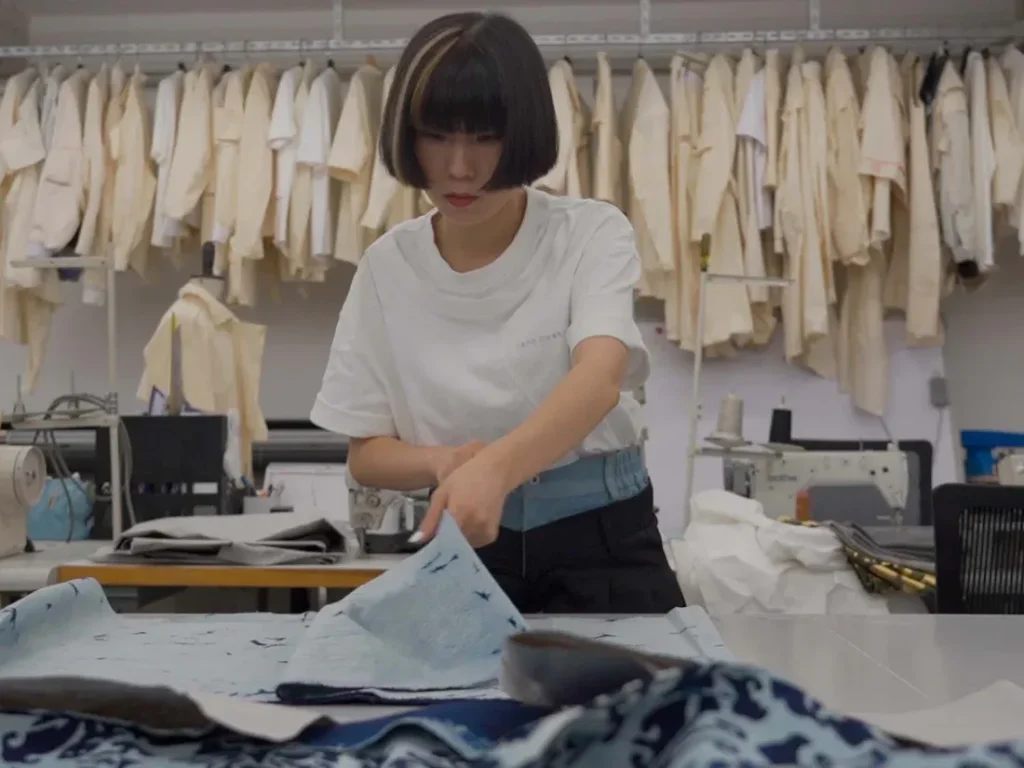
The Spring Summer 2026 collection connected contemporary tailoring with botanical dyeing. Fresh leaves were pressed onto 45-centimeter-wide handwoven cotton through a high-temperature process.
Each textile received a different transfer of shape and color. Raw fabric edges remained part of the finish, while hand-sprayed nylon added layered blue surfaces and lighter structure.
This approach positions craft as a source of product difference. Variations in the textile become part of the design rather than a defect to hide. For an independent label, this creates scarcity through process and gives consumers a clear explanation for why two pieces may never look exactly alike.
Chinese Art and Philosophy Shape each Season
The Autumn Winter 2025 collection drew on the Shan Hai Jing. It translated mythical beasts into ceramic sculptures made with artisans from Jingdezhen and used hand-painted Chinese ink imagery in bespoke in-house fabrics. The brand’s collection statement ties the runway concept directly to craft production.
Autumn Winter 2026 moved toward Liang Yi, or Two Forces. Architectural tailoring sat beside deconstructed panels, enlarged nylon forms, leather, wool, and hand-treated denim.
The official notes describe multiple dye processes and Dragon-Horse charms linked to the Lunar Year of the Horse. The Autumn Winter 2026 collection shows how Chinese philosophy can guide proportion and material contrast without becoming costume.
Collaboration Strategy Turns Design Codes Into Global Reach
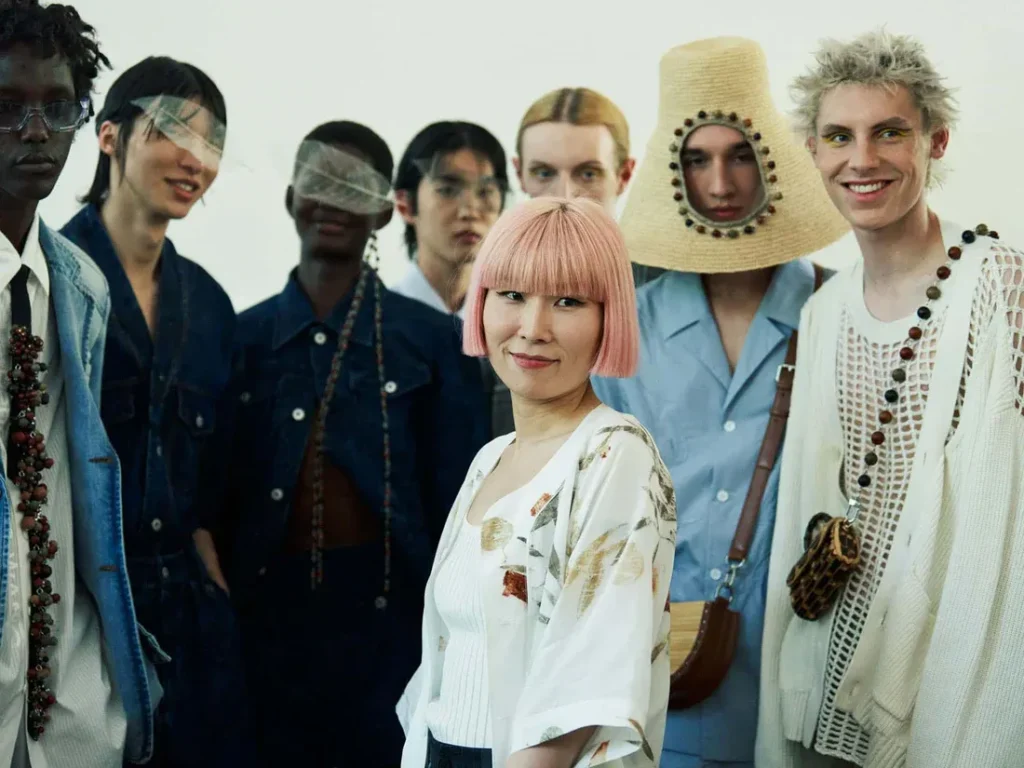
Perhaps no aspect of Feng Chen Wang’s business model is more strategic than its collaboration approach. The brand has partnered with an extraordinary range of global companies, each collaboration reinforcing a different dimension of its identity.
Feng Chen Wang Converse makes deconstruction easy to read
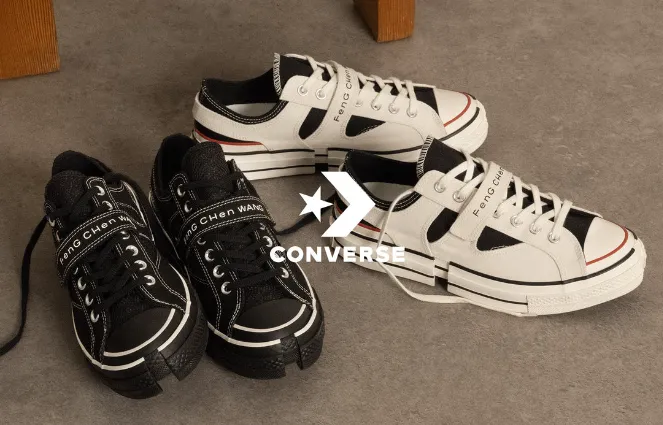
The relationship with Converse is the longest-running and most visible. Since debuting deconstructed Chuck 70s at Shanghai Fashion Week in 2018, Feng Chen Wang and Converse have revisited the collaboration multiple times. In May 2025, they released the Converse x Feng Chen Wang 2-in-1 Chuck 70 in two new colorways – brown/tan and light blue.
The Converse Feng Chen Wang collaboration is defined by a chunky, segmented sole that creates a stacked “2-in-1” midsole effect. The design draws inspiration from Jian ware, an ancient Chinese pottery technique known for its hypnotic glazes and organic finish.
The collaboration teaches a broader audience how to read the label’s design language. The Feng Chen Wang 2-in-1 Chuck 70 offers an accessible explanation of modular fashion, while the apparel carries the idea across a wardrobe.
Barbour Feng Chen Wang Connects Two Heritage Systems
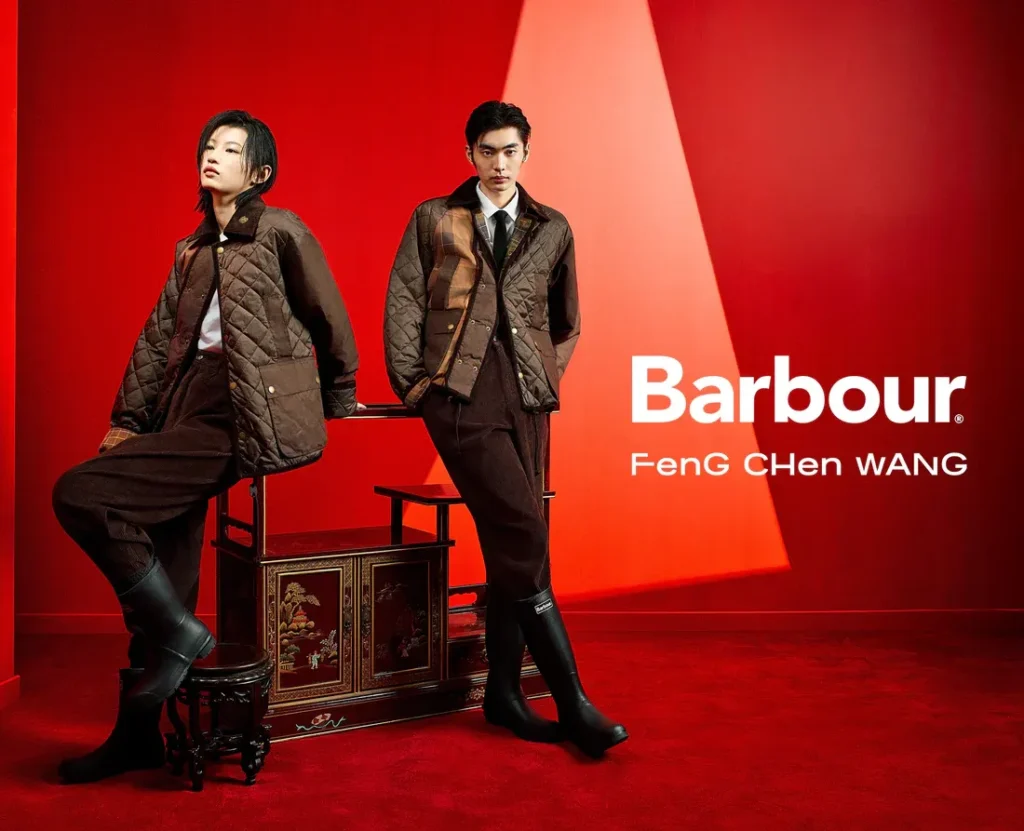
Barbour and Wang launched their first capsule in January 2026. The central Barbour Feng Chen Wang jacket reworked the Bedale around Long Ma, the mythical Dragon-Horse. The concept connects Barbour’s equestrian heritage with Wang’s deconstruction and Chinese storytelling. The capsule covers iconic silhouettes, layers, and accessories.
Barbour contributes a strong outerwear shape and rural British identity. Wang adds layered construction and a Chinese mythic symbol suited to the Year of the Horse. Each side remains legible.
Canada Goose x Feng Chen Wang
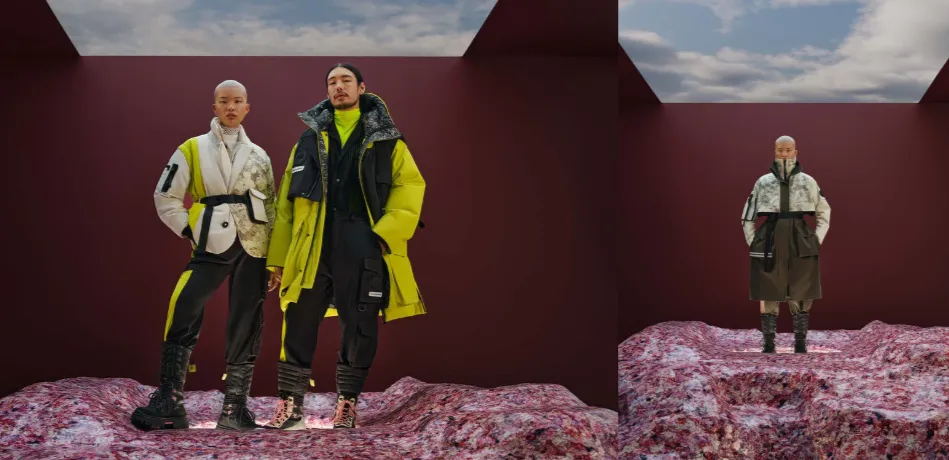
The Canada Goose Feng Chen Wang collaboration, which also involved artist Xu Zhen, debuted a “phygital” capsule and virtual showroom in Fall 2022, with global AR and digital try-on updates continuing through 2025.
The Canada Goose x Feng Chen Wang collection preserved the functional protection of Canada Goose outerwear while introducing multidimensional patterns from Xu Zhen’s artwork, re-cut and redesigned to transition from street to runway.
Nike and Audi: Expanding the Portfolio

Feng Chen Wang Nike collaborations have included performance-engineered pieces like the Nike x Feng Chen Wang Bra and lifestyle collections that fuse traditional craft with innovative dexterity. The designer created four looks for Nike’s Shanghai fashion show in early 2025.
In April 2025, Feng Chen Wang partnered with Audi on a collaborative project that included an art car – the SAIC Audi A7L concept – alongside a capsule collection of shirts and accessories. The collaboration blended industrial precision with fashion-forward creativity.
This was not a superficial branding exercise. The designer applied her signature deconstruction and拼接美学 (patching aesthetics) to the vehicle itself.
Paris and Shanghai Support Different Parts of Global Expansion

Paris gives the label a recurring place within the international menswear system. FHCM recorded its Spring Summer 2026 presentation on June 26, 2025, and the house remained on the official calendar in 2026. This continuity lets buyers, media, and partners evaluate a developing body of work.
Shanghai offers a different role. In March 2026, the brand marked ten years with an immersive runway that combined fashion, art installation, dance, and live music. It also introduced a complete womenswear line for the first time. The line carried deconstructive tailoring and fabric innovation into suits, soft knits, silk, flowing coats, and naturally dyed dresses.
The newest Paris chapter extends that cultural exchange. Spring Summer 2027 brought together the Seven Sages of the Bamboo Grove and Botticelli’s Primavera. Generous scholars’ robes, Renaissance drapery, raw edges, floral motifs, and sheer textiles shared one collection.
What Feng Chen Wang Shows About Chinese Brands Going Global
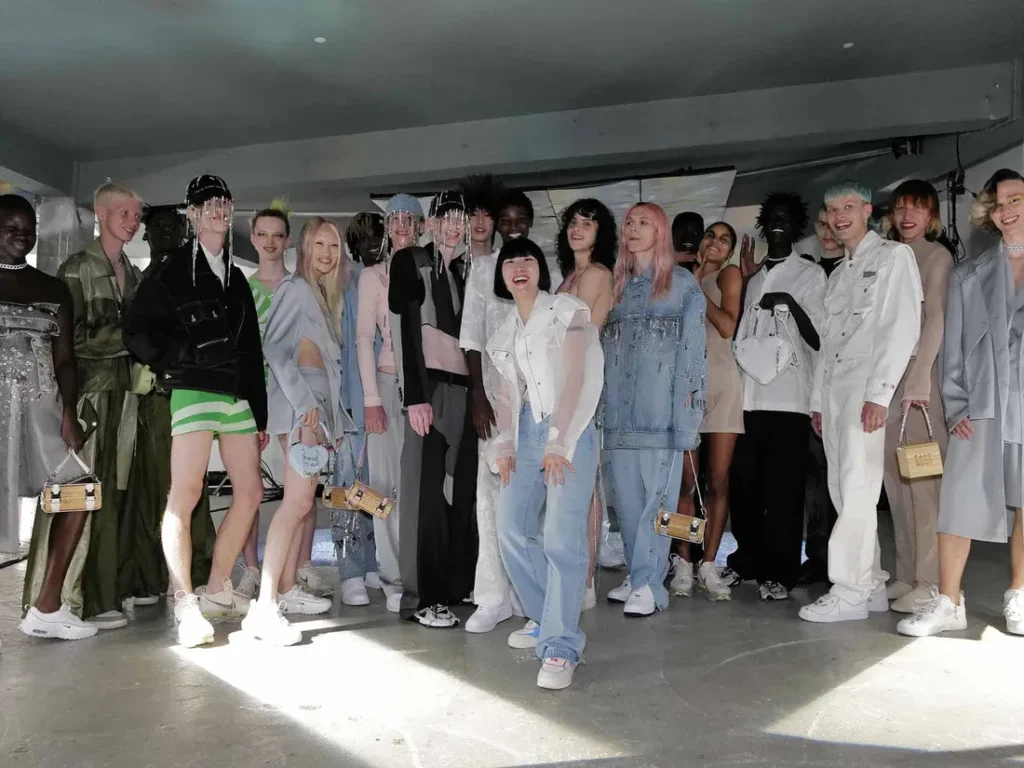
Feng Chen Wang’s progress offers five practical principles for Chinese brands with global ambitions.
Build a Core Design System That Can Scale
Technical deconstruction, modular layers, raw edges, and 2-in-1 construction recur across the brand’s jackets, trousers, footwear, bags, and womenswear. These codes make each product recognizably Feng Chen Wang without depending on a prominent logo or a single hit item. A repeatable design system also gives the brand room to enter new markets and product categories without weakening its identity.
Make Culture Part of the Product
Chinese cultural references carry greater international value when they affect the garment itself. Feng Chen Wang translates Chinese philosophy and craft into botanical dyes, handworked textiles, architectural silhouettes, and material contrasts. Global audiences can understand the visual and physical result before learning the full cultural story. This lowers comprehension barriers while preserving cultural depth.
Choose Collaborations Where Both Brands Remain Visible
Strong collaborations create a meaningful exchange between two recognizable identities. The Converse partnership retains the familiar Chuck 70 while applying Wang’s 2-in-1 construction.
The Barbour capsule preserves the Bedale silhouette while introducing layered construction and Long Ma symbolism. Both partners contribute something central to the final product, which gives the collaboration more substance than basic logo co-branding.
Use Different Fashion Hubs for Different Roles
Feng Chen Wang’s actual creative base spans London and Shanghai, while Paris provides recurring international visibility through its official fashion calendar. Wang divides her time between London and Shanghai, according to the South China Morning Post. Shanghai keeps the brand close to Chinese craft, culture, and its domestic community.
London and Paris Fashion Week connect it with international buyers, media, and creative networks. Chinese brands can apply a similar dual hub model to gain global access while retaining strong cultural roots.
Expand Categories Through an Established Brand Language
The 2026 womenswear debut grew from the same structural language and craftsmanship as the menswear line. Official runway notes confirm that both categories share a common foundation. This continuity allowed the brand to reach a wider audience without inventing a separate identity for womenswear.
Feng Chen Wang shows that international relevance comes from a clear system applied consistently across products, partnerships, categories, and markets. Technical deconstruction provides the structure, while Chinese craft and philosophy give that structure cultural meaning.
Explore China’s Global Brand Builders With Ashley Dudarenok
Feng Chen Wang reflects a broader shift in how Chinese brands combine cultural identity, design innovation, and global collaboration. Ashley Dudarenok helps leadership teams interpret such shifts through tailored China keynotes, advisory sessions, executive briefings, workshops, and trend research. Her work covers Chinese consumers, digital ecosystems, retail innovation, AI, and customer-centric transformation.
Request a tailored China strategy session to identify the brand, consumer, and innovation signals most relevant to your growth priorities. Book a consultation with Ashley Dudarenok.
FAQs About Feng Chen Wang
Is Feng Chen Wang a luxury brand?
Feng Chen Wang operates in contemporary designer fashion, with concept-led tailoring, specialist textiles, limited collaborations, and direct e-commerce. The brand sells menswear, womenswear, and accessories through its own store.
Is Feng Chen Wang Chinese or British?
She is a Chinese-born, London-based designer who divides her working life between London and Shanghai. Her Royal College of Art training informs the tailoring, while Chinese philosophy, craft, nature, and family memory shape the brand’s cultural language.
Are Feng Chen Wang Converse shoes true to size?
Converse currently labels the Converse x Feng Chen Wang 2-in-1 Chuck 70 true to size. Apparel fit varies because oversized shapes, detachable panels, and layered construction change proportions, so compare garment measurements with the product size chart before ordering.
Where can I buy a Feng Chen Wang jacket?
Buy a Feng Chen Wang jacket through the label’s official online shop or a retailer on its stockist list. Check the SKU, construction details, return terms, and seller authorization before purchasing from a marketplace or resale platform.
What is the Feng Chen Wang bamboo bag made from?
The Feng Chen Wang bamboo bag uses natural bamboo and is offered in several strap treatments. Official descriptions show both shoulder and handheld carrying options, so buyers should compare bag dimensions, strap material, and closure details across versions.
Does Feng Chen Wang ship internationally?
Yes. The official shop policy states that it offers global shipping, with free delivery above £350 excluding collaborations. Orders ship under DAP terms, so the recipient remains responsible for local import duties, taxes, and customs charges.
Can I return Feng Chen Wang clothing ordered online?
Return requests must be emailed to the official shop with the order number and SKU. Items need to remain unused, saleable, tagged, and accompanied by the required documents; current policy excludes sale merchandise, underwear, and swimwear.
What brands has Feng Chen Wang collaborated with?
Feng Chen Wang has collaborated with Converse, Barbour, Canada Goose, Nike, Crocs, Audi, UGG, Levi’s, and Estée Lauder. The Converse x Feng Chen Wang 2-in-1 Chuck 70 and Barbour Feng Chen Wang jacket are among the most recognized collaborations.
Is Feng Chen Wang made in China?
Feng Chen Wang embraces made in China as a mark of quality. The brand works with artisans from Jingdezhen for ceramic pieces and incorporates traditional Chinese techniques like botanical dyeing and handwoven cotton.
What awards has Feng Chen Wang won?
Feng Chen Wang has been a semi-finalist for the LVMH Prize, a finalist for the Woolmark Prize, and won the 2026 New Wave “Visionary of the Year” award. She was also selected for Kering’s CRAFT initiative in China.