

Meta description: JD.com is one of China’s largest ecommerce platforms. This guide explains how JD built its logistics network, retail model, and trust-driven commerce system.
Many readers encounter JD.com while researching Chinese ecommerce and assume it functions like a typical online marketplace. That interpretation overlooks the operational system behind the platform. In China’s retail ecosystem, JD is often described as a supply chain-driven commerce platform where logistics infrastructure directly shapes the customer experience.
China’s retail environment has also evolved alongside new retail formats, such as social commerce, in which content, community interaction, and online purchasing increasingly overlap.
The company built its reputation through direct retail operations, strict product-sourcing standards, and a dense logistics infrastructure. These elements allowed JD.com’s online shopping to develop strong credibility among consumers who value reliable delivery and authentic goods. Over time, this approach produced a retail environment where operational certainty influences purchasing behavior.
JD operates as a vertically integrated commerce system in which retail operations, logistics infrastructure, and service guarantees function as a single, coordinated platform.
What Is JD.com?
The platform connects product sourcing, logistics execution, and after-sales service into a single, coordinated system. This structure explains why JD.com ecommerce developed a reputation for operational reliability inside China’s competitive retail market.
JD Retail
JD Retail operates the consumer platform where hundreds of millions of users purchase electronics, household appliances, apparel, groceries, and daily necessities. The company continues to rely heavily on self-operated retail.
In the third quarter of 2025, JD Retail generated RMB 250.6 billion in revenue, reflecting strong growth in electronics, appliances, and general merchandise categories.
In this model, JD often purchases inventory directly from brands, stores it in company-controlled warehouses, and sells it to consumers through JD.com. Major global brands, including Apple, Xiaomi, Haier, and Lenovo, operate flagship stores on the platform because JD helps brands maintain tighter oversight of product sourcing, pricing, and customer service standards.
JD Marketplace
Alongside its direct retail business, JD also hosts third-party merchants through its marketplace platform. This hybrid structure allows the platform to expand product variety while maintaining strict seller qualification standards and customer service requirements.
The marketplace now contributes a growing share of platform activity as more brands shift toward digital storefronts and integrated fulfillment services. JD’s strategy balances assortment growth from marketplace sellers with operational control through self-operated retail.
JD Logistics
Behind the consumer interface sits one of the largest supply chain infrastructures in Chinese ecommerce. JD.com Logistics manages warehousing, transportation, and last-mile delivery nationwide. As of 2025, the network included 350,000 delivery personnel, allowing coverage across nearly every county and district in China.
The logistics network also includes more than 40 intelligent “Asia No.1” logistics parks that use robotics, automated sorting, and algorithmic inventory allocation to improve operational efficiency. JD originally built this infrastructure to support its own ecommerce platform.
Over time, the system expanded into a commercial service that supports external brands, manufacturers, and retailers. Businesses now use JD’s logistics network for warehousing, transportation, and supply chain management across China and international markets.
Together, these three operational layers define JD’s operational architecture. The platform integrates retail operations, merchant services, and large-scale logistics infrastructure into a single commerce system.
JD’s Retail Model: First Party Commerce and Marketplace Expansion
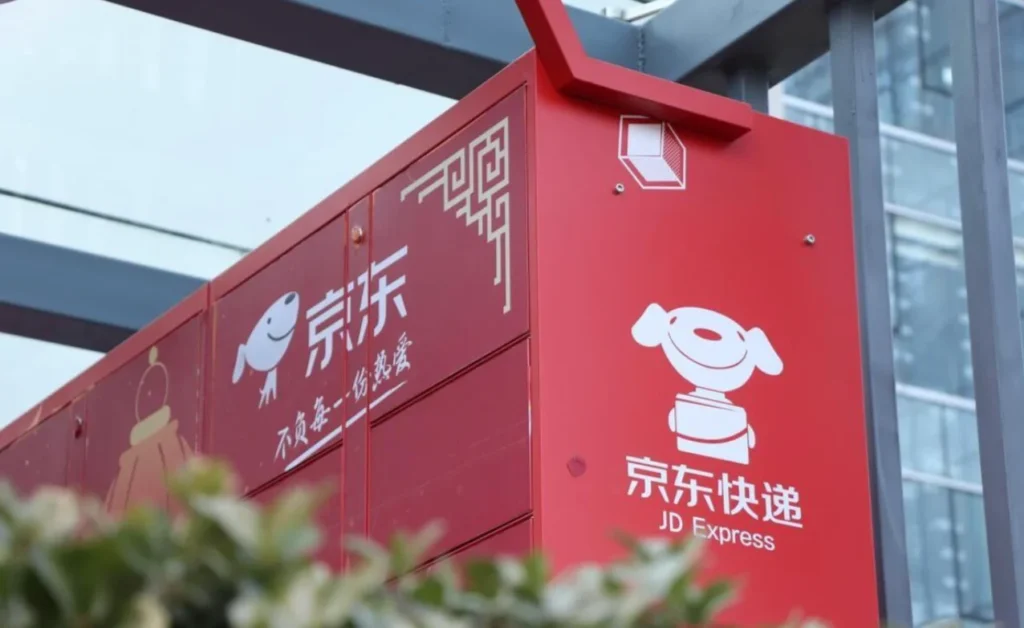
To understand how JD.com’s e-commerce functions in practice, it is important to examine the platform’s hybrid retail structure. The company combines direct inventory ownership with a controlled third-party merchant ecosystem. This structure supports product authenticity, predictable delivery, and broad product variety across China’s digital retail market.
First Party Retail
A defining feature of jd.com’s online shopping is its self-operated retail model. In this system, JD purchases inventory directly from manufacturers, stores it in its own warehouse network, and sells it through the platform.
This model supports strong brand partnerships. Many global manufacturers prefer JD because the company provides controlled distribution and verified product channels. Electronics brands such as Apple, Lenovo, and Xiaomi maintain flagship stores on the platform. Appliance companies such as Haier and Midea also rely heavily on JD for national online distribution.
Direct inventory ownership also improves operational control. JD manages product storage, inventory allocation, and delivery scheduling within its own supply chain network. This system allows the company to reduce counterfeit risks and maintain more consistent service standards for customers.
Marketplace Sellers
Alongside its direct retail operations, the platform operates a growing merchant ecosystem through the jd.com marketplace. Third-party merchants list products and operate digital storefronts while using JD’s payments system, marketing tools, and fulfillment infrastructure.
This marketplace layer expands product variety across millions of items and thousands of categories. JD now serves hundreds of millions of active consumers across China.
Many of these dynamics overlap with broader customer engagement strategies in China, where digital platforms combine product discovery, social interaction, and purchasing incentives.
The hybrid structure allows JD to balance two objectives. Direct retail operations reinforce trust and authenticity in core product categories. Marketplace sellers expand their assortments and category breadth, improving consumer choice and driving traffic growth across the platform.
The Consumer Value Proposition of JD.com
JD’s retail architecture creates a clear consumer value proposition built on authenticity, delivery reliability, and consistent after-sales service. For Chinese consumers, the platform’s appeal has long rested on three expectations: authentic goods, fast fulfillment, and dependable service after the sale.
These expectations reflect broader patterns in Chinese consumer behavior, where trust, reliability, and service consistency strongly influence online purchasing decisions.
That reputation still shapes jd.com online shopping in 2025 and 2026, even as competition across China’s ecommerce market grows more aggressive. Similar patterns appear in research on Gen Z shopping habits in China, where younger consumers increasingly prioritize delivery reliability and authentic branded products.
JD reported full-year 2025 revenue of RMB 1.1588 trillion, while management highlighted continued growth in both the user base and shopping frequency.
Authenticity and Product Confidence
A core reason consumers use JD is trust in product authenticity. The company still presents itself as a supply chain-based technology and service provider, and that positioning matters because it reflects how products move through controlled sourcing, warehousing, and fulfillment systems. On its corporate site, JD also continues to foreground “Authentic Products” as part of its consumer promise.
This matters most in categories where counterfeit risk can damage both brand value and buyer confidence. Electronics, appliances, health-related goods, and premium branded products all benefit from tighter control over distribution.
That is one reason many major brands keep flagship operations on JD and treat the platform as a more controlled retail environment.
Delivery Speed and Predictability
The company says its service coverage reaches nearly all regions, towns, and populations across China.
That infrastructure supports a consumer experience built around speed and predictability. JD’s latest annual results explicitly continued to highlight same-day and next-day delivery services as a core part of its model.
This is important because Chinese consumers do not judge ecommerce platforms only on price or assortment. They also judge them on how reliably the product arrives, how accurately the order is fulfilled, and how little friction the process creates.
Returns, Service Standards, and Repeat Purchase
The third layer is after-sales service. Fast delivery can attract a first order, but repeat purchases depend on how a customer experiences support, returns an item, or seeks confidence before placing another order.
JD’s retail and logistics model gives the company tighter control over reverse logistics and customer service processes than a looser marketplace structure usually allows. This is where JD’s consumer value becomes commercially meaningful.
Reliable fulfillment, stronger authenticity signals, and more standardized service create a loop of repeat purchases. Sustaining that loyalty often depends on long-term customer loyalty strategies in China, where service quality and brand trust reinforce repeat purchasing behavior.
The result is not just customer satisfaction but stronger purchasing confidence and higher repeat purchase behavior. It is a higher level of purchasing confidence, which helps explain why the platform continues to hold a strong position in categories where trust matters more than novelty.
JD Logistics: The Infrastructure That Powers the Platform
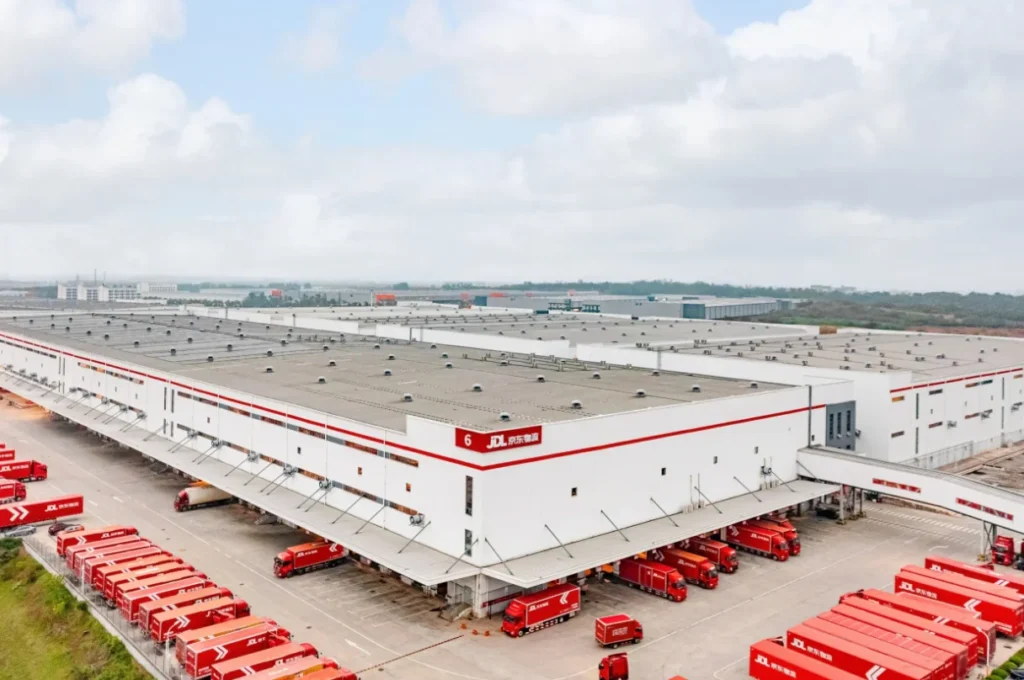
Retail strategy explains part of JD’s growth. Logistics infrastructure explains the rest. JD began building its logistics network in 2007 to address a structural weakness in early Chinese ecommerce: unreliable third-party delivery infrastructure.
At the time, most platforms relied on third-party courier companies. JD invested heavily in its own infrastructure to control delivery speed, service standards, and product handling across the supply chain.
This decision fundamentally differentiated JD from competitors such as Alibaba, whose platforms relied primarily on marketplace coordination rather than direct control of fulfillment infrastructure.
National Warehouse Network
JD’s logistics infrastructure operates at a scale rarely matched by global ecommerce platforms. According to JD’s corporate disclosures, the company operates over 3,600 warehouses and cloud warehouses, totaling more than 34 million square meters of storage capacity. These facilities form the backbone of the jd com warehouse network that supports national ecommerce operations.
The network includes regional distribution centers, city-level fulfillment hubs, and front distribution stations that place inventory closer to consumers. This structure reduces delivery distance and improves inventory allocation efficiency across China’s densely populated urban regions.
Many of these facilities also operate inside JD’s “Asia No.1” logistics parks. These parks combine automated sorting equipment, robotic picking systems, and algorithm-driven inventory management. The goal is to increase order processing speed while reducing operational errors in high-volume fulfillment environments.
Delivery Network and Service Coverage
Warehouse density allows JD to maintain one of the fastest ecommerce delivery systems in China. The company states that its logistics services now reach nearly all counties and districts across the country, covering the vast majority of the Chinese population.
This infrastructure supports services such as same-day delivery and next-day delivery in many major cities. In categories such as electronics and appliances, JD often coordinates delivery together with installation and after-sales support.
The logistics network also supports external clients. Over the past decade, JD expanded JD.com Logistics into a commercial service used by manufacturers, retailers, and international brands that require supply chain management within China.
Supply Chain Services for Businesses
The logistics division increasingly functions as a business-to-business infrastructure provider. Companies use JD’s supply chain services for warehousing, transportation, inventory management, and order fulfillment across China’s consumer market.
This evolution reflects a broader shift in strategy. JD initially built logistics capabilities to support its ecommerce platform. The same infrastructure now operates as a standalone commercial service supporting thousands of businesses.
Understanding the scale of JD.com Logistics helps explain why the platform developed a reputation for reliability in Chinese ecommerce. Control over inventory movement, warehouse capacity, and delivery operations allows JD to maintain tighter service standards across the retail experience.
Automation and Robotics Inside JD Warehouses
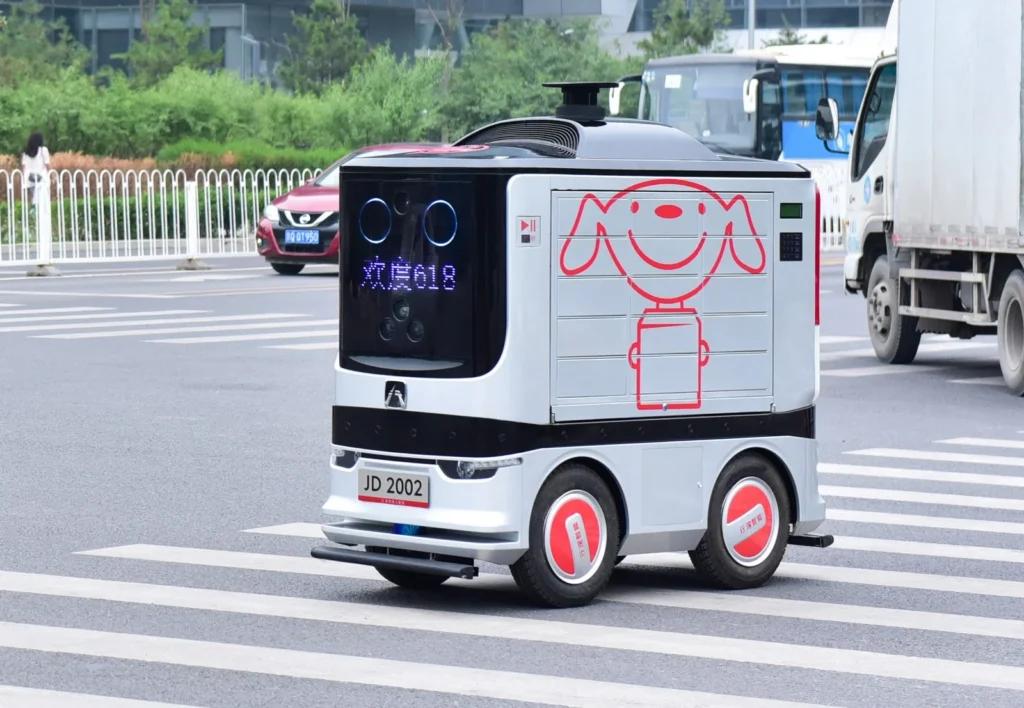
The logistics network described earlier depends on a second layer of operational capability. Large-scale e-commerce fulfillment requires automation that can process massive order volumes without delays.
For this reason, JD invested heavily in robotics, artificial intelligence, and automated sorting systems across its logistics infrastructure. These technologies operate within JD.com’s warehouse network and support the platform’s speed and reliability. These developments mirror broader innovations in AI in retail in China, where automation is increasingly supporting supply chain management and fulfillment operations.
Intelligent Warehouse Operations
Many of JD’s large fulfillment facilities are located in “Asia No.1” logistics parks. These parks integrate robotics systems, automated conveyors, and intelligent inventory management software that coordinates product storage and retrieval across the warehouse floor.
JD states that its automated warehouses can process hundreds of thousands of orders per day, supported by robotic picking systems that transport product shelves directly to human packing stations. This goods-to-person system reduces workers’ walking time and increases picking efficiency in high-volume environments.
Automation also helps the company manage inventory distribution across the jd com logistics network. Artificial intelligence models analyze order patterns, geographic demand, and delivery distances to allocate products to the most efficient warehouse locations.
Robotics and Sorting Technology
Sorting systems represent another important layer of warehouse automation. JD uses automated sorting lines capable of handling tens of thousands of packages per hour in major distribution centers. These systems scan parcels, determine delivery destinations, and route packages toward the appropriate transportation channel.
Robotic mobile units also operate inside many facilities. These autonomous robots transport product shelves across warehouse floors while communicating with central software systems that coordinate traffic flow and task assignments. Robotics technology has also expanded across Chinese retail environments, including applications discussed in studies on robots in retail stores.
In ecommerce environments where millions of packages move through warehouses each day, even small improvements in sorting speed and picking efficiency can significantly reduce fulfillment costs.
Efficiency Gains Across the Supply Chain
Automation supports another strategic goal inside JD’s logistics system. Faster order processing within warehouses enables the company to maintain strict delivery timelines across the JD.com logistics network.
Operational improvements in warehouse automation, therefore, translate directly into consumer benefits such as faster delivery and more predictable order fulfillment.
Autonomous Delivery: Drones, Robots, and the Future of Last Mile Logistics
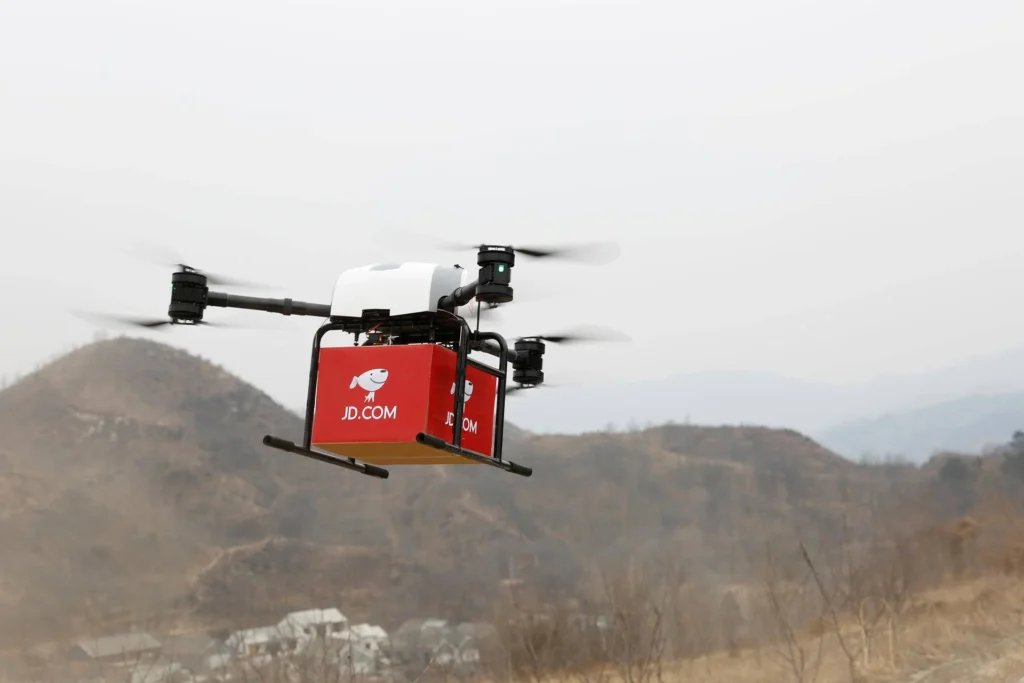
Warehouse automation increased efficiency inside fulfillment centers. The next challenge is to move parcels from distribution stations to customers faster and with lower labor intensity. For this reason, JD has invested heavily in autonomous delivery systems across its JD.com delivery network.
These technologies include logistics drones, ground robots, and self-driving delivery vehicles designed to operate in specific environments.
Drone Delivery for Rural Logistics
Drone delivery plays a central role in JD’s strategy for remote and rural regions. The company began developing its logistics drone program in 2015 and has conducted thousands of test flights across several provinces.
Recent trials show that drone routes in regions such as Jiangsu, Shaanxi, and Sichuan can reduce shipping times for rural customers by up to 70 percent compared with traditional ground transportation.
In January 2025, JD introduced a lightweight logistics aircraft, the JDX20 urban drone, designed for shorter-distance deliveries within cities such as Nanjing, Shanghai, and Guangzhou.
The company now operates nearly 50 drone routes across China, including regular operations in Chongqing, where deliveries can take as little as three minutes for one direction between logistics nodes.
These routes allow parcels to travel directly between warehouses and village distribution stations, bypassing road networks that may be slow or geographically constrained.
Autonomous Vehicles and Delivery Robots
The company’s latest-generation vehicles operate with Level 4 autonomous driving capability, enabling them to navigate campuses and controlled urban environments without direct human supervision.
These vehicles feature cargo bays of up to 4 cubic meters and a payload capacity of roughly 1,000 kilograms, enabling them to transport multiple parcels on a single route.
Autonomous robots represent another layer of the delivery network. During peak ecommerce periods, JD deployed around 700 delivery robots, both indoor and outdoor, to handle last-mile delivery.
Robots typically operate in locations such as university campuses, residential compounds, and business parks where traffic conditions remain predictable. Equipped with sensors and navigation systems, these machines can recognize obstacles and plan routes autonomously while delivering parcels to designated pickup points.
Scaling the Autonomous Logistics Network
JD’s long-term logistics strategy extends beyond small-scale trials. In 2025, the company announced plans to expand automation across its supply chain by deploying millions of robots, autonomous vehicles, and drones during the next five years.
These technologies remain complementary to the existing courier workforce rather than replacements for it. Human couriers still handle the majority of deliveries across the jd com delivery network. Autonomous systems instead address specific operational challenges such as rural access, labor shortages, and high parcel volumes during major ecommerce events.
The development of drone and robotic delivery, therefore, represents a strategic extension of JD’s logistics infrastructure. These technologies aim to increase coverage density and operational efficiency as ecommerce demand continues to grow across China.
Alibaba vs JD.com: Two Competing Ecommerce Systems
The comparison between Alibaba and JD appears frequently in discussions about Chinese digital commerce. The reason is structural. Both companies operate at a national scale, yet their operating models differ in fundamental ways.
Understanding Alibaba vs. JD.com reveals how two different approaches shaped China’s ecommerce industry. These differences also appear in the rise of livestreaming in China’s ecommerce ecosystem, where platform design increasingly shapes how consumers discover and purchase products.
Platform Design and Revenue Structure
Alibaba built its core platforms around a marketplace model. Taobao and Tmall connect merchants with consumers while sellers manage inventory and fulfillment. The company generates revenue mainly through advertising services, transaction commissions, and merchant tools.
JD developed a hybrid retail model that combines direct product sales with third-party merchants. The company purchases inventory directly from brands and sells those products through the platform while also hosting independent merchants through the marketplace layer.
Recent corporate disclosures highlight the scale of both companies. Alibaba reported over 1 billion annual active consumers across its China retail marketplaces, while JD reported more than 700 million annual active customers on its platform.
Logistics and Supply Chain Control
The biggest operational difference appears in logistics.
Alibaba operates the Cainiao logistics platform, which coordinates deliveries through partner courier companies such as ZTO, YTO, and STO. Cainiao acts as a digital logistics infrastructure rather than a self-operated delivery system.
JD built a fully integrated logistics network through JD.com Logistics. The company operates thousands of warehouses and distribution stations while employing its own delivery workforce across many regions of China.
This structure enables JD to coordinate inventory storage, order fulfillment, and last-mile delivery within a single operational system.
Category Strength and Consumer Behavior
These operational differences influence category performance.
JD performs strongly in categories where authenticity and reliable delivery matter most. Examples include consumer electronics, home appliances, and premium branded goods.
Alibaba maintains broader category coverage across fashion, small consumer goods, and niche retail segments. Marketplace scale allows millions of merchants to operate stores with minimal infrastructure requirements.
Key Strategic Differences
The comparison between alibaba vs jd.com can be summarized through several structural differences:
| Strategic Area | Alibaba | JD.com |
| Platform Architecture | Marketplace-driven ecosystem | A hybrid system combining retail and marketplace |
| Logistics Strategy | Partner courier networks via Cainiao | Self-operated logistics through JD Logistics |
| Category Strengths | Long-tail assortment and large merchant scale | Electronics, appliances, and branded goods with reliability |
These differences explain why both companies continue to coexist at the top of China’s ecommerce market. Each platform optimized a different layer of the digital retail system.
JD’s Global Expansion and Supply Chain Strategy
JD’s growth strategy now extends beyond China’s domestic ecommerce market. The company increasingly positions itself as a global supply chain service provider that combines logistics infrastructure, warehouse management, and cross-border fulfillment services.
This shift reflects rising demand from international brands that require reliable distribution networks connecting manufacturing centers, regional warehouses, and consumer markets.
Overseas Logistics Infrastructure
The international strategy focuses on expanding JD.com Logistics into global markets. JD Logistics has built an overseas warehouse network that supports cross-border ecommerce and regional distribution.
In 2025, the company operated nearly 90 overseas warehouses totaling more than 900,000 square meters across Europe, Southeast Asia, and the Middle East.
These facilities enable international brands to store products closer to consumers, reducing delivery times and improving inventory availability. Overseas logistics hubs also support cross-border shipments between Chinese manufacturers and international markets.
Entry Into International Delivery Markets
JD has also begun launching self-operated delivery services outside China. In June 2025, the company introduced its JoyExpress courier service in Saudi Arabia, marking the first time JD operated a national delivery network in an overseas market. The service initially covered major regions of the country and offered next-day and same-day delivery options for ecommerce shipments.
The Saudi launch represents an important milestone because it extends JD’s logistics model beyond warehouse services into full-scale courier operations. The company plans to expand delivery coverage as ecommerce demand in the region continues to grow.
Supply Chain Services for Global Brands
JD Logistics increasingly functions as an infrastructure provider for businesses that require complex supply chain coordination. Companies can use JD’s services for inventory storage, order fulfillment, transportation management, and distribution across multiple countries.
International manufacturers already use JD’s infrastructure to move products between production sites in Asia and consumer markets worldwide. These services include bonded warehouse operations, customs processing, and cross-border shipping solutions.
The expansion of JD.com Logistics into global markets reflects a broader transformation in the company’s strategy. JD originally developed logistics capabilities to support its domestic ecommerce platform.
Today, the same infrastructure operates as a commercial supply chain service, connecting international brands with consumers in China and other markets.
Conclusion: JD.com as Infrastructure-Driven E-commerce
JD is best understood not as a simple ecommerce website but as a logistics-driven commerce infrastructure. JD’s competitive advantage comes from controlling the full commerce chain, from product sourcing and warehousing to delivery and after-sales service.
Direct relationships with brands strengthen product authenticity, while JD.com Logistics’ logistics network supports reliable delivery across most regions of China. These capabilities shaped JD’s reputation for dependable service in categories such as electronics, appliances, and branded consumer goods.
As the company expands internationally, the same infrastructure now supports global distribution and supply chain services. JD now operates as a logistics-driven commerce infrastructure that continues to influence the evolution of global ecommerce.
Work With Ashley Dudarenok to Understand China’s Ecommerce Landscape

China’s ecommerce ecosystem evolves rapidly, and platforms such as JD reveal how supply chain infrastructure shapes digital retail success. Understanding these systems requires more than surface-level market data. It requires deep insight into consumer behavior, technology adoption, and platform strategy.
Ashley Dudarenok is a recognized China digital marketing speaker who helps global companies understand how platforms such as JD, Alibaba, Douyin, and RedNote influence consumer markets. Through keynote presentations, strategy workshops, and executive briefings, she helps brands translate Chinese digital innovation into practical business strategies.
Organizations that want to understand China’s ecommerce infrastructure, retail technology trends, and digital consumer behavior often work with Ashley to gain actionable insights.
Book a consultation or keynote session with Ashley Dudarenok to explore how China’s ecommerce innovations can inform your global strategy.
Frequently Asked Questions About What is JD.com
1. Is JD.com the same as Alibaba?
No. JD operates a hybrid retail and logistics model that includes direct inventory ownership and self-operated delivery infrastructure. Alibaba primarily runs marketplace platforms where merchants manage inventory and fulfillment through partner logistics networks.
2. Is JD.com safe for online shopping?
Yes. JD.com’s online shopping platform gained popularity in China by selling many products through direct supplier relationships and verified brand stores. This structure reduces the risk of counterfeiting compared to open-marketplace platforms.
3. How big is JD.com compared to other ecommerce companies?
JD ranks among the largest ecommerce companies in China. The platform serves hundreds of millions of consumers and generated over RMB 1.15 trillion in revenue in 2025.
4. Does JD.com operate its own delivery network?
Yes. JD built a nationwide supply chain system through JD.com Logistics. The network includes thousands of warehouses, distribution stations, and delivery personnel that handle fulfillment across most regions of China.
5. Can international customers buy from JD.com?
Some international consumers can purchase products through the platform’s cross-border ecommerce services. These orders often ship from bonded warehouses or international fulfillment centers.
6. What products sell most on JD.com?
The platform performs particularly well in consumer electronics, home appliances, and branded consumer goods. These categories benefit from the company’s reputation for authentic products and reliable delivery.
7. Does JD.com use robots or drones for delivery?
JD experiments with autonomous logistics technologies, including jd com delivery robot systems and drone delivery routes. These technologies mainly support specific environments such as rural regions or campus logistics.
8. How does JD.com make money?
JD generates revenue through several channels. These include direct product sales, marketplace merchant services, logistics services, and supply chain solutions provided to businesses.
9. What is JD Logistics?
JD.com Logistics is the company’s logistics and supply chain division. It manages warehousing, transportation, and delivery services for JD’s ecommerce platform and for external businesses.
10. Is JD.com expanding internationally?
Yes. JD continues to expand its global supply chain infrastructure. The company operates overseas warehouses and has launched delivery services in regions such as the Middle East to support international ecommerce growth.