

Guochao is often described as a cultural trend. That framing is incomplete. It is a structural shift in how demand forms in China. The term itself means “national trend,” referring to the rise of products that embed Chinese culture into modern consumption. However, its real impact lies in how it changes consumers’ evaluation of relevance, trust, and value.
This shift reflects a broader change in consumer behavior. Younger generations increasingly prefer products that align with local identity, aesthetics, and lived experience. As a result, consumption decisions no longer depend solely on function or price. They depend on whether a product fits into a cultural and social context.
That change has already altered competition. Domestic brands now compete through design, storytelling, and product quality rather than solely on price. Guochao, therefore, functions as a system. Cultural meaning creates the signal, but demand only scales when it connects with product execution, platform dynamics, and rapid iteration.
What Guochao Actually Is and How It Evolved
Guochao began as a visible expression of national pride. Early adoption centered on symbolic elements such as traditional patterns, historical references, and recognizable cultural motifs. These products attracted attention because they reflected identity in a market long shaped by foreign influence.
However, symbolic appeal did not sustain demand. As the trend matured, consumers’ expectations rose. Cultural references alone became insufficient. Products had to meet modern standards of quality, usability, and design.
This transition marked a critical shift. Guochao moved from symbolic consumption into product-driven competition. Traditional elements were reinterpreted into contemporary formats, creating a balance between heritage and innovation. This evolution explains why guochao now extends beyond fashion into multiple consumer categories.
Guochao 3.0: Focus on ICH + Regional Traits
Guochao demand forms through a coordinated system. Identity creates the initial signal, but adoption only occurs when that signal is validated, reinforced, and scaled.
Consumers use products to express cultural alignment and personal taste. However, this expression becomes meaningful only when it is visible. Content, reviews, and everyday sharing turn private consumption into public signaling. Once visible, products enter a feedback loop where others evaluate and replicate them.
Cultural alignment alone does not drive conversion. It creates openness. The decisive trigger comes from reinforcement. Consumers look for repeated confirmation across peer reviews, creator content, and platform engagement. When the same signal appears consistently, hesitation drops, and adoption accelerates.
At the same time, product quality acts as a constraint. Cultural relevance cannot compensate for weak performance. Consumers apply a dual filter. The product must deliver functionality and carry cultural meaning that feels current. If either fails, demand cannot be sustained.
Platforms complete the system. They compress discovery, validation, and conversion into a single environment. Products gain visibility through culturally resonant content, move into validation through engagement, and convert without leaving the platform. This creates continuous demand loops rather than isolated transactions.
The Infrastructure Behind Guochao: Why It Scales

Guochao scales because China’s digital platforms, content systems, and manufacturing capabilities operate as an integrated environment. This integration removes friction between idea, validation, and production.
Platforms do not simply distribute trends. They construct them. Algorithms prioritize content that reflects current cultural signals, then amplify it based on engagement. This creates rapid exposure cycles in which relevance compounds rather than fades.
Content plays a central role in this system. It is not a promotional layer. It is part of the product interface. Consumers engage with meaning before function, and they rely on content to interpret both. This collapses the gap between storytelling and proof.
Speed emerges from system integration rather than isolated capability. Design, production, and distribution operate in parallel. Brands test ideas in real time, observe response through platforms, and adjust immediately. This continuous loop allows domestic companies to remain aligned with shifting preferences.
Localization is also embedded within this system. Cultural alignment is built into product development from the start. It is not applied later through marketing. This is why external replication often fails. Surface-level adaptation cannot match system-level integration.
Brand Execution: How Companies Turn Guochao into Revenue
Li-Ning: Premium Positioning Through National Style

Li-Ning illustrates premium repositioning through cultural identity. The brand moved beyond functional sportswear and became a symbol of modern Chinese expression. This shift allowed it to increase perceived value and pricing power.
Florasis: Cultural Storytelling as Product Strategy

Florasis demonstrates product-level storytelling. Cultural elements are embedded directly into design, creating a cohesive experience rather than a marketing layer. This strengthens emotional connection and brand loyalty.
Perfect Diary: Scaling Guochao for Mass Market Growth

Perfect Diary shows how guochao scales in the mass market. The brand combines rapid product cycles with strong platform presence, maintaining constant visibility and engagement.
Execution Patterns Across Guochao Brands
Across these examples, a clear pattern emerges within guochao China. Successful brands do not treat culture as decoration. They integrate it into product design, brand narrative, and distribution strategy.
Three consistent elements appear:
- Cultural identity is built into the product experience
- Design reflects contemporary Chinese aesthetics rather than static tradition
- Distribution aligns with platform-driven discovery and engagement
These patterns explain why some brands convert cultural relevance into sustained revenue growth, while others struggle to maintain momentum.
Why Guochao Is Structurally Difficult to Replicate
Guochao cannot be replicated through surface-level adaptation. It depends on three interconnected conditions that are difficult to reproduce outside China.
- First, cultural context cannot be imported. Consumers respond to products that reflect lived experience and shared meaning. When cultural elements are applied without understanding, the result feels disconnected.
- Second, speed requires system integration. Domestic brands operate within tightly connected ecosystems that link design, production, and distribution. External brands often rely on fragmented processes that slow response time.
- Third, identity must be built into the product. It cannot be added later. Successful guochao brands integrate cultural meaning across design, narrative, and experience. Attempts to layer identity onto existing products fail because they lack coherence.
These constraints explain why many imitation strategies generate short-term visibility but fail to sustain demand.
Guochao Rewards Systems, Not Campaigns
The most common mistake is treating guochao as a positioning strategy. In practice, it behaves as a system filter.
China’s consumer environment selects for brands that integrate product, culture, and distribution into a single operating model. Those that rely on campaigns or surface adaptation may generate attention, but they fail to sustain demand.
This explains why many global brands misread early traction. Visibility is mistaken for validation. However, without system alignment, that visibility decays quickly as consumers move toward products that feel more coherent.
Guochao, therefore, does not reward creativity alone. It rewards structural fit. That is why it scales for some brands and collapses for others.
Strategic Implications: What Guochao Actually Changes for Businesses
Guochao forces a shift in how products are built, validated, and scaled in China. Treating it as branding fails. Treating it as a system-level constraint works. The difference lies in where decisions are made and how fast they evolve.
Localization Moves Upstream Into Product Development
Localization starts at the product, not the campaign. Design, materials, features, and narrative must reflect local expectations before launch.
China requires product-level localization, not adaptation of global models. Consumers judge whether a product feels native. If it does not, marketing cannot fix it.
This shifts control upstream. China must influence decisions at the development stage, not after.
Cultural Fit Now Determines Product-Market Fit
Product-market fit now includes cultural alignment alongside function. Consumers evaluate what a product represents, not just what it does, a shift tied to rising cultural identity expression in consumption.
A product can perform well and still fail if it lacks cultural coherence. Strong alignment increases perceived value and supports premium positioning.
This is demand formation, not branding.
Platform-Native Execution Replaces Channel Strategy
Platforms define discovery, evaluation, and purchase. Social content and commerce operate as one system, not separate layers.
Execution must align with platform behavior from the start:
- Content is developed with the product
- Concepts are tested within platforms
- Engagement is treated as validation
Without this, visibility does not convert.
Speed Becomes a Competitive Constraint, Not an Advantage
Speed is not an advantage. It is a baseline. Trends move quickly because feedback cycles are compressed. Domestic brands iterate continuously. They test, adjust, and relaunch within short cycles.
Foreign brands rely on sequential processes. By launch, the market has already shifted. Failure is a relative speed mismatch, not an absolute delay.
Execution Fails When Systems Do Not Match
Most failed guochao strategies follow the same pattern:
- cultural elements are added late
- Product decisions are made outside China
- Platform dynamics are treated as marketing channels
- iteration cycles are too slow to respond
Each failure comes from a structural mismatch. The brand operates in one system while the market operates in another.
Guochao exposes this gap quickly. Consumers respond to coherence across product, content, and experience. When that coherence breaks, demand disappears just as fast as it appeared.
What This Means in Practice
Guochao is not a trend to follow. It is a constraint that reshapes how companies operate in China.
To compete effectively:
- Product development must integrate local input from the start
- Cultural meaning must align with function and design
- Platform behavior must shape execution, not distribution
- Speed must match real-time feedback cycles
Anything less creates short-term visibility without sustained demand.
Turning Insight into Action with Ashley Dudarenok
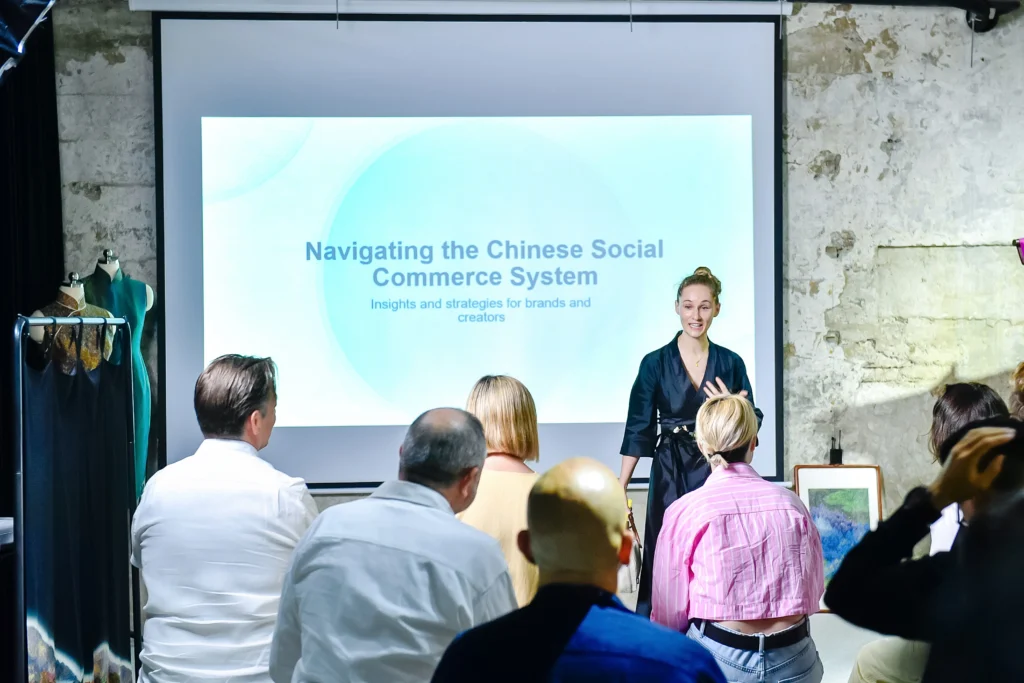
Understanding guochao at a conceptual level is straightforward. Applying it in a way that drives real outcomes requires direct exposure to how China’s systems actually operate.
Ashley Dudarenok works at that intersection. She is a global keynote speaker, bestselling author, and founder of ChoZan and Alarice, with more than 17 years of experience analyzing China’s consumer, tech, and digital ecosystems.
Her work focuses on one thing: translating China’s fast-moving market dynamics into decisions that businesses can actually execute.
How Ashley Works with Companies
- Keynotes and executive briefings
Clear breakdowns of China consumer behavior, guochao, social commerce, and digital ecosystems—focused on what changes and why it matters. - Workshops and strategy sessions
Structured sessions that connect China trends to product, marketing, and growth decisions. - Advisory and expert calls
Direct access to insights on platforms, consumer shifts, and competitive dynamics in China.
Guochao reflects a deeper shift in how demand forms in China. It rewards brands that align product, culture, and execution into one system.
Ashley’s work sits at that exact point—where insight turns into action.
Book a consultation to discuss how these shifts apply to your business and where your current strategy is misaligned.
FAQ: Guochao in China
1. How is guochao different from traditional “Made in China” products?
Guochao products carry cultural meaning, not just origin. They integrate Chinese aesthetics, symbols, and identity into design and storytelling, while traditional “Made in China” products focus primarily on manufacturing rather than cultural expression.
2. Which industries are most influenced by guochao today?
The guochao trend has expanded far beyond fashion into beauty, food, technology, and lifestyle categories. Domestic brands across sectors now integrate cultural elements, which shows how widely this movement shapes modern consumption.
3. How does guochao influence product design decisions?
Design under guochao starts with cultural references and adapts them into modern formats. Brands draw on heritage, then reinterpret materials, colors, and patterns to align with current consumer tastes rather than copying traditional forms directly.
4. Why do younger consumers drive the guochao movement?
Younger consumers grew up during China’s economic rise and show stronger cultural confidence. This shapes their preferences toward domestic brands that reflect identity and heritage in ways that feel relevant to their daily lives.
Social platforms accelerate guochao adoption by turning cultural products into visible trends. Influencers and user-generated content help validate products quickly, thereby increasing trust and driving faster consumer adoption across categories.
6. Can foreign brands participate in the guochao trend successfully?
Foreign brands can participate in guochao China, but success depends on cultural understanding and local integration. Superficial design changes rarely work, while collaborations and deep cultural alignment improve acceptance and credibility.
7. How does guochao impact brand perception in China?
Guochao shifts perception by increasing trust in domestic brands. Consumers now associate local products with quality, innovation, and cultural relevance, which challenges the historical dominance of international brands.
8. What is guochao 3.0, and why is it important?
Guochao 3.0 represents a more advanced phase where cultural identity combines with modern craftsmanship and design. It reflects a deeper integration of heritage and innovation, which strengthens long term brand value and differentiation.
9. How does guochao affect pricing and brand positioning?
Brands aligned with guochao can command higher prices because cultural relevance increases perceived value. Consumers are willing to pay more for products that reflect identity alongside quality and design.
10. Why is guochao considered a long term shift rather than a short-term trend?
The Guochao movement reflects structural changes in consumer identity and cultural confidence. As domestic brands continue to improve quality and design, this preference becomes embedded in long-term consumption patterns rather than temporary behavior.