
Tmall vs Taobao describes the two primary retail platforms inside Alibaba’s ecommerce ecosystem. Taobao operates as a discovery marketplace where consumers explore products and compare sellers. Tmall functions as a brand-controlled retail platform where verified flagship stores convert that discovery into trusted purchases.
Search interest around Tmall vs Taobao often assumes the two platforms compete for the same role inside China’s ecommerce market. In reality, Alibaba structured them as complementary layers within a unified commerce system.
Tmall vs Taobao: Key Differences
Although the two platforms belong to the same Alibaba ecosystem, they serve very different roles in China’s ecommerce system. The table below summarizes how Taobao and Tmall differ in merchant structure, consumer behavior, and transaction environment.
| Feature | Taobao | Tmall |
| Core role | Product discovery and price comparison | Brand-controlled retail and verified purchases |
| Merchant type | Independent sellers, small manufacturers, resellers | Verified brands and authorized distributors |
| Platform structure | Open marketplace with low entry barriers | Curated marketplace requiring brand verification |
| Consumer behavior | Browsing, trend exploration, experimentation | Confident purchasing from official brand stores |
| Trust mechanism | Seller reputation scores, reviews, transaction history | Brand verification, security deposits, supply chain checks |
| Pricing dynamics | Often, lower prices are due to intense seller competition | Typically stable pricing reflecting official brand channels |
| Product variety | Extremely broad “long-tail” assortment | Focused brand catalogs and official product lines |
| Typical purchase stage | Early discovery and product exploration | Final purchase and after-sales service |
Understanding these structural differences helps explain why Alibaba maintains both platforms. Taobao generates discovery traffic and product experimentation, while Tmall converts that demand into brand-verified retail transactions.
Alibaba’s Commerce Architecture in 2026
To understand Tmall vs Taobao, it helps to look at how Alibaba structured its domestic retail infrastructure. The company built separate environments that serve different functions in the consumer purchase process.
Taobao as the Consumer Gateway
Taobao remains the main consumer entry point into Alibaba’s retail ecosystem.
The platform hosts a large merchant base, including small manufacturers, resellers, and experimental brands. This environment produces a wide product variety and rapid product experimentation.
Consumers typically use Taobao to
• explore new product categories
• compare price ranges
• evaluate seller reputation
• observe products in livestream demonstrations.
Platform updates reported during 2025 strengthened these discovery features through recommendation feeds and creator-driven product content.
Tmall as the Brand Retail Layer
Tmall operates under a stricter merchant model that emphasizes brand credibility.
Only verified merchants can open official flagship stores. Companies must provide documentation confirming brand ownership and meet platform service requirements.
Brand flagship stores allow companies to control
• product catalog presentation
• pricing strategy
• customer service standards
• brand storytelling.
Global companies such as Nike, Apple, and L’Oréal operate large flagship stores on Tmall because the platform supports structured brand retail.
Consumers often complete purchases on Tmall when they want confidence that products come from authorized brand channels.
The Consumer Journey: From Curiosity to Certainty
The platform architecture described earlier reflects a specific pattern of consumer behavior. Shoppers in China rarely move from discovery to checkout in a single step. Instead, they pass through two stages that align with the roles of Taobao and Tmall inside Alibaba’s ecosystem.
Understanding this journey explains why the company continues to operate both platforms rather than merging them.
Phase One: Discovery on Taobao
The journey often begins without a specific purchase goal. Many users open Taobao to explore products, follow trends, or see what other shoppers are buying.
They scroll through feeds, watch short livestream segments, and encounter products shared in social conversations across WeChat groups or community forums. These interactions expose users to new merchants, small design studios, and emerging product categories.
Discovery behavior dominates large portions of Taobao activity. Users frequently bookmark products, save listings to wish lists, or remember brands they encountered while browsing. The goal at this stage is not immediate purchase. The goal is to increase product awareness and explore the category.
Phase Two: Evaluation and Conversion
Once a product captures attention, consumers shift from browsing to verification. They compare listings across Taobao and Tmall to assess price differences, seller credibility, and the presence of an official brand store. This comparison process allows consumers to evaluate several signals at the same time
• price differences between merchants
• review depth and customer feedback
• seller reputation scores
• the existence of an official brand store.
If the brand operates a flagship store on Tmall, many shoppers prefer to complete their purchase there. The official store provides stronger assurance about product origin and after-sales support.
Consumers rarely choose one platform over the other. They use both environments to gather different types of information before making a final decision.
The Mechanics of Trust in Alibaba’s Marketplace

Alibaba’s marketplace operates across two environments that serve different kinds of transactions. Discovery-driven marketplaces require one form of trust. Brand-controlled retail environments require another. Taobao and Tmall, therefore, rely on distinct credibility systems that address different consumer concerns.
Taobao Trust System
Trust in Taobao builds over time through accumulated seller history and transaction performance. Buyers often judge reliability through a visible credit system that records seller activity over time. Seller reputation grows through long-term transaction records and consistent customer feedback.
Main tools
- credit rating symbols such as hearts, diamonds, and crowns that indicate seller longevity
- detailed buyer reviews and transaction history
- Real Experience Scores that measure product quality, logistics speed, and service standards.
Platform data from 2025 shows that stores with Real Experience Scores above 4.8 recorded transaction growth more than twice the average. The recommendation algorithm gives sellers with stronger performance metrics greater visibility.
Taobao also introduced broader quality indicators that measure negative product feedback and overall customer satisfaction. Sellers who violate rules on counterfeit products, misleading descriptions, or abnormal shipping records lose exposure to traffic.
Tmall Trust System
Tmall builds credibility through verification and legal accountability rather than long-term seller reputation. Consumers trust Tmall because stores represent verified brands or authorized distributors.
Verification mechanisms
- official flagship store status tied to verified business licenses
- trademark documentation and supply chain verification
- strict platform approval before store launch.
Financial accountability
Tmall requires security deposits from merchants. These deposits function as a financial safeguard during disputes and reinforce seller accountability.
The platform also conducts inventory audits for sensitive product categories, including cosmetics, infant formula, and health products. These controls reinforce confidence that products originate from legitimate brand channels.
Why Two Trust Systems Exist
Different marketplace structures require different trust mechanisms.
Taobao supports a long tail of small sellers and experimental products. Reputation scores and transaction feedback provide sufficient confidence for everyday purchases.
Tmall concentrates verified brands where authenticity and product origin matter more. Verification systems, financial deposits, and supply chain audits provide the credibility required for higher-value transactions.
Both trust models operate inside Alibaba’s broader credibility infrastructure. The platform monitors suspicious behavior across marketplaces and applies consistent enforcement mechanisms to protect consumers and legitimate merchants.
What International Brands Often Misunderstand About Tmall vs Taobao

Many international brands entering China assume Tmall and Taobao compete for the same role. In reality, Alibaba designed them as complementary layers in the consumer purchase journey rather than interchangeable marketplaces.
A common mistake is expecting a Tmall flagship store to generate discovery traffic. Tmall mainly functions as a conversion environment. Product discovery usually happens earlier on Taobao or on content platforms such as Douyin and Xiaohongshu.
Another misunderstanding involves price positioning. Some brands avoid Taobao because they associate it with low-cost sellers. However, Taobao often provides valuable market visibility, enabling companies to observe emerging demand, analyze pricing behavior, and test new product concepts.
Operational strategy creates another challenge. Brands sometimes manage both platforms with identical tactics. In practice, each environment requires different capabilities. Taobao rewards fast product iteration and content-driven discovery, while Tmall requires disciplined brand management, verified supply chains, and structured customer service.
Brands that recognize this functional split use Taobao to observe demand and generate exposure, then use Tmall to convert that demand into trusted brand transactions.
Brand Strategy of Tmall vs Taobao: How Companies Use Taobao and Tmall Together
The consumer journey and trust systems described above shape how brands operate within Alibaba’s marketplace. Companies rarely treat the platforms as interchangeable retail channels. Instead, they assign different commercial roles to each platform based on how Chinese consumers discover products and where they prefer to complete purchases.
Understanding this division helps explain how successful brands structure their ecommerce presence in China.
Taobao as a Market Testing Environment
Many brands use Taobao to observe early demand patterns and test new products before expanding distribution.
The platform’s large merchant ecosystem provides visibility into pricing behavior, consumer feedback, and emerging category trends. Manufacturers and smaller brands often introduce products through limited releases and small production runs.
Early customer responses reveal how consumers react to product design, packaging, and price positioning. Brands can then refine the offer before committing to broader retail distribution.
This environment allows companies to experiment quickly and identify which products deserve larger investment.
Tmall as the Core Brand Retail Channel
Once demand stabilizes, brands usually concentrate their main retail operations on Tmall. The platform allows companies to operate official flagship stores that present products in a controlled brand environment.
Inside these stores, companies manage
- product catalog presentation
- pricing consistency
- customer service standards
- promotional campaigns.
Brand flagship stores also support coordinated product launches and exclusive bundles that strengthen brand positioning. International companies such as Nike, Apple, and L’Oréal rely heavily on this infrastructure to maintain consistent retail experiences in China.
Coordinated Platform Presence
For most brands, the goal is not to choose between platforms. The goal is to coordinate activity across both environments.
Taobao supports product exposure, merchant experimentation, and early-stage consumer interest. Tmall provides the retail infrastructure that enables brands to convert demand into purchases and develop repeat customers.
This coordinated approach reflects how the Alibaba ecosystem distributes retail functions across multiple environments.
88VIP: The Loyalty Engine Connecting Taobao and Tmall
Alibaba reinforces its dual-platform strategy through its 88VIP membership program. The program connects consumer benefits across both marketplaces and encourages shoppers to remain inside Alibaba’s retail ecosystem.
Members receive advantages such as shipping privileges, special discounts, and access to exclusive brand events. These incentives apply across both Taobao browsing activity and purchases completed through Tmall flagship stores.
Industry data shows that 88VIP members generate a disproportionate share of sales for many leading brands. Their annual spending levels are significantly higher than those of average users.
This membership structure reveals an important aspect of Alibaba’s strategy. Consumers do not maintain separate relationships with Taobao and Tmall. Instead, they move fluidly between the two platforms while remaining inside the same ecosystem.
Festival Mechanics: How Singles Day Reveals the Taobao Tmall Split
The economic models described above become most visible during peak shopping events. Singles Day reveals how Taobao and Tmall divide labor when transaction volume spikes. The 2025 event provided fresh data confirming the functional split.
Pre-Festival: Discovery on Taobao
The Singles Day journey begins weeks before November 11 on Taobao. Users participate in gamified activities that drive discovery. They collect coins by browsing products, share links with friends to unlock team bonuses, and watch live streaming sessions where influencers preview deals.
These activities keep users within the Alibaba ecosystem, helping them discover products they might not have considered.
Discovery behavior peaks during this period. Users browse more categories than usual and explore items from smaller sellers. The algorithm surfaces products that will later be available on Tmall. Taobao functions as the festival’s discovery engine, generating interest that will convert when the event officially begins.
The Event: Conversion on Tmall
On November 11, the action shifts to Tmall. The platform handles transaction processing, flash sales, and first-hour discounts. Tmall reported gross merchandise volume grew 11.11 percent, the strongest performance in four years. Nearly 600 brands exceeded 100 million yuan in platform sales.
The 88VIP member program showed particular strength. Membership exceeded 53 million users, with daily active 88VIP buyers rising 39 percent year on year. These members spend 9 times more annually than non-members and account for more than half of all sales for top brands.
Their behavior confirmed the pattern driving Alibaba’s two-platform strategy. They browsed on Taobao for discovery. They bought on Tmall for confidence and service.
Cross-Platform Behavior
The most telling 2025 data involved cross-platform movement. Instant commerce orders for participating Tmall brands increased by 198% compared with September 2025 levels. Consumers discovered products through Taobao and completed purchases on Tmall, often receiving them within hours through the combined infrastructure.
This integration demonstrated the functional split in action. Taobao generated initial interest. Tmall provided trust infrastructure and fulfillment. Users who discovered products on Taobao during the pre-festival period completed purchases on Tmall at higher rates than in previous years.
Strategic Implications for Brands and Sellers
For brands and sellers, the functional split between Taobao and Tmall determines where marketing budgets flow, how product launches are staged, and which platform ultimately captures the transaction.
The Dual Presence Imperative
The most successful brands in 2026 maintain a presence on both platforms. They use Taobao for discovery and market testing. They use Tmall for conversion and loyalty building.
Testing begins on Taobao, where entry barriers are low. The brand experiments with product concepts, pricing strategies, and messaging. Once product market fit is validated, the brand opens a Tmall flagship store to capture premium buyers who prioritize authenticity over price. Both presences are maintained indefinitely. The Taobao store serves price-sensitive shoppers. The Tmall store serves brand loyalists.
The 2025 data support this approach. Brands that maintained active presences on both platforms achieved 40 percent higher first-year gross merchandise value than those operating on Tmall alone.
Category Specific Strategies
High-stakes categories where authenticity is paramount belong on Tmall. Electronics, infant formula, cosmetics, and premium apparel convert here. Consumers pay a premium for verified supply chains and standardized return policies.
Low-stakes categories where discovery drives sales belong on Taobao. Fashion accessories, home decor, and niche products thrive here. Consumers enjoy browsing without commitment and value the variety that Taobao’s long tail provides.
Operational Requirements
Taobao demands agility. The platform moves quickly, trends shift rapidly, and sellers must adapt continuously. Success requires strong content creation, community management, and responsiveness to emerging patterns.
Tmall demands rigor. The platform requires documentation, verification, and compliance with structured processes. Success requires strong supply chain management, customer service, and brand-building expertise.
Brands that attempt to run both presences with a single undifferentiated approach underperform. Successful operators maintain separate teams with distinct skill sets.
The Triad Model
The 2026 environment requires accounting for Douyin. The platform now commands approximately 24 percent of e-commerce gross merchandise volume and has fundamentally altered discovery expectations.
Top performers now combine three channels. They use Taobao for testing and market validation. They use Tmall for branding and loyalty. They use Douyin for virality and reach. This approach reduces dependency on any single algorithm and diversifies risk across different consumer behaviors.
Market Forces That Reshaped the Ecosystem
Several shifts across China’s ecommerce market forced Alibaba to adjust how Taobao and Tmall operate.
Douyin changed product discovery
Short video commerce altered how consumers encounter products online. Douyin’s recommendation algorithm places product content directly inside entertainment feeds. This format compresses the path from discovery to checkout into a short interaction cycle.
Industry reports published during 2025 showed Douyin’s ecommerce gross merchandise volume growing about 35 percent year over year. Its market share approached one quarter of the national online retail market.
This growth placed pressure on Alibaba’s discovery traffic. Taobao responded by strengthening recommendation feeds, livestream rooms, and creator-driven product content.
Pinduoduo intensified price competition
Pinduoduo drove aggressive price competition through group-buying mechanisms and large-scale subsidies. This model created sustained pressure on margins across several consumer product categories.
Regulatory guidance released by the State Administration for Market Regulation in early 2026 discouraged extreme subsidy competition across digital marketplaces. Price alone became a less reliable competitive lever.
Tmall, therefore, strengthened its focus on brand credibility, service guarantees, and official flagship store infrastructure.
Platform governance also evolved
In February 2026, the government-backed 信用中国 initiative released guidance requiring stronger platform responsibility in AI-generated fraud disputes. Some sellers had used generative AI tools to create manipulated damage photos during return claims.
Alibaba deployed a joint image verification system designed to detect altered photos. Both Taobao and Tmall integrated this technology into dispute resolution processes. The initiative showed that the platforms share technical infrastructure even though their retail environments remain distinct.
Alibaba reorganized its commerce divisions
Alibaba reorganized its domestic ecommerce operations in early 2026. The company created two umbrella groups called China Digital Commerce and International Digital Commerce.
Taobao and Tmall now operate under the same leadership at China Digital Commerce. This structure treats the platforms as coordinated retail layers that divide responsibilities between discovery traffic and brand conversion.
The comparison between Taobao, Tmall, and Alibaba, therefore, misses the underlying system design.
Why Alibaba Maintains Two Retail Environments
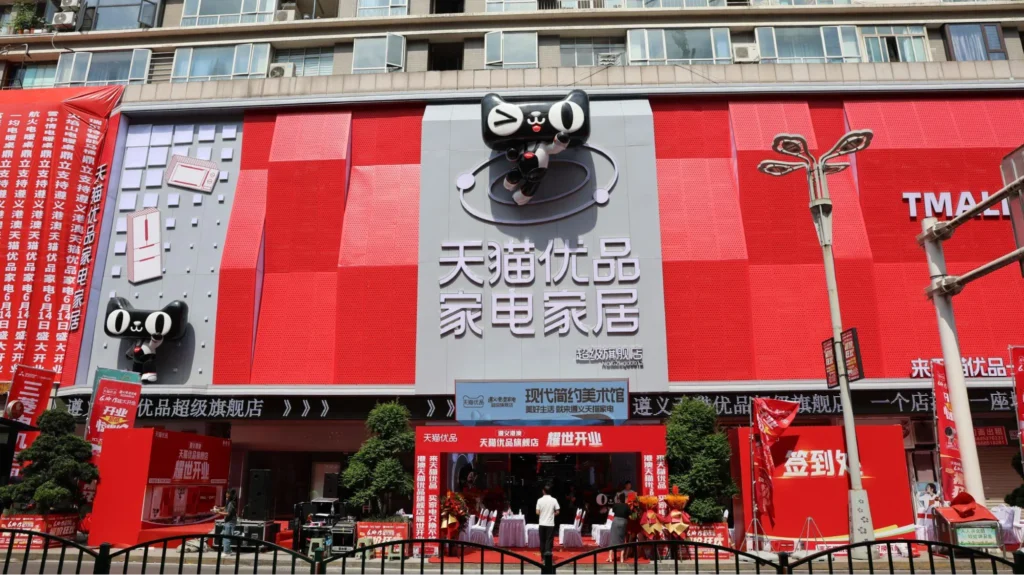
Alibaba maintains separate retail environments because discovery behavior and brand-controlled retail require different marketplace structures.
Taobao supports experimentation and product discovery. The platform allows millions of independent sellers, manufacturers, and small studios to introduce new products quickly. This environment generates a constant flow of emerging trends, niche products, and price competition.
Tmall operates under a more controlled structure designed for brand retail. Verified merchants run official flagship stores, provide standardized customer service, and maintain consistent pricing. These controls allow consumers to purchase with greater confidence in product authenticity and after-sales support.
Combining both environments inside a single marketplace would create structural conflicts. Open marketplaces favor flexibility and rapid product turnover, while brand-controlled retail depends on verification, documentation, and operational discipline.
By separating these functions, Alibaba allows each platform to optimize for a different stage of the consumer purchase process. Taobao generates discovery and experimentation, while Tmall converts that demand into trusted brand transactions.
The Bottom Line
Taobao and Tmall serve different roles inside Alibaba’s ecommerce ecosystem rather than competing as separate marketplaces. Taobao operates as a discovery platform where consumers explore products, compare sellers, and discover emerging trends. Tmall functions as the brand-controlled retail layer where verified flagship stores convert that interest into trusted purchases.
This division reflects how Chinese consumers actually shop online. Discovery happens through browsing, content, and social influence, while final purchases often occur through official brand channels.
As China’s ecommerce market evolves and competition from platforms like Douyin intensifies, the distinction between discovery and conversion becomes even more important. Brands that understand how Taobao and Tmall operate together can structure their platform strategy more effectively and capture demand across the entire consumer journey.
Learn From China’s Digital Innovation With Ashley Dudarenok
Understanding how platforms like Taobao and Tmall shape China’s ecommerce ecosystem is only the first step. The bigger opportunity lies in translating China’s digital innovation into practical strategies that global companies can apply in their own markets.
Ashley Dudarenok helps organizations interpret the fast-moving Chinese digital landscape and turn those insights into business advantage. As the founder of the China digital consultancy ChoZan and the marketing agency Alarice, she works with global brands to understand Chinese consumers, digital ecosystems, and emerging retail models.
Ashley supports companies through several formats:
- Strategy consulting and research: Businesses work with Ashley and the ChoZan team to understand Chinese consumer trends, platform ecosystems, and digital transformation strategies that can inform market entry or global innovation planning.
- Executive keynotes and leadership briefings: Ashley delivers tailored talks on topics such as the future of retail, customer centricity, and lessons global companies can learn from China’s technology ecosystem.
- China learning expeditions and innovation tours: Leadership teams visit China to observe digital innovation firsthand and meet the companies shaping new retail, social commerce, and platform ecosystems.
Ashley’s insights draw on more than a decade of experience studying China’s digital economy and working with global brands navigating the market. Her expertise has been recognized by organizations such as Thinkers50 and Global Gurus, and she regularly advises Fortune 500 companies on digital transformation and China strategy.
If your team wants to understand how China’s most advanced digital ecosystems work and what lessons they hold for global business, you can book a consultation or invite Ashley Dudarenok to speak with your leadership team to explore the opportunities.
FAQs about Tmall vs Taobao
1. Can international brands sell directly on Tmall without a Chinese business entity?
International brands can sell on Tmall Global without establishing a Chinese legal entity. The platform allows overseas merchants to ship products directly from bonded warehouses or international locations while still operating an official flagship storefront for Chinese consumers.
2. What is the difference between Tmall and Tmall Global?
Tmall focuses on domestic brands and companies with Chinese business licenses. Tmall Global allows international brands to sell cross-border products without local registration, often using bonded warehouses and overseas fulfillment to reach Chinese consumers.
3. How does Alibaba prevent counterfeit products on its marketplaces?
Alibaba uses several anti-counterfeit systems, including trademark verification, merchant deposits, algorithmic monitoring, and consumer complaint channels. Tmall adds stricter brand verification, while Taobao relies more heavily on seller reputation systems and transaction history.
4. Why do many Chinese consumers check both Taobao and Tmall before buying?
Consumers often compare listings on both platforms to evaluate price differences, seller reputation, and brand authenticity. Taobao helps identify product options, while Tmall provides official flagship stores that offer stronger assurance about product origin.
5. Is Taobao cheaper than Tmall for most products?
Taobao often offers lower prices because independent sellers and factories compete aggressively. Tmall prices may be slightly higher because products are sold through official brand stores that provide verified supply chains, customer service, and standardized return policies.
6. What types of products sell best on Taobao?
Products with high variety and trend sensitivity perform well on Taobao. Categories such as fashion accessories, niche electronics, hobby products, and home decor thrive because consumers enjoy browsing diverse options and discovering new designs.
Luxury and premium brands choose Tmall because it offers verified flagship stores, robust intellectual property protection, and consistent pricing controls. The platform also supports official brand storytelling and loyalty programs that help maintain premium positioning.
8. How does Taobao support small manufacturers in China?
Taobao gives factories and small studios direct access to consumers without traditional retail intermediaries. Manufacturers can launch products quickly, test demand with small batches, and adjust production based on customer feedback from reviews and sales data.
9. Does Alibaba use artificial intelligence in Taobao and Tmall operations?
Alibaba integrates artificial intelligence across both platforms to recommend products, detect fraud, analyze consumer behavior, and optimize search results. AI systems also help identify counterfeit listings and monitor suspicious seller activity.
10. How important are shopping festivals for Tmall and Taobao sales?
Major shopping festivals such as Singles Day and the 618 Festival generate a large share of annual ecommerce revenue. Taobao drives early discovery and promotional activity, while Tmall handles most transactions for brand flagship stores during peak sales periods.
11. Can sellers operate stores on both Taobao and Tmall?
Yes. Many merchants maintain both storefronts. A Taobao store often targets price-sensitive shoppers or experimental products, while a Tmall flagship store focuses on official branding, premium positioning, and long-term customer relationships.
12. Is Taobao similar to Amazon Marketplace?
Taobao shares similarities with Amazon Marketplace because both host independent sellers competing on price and reviews. However, Taobao integrates livestream commerce, social discovery, and algorithmic product feeds more deeply into the shopping experience.