

In our China Economic Mega Report 2025, one of the clearest shifts in Chinese consumer technology is cars changing from a physical product into a software defined vehicles. The consequence shows in the numbers.
In the first two months of 2026, L2-level combined driver assistance penetration in China’s newly sold passenger vehicles reached 69.15%, up 10 percentage points year-on-year, per Ministry of Industry and Information Technology data.
The vehicle operating system has become the primary competitive variable in the world’s largest auto market. What China figured out first, and why that lead compounds, is what this article maps.
What Is a Software Defined Vehicle and Why China Is Setting the Standard
A software defined vehicle (SDV) is a car whose features, performance, and behavior are controlled primarily through software rather than fixed hardware. In a traditional car, changing a driving function required a physical modification or a dealer visit. In an SDV, the same change happens over the air, the way a phone receives a new operating system.
China is one of the fastest-moving SDV markets by deployment. By September 2025, more than 60% of new passenger cars sold in China were equipped with combined driver-assistance systems, according to China’s Ministry of Industry and Information Technology (MIIT).
By the first three quarters of 2025, MIIT data showed that new passenger cars with L2 combined driver-assistance functions had reached 64% penetration, with sales up 21.2% year over year.
The structural reason is China’s EV baseline. By April 2026, new energy vehicles accounted for 53.2% of total new-car sales in China, meaning the country’s new-car market had already moved past the halfway point into NEV-majority sales.
EV architecture is inherently software-intensive: battery management, motor control, and energy optimization all run on code. When the vehicle fleet went electric at scale, the software-defined transition was already embedded.
The Architecture Gap: Why Chinese Brands Started Where Western OEMs Are Still Trying to Reach
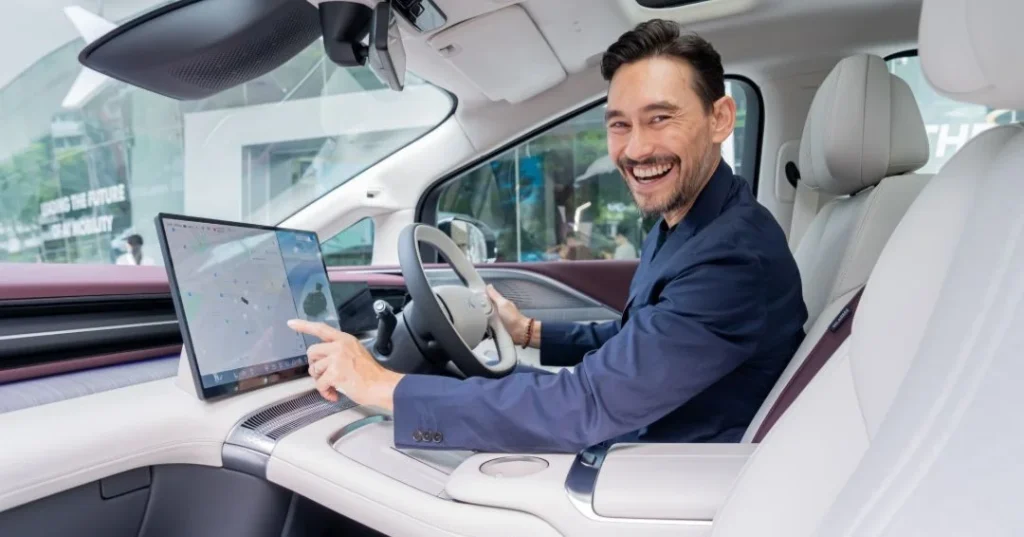
The mechanism behind China’s lead is architectural.
Traditional automakers built vehicles around distributed systems with 70 to 100 separate electronic control units, each controlling one function. Centralizing those into unified computing platforms requires expensive redesigns and organizational restructuring.
Chinese EV brands did not face that problem. NIO, Xpeng, Li Auto, and BYD designed centralized architectures from the start. Over-the-air updates were a founding capability, not a later addition.
From January to August 2025, L2-level and above driver assistance was installed in 87% of new energy passenger vehicles in China, per China Passenger Car Association data.
That deployment scale generates training data no other market produces at comparable volume. Better data feeds better models. Better models reach millions of vehicles through OTA updates. The cycle compounds.
The speed gap is documented. Chinese automakers release new models on roughly two-year cycles. Legacy European and American OEMs operate on five-to seven-year development timelines.
Volkswagen’s internal software unit Cariad faced repeated delays and restructuring before the group shifted more software-development responsibility outside the unit, including a joint venture with Rivian backed by a planned investment of up to $5.8 billion by 2027.
Ford ended its FNV4 next-generation architecture program entirely. These are structural corrections, not minor course adjustments.
The pattern connects to how retail technology adoption cycles in China work across categories. Speed of iteration, at scale, in a software-heavy product, is a compounding advantage. Each cycle widens the gap.
Huawei’s HIMA Model: What Full-Stack Vertical Integration Produces
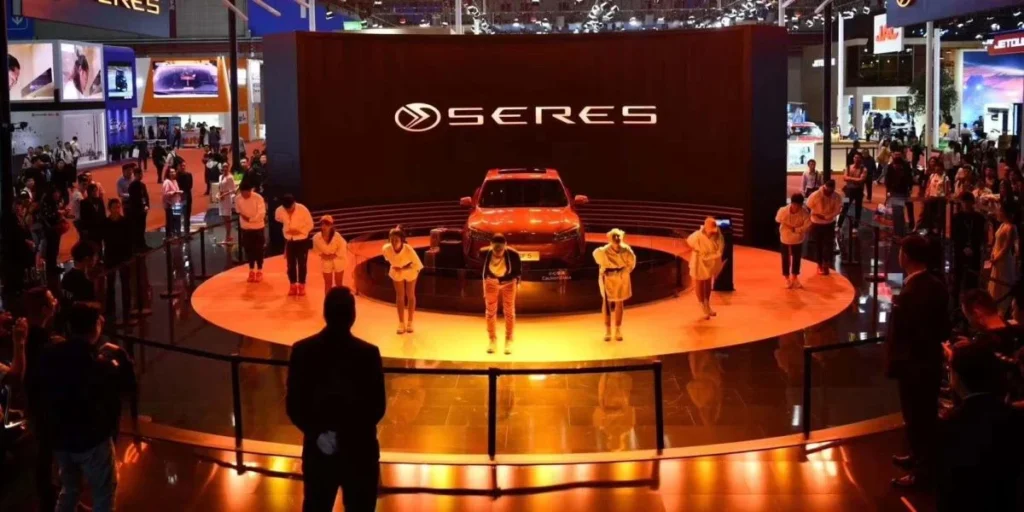
Huawei controls the complete intelligent vehicle stack: Kirin chips, LiDAR sensors, the Qiankun autonomous driving system, the HarmonyOS cockpit software, cloud infrastructure, and cross-device connectivity. Very few global automakers control that range of components internally.
Huawei’s automotive model runs through the Harmony Intelligent Mobility Alliance (HIMA), a partnership with five Chinese manufacturers: Seres, Chery, BAIC, JAC, and SAIC.
Huawei supplies the full intelligent vehicle platform. The partner handles manufacturing. HIMA’s cumulative deliveries exceeded one million units in October 2025, reaching this milestone in 43 months from its first launch. A technology company scaled to one million vehicles in three and a half years without building a factory.
In 2025, AITO delivered more than 420,000 vehicles, making it one of the strongest performers in China’s high-end SUV market. The M9 delivered more than 110,000 units in 2025 and remained the sales champion in the 500,000-yuan class for a second consecutive year, while the M8 delivered more than 150,000 units and led the 400,000-yuan class.
Seres, AITO’s manufacturing partner, reported 472,269 new-energy vehicle sales in 2025, revenue of RMB 165.05 billion (approximately US$24.33 billion), net profit attributable to shareholders of RMB 5.96 billion (approximately US$878.4 million), and a 28.8% gross margin on new-energy vehicles.
The unit economics of Huawei’s platform-supplier model are no longer theoretical; they are visible in a full-year profit-and-volume cycle.
The response from Western brands signals how far the shift has gone. BMW announced it will integrate HarmonyOS NEXT into its Neue Klasse models produced in China from 2026 onward. A German luxury automaker is adapting its in-car software to a Chinese technology company’s operating system. That is not a minor localization adjustment.
Three Chinese SDV Models Global Strategists Need to Understand
Huawei’s platform-supplier model gets the most attention. Three other models carry different strategic lessons.
BYD operates the most self-contained architecture. It makes its own semiconductors through BYD Semiconductor, develops its in-car software stack internally, and controls battery chemistry, motor design, and energy management as one integrated system.
The cost economics that come from owning every layer are visible in what BYD can price a vehicle at while maintaining a margin. No major Western automaker controls that full range. For the depth of that vertical reach, the BYD full-stack integration analysis on ChoZan maps the architecture precisely.
Xiaomi built the car as a continuation of the smartphone, not as a separate category. The SU7 runs on Xiaomi HyperOS, tying the car into the same phone-car-home ecosystem that connected 1.079 billion IoT devices globally by the end of 2025, excluding smartphones, tablets, and laptops.
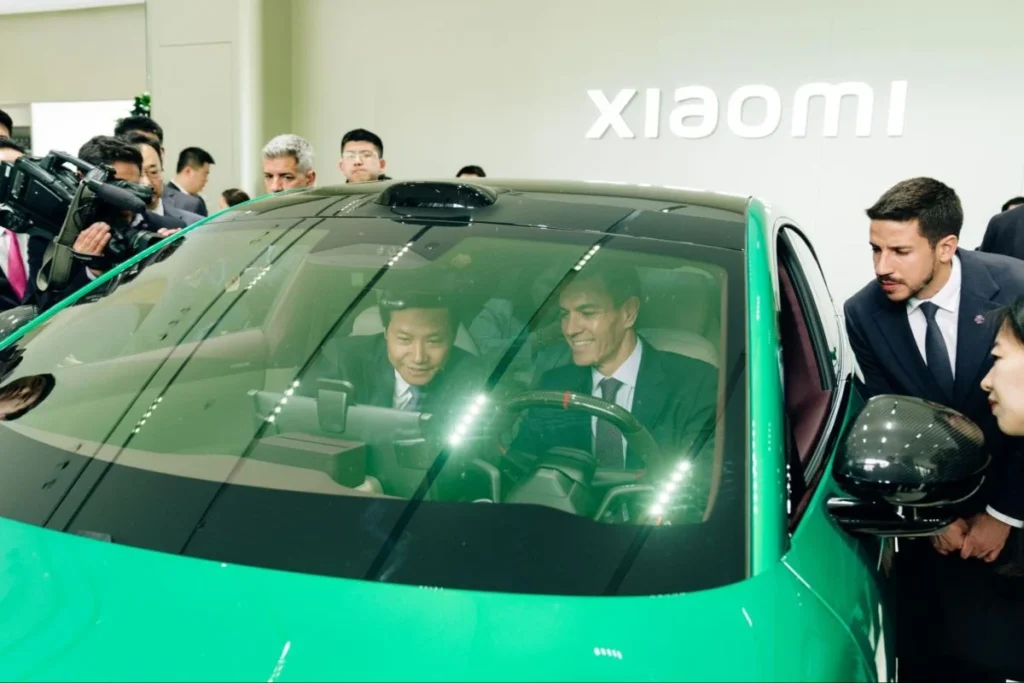
When the phone enters the cabin, the vehicle recognizes it instantly. The car also connects directly to over 1,000 Xiaomi smart home devices. Understanding the connected device networks that make this cross-device experience possible clarifies why the Xiaomi model has no direct Western parallel.
NIO chose a third path: its Banyan operating system combined with a battery-as-a-service subscription. Software and energy become ongoing revenue, not a one-time sale. Three companies, three different theories about where value concentrates in an SDV world. The global industry has not yet produced a clear equivalent to any of them.
What Global Automakers Are Doing With China’s Lead
As China’s automotive software advantage becomes clearer, the response from Western automakers has moved from skepticism to concrete structural action.
When I speak with global automotive teams about this shift, the reaction follows a consistent pattern. They understand the technology difference. The harder question is what organizational changes the gap actually demands, and how fast those changes need to happen.
The partnership response is already underway. BMW is integrating Huawei’s HiCar and HarmonyOS ecosystem services for China-produced models from 2026.
Volkswagen is running two parallel SDV development tracks: a China Electronic Architecture developed with XPeng for the Chinese market, and a Rivian joint venture in the West focused on zonal architecture and software for future software-defined vehicles.
Renault cut the new Twingo’s development timeline to 21 months, using its Shanghai ACDC R&D centre to accelerate development and reduce costs.
When I work with international leadership teams on this, the first question is usually about timelines. The honest answer is that the development cycle gap is the core problem. Chinese brands can release a new software-defined model in two years. That forces a different cadence for testing, validation, and market response than any Western OEM currently operates on.
China’s AI strategy underpins much of what makes this speed possible. Policy infrastructure, talent pipelines, and data access are aligned to support fast iteration in intelligent vehicles, not just in general AI development.
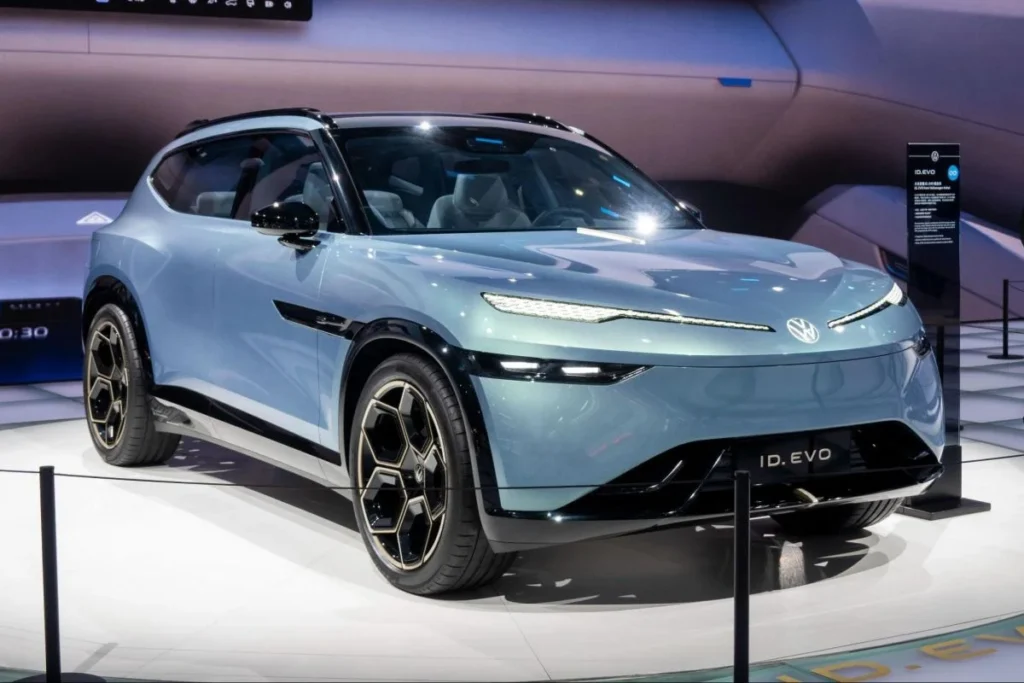
What Does China’s Automotive Software Race Mean for Your Strategy?
As China’s software defined vehicle lead becomes a competitive pressure on global automakers, executive teams face a harder question. How do you close a gap that compounds with every model cycle?
Ashley Dudarenok works with global executive teams and conference organizers to translate China’s automotive and technology shifts into sharper strategic frameworks, clearer competitive context, and stronger decision-making.
She helps leadership teams understand how China’s AI strategy and intelligent vehicle development are producing competitive pressures that extend beyond the auto industry into consumer tech, retail, and branded technology sectors.
Invite Ashley Dudarenok to speak on China’s automotive technology lead, software defined vehicles, and the strategic implications for global industries. Her sessions give senior teams a grounded view of what China’s technology competition looks like from the inside.

Software Defined Vehicle FAQs for Global Strategists
Below are concise answers to the questions executives, analysts, and event organizers ask most about software defined vehicles and China’s competitive position.
1. What Is a Software Defined Vehicle?
A software defined vehicle is a car whose core features, performance settings, and safety functions are controlled by software and can be updated remotely, without physical dealer visits.
2. How Does a Software Defined Vehicle Differ from a Traditional Car?
Traditional cars rely on fixed vehicle architecture with dozens of separate control units. SDVs use centralized computing platforms, enabling features to be added, changed, or removed after purchase via OTA.
3. What Is a Software Defined Vehicle Platform?
A software defined vehicle platform is the centralized computing and software stack that manages all vehicle functions. Huawei’s HarmonyOS-based cockpit system and BYD’s in-house OS are examples operating at scale in China.
4. What Does OTA Mean in Cars?
OTA stands for over-the-air update. It allows automakers to push new software to a vehicle remotely, adding features, fixing issues, or improving performance without requiring the owner to visit a service center.
5. What Is a Smart Cockpit in Chinese EVs?
A smart cockpit is the in-vehicle digital interface managing infotainment, navigation, voice control, and cross-device connectivity. Huawei’s HarmonyOS cockpit integrates phone, home, and car into a single interface layer.
6. How Does HarmonyOS Connect Cars to Other Devices?
HarmonyOS links vehicles to Huawei phones, smart home devices, and wearables through a shared software layer. A user’s phone connects automatically to the car, carrying apps, contacts, and settings across devices.
7. What Is the Connected Car Ecosystem in China?
China’s connected car ecosystem links vehicles to phones, smart home networks, charging infrastructure, and cloud services. It spans hardware makers, software platform providers, and automakers operating under shared standards.
8. Which Chinese Brands Lead in Software Defined Vehicle Development?
BYD, Huawei’s HIMA alliance, NIO, Xpeng, and Xiaomi each lead different parts of China’s SDV field. BYD leads on vertical integration, Huawei on platform supply, and Xiaomi on cross-device consumer experience.
9. What Is Vertical Integration in Automotive Software and Why Does It Matter?
Vertical integration means controlling chips, software, sensors, and cloud in-house. It cuts supplier dependency, speeds development cycles, and improves cost control, all visible in BYD’s and Huawei’s margin profiles.
10. How Quickly Do Chinese Automakers Release Software Updates?
Chinese EV brands typically release major OTA updates monthly, with minor feature pushes more frequently. New vehicle models follow roughly two-year cycles, compared to five-to-seven years for most Western legacy OEMs.
11. What Does China’s Software Defined Vehicle’s Lead Mean for Global Automakers Competitively?
China’s SDV advantage forces industry transformation for global OEMs. Brands must redesign development cycles, rethink supplier relationships, and decide how much software IP to build internally versus source from tech platform providers.