
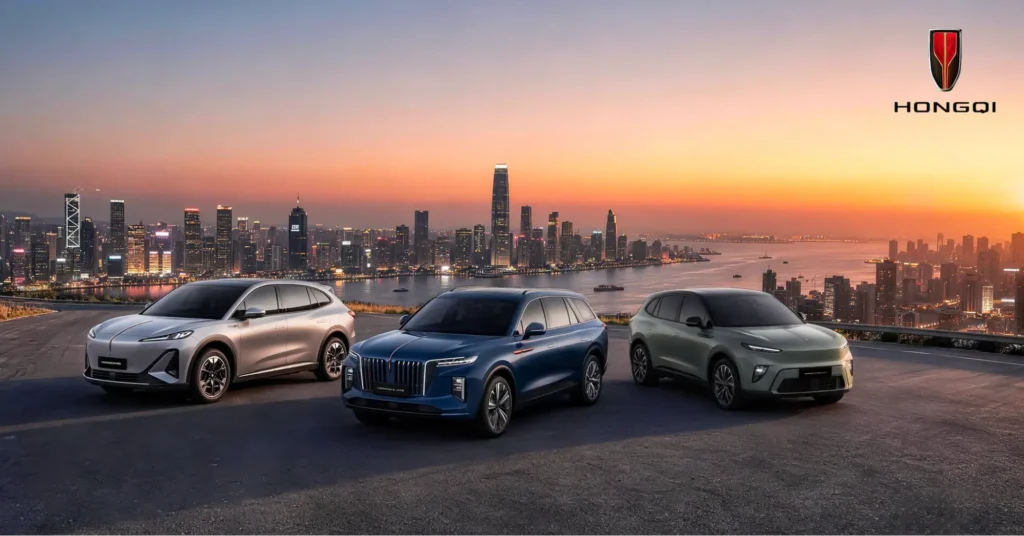
The global luxury car market has operated on a predictable axis for decades. German engineering dominated the executive sedan. British marques defined ultimate prestige. The conversation about Chinese automobiles has centered on volume, affordability, and, more recently, electric-vehicle scale. A structural shift is rewriting that narrative. The Hongqi car is moving from a symbol of domestic political ceremony to a credible contender in the international premium mobility market.
This matters for strategy teams tracking China’s brand premiumization. It signals that Chinese automakers are no longer content chasing volume segments. They are building cultural, technical, and symbolic capital inside the world’s most demanding consumer categories.
Why Hongqi Car Matters In China’s Luxury Auto Push
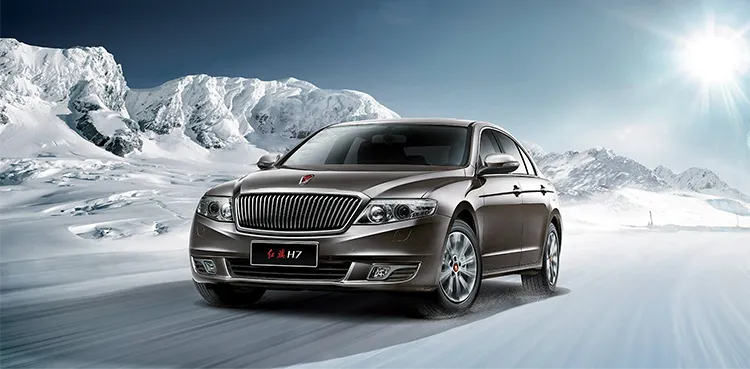
The modern Hongqi auto story sits at the intersection of national prestige and auto premiumization. Official brand history says the first Hongqi sedan was born in 1958 and became the first independently produced car in China. That origin gives Hongqi cars a status code that few Chinese car brands can claim.
The numbers now make the brand relevant beyond symbolism. Gasgoo reported that FAW Hongqi reached 460,063 vehicle sales in 2025, up 11.7 percent year-on-year. New energy product sales reached 149,000 units, up 29.8 percent, while the Hongqi Golden Sunflower series delivered 1,404 units. For executives, the key signal is clear. Hongqi luxury car demand is shifting from official use to private, premium, and global markets.
Western luxury carmakers built prestige through motorsport, engineering, celebrity use, and dealership ritual. Hongqi China starts from another base: state symbolism, Chinese aesthetics, and a product ladder across combustion, hybrid, electric, and bespoke models.
The harder question is “Can Chinese luxury travel across markets without losing its cultural origin?”
From State Luxury To A Global Product Ladder
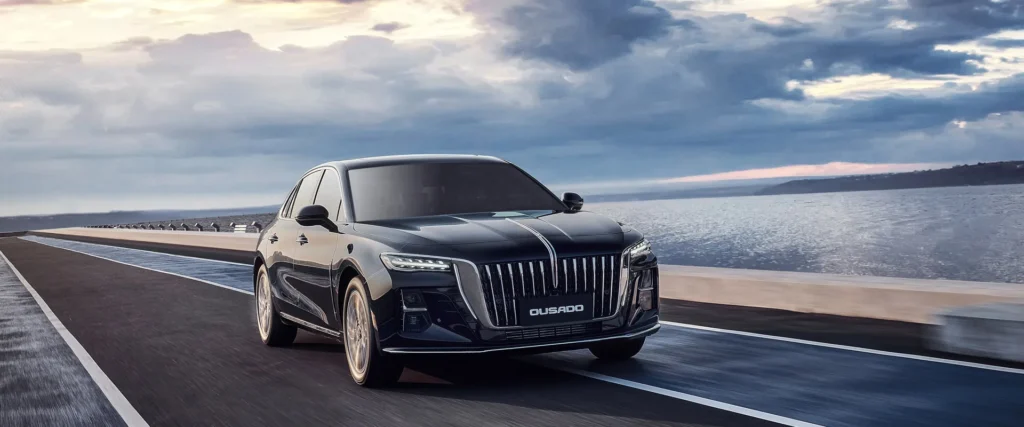
The current Hongqi portfolio extends far beyond one flagship limousine. It’s official global model gate lists sedans, SUVs, EVs, and Golden Sunflower products, including Hongqi H9, Hongqi E-HS9, Hongqi E-QM5, Hongqi HS5, EHS7, EH7, HS7, H6, and Guoya.
This breadth provides the brand with entry points across different income levels, use cases, regulations, and energy preferences.
Hongqi H9 And The Business Sedan Signal
The Hongqi H9 remains one of the brand’s strongest image carriers. An 86 percent high-strength steel body, eight airbags, upgraded AEB, lane-keeping, blind-spot monitoring, advanced cruise control, automatic parking, 19 smart functions, and the Qisi Smart Connectivity system.
Buyers are asking whether the car looks prestigious, then comparing its safety, comfort, software, and business-class cabin value against established premium sedans. Cultural storytelling attracts attention. Ownership experience converts attention into trust.
Hongqi E-HS9 And The Premium EV Test
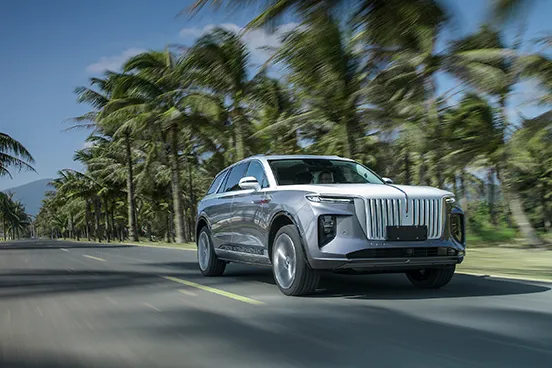
The Hongqi E-HS9 is the brand’s clearest global EV statement. It is a full-size smart electric SUV with a deluxe cabin layout, panoramic sunroof, two-tone body design, and large-capacity batteries.
The Hongqi e-HS9 price conversation is central. Hongqi must win through visible cabin value, confidence in range, charging support, warranty clarity, and after-sales depth. This is where premium EVs from Chinese automakers pressure legacy brands with size, features, digital interface, and pricing discipline.
Hongqi E-QM5, Hongqi H5, And Volume Credibility
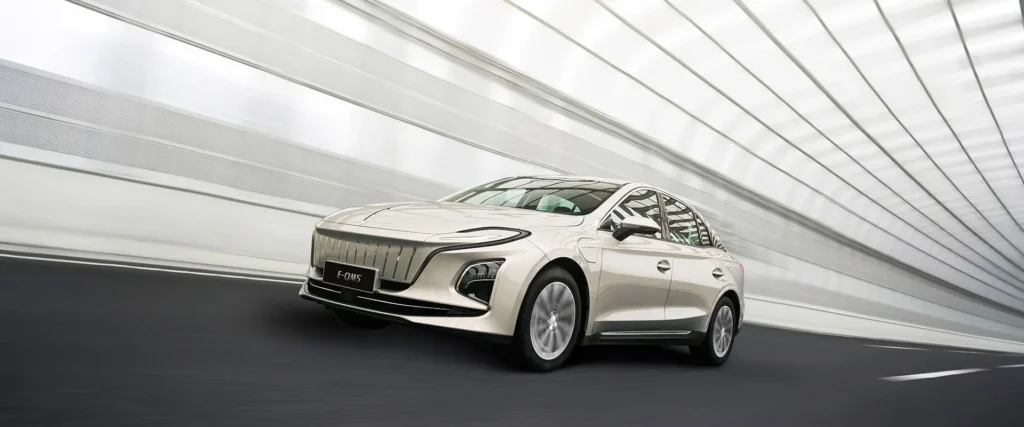
Luxury expansion also depends on volume discipline. Hongqi E-QM5 gives the brand a practical electric sedan proposition. Its official page lists a 431 km NEDC range, 20 percent-to-80 percent charging in 30 minutes, smart connectivity, and active safety systems such as FCW, AEB, and driver fatigue monitoring. Hongqi H5 and Hongqi HS5 broaden the brand’s reach for buyers seeking premium design without ultra-luxury pricing.
This is where Hongqi car price searches become strategic. Price positioning will decide if Chinese luxury cars are seen as value-rich alternatives, true premium rivals, or niche diplomatic curiosities.
Hongqi Golden Sunflower And The Ultra Luxury Ambition
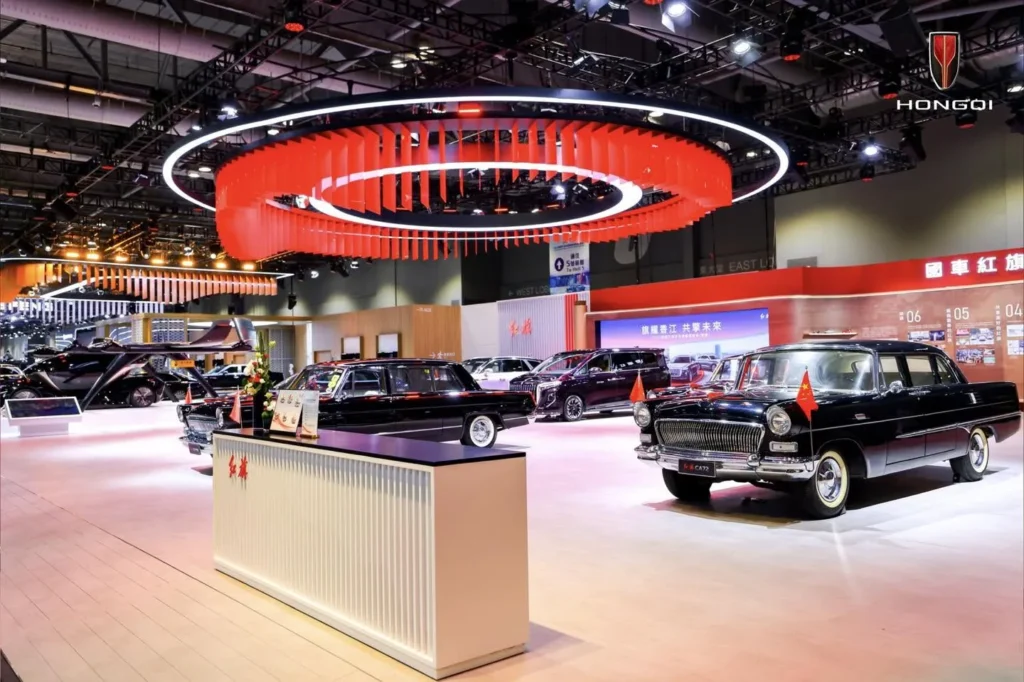
The Hongqi Golden Sunflower series is the clearest attempt to place Chinese craftsmanship into the ultra-luxury conversation. In June 2025, FAW Hongqi showed GUOYAO, GUOLI, GUOYA, and GUOYUE at the International Automotive and Supply Chain Expo in Hong Kong.
The brand said all four flagship models were fully reserved on the first day. This matters because Chinese luxury brands are trying to own the high end through culture, materials, and ceremonial meaning rather than by copying European codes.
Hongqi Guoli connects directly to the Hongqi L5 lineage and to state-limousine heritage. Hongqi Guoya adds a newer executive luxury expression. The official Guoya page highlights a high-performance V8 with 430 kW combined power and 800 N m combined torque, premium audio tuned with the China National Traditional Orchestra, and design references to the Forbidden City.
Reuters reported that Hongqi debuted a customized Golden Sunflower limousine at the 2025 Shanghai auto show priced at 10 million yuan, about 1.4 million dollars.
Global Expansion: Europe, Southeast Asia, And The Localization Challenge
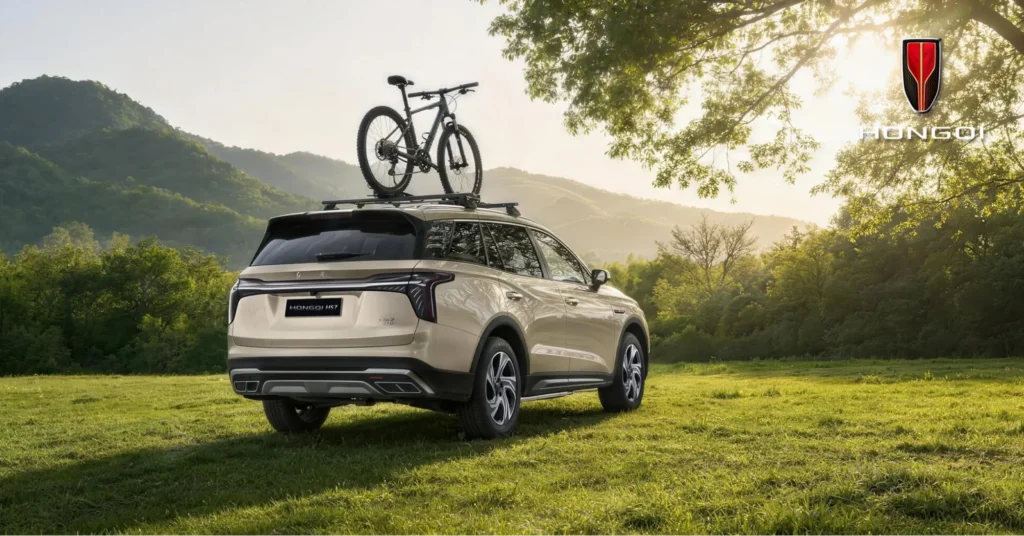
The most important 2026 signal is Hongqi’s shift from export presence to localized market architecture. Reuters reported in April 2026 that Hongqi, part of state-owned China FAW Group, planned to sell right-hand-drive versions of Hongqi E-HS9, EHS5, and a Hongqi Global SUV in Southeast Asia from the second half of 2026. The same report said the brand plans to expand into more than 110 countries and regions with over 650 dealerships by 2028.
Europe is a harder test. Reuters reported in September 2025 that Hongqi planned to launch 15 electric and hybrid models across 25 European markets by 2028, supported by more than 200 dealers. The brand already sold cars in Norway, the Netherlands, and Poland, and unveiled the EHS5 compact electric SUV at IAA Mobility in Munich.
This is why the European EV market is a harder test than a simple export plan. In April 2026, Reuters reported that FAW was in talks with Stellantis through Leapmotor to build Hongqi vehicles at a Spanish plant.
This is the real test for Hongqi’s SUV ambitions and its luxury-SUV China positioning. Overseas buyers judge luxury through delivery timelines, financing, parts availability, digital updates, residual value, and dealership confidence. A strong Hongqi logo may open curiosity. A weak service experience would quickly close the relationship.
Technology Partnerships And The Leapmotor Signal
Hongqi’s global push is also a lesson in the speed of Chinese automotive expansion. Reuters reported in April 2025 that Leapmotor had struck a deal with FAW to supply an electric vehicle platform for a new Hongqi model aimed at overseas markets.
This partnership shows how Chinese automakers are shortening development cycles. An established state luxury brand can combine design language and status with a fast-moving EV platform.
For investors and strategy teams, China’s automotive innovation is increasingly modular. Brand, platform, software, battery sourcing, and market access can be recombined faster than traditional luxury cycles allow.
What Global Business Leaders Should Learn From Hongqi
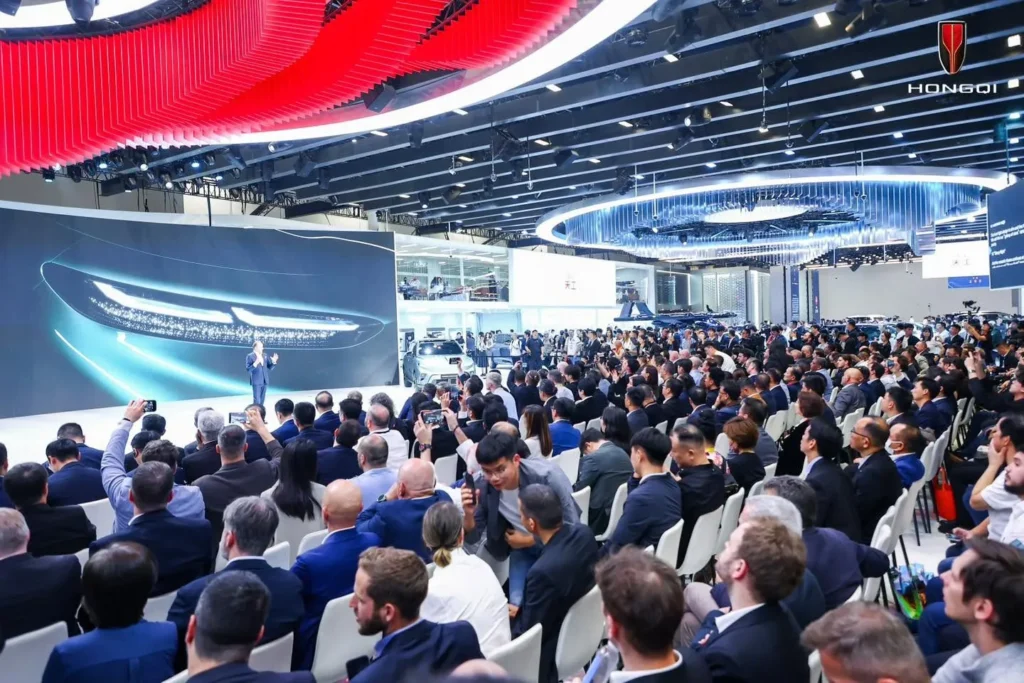
Hongqi cars are going global as China’s auto industry enters a new stage. Exports are large, EV capabilities are mature, and domestic competition is pushing stronger brands toward overseas demand. China’s State Council Information Office reported that China’s auto output and sales reached new highs in 2025, while new energy vehicle exports doubled. Hongqi’s advantage is cultural depth. Its challenge is international trust.
- For luxury executives, the lesson is direct. National identity can become a premium asset when it is supported by product credibility.
- For marketers, the Hongqi car proves that storytelling must connect to dealership reality.
- For investors, the brand is a case study in how state heritage, EV platforms, and global distribution can converge.
The global expansion of Hongqi cars will be judged by repeat buyers, service quality, EV reliability, resale confidence, and local cultural translation. It is Chinese brand globalization in one of the hardest premium categories.
Learn What China’s Luxury And Mobility Shifts Mean For Your Brand
If your team needs strategic clarity on Chinese consumer brands going global, Ashley Dudarenok provides keynote presentations, executive workshops, and tailored advisory grounded in on-the-ground insights from China.
Ashley is the founder of ChoZan and Alarice, and with her team, she has helped Fortune 500 companies and global brands learn from China.
Book a consultation with Ashley Dudarenok to decode what Hongqi Car, Chinese EVs, and China’s premiumization wave mean for your next market, brand, or innovation strategy.
FAQs
What Is Hongqi Car Known For?
Hongqi Car is known for combining Chinese state prestige with premium sedans, SUVs, EVs, and ultra-luxury models. Its value lies in cultural symbolism, government heritage, and a growing product ladder for private buyers.
Is Hongqi Owned By FAW Group?
Yes, Hongqi operates under China FAW Group. Current reporting describes FAW as a state-owned automaker and Hongqi as its premium luxury brand, with global expansion plans in Europe and Southeast Asia.
What Makes Hongqi E-HS9 Different From Other Chinese EVs?
Hongqi E-HS9 stands out through its full-size SUV format, luxury cabin positioning, ceremonial design language, and role as Hongqi’s flagship electric model in overseas markets. Buyers compare it with premium electric SUVs.
How much does the Hongqi H9 cost in international markets?
The Hongqi H9 price varies by market, generally positioning it 20 to 30 percent below comparable German executive sedans. Middle Eastern and Southeast Asian markets have reported prices in the equivalent range of $50,000 to $70,000 USD.
Is the Hongqi E-HS9 available in Europe?
The Hongqi E-HS9 electric SUV has entered select European markets, including Norway and the Netherlands, markets with strong EV infrastructure and consumer openness to new electric luxury vehicle entrants from China.
What does the Hongqi logo symbolize?
The Hongqi logo features a red flag motif central to the brand’s identity, while the Hongqi Golden Sunflower emblem appears on ultra-premium models like the L5, symbolizing state-level prestige and Chinese craftsmanship heritage.
What Is Hongqi Guoya In The Golden Sunflower Range?
Hongqi Guoya is an executive luxury sedan in the Golden Sunflower family. Its official page emphasizes Chinese cultural design references, premium audio, high comfort, and V8 hybrid performance credentials for executive buyers.
What Is Hongqi N701?
Hongqi N701 is mainly a search term associated with curiosity about China’s official state car. Public, current, high authority information about specifications is limited, so buyers should separate symbolic interest from retail availability.
Is Hongqi S9 Available Globally?
Hongqi S9 remains a niche search term tied to Hongqi’s performance and concept ambitions. Current 2025 and 2026 high-authority sources provide limited details on retail rollout, so confirmed dealer availability should be checked locally.
What safety rating did the Hongqi H9 achieve in recent independent crash tests?
The export-specification Hongqi H9 achieved a five-star safety rating in the 2025 Euro NCAP assessments, demonstrating that the active safety and structural engineering systems meet rigorous global protection standards.
Can A Hongqi Electric Car Use Public Charging Stations?
Yes, a Hongqi electric car can use compatible public charging stations where local standards match. EV Database notes public charging uses charging stations, and official Hongqi E-QM5 data lists 20 to 80 percent fast charging.