
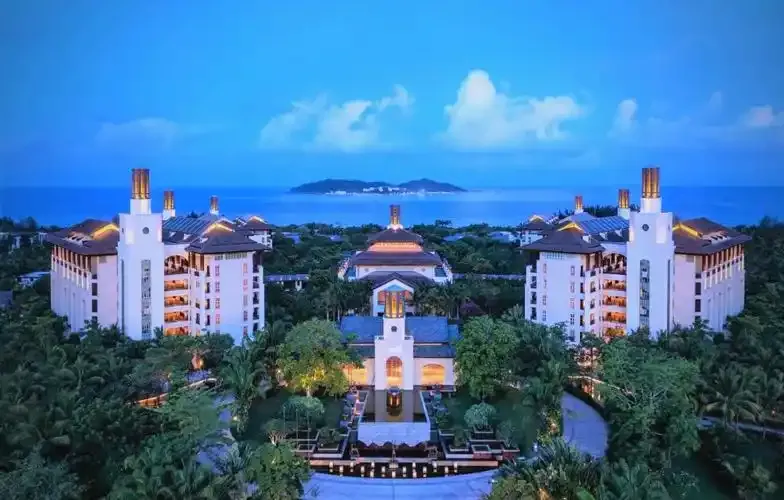
Luxury hotels in China offer several distinct stays: courtyard residences, city towers, garden retreats, mountain resorts, and coastal escapes. These 20 mainland properties merit comparison for how their accommodation, experiences, and services match a trip’s purpose.
The difference extends beyond interiors. Separate bedrooms can improve a family stay; regional experiences can justify time at a resort; the right address can simplify a city itinerary. The commercial lesson is equally practical: experiential luxury needs a clear benefit that guests can recognize and book.
Luxury Hotels in China for Architecture and Local Culture
1. Mandarin Oriental Qianmen, Beijing
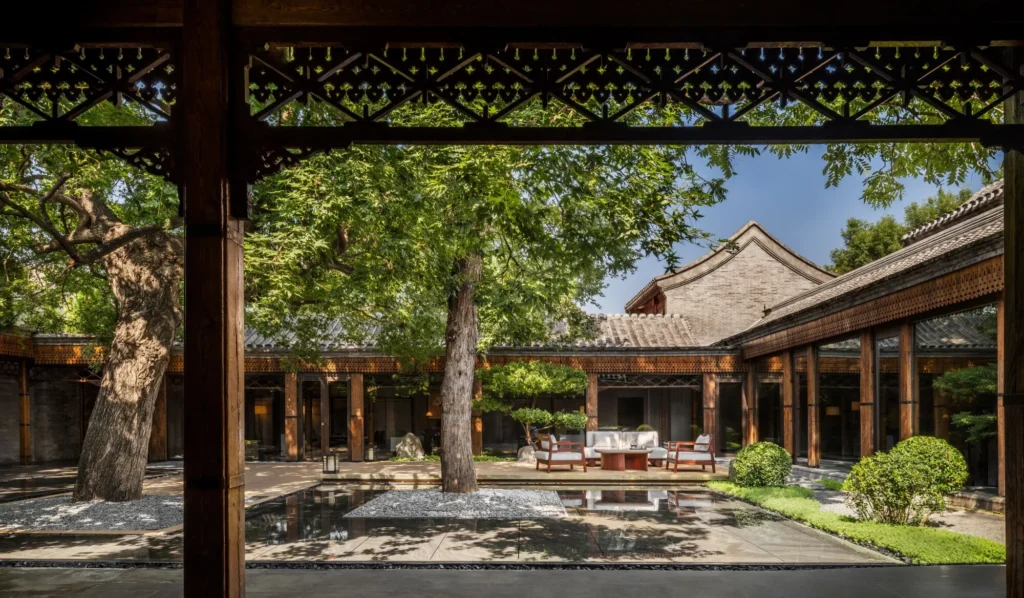
Mandarin Oriental Qianmen is a five-star luxury hotel with a very different setup from a typical city hotel. Instead of standard rooms in one building, guests stay in 42 private courtyard houses set within Beijing’s historic hutong neighborhood. Its mix of traditional Chinese architecture, private courtyards, and high-end service makes it feel more like staying in a beautifully restored piece of old Beijing than in a conventional hotel.
2. Capella Shanghai, Jian Ye Li
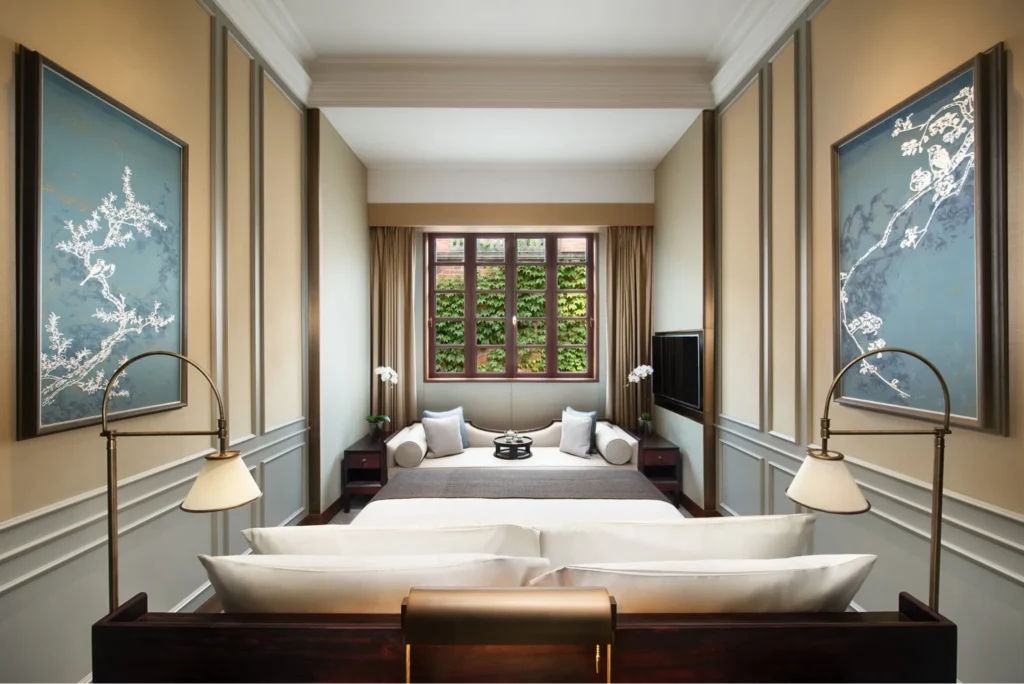
Capella Shanghai, Jian Ye Li is a five-star luxury hotel set inside one of Shanghai’s last remaining clusters of historic shikumen townhouses. Its restored 1930s villas blend traditional Chinese details with French-inspired design, giving guests the feeling of staying in old Shanghai rather than a conventional city hotel.
3. Upper House Chengdu
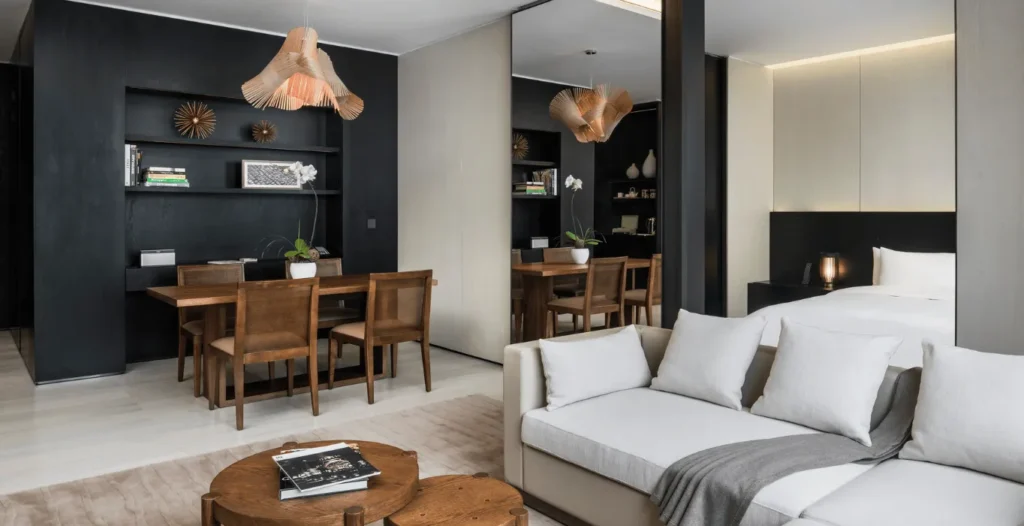
Upper House Chengdu is a luxury boutique hotel set on former temple grounds beside Chengdu’s Daci Temple. One of its most distinctive features is Mi Xun Teahouse, tucked inside a historic courtyard; in 2025, it became the only restaurant in Chengdu to hold a Michelin Green Star, recognized for its sustainability efforts.
4. Yangshuo Sugar House, Guangxi
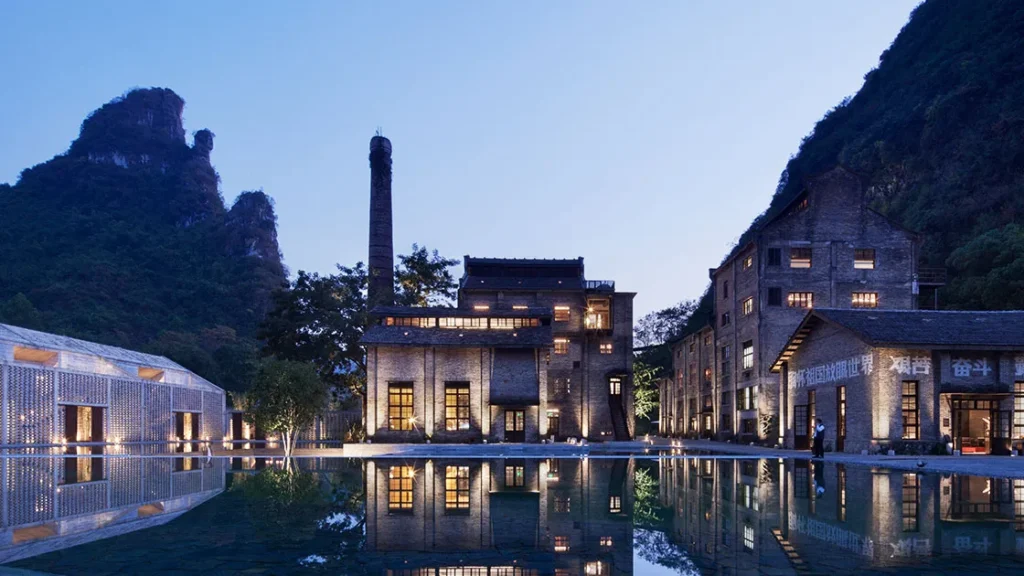
Yangshuo Sugar House is a luxury riverside retreat built inside a restored 1960s sugar factory, surrounded by Guangxi’s dramatic karst mountains.
Some of the original factory structures are still part of the hotel—including the old pressing room, boiler rooms, power plant, and molasses tank—giving the property a character you won’t find in a purpose-built resort.
Its riverside swimming pool, framed by the old industrial ruins and limestone peaks, is one of its most striking features.
City Hotels for Views, Dining, and Daily Routines
5. Bvlgari Hotel Shanghai
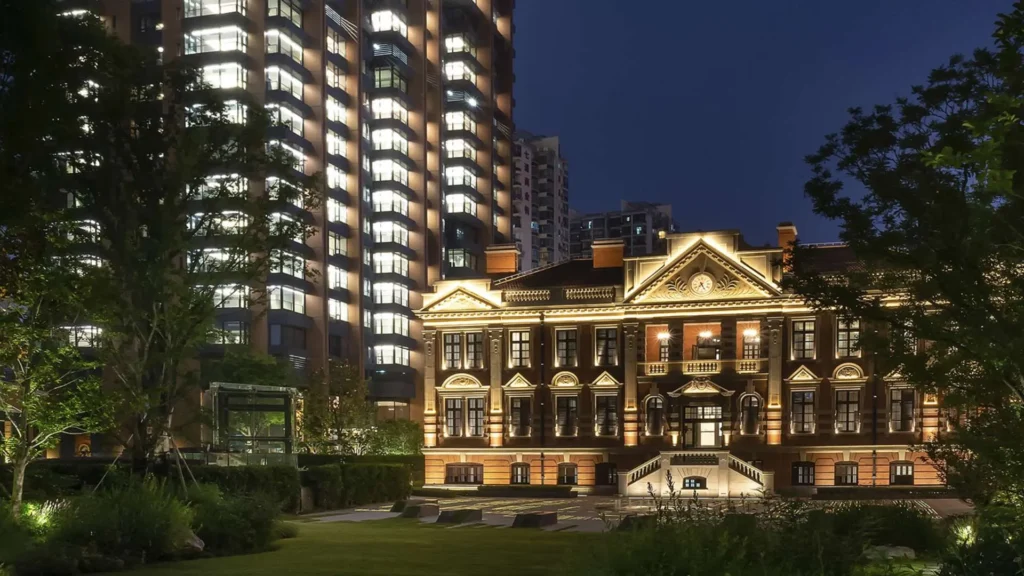
Bvlgari Hotel Shanghai pairs contemporary glamour with a strong sense of the city’s past. Rising above the Bund, the hotel’s sleek tower is linked to the beautifully restored 1916 Shanghai Chamber of Commerce, creating a striking dialogue between historic Shanghai and modern luxury. With just 82 rooms and suites, it also feels notably intimate for such a landmark city hotel.
6. J Hotel Shanghai Tower
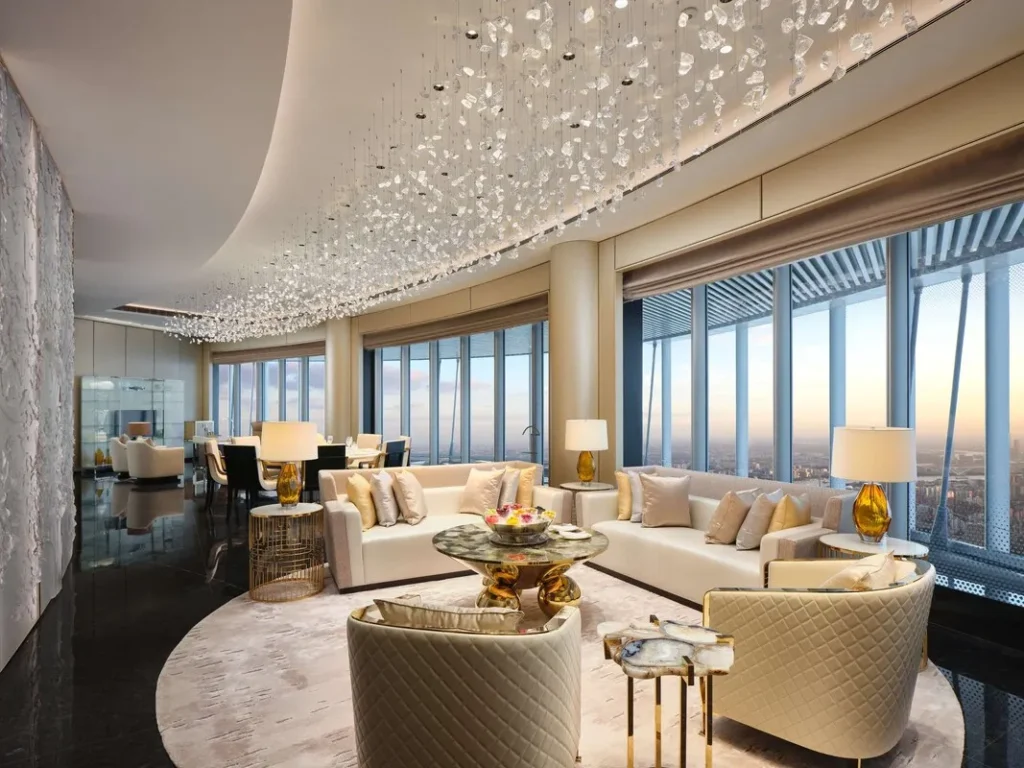
Perched near the summit of Shanghai Tower, J Hotel Shanghai Tower turns a stay into a true sky-high experience. Its 165 rooms and suites occupy floors 86 to 98, with sweeping views over the Huangpu River, the Bund and Pudong, while the lobby lounge sits an extraordinary 469 metres above the city.
7. Rosewood Guangzhou
Rosewood Guangzhou is a five-star luxury hotel set across the upper floors of the 530-metre CTF Finance Centre, with panoramic views stretching across the city and Pearl River Delta.
Its standout feature is the 108th-floor Manor Club, where private lounges and open-air terraces create an elevated sense of exclusivity.
For travellers who want dramatic skyline views, refined service and a true sense of occasion, Rosewood Guangzhou is one of the city’s most memorable places to stay.
8. Mandarin Oriental, Shenzhen
Awarded two Michelin Keys, this 178-room hotel in Futian occupies the UpperHills complex with views over Lotus Hill Park. Mandarin Oriental, Shenzhen brings a distinctly vertical kind of luxury, occupying the upper floors of the 388-metre UpperHills tower.
Its real appeal is the sense of being suspended above the city, with dramatic skyline views, elevated dining and a glamorous rooftop atmosphere. Choose it for a sleek, high-energy Shenzhen stay where the view is very much part of the experience.
Garden and Lakeside Retreats
9. Four Seasons Hotel Hangzhou at West Lake
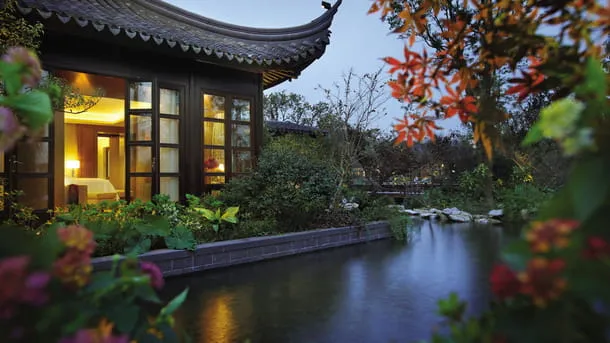
Few city hotels feel as closely tied to their setting as Four Seasons Hangzhou, where guests can arrive by traditional wooden boat across West Lake. The experience is calm, romantic and deeply connected to one of China’s most celebrated landscapes.
Choose it for an elegant lakeside escape that feels unmistakably Hangzhou from the moment you arrive.
10. Four Seasons Hotel Suzhou
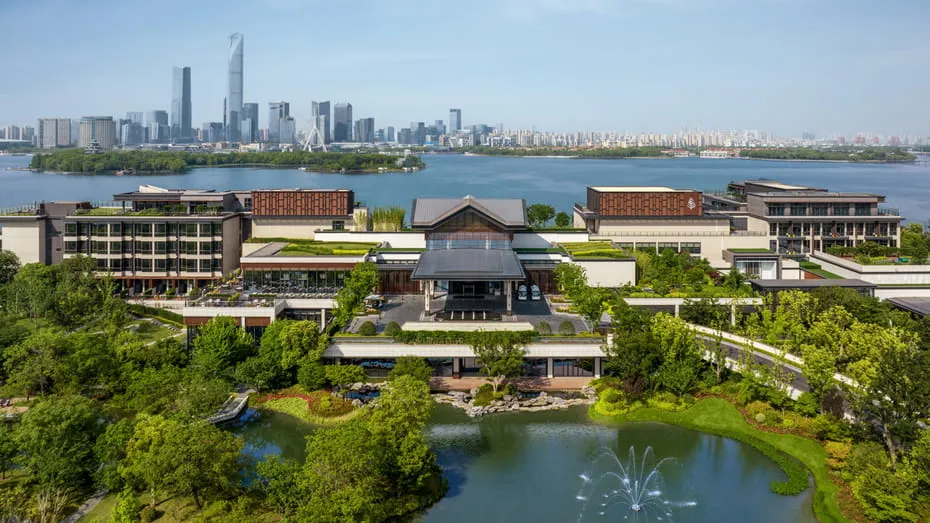
Set on a private island in Jinji Lake, Four Seasons Hotel Suzhou offers a rare sense of space and seclusion in the middle of a major city. Villas, gardens and waterfront paths give it the feel of a resort rather than an urban hotel. Choose it if you want the privacy and calm of a retreat without being far from Suzhou’s cultural sights.
11. Amanfayun, Hangzhou
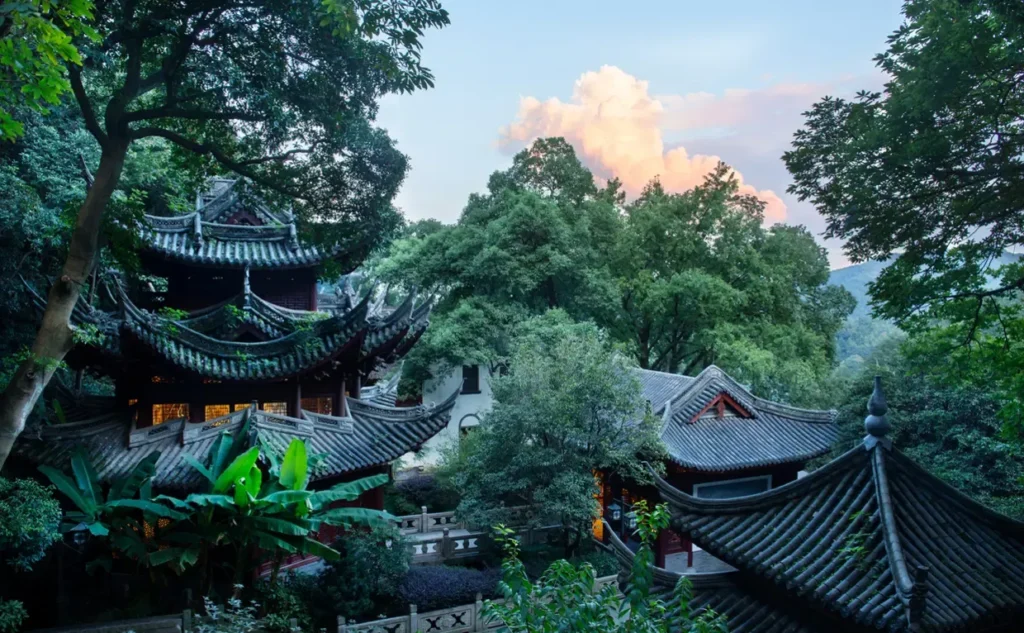
Amanfayun’s greatest luxury is its atmosphere: the resort unfolds like a small historic village among tea fields, woodland and ancient Buddhist temples. Rather than feeling polished or showy, it is quiet, contemplative and deeply rooted in its surroundings.
Choose it for a stay that feels less like checking into a hotel and more like disappearing into another, slower version of Hangzhou.
12. Amanyangyun, Shanghai
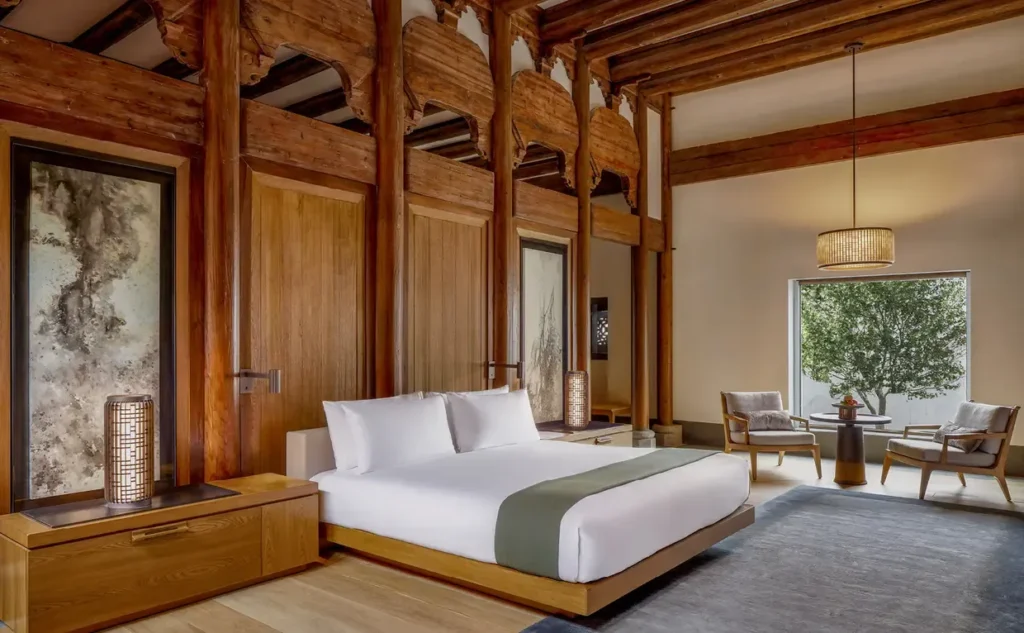
Amanyangyun is defined by an extraordinary preservation story: historic houses and mature camphor trees were relocated hundreds of kilometres to save them from destruction.
The result is a resort that feels both monumental and deeply personal, with heritage woven into every part of the experience. Choose it for one of Shanghai’s most distinctive luxury stays, where the story behind the property is as memorable as the stay itself.
Mountain Resorts With Regional Experiences
13. Six Senses Qing Cheng Mountain, Sichuan
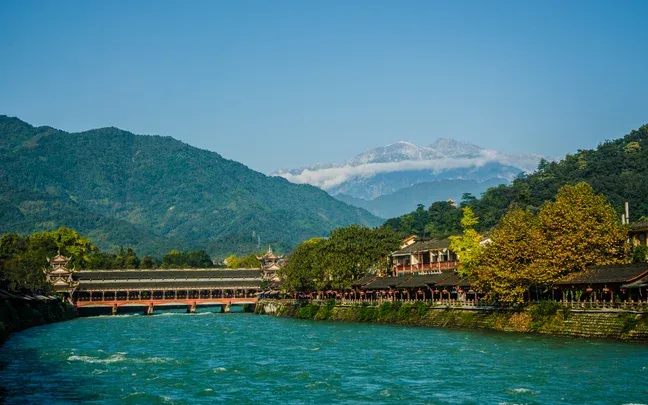
Set at the gateway to Qingcheng Mountain, the birthplace of Taoism, Six Senses turns its setting into part of the wellness experience, with Taoist-inspired spa rituals and Tai Chi sessions—including instruction connected to the Qingcheng tradition.
It’s also only around 20 minutes from Panda Valley. Choose it for a restorative escape where wellness, mountains and Sichuan’s panda country come together naturally.
14. Rissai Valley, a Ritz-Carlton Reserve, Jiuzhaigou
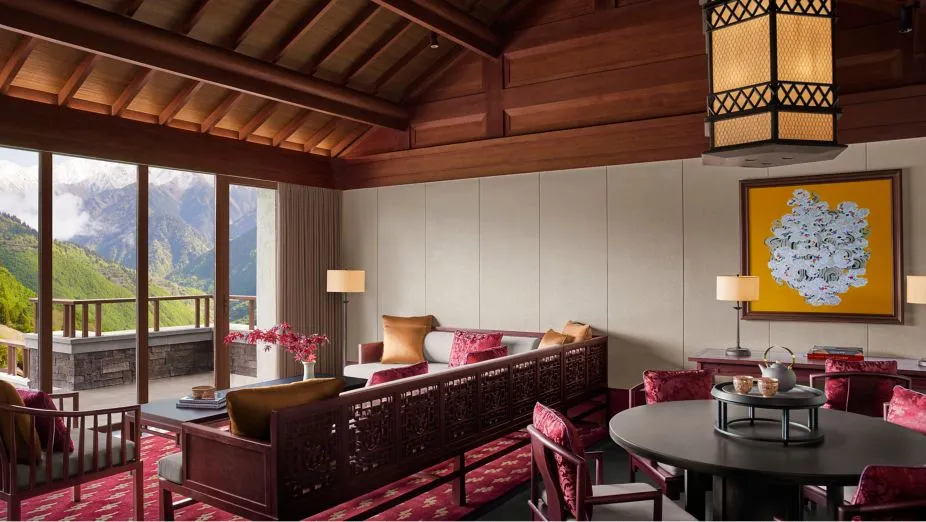
Rissai Valley places 87 standalone villas among the mountains near the UNESCO-listed Jiuzhaigou landscape, with sweeping views across the Minshan range and experiences shaped by local Tibetan culture.
The sense of seclusion is exceptional, yet one of China’s most spectacular natural areas is close at hand. Choose it when the destination itself needs to feel as extraordinary as the hotel.
15. Songtsam Linka Retreat Shangri-La, Yunnan
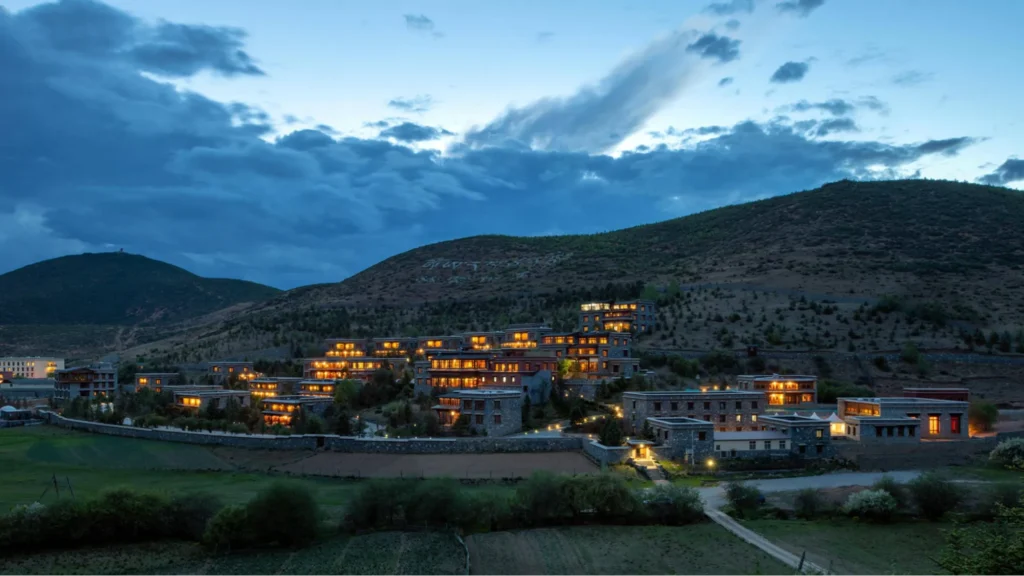
Songtsam Linka Retreat sits across a meadow from the magnificent Songzanlin Monastery, with monks, villagers and horses still passing along the nearby pine-forest paths.
At roughly 3,300 metres above sea level, the setting brings guests unusually close to the landscapes and everyday rhythms of Tibetan Shangri-La.
Choose it for an intimate cultural experience that feels genuinely connected to its surroundings rather than simply inspired by them.
16. Banyan Tree Lijiang, Yunnan
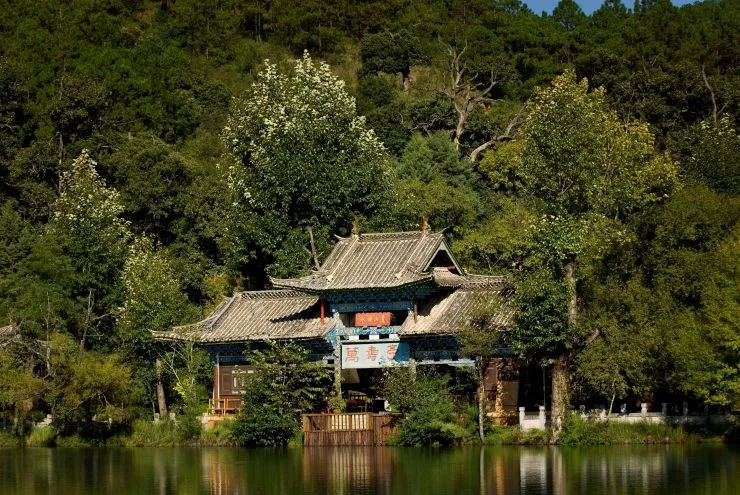
Banyan Tree Lijiang sits beneath the dramatic Jade Dragon Snow Mountain, and every villa is positioned to take in mountain views. With historic Shuhe Ancient Town nearby, it offers an easy balance between quiet resort life and exploring Lijiang’s Naxi heritage.
Choose it for those unforgettable snow-mountain views—especially if you want privacy without feeling cut off from the region’s cultural highlights.
Coastal Resorts With Distinct Guest Experiences
17. Capella Tufu Bay, Hainan
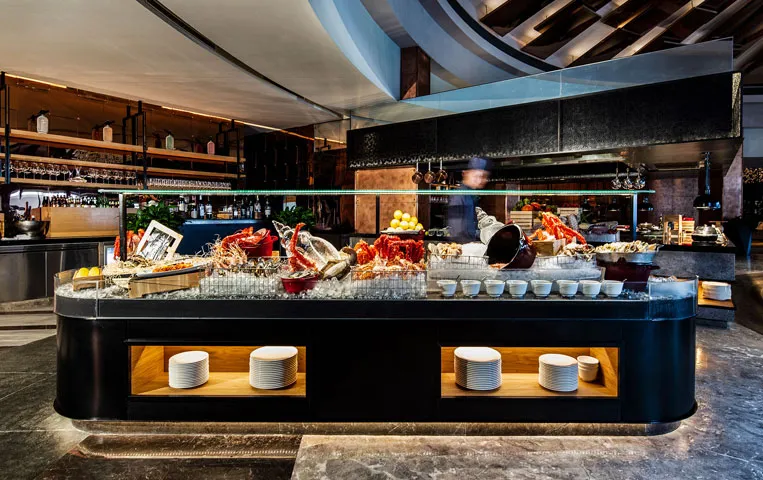
Capella Tufu Bay draws on Hainan’s historic connection to the Maritime Silk Road, weaving that story through its landscape, dining, and guest experience. Set amid tropical gardens beside the South China Sea, the resort also offers exceptionally spacious rooms and private-pool villas designed for true seclusion.
Choose it for a quieter, more sophisticated side of Hainan, where the beach escape comes with a strong sense of story and place.
18. The Sanya EDITION
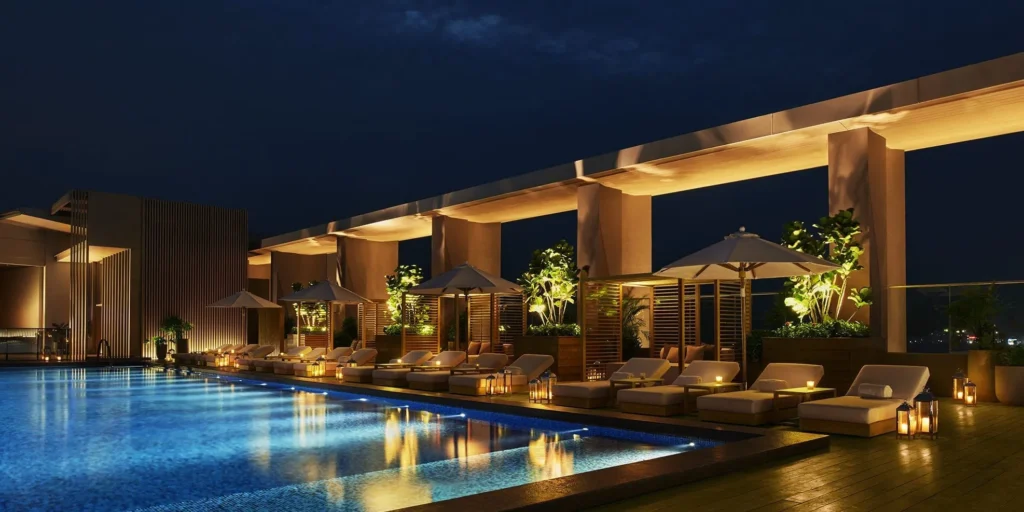
The Sanya EDITION’s signature feature is its remarkable 4,000-square-metre “Private Ocean”—a vast saltwater lagoon that meets its own crescent-shaped beach.
Every one of the hotel’s 501 rooms faces the ocean, while rooftop and adults-only pools add even more ways to experience the waterfront. Choose it for a livelier, more contemporary resort stay where the water itself becomes the centrepiece.
19. Park Hyatt Sanya Sunny Bay Resort
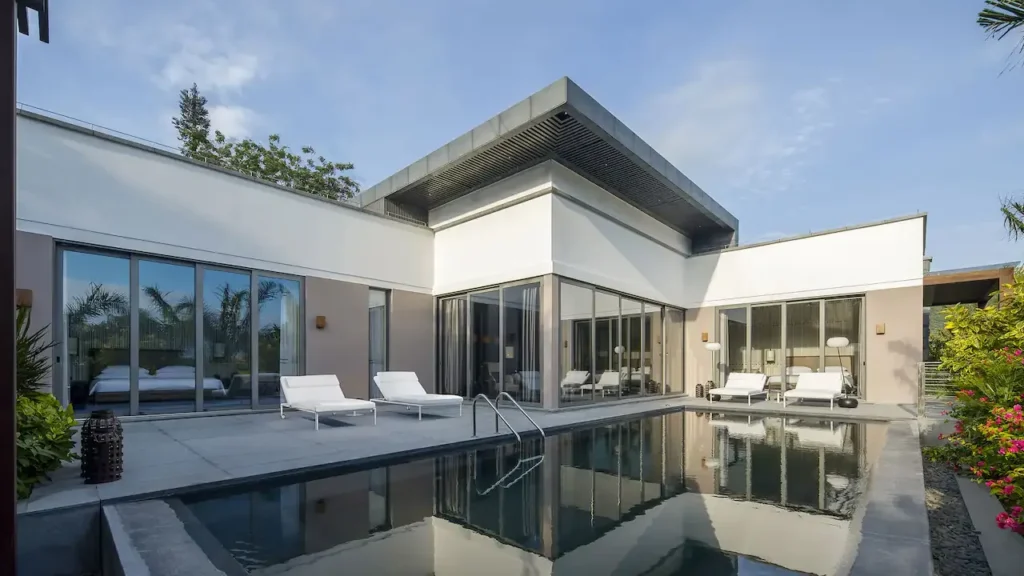
Tucked into secluded Sunny Bay, Park Hyatt Sanya feels more like a private seaside estate than a conventional resort, complete with its own lake, white-sand beach and sweeping South China Sea views.
One of its most striking features is the 130-metre Sunny Bay Pool, among the longest hotel pools in China. Choose it for understated luxury and genuine privacy—especially if you want Sanya’s tropical beauty without the atmosphere of a busy resort strip.
20. Alila Dong’ao Island Zhuhai
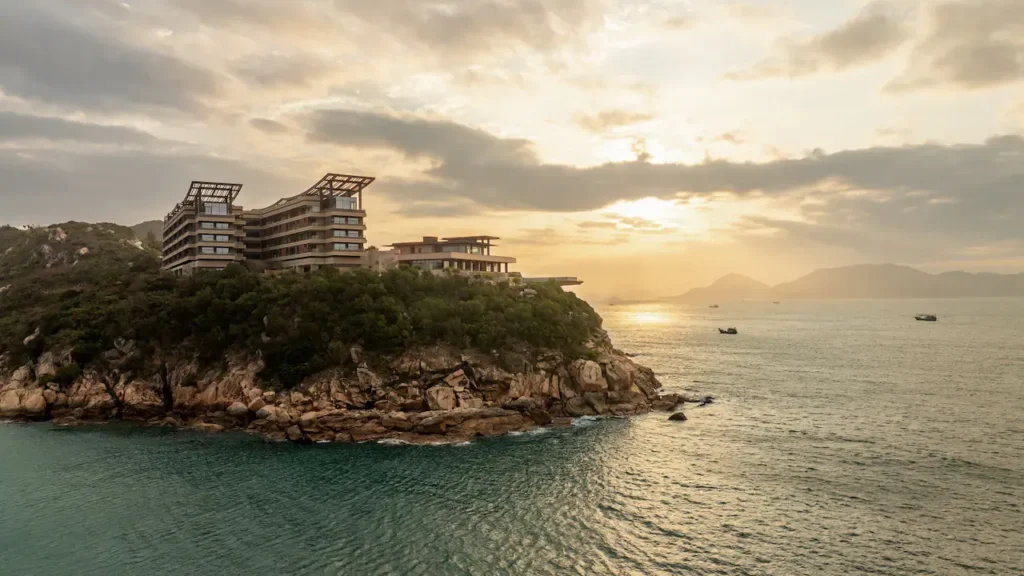
Perched on a cliff at the southern tip of Dong’ao Island, Alila Dong’ao Island Zhuhai feels dramatically removed from the mainland despite being less than an hour from Zhuhai by ferry.
Its standout infinity pool projects 15 metres over the cliff edge, creating the sensation of floating between the sea and sky.
Choose it for a true island escape with dramatic coastal scenery, contemporary luxury and just enough remoteness to feel like a discovery.
What These Properties Suggest About Hospitality Strategy
The best hotels in China for a particular trip should earn their place through usable benefits. Start with the daily itinerary, then compare the room format, included services, and experiences that justify spending time at the property.
For luxury hotels in China, these examples suggest a disciplined approach to premiumization: identify a specific guest need, build the stay around it, and make the added value easy to understand. The hotel features support this interpretation; they do not establish willingness to pay among Chinese luxury consumers.
A practical hospitality strategy should test that demand through experience bookings, guest feedback, repeat visits, and delivery costs. Before copying a design concept, establish which part guests value enough to purchase again.
Apply China’s Consumer Lessons With Ashley Dudarenok

The choices behind luxury hotels in China offer useful questions about Chinese consumer behavior, cultural branding, innovation, and global expansion. Ashley Dudarenok’s work connects those questions with:
- China market intelligence and advisory for strategic decisions.
- Executive education through keynotes and workshops.
- Learning expeditions that connect market observation with business priorities.
Book a consultation to explore the implications for your brand.
Frequently Asked Questions
1. What should a quote for a luxury hotel in China include?
Request the total stay price, room category, occupancy, taxes, service charges, breakfast allowance, and cancellation deadline. Add transfers and planned activities to the comparison, then ask which benefits apply to every guest in the reservation.
2. Are MICHELIN Keys the same as restaurant stars?
No. MICHELIN Keys assess hotels, while stars recognize restaurant cooking. A hotel can contain a starred restaurant without holding a Key. When comparing credentials for a stay, check the property’s accommodation distinction and restaurant awards separately.
3. Do luxury hotels in China accept foreign credit cards?
Some explicitly list international card networks. Four Seasons Hangzhou at West Lake lists Visa, Mastercard, and American Express. Confirm your card with the specific hotel, including deposit requirements, payment currency, and the process for releasing authorization holds.
4. Can I guarantee early check-in after an overnight flight?
A prior-night reservation can secure immediate room access. Four Seasons Hangzhou recommends this approach for early arrivals. Confirm the arrangement directly and provide your arrival time, so staff keep the room available until you reach the hotel.
5. How do I secure connecting rooms for a family?
Ask for written confirmation of an internal connecting door, the bed configuration, and the approved occupancy in each room. Specify that proximity alone does not meet the requirement, and clarify cancellation options if the hotel cannot guarantee it.
6. Can I visit a luxury hotel’s restaurant or spa without staying overnight?
Yes, at properties that welcome outside visitors. Amanyangyun explicitly invites nonresidents to its restaurants and spa. Book directly and confirm which facilities the booking covers, since a treatment or meal doesn’t grant access to every area.
7. Are Michelin Keys important for booking luxury hotels in China?
MICHELIN Keys provide an independent quality signal for hotels and can complement guest reviews when comparing properties.
8. How can wheelchair users assess a property before booking?
Request room-specific accessibility details, including doorway widths, bathroom layout, step-free routes, lift access, and vehicle arrangements. Ask for recent photographs or a video walkthrough of the booked room and the routes to dining and leisure facilities.
9. Are there luxury hotels in China outside Beijing and Shanghai?
Yes, and their quality is rising. Rissai Valley in Jiuzhaigou earned three Michelin Keys, Park Hyatt Changsha is Central China’s first Key hotel, and Six Senses Qingcheng Mountain holds a Key near Chengdu.
10. How do Chinese luxury consumers choose hotels?
Chinese luxury consumers prioritize hedonic value over symbolic status, making experiential and emotional satisfaction the strongest predictor of hotel choice. They research via Xiaohongshu (65% usage) and book spontaneously, with 76% booking within one month of travel
11. Do luxury resorts allow drones or commercial photography?
Permission depends on the property and activity. Capella Tufu Bay restricts drone use and commercial photography or filming. Contact the hotel before bringing production equipment, and obtain written approval covering locations, timing, crew size, and any applicable fees.