

NIO Cars are premium electric vehicles that combine battery swapping with a separate battery subscription option. A battery swap exchanges a depleted pack for a charged one. Battery-as-a-service (BaaS) lets buyers purchase the vehicle while paying separately for battery use.
The commercial significance lies in how those choices change ownership: customers gain another way to replenish energy, while NIO coordinates vehicle design, battery financing, and physical service delivery. China offers a substantial operating test of that approach, with real costs and compatibility constraints behind the convenience.
How NIO Cars Connect Vehicle Sales With Battery Services
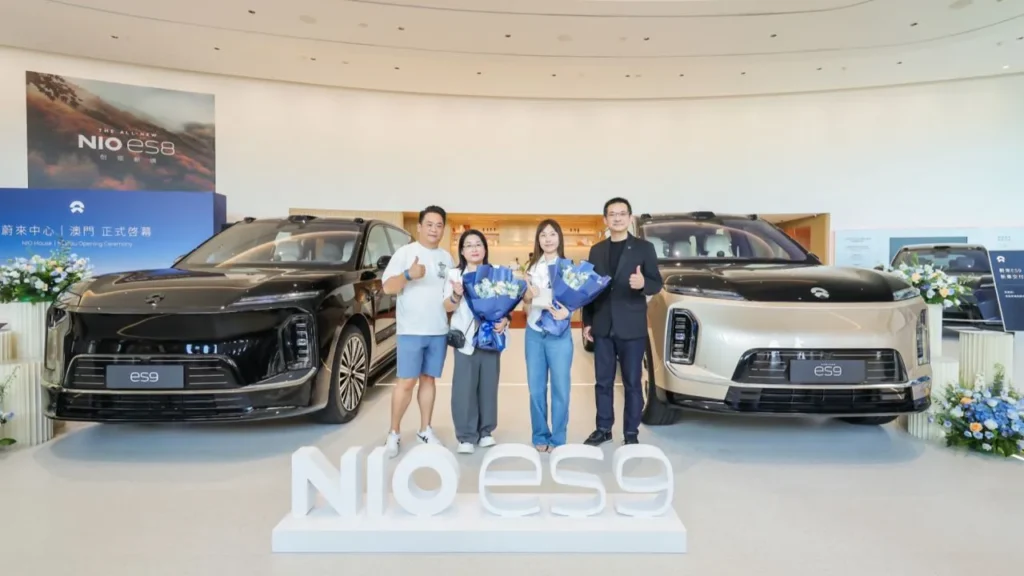
NIO’s model depends on the relationship between the automaker, the driver, and the company that owns the subscribed battery.
In China, NIO sells batteries for BaaS vehicles to Wuhan Weineng Battery Asset Co., Ltd. and its subsidiaries. Customers pay that company monthly for battery use. NIO receives separate fees for services including battery monitoring, maintenance, and replacement, as its 2025 annual report, filed in April 2026, explains.
That division matters when assessing revenue. Customer battery rent cannot automatically be counted as NIO subscription income. Vehicle sales, battery sales, and operating-service fees follow different commercial arrangements.
Battery Financing Creates a Separate Risk
NIO’s annual report warns that the battery asset company depends on financing to keep purchasing batteries and serving subscribers. NIO also provides a payment-default guarantee, capped at the accumulated service fees it receives from that company, as its 2025 interim filing documents.
The lower entry price leaves a battery-funding requirement elsewhere in the system. Any review of the model should examine that financial dependency alongside vehicle quality.
NIO Car Price: What BaaS Changes for the ET5 and ES6
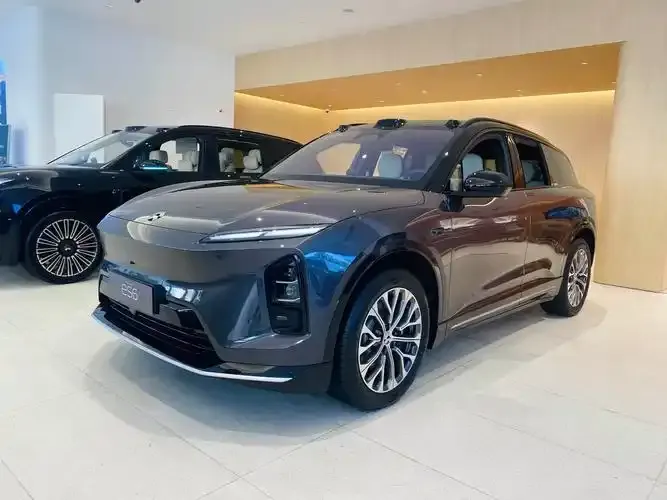
A NIO car price comparison needs two columns: the purchase price with the battery and the vehicle price under BaaS.
The April 2026 model launches retained the following starting prices in China. These are launch list prices, before temporary offers or options.
| Model | Battery-included purchase | BaaS vehicle purchase, plus battery rent |
| ET5 sedan | RMB298,000 [US$43,920] | RMB190,000 [US$28,000] |
| ET5 Touring wagon | RMB298,000 [US$43,920] | RMB190,000 [US$28,000] |
| ES6 SUV | RMB338,000 [US$49,820] | RMB230,000 [US$33,900] |
The upfront difference is RMB108,000 [US$15,920] for each model. That changes the amount a buyer must pay or finance at delivery. The battery subscription remains an ongoing obligation.
Battery Rent Belongs in the Ownership Calculation
A useful ownership comparison adds the contracted rental payments over the expected holding period, energy and service charges, financing costs, and expected resale proceeds. The comparison should account for battery ownership under an outright purchase.
A lower entry price can make a premium NIO electric car worth considering. The decision to buy a NIO car depends on the full contract and the buyer’s actual use.
NIO Power: Why Station Usage Matters to the Business Model
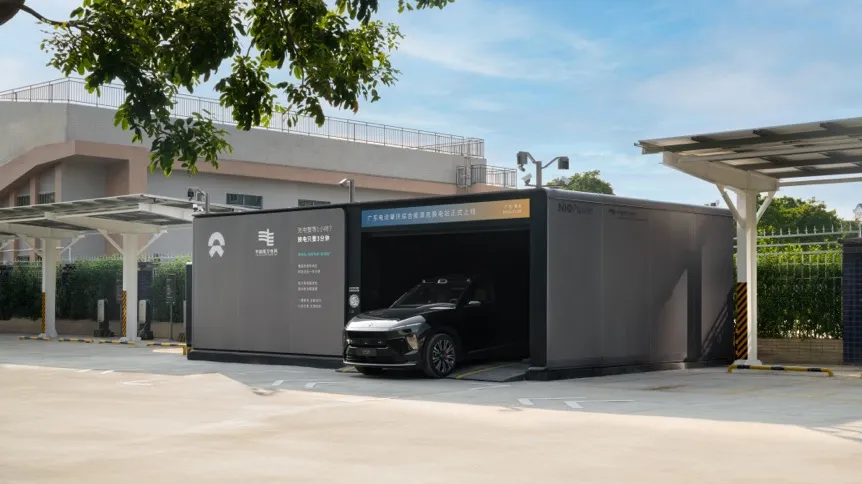
As of September 27, 2026, NIO reported 4,126 Power Swap Stations in China and more than 125 million cumulative swaps. It had invested over RMB20 billion [US$2.95 billion] in charging and swapping technologies and infrastructure, according to its September network update.
That investment covers a wider energy system than swapping alone. It includes charging infrastructure, technology development, and the assets required to deliver services.
Commercially, every car NIO sells can add potential demand for energy services. A site must still attract enough local use to justify its capacity.
Four Measures That Test Battery Swap Economics
Four operating measures deserve close attention:
- Daily swaps per station show how widely customers use the installed capacity.
- Charged-pack availability reveals the balance between service readiness and battery inventory.
- Peak-period waiting time tests the convenience customers experience.
- Site cash contribution after electricity, rent, maintenance, and staffing shows operating viability before capital recovery.
A highway station may justify its location through route continuity despite light weekday use. An urban station can serve more regular demand. A network review should distinguish site cash returns from any contribution to vehicle demand, rather than assign every location the same revenue target.
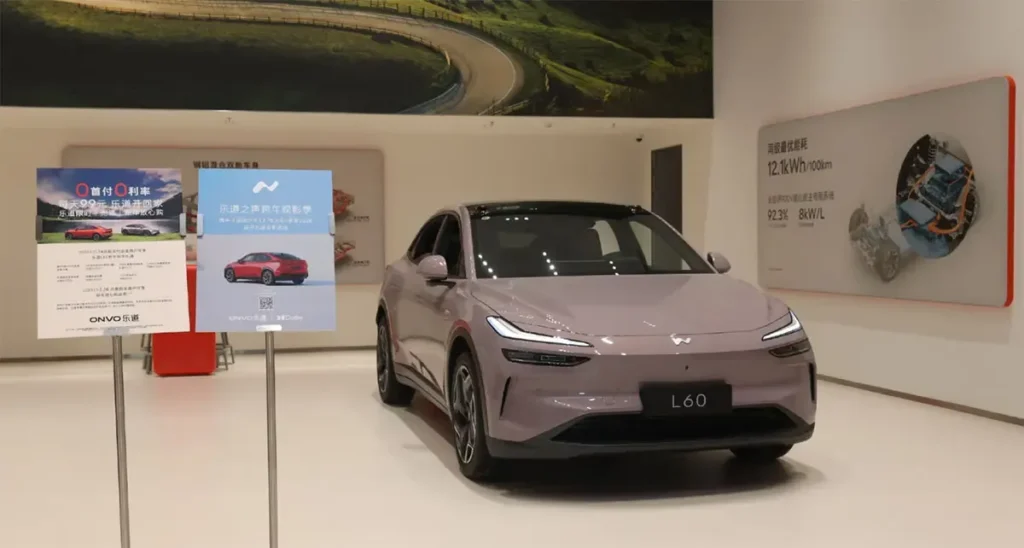
NIO positions its namesake brand around premium vehicles, ONVO around families, and FIREFLY around high-end compact cars, as its 2026 financial reporting confirms.
The infrastructure connection became more concrete on August 7, 2026. The first fifth-generation stations entered operation across seven Chinese cities. These stations support models across all three brands, including FIREFLY, which is now part of the swapping network, according to the brand’s official announcement.
Compatibility therefore needs to be checked at the station-generation level. The company’s overall network count does not represent identical access for every model.
The strategic opportunity is to spread infrastructure use across several customer segments without forcing them into one vehicle brand. The operational test is capacity allocation: broader access must preserve the availability existing customers expect.
How the Customer Community Shapes the Premium EV Experience

NIO reported 2,440 community interest groups cumulatively covering 686,873 users at the end of 2025 in its 2025 ESG release.
Its app and NIO Houses provide recurring contact beyond the original purchase. The company’s current overview describes NIO Houses hosting activities such as talks, workshops, and gatherings.
The commercial interpretation is that these channels give owners places to exchange experiences and the brand opportunities to hear service problems. Their business value needs to be measured through referrals, repeat purchases, and satisfaction after problems are resolved.
Community size alone cannot establish a retention effect. A NIO EV ownership program earns credibility through the quality of its daily interactions, including how the company responds when a service fails.
That creates a demanding form of premium positioning. Customers judge the relationship over years of use, with service recovery carrying as much weight as the showroom presentation.
The Geely Agreement Adds a Platform Business Question
NIO’s September 27, 2026 transaction announcement outlined a proposed Geely investment combining Yiyi Power’s equity with RMB640 million [US$94.3 million] in cash. Geely would hold 30% of NIO Power after completion.
Regulatory clearance and other closing conditions remain part of the agreement. Plans for compatible Geely vehicle models require further discussions. A cooperation announcement does not establish that those cars already operate on NIO’s network.
The investment terms include another revealing detail: Geely’s stake could fall to as low as 20% if specified operational milestones are missed.
The strategic interpretation is a move toward an infrastructure platform serving additional vehicle businesses. The milestone condition ties part of the transaction to operating performance, which deserves attention alongside the headline investment.
What NIO’s Financial Results Actually Establish
NIO reported an 18.5% vehicle margin for the second quarter of 2026. It recorded an adjusted net profit (non-GAAP) of RMB 26.1 million (US$3.8 million), while reporting a net loss of RMB 528.0 million (US$77.8 million) under GAAP.
Those are consolidated company figures. They cannot establish the profitability of individual swap stations or the swapping network separately.
The business lesson from China is the coordination required to commercialize the technology. A removable battery changes product architecture; a subscription changes financing; a physical network creates continuing delivery obligations.
Any attempt to adapt the model needs a clear allocation of asset ownership, customer responsibility, and service risk.
Learning From the Business Model Behind NIO
NIO’s approach raises business questions that reach beyond electric vehicles: how to price an ongoing service, support convenience with physical infrastructure, and sustain customer trust after the sale. These questions give leadership teams a practical starting point for studying innovation in China.
Keynotes on learning from China connect technology developments with customer expectations and evolving business models. Tailored sessions and follow-up workshops let you apply those lessons to a specific business challenge, with attention to the conditions that make them relevant in another market.
Arrange a conversation about a China-focused keynote or workshop.
FAQs About NIO Cars
1. Can NIO Cars charge at home?
Yes. NIO electric cars can use home charging alongside the swapping network. Owners can choose how to replenish energy around their parking arrangements and travel needs. A battery subscription does not require every recharge to involve swapping.
2. Is a NIO car fully autonomous?
NIO describes its systems as driver assistance. The driver must remain attentive and ready to intervene. Available functions can vary by vehicle version and market, so the production vehicle’s specifications matter more than a promotional demonstration.
3. Why is the ES6 called the EL6 in some markets?
NIO uses ES6 in China and EL6 in several overseas markets. Its official international announcements identify the naming relationship. Buyers should compare the locally offered version, since specifications, purchase terms, and service arrangements can differ.
4. Why do NIO EV range figures differ between websites?
NIO’s global product page quotes CLTC range, while its German page uses WLTP. These are different test procedures. Battery size and vehicle configuration matter too, so compare figures using the same test cycle and specification.
5. Can NIO owners temporarily use a larger battery?
Yes, NIO’s latest annual report describes flexible battery upgrades with daily, monthly, and annual options for an additional fee. Owners should confirm eligible packs, local availability, booking conditions, and return arrangements before planning a trip.
6. Can a BaaS customer buy the battery later?
NIO’s filings describe a battery buyout option in China. The process involves ending the subscription and purchasing the battery. Buyers should request the applicable quote and terms rather than assume previous rental payments automatically purchase ownership.
7. Does each battery swap provide a brand-new battery?
The service exchanges a depleted pack for a charged, compatible pack. It does not promise a factory-new battery at every visit. NIO says its stations check battery and electric-drive-system health during each swap to assess condition.
8. How can drivers check charging options before a journey?
NIO’s Power Map provides information on its network and public chargers, including real-time availability updates. Drivers should check options near planned stops and identify a backup, since a national coverage figure cannot confirm one site’s availability.
9. Does NIO’s three-minute swap claim include waiting time?
NIO defines the automated swap timing as the period from the vehicle’s ready-for-swap mode through completion of its self-check. That definition excludes any queue before the process begins. Actual stop duration therefore depends on conditions at the chosen station.
10. Can NIO’s stations provide services to the electricity grid?
Yes. NIO reported that around 860 swap stations participated in peak shaving and frequency regulation across 14 Chinese provinces and municipalities by the end of 2025. That establishes grid participation without demonstrating a separate profit contribution.