
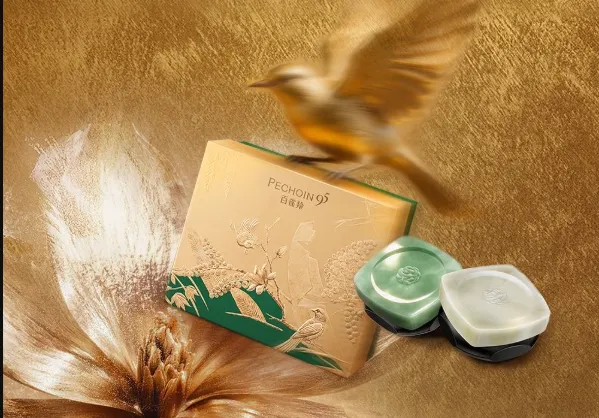
Pechoin made itself relevant again through a coordinated reset: it turned heritage into a usable product asset, reformulated familiar lines around efficacy, invested in research credibility, and rebuilt discovery around China’s social-commerce system. Attractive packaging helped, but it was not the full mechanism.
The deeper change connected cultural identity to formulas, price tiers, livestreaming, and retail execution. That makes the brand a useful case study in heritage brand modernization, not simply nostalgia.
What Pechoin is Today
Known in China as 百雀羚, Pechoin traces its origin to Shanghai in 1931. It follows the line from face powder to cold cream, while the blue jar became a strong visual memory cue.
History gives the brand recognition, but age alone cannot secure demand. Chinese skincare brands also compete through ingredients, evidence, content, service, and platform conversion. The archive needed a current reason to buy.
The current portfolio includes heritage moisturizers, anti-aging and brightening care, collagen products, men’s skincare, and cultural gift lines. This range keeps an accessible domestic skincare entry point while testing higher-priced formulas.
How Pechoin Turned Heritage into a Current Product System
The classic Blue Jar Became a Product Platform
The current New Classics range did not discard the blue jar. It updated the formula and the story around it. The official New Classics page presents a 94-year anniversary line with triple skin-related proteins and a “5D glycerin hydration matrix.” Its footnotes state that some ingredient data came from suppliers, while selected product claims came from internal or third-party tests.
That distinction matters. Reformulation gives an old icon a current functional reason to exist. Transparent footnotes also let informed consumers see which statements refer to ingredients, internal testing, or finished-product assessment. They do not turn every claim into independent clinical proof.
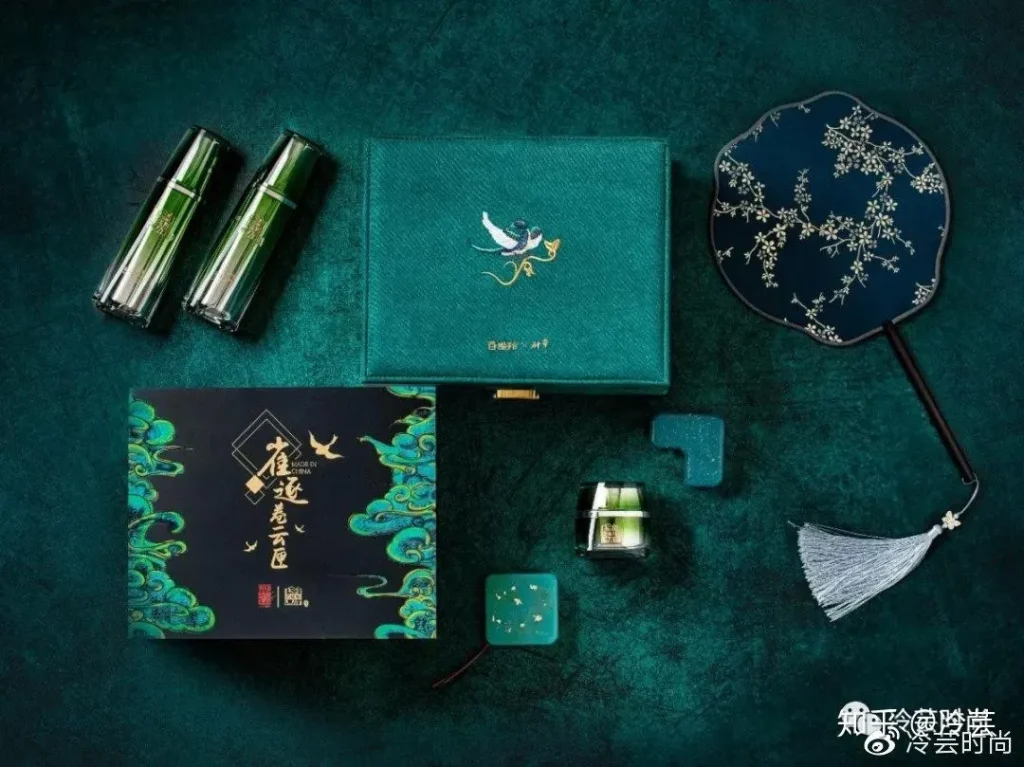
Pechoin also moved the classic into a more selective retail context. In March 2025, Lane Crawford launched a numbered blue-and-white porcelain gift set through its Xiaohongshu store, online shop, and WeChat mini program. Vogue China reported that heritage porcelain artist Wu Yibing designed the jar, which required 42 production steps and firing at 1,300 degrees Celsius.
This was more precise than adding generic Chinese motifs. The brand connected a known package, a named craft tradition, a recognized maker, and a premium retail environment. The commercial role was to make cultural identity collectible and giftable without removing the affordable original from the range.
A Wide Price Ladder Keeps Memory and Aspiration Together
The Heritage Nourishing Facial Cream is RMB 19.90 for 56 grams, and the renewed Exquisite Jade Cream is RMB 360 for 50 grams. The latter references the Liangzhu jade cong and contains botanical extracts, nephrite powder, pearl powder, peptides, and other modern cosmetic ingredients.
These list prices indicate a product ladder, although they do not reveal realized prices, margins, or sales mix. The classic preserves accessibility, while higher-priced lines support beauty premiumization.
The two tiers create tension because low-cost recognition can limit premium perception, while aggressive upgrading can weaken mass appeal.
Pechoin Skincare Moved from Herbal Familiarity to Efficacy Language
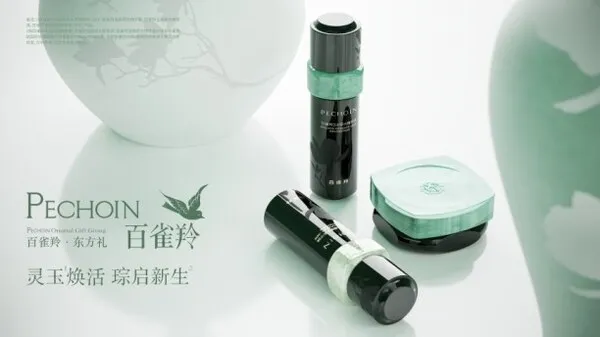
The greatest change appears in how the brand describes product value. “Herbal” remains part of its identity, but current communication adds peptides, collagen pathways, barrier support, testing methods, and defined product benefits.
The Super A 2.0 collection combines two cyclic peptides with Ulmus davidiana root extract, described as a botanical retinol. Five products in the renewed six-product line contain the updated complex. The page separates raw-material and in-vitro findings from small finished-product studies, including tests with 30 women over two or four weeks for selected formulas.
In-vitro ingredient results cannot predict outcomes on a person’s skin, and small brand-commissioned tests have limits. The disclosures still show how Pechoin skincare now competes: a mechanism, ingredient system, test type, and stated outcome replace broad promises about traditional Chinese beauty.
Research partnerships add another layer. In June 2025, Pechoin and Ashland announced a collaboration focused on bioavailable raw materials and formulation technology. In July, the International Federation of Societies of Cosmetic Chemists named Pechoin researcher Jun Miao the 2025 Maison G. de Navarre Young Scientist Essay Prize winner for work on skin longevity.
Neither event proves that every product outperforms competitors. Together, they show that skincare R&D has become part of the brand’s operating model and external reputation, not a decorative campaign theme.
Social Commerce Converted Brand Rejuvenation into Reach
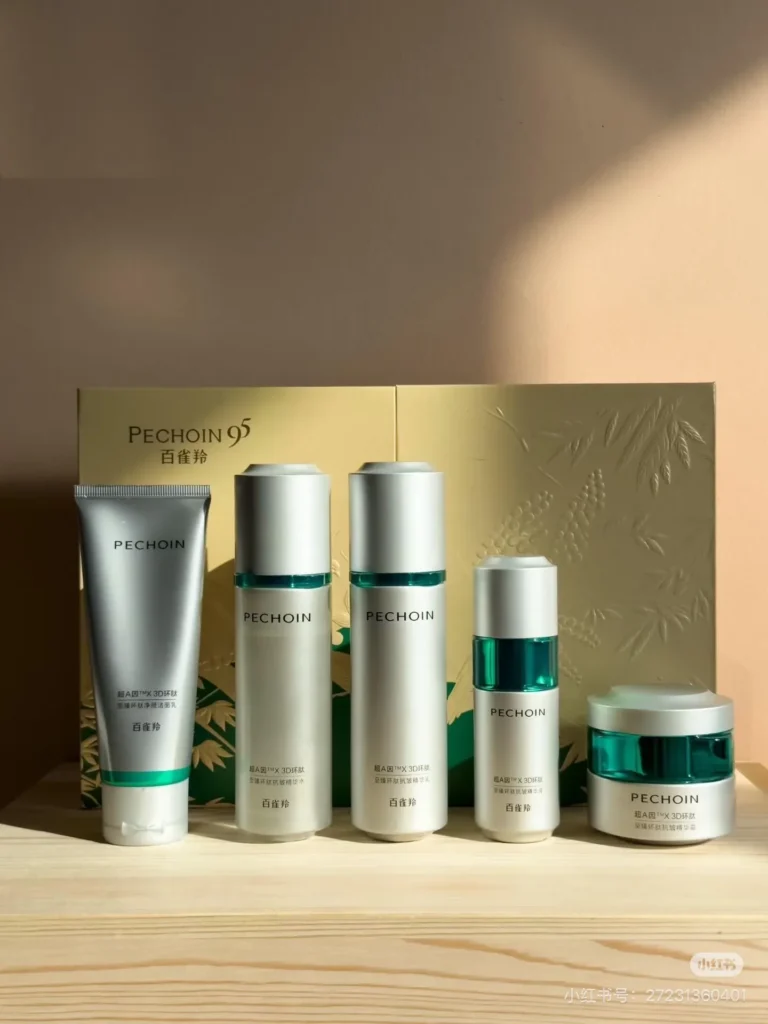
Product renewal required a new distribution and communication system. In a September 2025 Xinhua interview, a company vice president said Pechoin was developing Tmall and Douyin through brand livestreams, KOL collaborations, and educational content. She also cited themed pop-up stores as part of its offline retail work.
The channels serve different jobs. Douyin beauty content can connect discovery, explanation, demonstration, and purchase. Tmall beauty stores capture planned demand. A Xiaohongshu skincare launch can enter design and gifting conversations, while pop-ups make products tangible. This interpretation follows observed activity; Pechoin has not published a full attribution model.
Independent valuation data gives a cautious performance signal. Brand Finance valued the brand at US$3.2 billion in 2026, up 7 percent, and ranked it 13th globally among cosmetics brands. The consultancy attributed much of the momentum to Douyin sales and influencer collaborations.
Brand value is an estimate based on a royalty-relief model, not reported revenue or market share. Its direction is still useful, valuing Pechoin at US$3.0 billion after a 9 percent decline. The next year’s increase supports a recovery reading, but it does not show uninterrupted growth.
Younger Relevance Came from Coordination, Not a Single Campaign
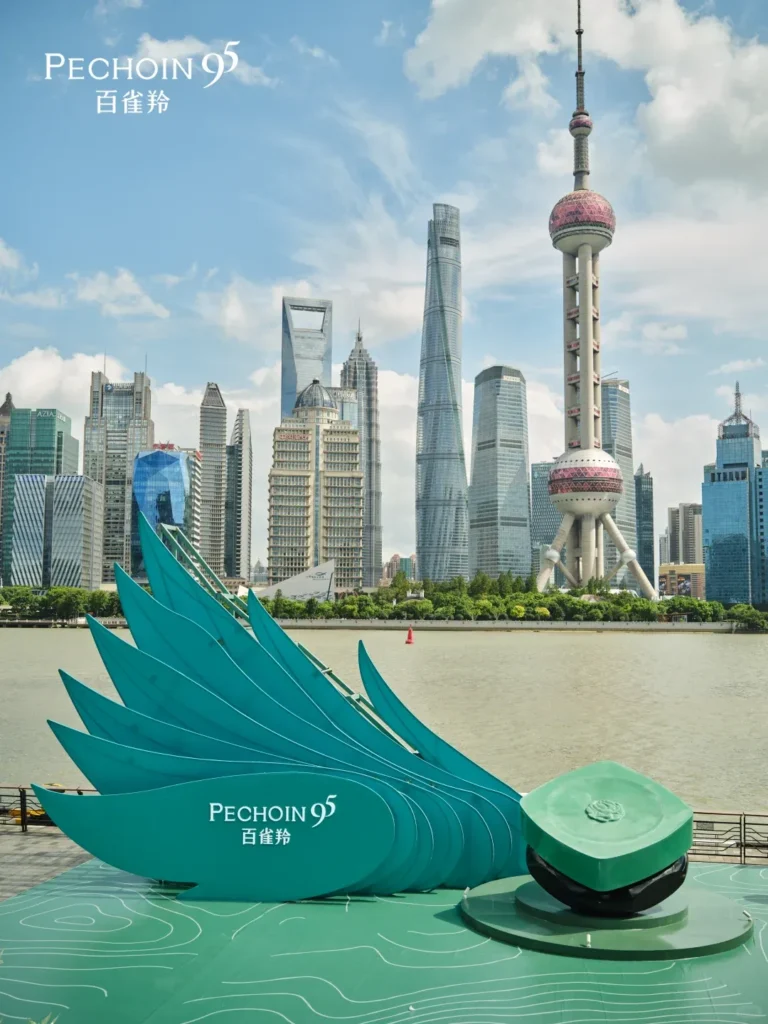
The company says it uses cultural collaborations and celebrity partners to connect with younger consumers. Public evidence does not disclose the age mix of buyers, cohort retention, or repeat-purchase rates. Claims about winning Gen Z beauty consumers should therefore be restrained.
The stronger interpretation concerns coordination. Modern packaging creates attention. Heritage storytelling makes the design ownable. Product reformulation supplies a functional reason to reconsider the brand. Livestream hosts translate technical language, while digital and physical retail provide several purchase paths.
Visual copy alone would miss the strategy. A legacy beauty brand needs recognizable assets, credible product change, suitable price architecture, and channel-specific content. Cultural references without product improvement can feel superficial. Efficacy language without accessible evidence can weaken domestic brand trust.
What Pechoin Still Has to Prove
The company’s current relevance is credible, but several commercial questions remain unanswered. Pechoin does not publicly disclose product-level revenue, repeat purchase rates, customer age distribution, channel profitability, or margins for its premium lines. Public sources also do not establish significant current overseas retail scale.
Its English and French websites, international research links, and global brand ranking support an outward-facing identity. They do not prove successful international expansion. Chinese brands going global face different retailer economics, compliance rules, media systems, and cultural reference points. The Douyin playbook cannot be transferred intact.
The strategic takeaway is specific: heritage becomes valuable when it lowers recognition costs, while current products earn renewed trust. Pechoin linked memory to formulation, proof, price, and distribution. Its next test is to turn attention into repeat demand and translate Chinese cultural confidence for markets that do not share the same memories.
Explore China’s Brand Renewal with Ashley Dudarenok
Pechoin shows how Chinese consumer behavior, cultural branding, product innovation, and social commerce interact. Ashley Dudarenok helps companies examine these shifts through China market intelligence, advisory work, executive education, keynotes, workshops, and learning expeditions.
Book a consultation to discuss what the evidence means for your China strategy or global expansion plans.
FAQs
What does Pechoin mean in Chinese?
Pechoin, written 百雀羚, draws on an auspicious image of many birds gathering around a phoenix. The English spelling reflects an earlier rendering of the brand name, while 百雀羚 remains the name Chinese consumers see.
Is Pechoin the same brand as Baique Ling?
Yes. Pechoin, Baique Ling, and 百雀羚 refer to the same Shanghai skincare brand. “Baique Ling” follows Mandarin pinyin more closely, while Pechoin remains the company’s established international brand spelling today.
Is Pechoin a luxury skincare brand?
Pechoin spans several price tiers rather than fitting one luxury category. Its official site lists inexpensive classic moisturizers alongside RMB 360 Exquisite Jade products, suggesting a portfolio that stretches from mass access to premium gifting.
Does Pechoin skincare use traditional Chinese herbs?
Many formulas contain Chinese botanical extracts such as ginseng, lingzhi, dendrobium, or centella, but ingredients vary across products. Buyers should check each INCI list because the brand also uses peptides, silicones, humectants, and recombinant proteins.
How should consumers read Pechoin efficacy claims?
Check each product-page footnote for the evidence type. Raw-material or in-vitro findings differ from finished-product human testing. Study size, duration, participant profile, measurement method, and the testing laboratory’s identity all affect interpretation.
Does Pechoin make products for sensitive skin?
Some individual products carry gentleness or sensitive-skin claims supported by tests cited on their pages. That does not make every formula suitable for everyone. Review the ingredient list and patch-test a new product first.
Where can shoppers buy Pechoin in China?
The official product pages link to the brand’s Tmall store. Current reporting also confirms Douyin sales and content activity, plus selected launches through WeChat and Xiaohongshu retail channels such as Lane Crawford.
How can shoppers check if a Pechoin product is authentic?
Use the product-verification link on the official Pechoin website and buy through clearly identified official stores or authorized retailers. Packaging alone is not reliable proof because counterfeiters can copy visible design elements.
Does Pechoin sell makeup as well as skincare?
Yes. In March 2026, Pechoin announced a return to color cosmetics with a new face powder and an AI digital model named Bai Ling. The launch extended the brand beyond its current skincare focus.
Is Pechoin already a successful global brand?
Current evidence supports international visibility, multilingual brand presentation, and research relationships. It does not establish broad overseas distribution or sales. Global ranking position measures estimated brand value, so it should not substitute for international operating results.