
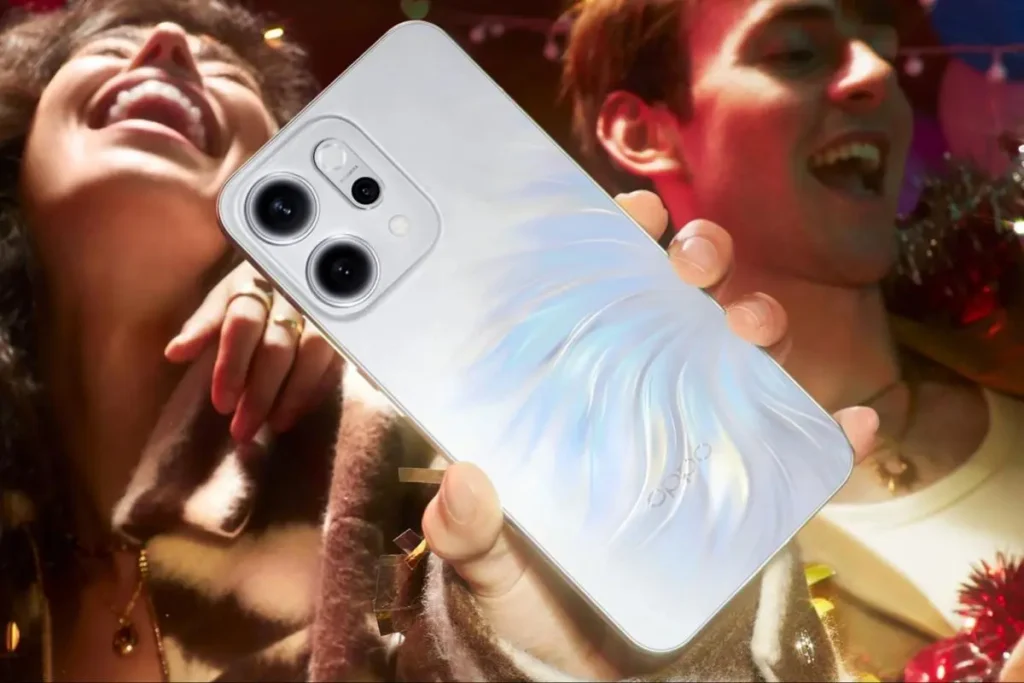
China’s smartphone market produced a different number-one vendor in each of 2025’s first three quarters. That kind of volatility is unusual even for a saturated category. In our China Economic Mega Report 2025, one of the clearest structural patterns in Chinese consumer electronics is compressed competition. Five brands separated by fewer than four million annual shipments in a 282-million-unit market.
OPPO Company has occupied the lower half of that cluster for three consecutive years. How it holds position there, and what it is doing to move up, is the more instructive story.
What Is OPPO and Why Its Position in China Matters
OPPO is a Chinese consumer electronics company founded in 2004 by Tony Chen. Its headquarters are in Dongguan, Guangdong, in southern China. The company runs three main product families, including:
- The Find series for flagship buyers
- The Reno series for the mid-premium segment
- The A series for entry-level buyers
The company also owns OnePlus and Realme as subsidiaries, with Realme progressively reintegrated under the OPPO umbrella in recent years.
OPPO operates under Guangdong Oujia Holdings, following the deregistration of its former parent, BBK Electronics, in 2023. It employs more than 40,000 people and sells across more than 60 countries. In 2025, it ranked fifth in global smartphone shipments.
The Chinese context is the instructive one. OPPO became the country’s largest smartphone brand in 2016, with over 200,000 retail outlets nationwide. It has not held that position since. The gap between then and now reveals the two strategic pivots the brand has made to stay competitive: a push into premium pricing and a concentrated investment in AI. Both are examined below.
The Market OPPO Company Operates In: Five Brands Within Striking Distance
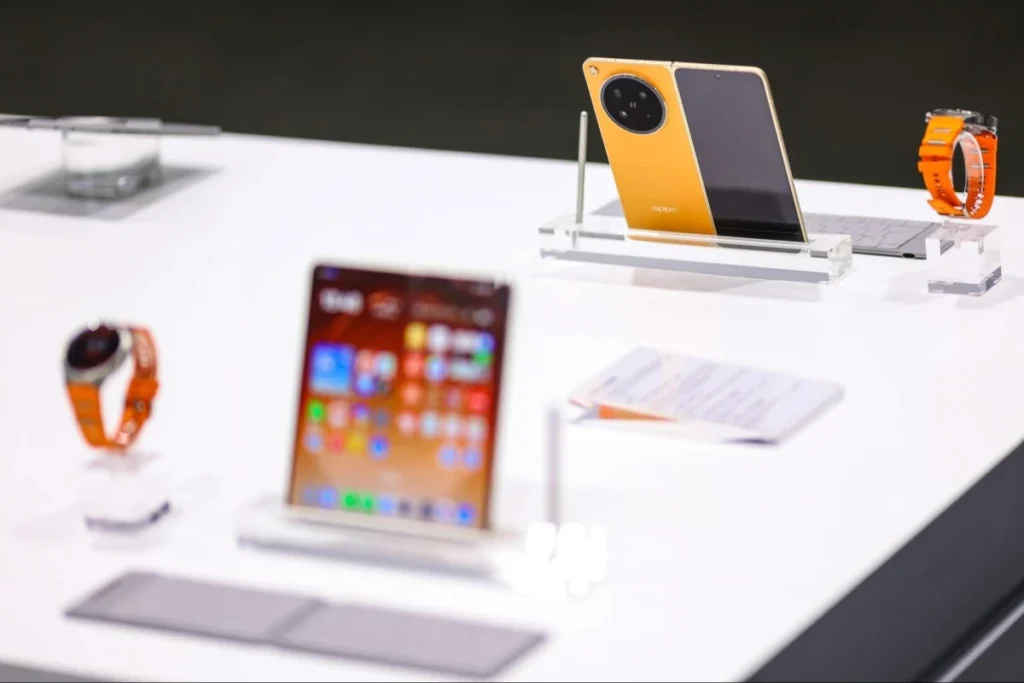
Mainland China’s smartphone market declined 1% in 2025 to 282.3 million units, per Omdia research. Huawei led with 46.8 million units and 17% share. Vivo followed at 46.0 million, Apple at 45.9 million, Xiaomi at 43.7 million, and OPPO at 42.8 million.
The gap between first and fifth was 4 million units across 282 million total. That is a statistical tie. The consequences are different for each brand depending on where they stand.
In Q3 2025, the field was even tighter. Vivo led with 11.8 million units and 18% share, while OPPO ranked fifth with 9.9 million units and 15% share, with Huawei, Apple, and Xiaomi between them.
Less than two million units separated first from fifth in a single quarter. China’s market had a different leader every quarter in 2025. That had not happened in 2024.
Government subsidy programs explain part of the volatility. They pulled demand forward in early 2025. When subsidies tapered, volumes corrected, and the leaderboard reshuffled. Organic demand growth is slower than the headline figures suggest.
For brands sitting in the middle of the pack, that structure means there is no quiet season. Every share point gained comes directly from a competitor.
OPPO’s response runs in two directions: upward on price and inward on technology. Neither is a short-term play.
OPPO’s Premium Bet: The Find Series and the Hasselblad Strategy
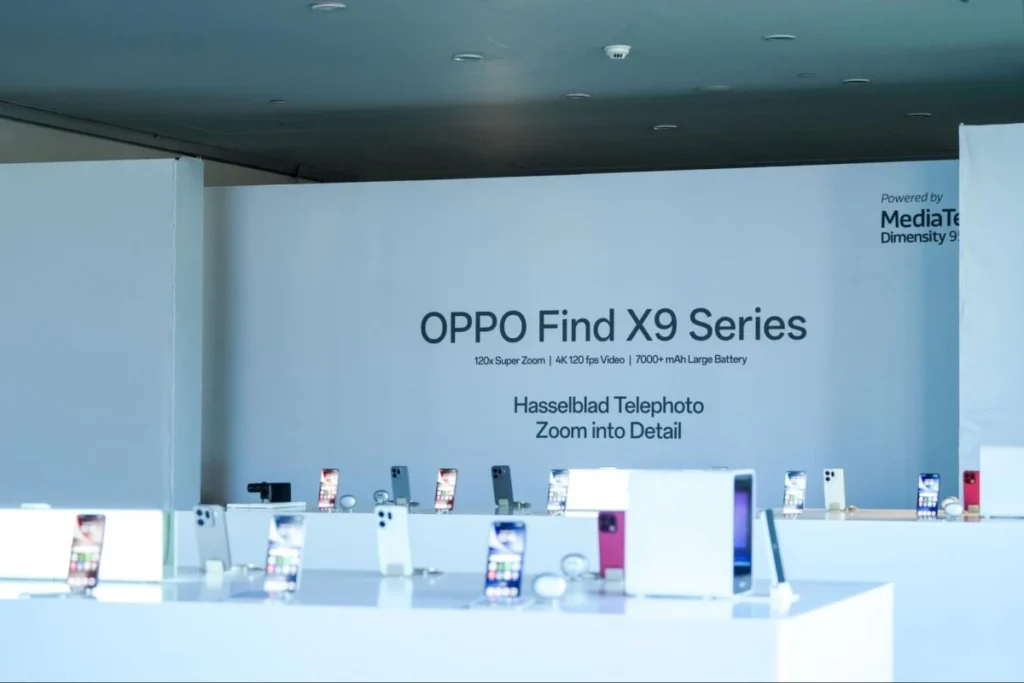
China’s smartphone market is not contracting uniformly. The above-4,000-yuan (around 590 US Dollars) premium tier is expanding. According to OPPO China president Liu Bo, that tier accounts for nearly one-third of China’s smartphone market, with annual volumes exceeding 90 million units.
Despite flat overall demand, the 4,000-6,000 yuan (around 560-840 US Dollars) premium mid-range smartphone segment has grown for three consecutive years. OPPO’s Find X8 series led growth in this price band in January and February 2025, achieving a 125% week-on-week surge after the government subsidy program was launched on January 20, 2025—marking the fastest expansion among major flagship models in that range during the subsidy period.
Imaging is OPPO’s chosen ground for that push. The company has co-developed cameras with Hasselblad since 2022. In 2025, OPPO and Hasselblad extended their partnership beyond its original three-year term, committing to co-develop the next generation of mobile imaging systems. In April 2025, OPPO also launched Lumo, a proprietary in-house imaging brand. Both run in parallel on the Find X8 Ultra. The result is stacked credibility: Hasselblad provides the cultural signal, and Lumo provides the engineering proof.
The pattern is consistent across China’s premium consumer categories. Brands that anchor to one verifiable craft argument hold their price tier better than brands competing on aggregate specs. For OPPO in consumer electronics, imaging is that anchor.
The foldable tier reinforces the same logic. OPPO Company launched its Find N5 foldable alongside a bar-phone flagship simultaneously in early 2025, the first dual-flagship global launch in the brand’s history.
Foldables carry the highest price tags in China’s smartphone market. Winning in that segment strengthens everything the Find series wants to signal.
AI as the New Table Stakes: ColorOS, DeepSeek, and 100 Million Users
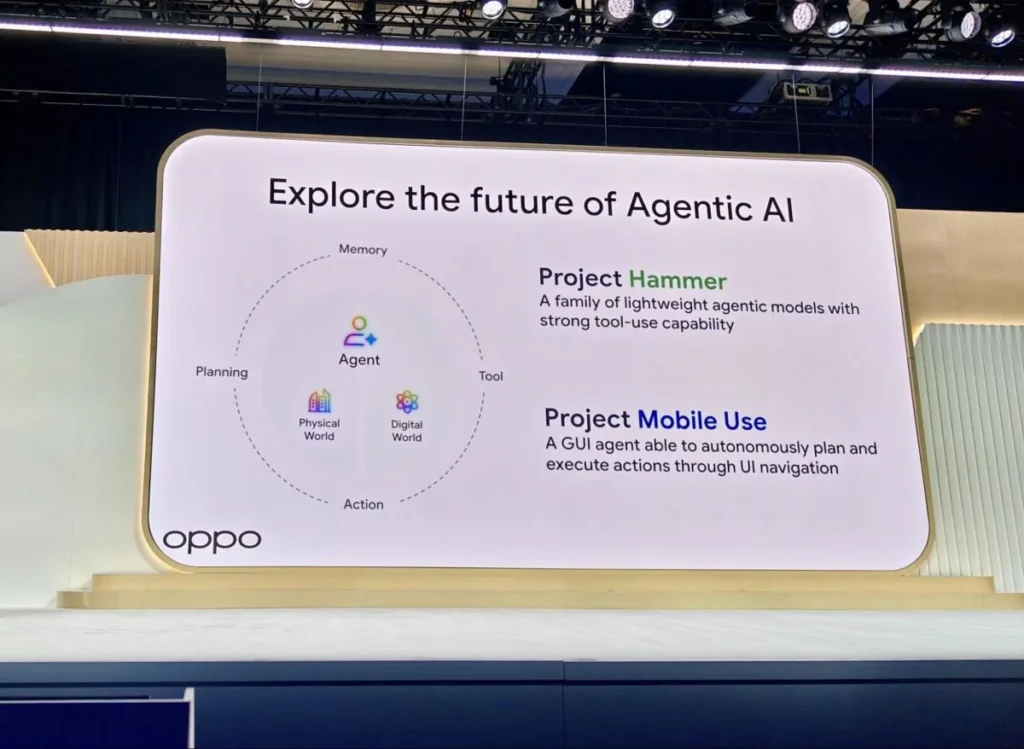
AI has become the stickiness layer that shapes whether smartphone buyers stay inside a brand’s product family after their first purchase. OPPO’s approach to that layer is more deliberate than most.
For 2025, OPPO targeted nearly 100 million users, with monthly AI feature updates planned across the full product range. ColorOS 15 integrated DeepSeek for the Chinese market. ColorOS 16 launched in October 2025 with expanded AI productivity and imaging tools. Collaboration partners include:
- Microsoft
- MediaTek
- Qualcomm
The R&D signal adds weight. Ten papers from OPPO’s research institute were accepted at CVPR 2025, one of the world’s most selective computer-vision conferences. The research spans image restoration, video generation, and semantic segmentation. That is external academic validation, not product marketing.
The implication for executives following retail technology reshaping China’s consumer electronics sector is direct. AI on Chinese smartphones is cascading from flagship to mid-range faster than in most Western markets.
OPPO’s estimated 650 million ColorOS monthly active users give it a scale advantage when deploying new features across the base. For a broader view of where Chinese tech R&D sits globally, the Top 25 Chinese Tech Innovators report maps the companies setting the pace.
The Structural Advantages OPPO Doesn’t Market Loudly
Two advantages sit beneath OPPO’s product story: channel depth and portfolio architecture.
On channel depth: OPPO built one of China’s densest offline retail networks, reaching over 200,000 outlets at its peak. I’ve seen this play out in lower-tier cities across Guangdong and Hubei.
OPPO’s physical presence in those markets was not visible from the outside. You had to walk the streets to find it. Both OPPO and Vivo built consumer trust in cities where many buyers still want to hold a device before committing. Online-first rivals paid a real cost trying to enter those markets, and many never fully did.
Understanding China’s Gen Z shopping behavior adds an important dimension here. Younger buyers in lower-tier cities first encountered OPPO through physical retail, not social feeds. That first-purchase moment shapes brand perception in ways that digital advertising rarely undoes.
On portfolio architecture: when BBK Electronics deregistered in 2023, the portfolio did not collapse. Realme was progressively reintegrated under OPPO. Today, the brand range runs from the Find flagship through Reno mid-premium to the A-series entry tier to Realme’s value segment. That coverage limits the number of price bands where a rival can enter and find OPPO absent.
The channel depth also feeds what is social commerce in China in a specific way. OPPO’s offline presence provides the trust base that social campaigns reinforce. Brands competing only online are competing for attention. OPPO competes for proximity.
Three Pressures That Could Unsettle OPPO’s Strategy

The analysis above is not a clean success story. Three structural pressures remain unresolved.
The first is the HarmonyOS moat. Huawei’s HarmonyOS 6 connects phones, tablets, laptops, smartwatches, and home devices into a closed product system. Users inside it face real switching costs.
OPPO runs ColorOS on Android. It is a strong platform with deep AI integration. But it does not create the same lock-in. As ByteDance’s rise demonstrated in social media, the companies that hold dominant positions in China rarely win on a single product. They win on the cost of leaving. OPPO has not yet built that kind of architecture.
The second is Xiaomi’s IoT scale. Xiaomi approached 1 billion connected IoT devices by late 2025. Its “Human x Car x Home” strategy integrates smartphones with electric vehicles and smart home products. A consumer anchored across those categories is very difficult to move with a better camera. OPPO’s wearables and tablet range is smaller. That gap is structural, and it widens with each category Xiaomi adds.
The third is AI commoditization. As DeepSeek, Gemini, and Qualcomm on-device AI spread across all Android flagships in 2026, OPPO’s AI differentiation window narrows. Being first to 100 million AI users matters less if five other brands reach that threshold by year-end. OPPO’s CVPR research shows genuine technical depth. Research leadership and market separation are different problems.
When I speak with global brand teams about China’s competitive structure, this cluster of pressures is the part that rarely surfaces in initial briefings. It should be on the table first.
What Does China’s Smartphone Competition Tell Your Brand Strategy?
As competition among China’s five smartphone leaders intensifies, global executives face a harder version of the same question. How do you maintain relevance when every competitor matches you on nearly every metric?
Ashley Dudarenok works with global executive teams and conference organizers to translate China’s competitive dynamics into sharper strategic frameworks, clearer consumer understanding, and stronger market positioning.
She helps leadership teams understand how China’s AI strategy and domestic brand competition are producing lessons that apply beyond the smartphone category, from consumer goods to branded technology to retail.
Invite Ashley Dudarenok to speak on China’s consumer-technology market, brand competition, and the forces reshaping Asian consumer categories. Her sessions give senior teams a grounded view of what competition inside China looks like from the inside.
OPPO Company FAQs
Below are short answers to the most common questions about OPPO’s origins, ownership, technology, and strategy in China.
1. What Is OPPO Company?
OPPO company is a Chinese consumer electronics manufacturer founded in 2004. It produces smartphones, audio devices, and wearables sold across more than 60 countries worldwide.
2. What Does the OPPO Name Mean?
The OPPO name is not an acronym. Tony Chen selected it to project quality and global appeal when the brand launched in China in 2004.
3. Where Is the OPPO Company Headquarters?
OPPO’s headquarters is in Dongguan, Guangdong Province, China, where the brand was founded in 2004. It also operates major facilities in Shenzhen.
4. Who Makes OPPO Phones?
OPPO phones are made by Guangdong OPPO Mobile Telecommunications Corp. Primary manufacturing is centered in Guangdong, with additional assembly plants in India and Indonesia.
5. Who Is the CEO of OPPO Company?
Tony Chen, also known as Chen Mingyong, is OPPO’s CEO. He co-founded the brand in 2004 and has overseen its global smartphone expansion since then.
6. What Brands Does OPPO Own?
OPPO owns OnePlus, which targets premium enthusiast buyers, and Realme, covering the value segment. Both share OPPO’s manufacturing infrastructure while maintaining distinct brand identities.
7. What Is ColorOS?
ColorOS is OPPO’s proprietary Android-based operating system. It runs across all OPPO devices and integrates AI tools, privacy controls, and ecosystem connectivity features.
8. What Is VOOC Charging?
VOOC is OPPO’s proprietary fast-charging system, introduced in 2014. It controls current delivery to cut charge times while limiting heat, and evolved into SuperVOOC.
9. How Does OPPO Compare to Huawei and Xiaomi in China?
In China’s 2025 market, OPPO, Huawei, and Xiaomi each held 15 to 17 percent share. OPPO’s edge is imaging. Huawei and Xiaomi prioritize ecosystem integration.
10. Is OPPO Stronger in Certain Chinese Cities?
OPPO’s channel strategy is strongest in China’s lower-tier cities. Dense physical retail there outperforms online-first rivals, building brand trust where e-commerce lags.