
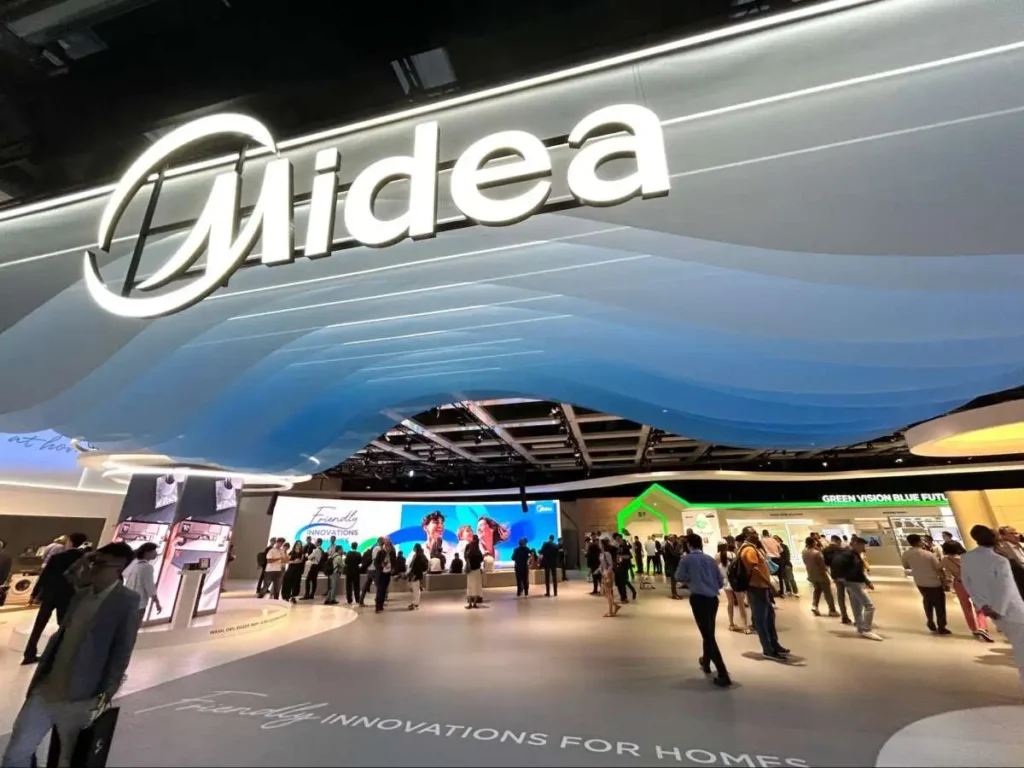
Midea is often searched as an appliance maker. Its China story is much bigger. Midea shows how household utility becomes brand power. The company won trust by entering daily routines, then expanded into premium appliances, AI home scenarios, logistics, energy, and industrial technology.
Its success is useful for business leaders because it connects three forces. China’s manufacturing base, platform retail, and consumer demand now reinforce one another.
What Is Midea Company?
Midea is a Chinese technology group built from the home appliance sector. Midea Group is the corporate entity behind the Midea brand. Its business now covers smart home, industrial technology, building technologies, robotics and automation, energy, healthcare, and smart logistics.
Midea reported RMB 458.5 billion (approximately USD 67.52 billion) in revenue and RMB 43.95 billion (approximately USD 6.47 billion) in net profit attributable to owners for 2025. It has accumulated over 539 million users globally and serves nearly 100 million users annually across its product and service ecosystem.
The real question is not whether Midea is large. The sharper question is how it turned size into durable China market power.
How Did Midea Company Win Trust In Chinese Homes?
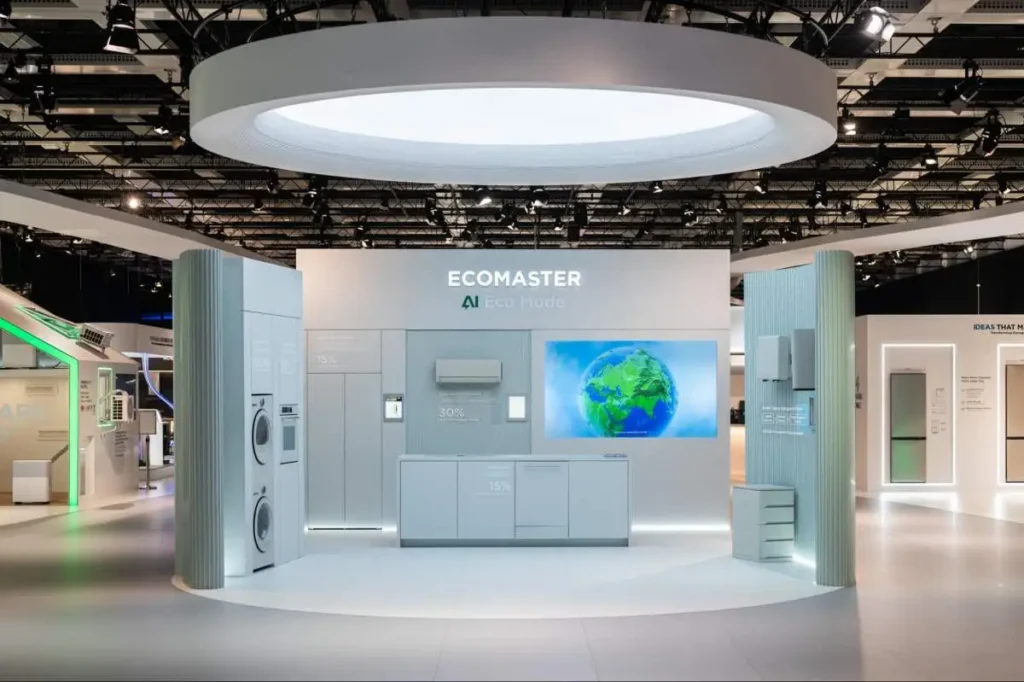
Midea won trust in China by becoming useful across ordinary home routines. Air conditioning, cooking, laundry, water heating, food storage, and cleaning all shape daily comfort.
Midea entered many of these moments. A Midea home appliance could sit in almost every room. That creates repeated contact. A consumer may meet the Midea brand in the kitchen, bedroom, laundry area, and bathroom. Each contact is small. The total effect is large.
This is why home appliance trust is different from fashion or beauty trust. Appliances rarely create excitement after purchase. They create trust by working well, saving time, and failing less.
Midea understood this logic. The company built category breadth before turning that breadth into ecosystem ambition. This is the appliance ecosystem logic behind Midea home appliances.
Why Does Midea Lead Across So Many Appliance Categories In China?
Midea leads across many appliance categories because it has built a full household portfolio. In the first half of 2025, Midea-branded products ranked first in home appliance sales on JD.com, Tmall, Douyin, and Pinduoduo. They also ranked first across major offline channels.
That matters because China’s appliance market is fragmented by platform, city tier, product type, and service need. Winning on one platform is useful. Winning across online and offline channels shows stronger operating depth.
Midea’s category spread also protects it from single-product risk. If demand softens in one area, another category can support the consumer relationship. This gives Midea a stronger position than a brand tied to one hero product.
The company’s China success is built on this portfolio logic. It can serve a new apartment, a family upgrade, a kitchen renovation, or a premium home project. Each use case strengthens the next one.
What Did Midea’s 2025 618 Performance Reveal About Consumer Demand?
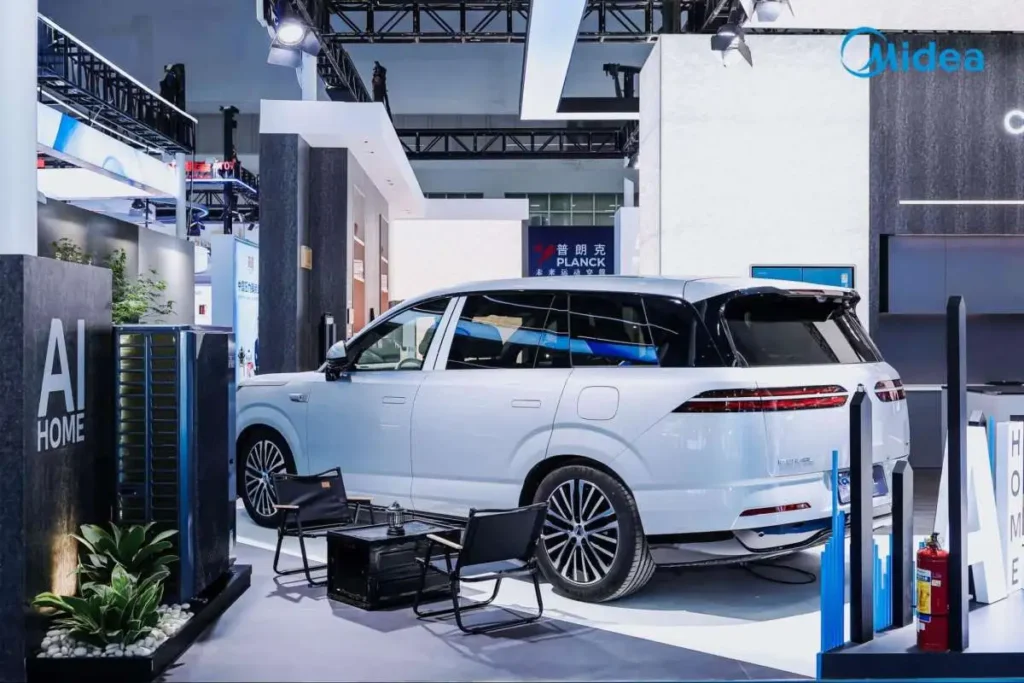
Midea’s 618 performance showed that its strength holds during China’s most competitive retail moments. During Tmall’s full cycle 618 brand rankings, Midea ranked first in large appliance sales. It also ranked first in small appliance sales.
This is important because 618 compresses many pressures into one event. Consumers compare prices fast. Platforms push traffic hard. Brands compete on stock, discounts, delivery, reviews, and service.
Midea’s ranking across both large and small appliances shows breadth. It also shows appliance leadership under pressure. Large appliances require trust, logistics, installation, and after-sales service. Small appliances require speed, novelty, price discipline, and frequent product refresh.
A brand that performs in both categories has stronger operating depth. The campaign is only the visible layer.
That is the Midea lesson. In China, sales events test the entire value chain. Brand visibility helps. Execution decides whether demand converts.
How Are COLMO And Toshiba Moving Midea Into Premium Home Tech?
COLMO and Toshiba show how Midea is moving beyond mass appliance strength. In the first half of 2025, Midea continued its COLMO plus Toshiba dual premium brand strategy. The two premium brands recorded over 60 percent growth in overall retail sales.
COLMO is Midea’s higher-end AI appliance brand. It targets consumers who want whole-home quality, cleaner design, health features, and intelligent control. Its products include the TURING 2.0 Refrigerator 708 and the EVO 2.0 residential central air conditioner.
The line also includes the TURING 2.0 washer dryer care machine, EVO Gas Water Heater X5, and an automatic Italian coffee machine.
The premium strategy goes beyond higher prices. It changes the reason people upgrade. In China, premium appliances now connect with health, design, quietness, embedded kitchens, better air, and tailored service.
COLMO has built over 1,700 brand stores in over 280 Chinese cities. Its registered membership has approached 3 million users. The brand also offers expert-level service, 24-hour support, and one-to-one butler service.
Toshiba gives Midea another premium path. It brings design heritage and a different emotional vocabulary. In China, Toshiba built over 600 brand stores and over 1,200 brand halls through domestic retail partnerships.
This is a clear succession model. Midea uses the mass brand for scale. Product adjacency creates the ladder. COLMO and Toshiba move selected consumers into premium home tech.
Why Does COLMO AI HOME Matter For China’s Smart Home Market?
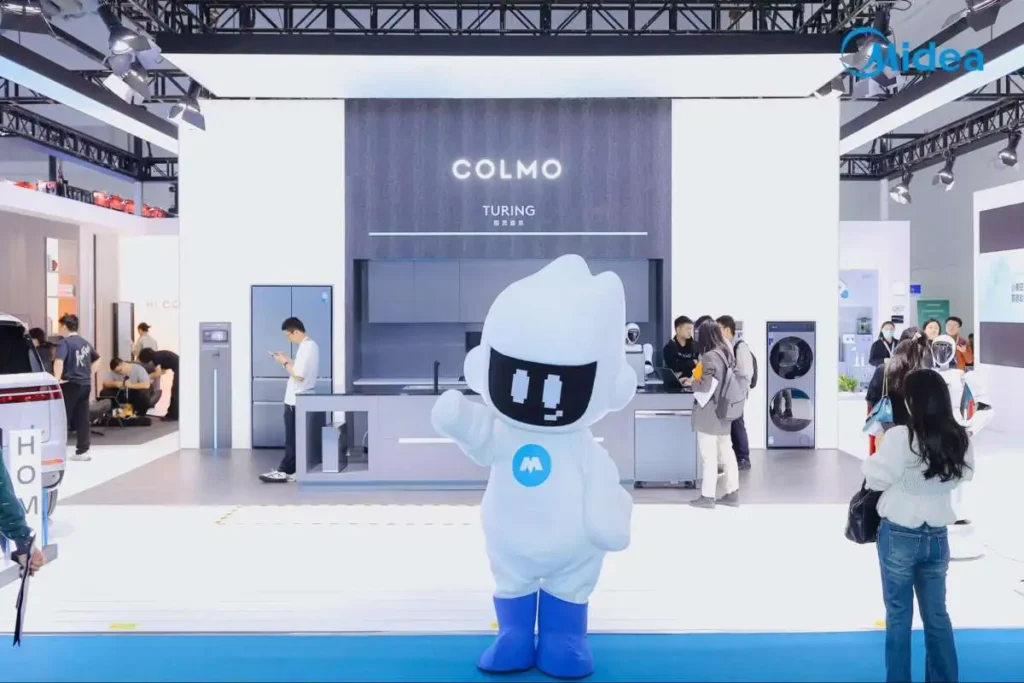
COLMO AI HOME matters because it shows where smart home competition is heading in China. The next step is not a phone app controlling separate devices. It is a coordinated home system that understands situations.
At WAIC 2025, COLMO presented an AI HOME solution with an AI agent at the center. The system aims to understand, plan, and execute across home scenarios. That shifts the appliance from command response to scenario intelligence.
The home is difficult for AI. Families have different routines. Rooms change. Appliances use different protocols. Guests arrive. Children and elderly relatives may need special comfort settings.
COLMO’s concept tries to solve that complexity. The goal is a home that can manage air, water, cooking, laundry, lighting, privacy, entertainment, safety, and control as connected scenarios.
This is why Midea’s appliance base matters. It supports home tech expansion. A company already present across many home categories has a better chance of building scenario intelligence. It owns more touchpoints inside the home.
How Does Midea’s Wuhu Factory Explain Its Execution Advantage?
Midea’s Wuhu factory shows the operational side of its China success. The World Economic Forum recognized Midea Kitchen and Bath Appliances in Wuhu as a Supply Chain Resilience Lighthouse in 2026.
The case is specific. Midea Wuhu faced a five-tier distribution network, small batch orders, and rising expectations for shorter lead times. It responded by building a direct-to-consumer value chain.
The factory used 113 digital use cases. Thirty-five percent were AI-driven. The system included real-time order management, AI-enabled planning, and a supply chain control tower.
The gains were concrete. Wuhu reduced the end-to-end delivery lead time by 39 percent. Inventory days fell by 30 percent. The market defect rate dropped by 86 percent.
This is the missing layer behind Midea’s brand power. It turns manufacturing scale into a visible service. Consumers see appliances. They do not see planning systems, routing tools, inventory logic, or installation scheduling. Yet those systems shape the buying experience.
What Does Midea Company Reveal About China’s Business Model?
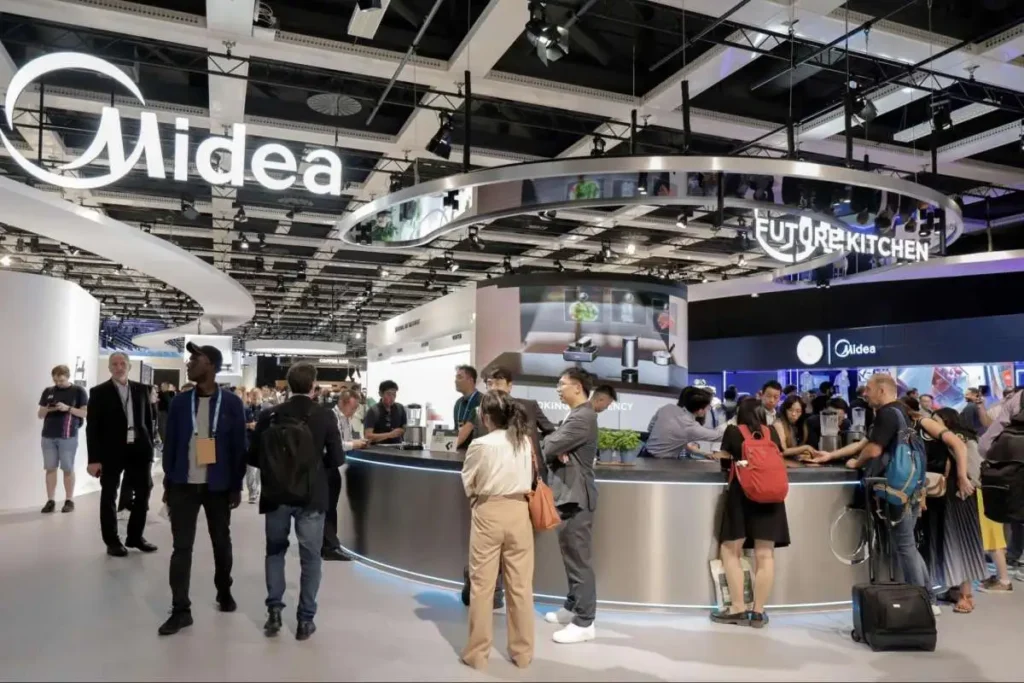
Midea Company reveals how Chinese champions move from China manufacturing to systems competition. The path starts with production. It then moves into product portfolios, platform sales, local service, AI features, premium brands, and global reach.
This model is hard to copy because it requires coordination. A company needs factories, engineers, category managers, data teams, channel partners, service networks, and retail discipline. One weak layer can damage the consumer experience.
China gives companies like Midea a demanding test market. Consumers expect value. Platforms create visibility and pressure. Service reviews expose weak delivery. Domestic competitors move fast.
That pressure can become domestic brand power. A company that survives this environment becomes sharper. It learns to manage price, quality, speed, design, and service at the same time.
Midea’s global position reflects that training. The company ranked No. 246 on the 2025 Fortune Global 500. It also reported RMB 195.9 billion (approximately USD 28.85 billion) in overseas revenue for 2025.
What Can Global Appliance And Home Tech Leaders Learn From Midea Company?
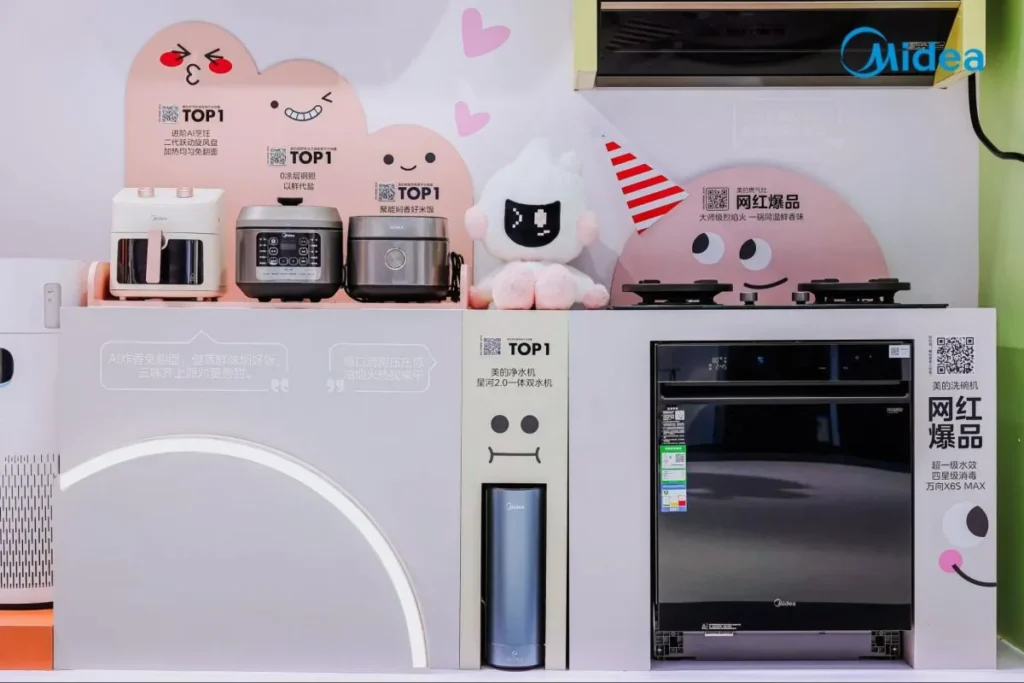
Global appliance and home tech leaders should study Midea for practical strategic lessons. The company shows how category depth becomes a defensive advantage. It also shows how premiumization can grow from mass trust.
The first lesson is to design around routines. Midea’s success starts with daily needs, not abstract positioning.
The second lesson is to treat service as a strategy. Installation, repair, replacement, and delivery all shape consumer trust.
The third lesson is to use premium brands with clear jobs. COLMO adds AI and whole-home intelligence. Toshiba adds design heritage and lifestyle appeal. Each brand carries a different upgrade path.
The fourth lesson is to link factories with front-end demand. Midea’s Wuhu case shows how AI and digital systems can improve service outcomes, more than factory efficiency.
The fifth lesson is to read China as a preview market. Consumers, platforms, and manufacturers interact at high speed. That makes China a live lab for home tech competition.
Midea Company matters because it shows what happens when a manufacturer becomes a system builder. The result is stronger than a product line. It is a model for competing across homes, platforms, factories, and services.
Looking To Understand What China’s Home Tech Leaders Signal For Your Industry?

Midea Company gives leaders a clear view of China’s execution advantage. It shows how consumer trust, platform retail, smart home technology, and manufacturing systems can reinforce one another.
Ashley Dudarenok helps global executives decode these China market signals with clarity. Her work focuses on Chinese consumers, digital transformation, customer centricity, AI, retail innovation, and future business models.
Through keynotes, workshops, and advisory sessions, Ashley turns Chinese company stories into practical strategy. Invite Ashley Dudarenok to help your team understand what China’s home tech leaders reveal about future competition.
FAQs About Midea Company
Below are some of the most common questions about Midea:
1. Who Makes Midea and Who Owns Midea Appliances?
Midea appliances are made by Midea Group, a Chinese technology company that owns the Midea brand and manages its appliance business.
2. Is Midea An OEM Manufacturer Or A Consumer Brand?
Midea has manufacturing capabilities, but it is also a consumer brand with its own products, retail presence, service systems, and brand portfolio.
3. Does Midea Only Compete On Price?
Midea competes on price in some categories, but its stronger advantage comes from category range, production depth, service reach, and retail execution.
4. How Is Midea Different From A Western Appliance Brand?
Midea grew from China’s manufacturing system, where product range, speed, channel coverage, and operating discipline often shape brand strength faster.
5. Why Does Midea Use Multiple Brands?
Midea uses different brands to serve different consumers, price tiers, design preferences, home scenarios, and premium upgrade paths inside China.
6. What Makes Midea Difficult For Global Competitors To Copy?
Midea is difficult to copy because its advantage sits across factories, suppliers, retail channels, service teams, data systems, and brand layers.
7. Why Is Midea Relevant To Business Leaders Outside Appliances?
Midea shows how a Chinese company can turn production capability into consumer trust, premium brands, smart systems, and global competition.
8. How Does Midea Build Trust Without Relying On Luxury Branding?
Midea builds trust through frequent household use, product availability, practical performance, service access, and value across everyday appliance categories.
9. Why Does Midea’s Brand Portfolio Matter?
Midea’s portfolio allows the group to serve mass, premium, youth, design-focused, and smart home consumers without forcing one brand identity.
10. What Does Midea Teach About Chinese Brand Building?
Midea shows that Chinese brand building often starts with usefulness, then grows through service, channel strength, category depth, and technology upgrades.