

Meituan-Dianping matters more in 2026 because local commerce competition now plays out at the level of trust quality, ranking credibility, and learning speed. China ended 2025 with 1.125 billion internet users, and generative AI usage climbed to 602 million people. That combination raises the bar for local platforms. Users expect faster recommendations, sharper relevance, and stronger confidence before they commit to a booking, an order, or a visit.
Local commerce has a simple problem that never disappears. People want confidence before they spend money on a place, a service, or an experience. The companies that win treat confidence as infrastructure.
Meituan-Dianping built that infrastructure at a national scale by connecting trusted discovery to real-world fulfillment, then turning each completed transaction into better decisions for the next user.
This cycle forms a Trust Loop that grows stronger with repeated use. It is the mechanism that turns local choice into a durable operating system. Meituan’s 2025 interim disclosures also show why this matters now, with intensified competition in food delivery and on-demand retail and higher company-level AI investment shaping the next phase of platform competition.
What Is Meituan-Dianping?
Meituan-Dianping is a local commerce ecosystem that connects discovery, trust signals, and fulfillment in one continuous cycle. Users discover options through Dianping, complete a booking or purchase within the Meituan and Dianping ecosystem, then return feedback that improves future matching across the platform.
What Is Dianping?
Dianping is the discovery and trust engine inside the ecosystem. It works as a decision infrastructure for local experiences through dense reviews, user photos, and ranking signals that reduce risk at the point of choice.
How Is Dianping Related to Meituan?

Dianping captures user intent at the moment of consideration. Meituan converts that intent into action through bookings, ticketing, and delivery. The two functions reinforce each other through a shared feedback cycle.
What Dianping Really Is: The Trust Layer, Not a Content Feature
Many executives look at Dianping and see a review product. That view misses the actual role it plays in the system. Dianping sits at the highest friction point in local commerce, the moment when a user hesitates because the downside feels personal and immediate.
A poor restaurant choice can waste an evening. A weak salon choice can damage trust for a long time. In that moment, basic star ratings do not carry enough weight. People want proof, detail, and recency. Dianping supplies that proof through photos, specific commentary, and ranking signals that shape merchant outcomes.
In dense urban markets, the real scarcity is not supply. The real scarcity is confidence. As a review platform in China, Dianping closes that trust gap by turning customer experience into a decision surface that people can:
- Read
- Compare
- Act on
That decision surface guides demand toward merchants that perform well, and it pushes merchants to improve because reputation affects revenue.
How Meituan-Dianping Builds the Trust Loop
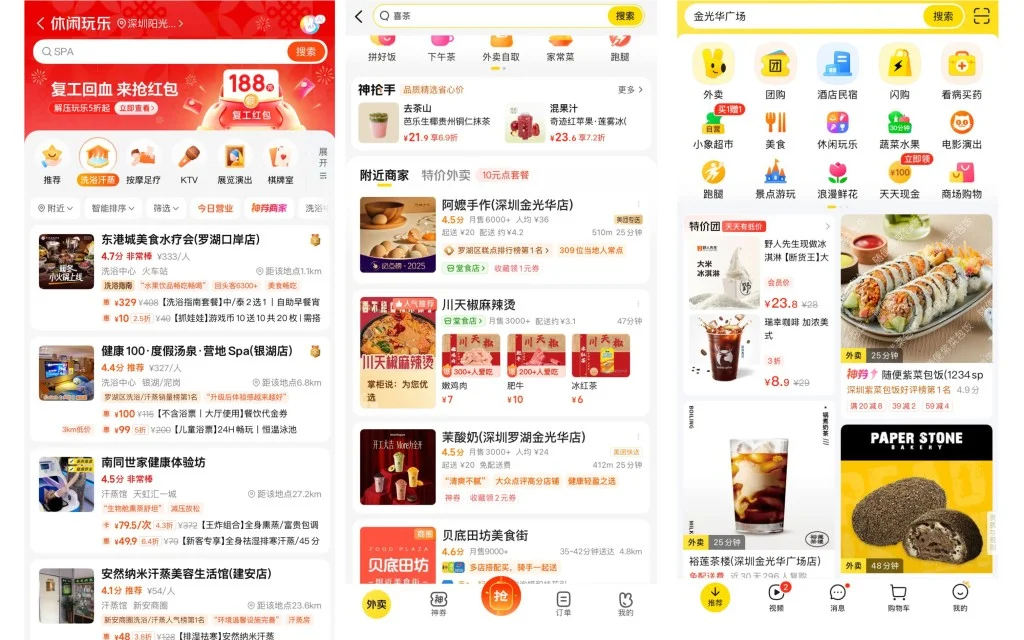
The strength of Meituan-Dianping becomes clear when you track the flow of user intent across the system. A user arrives on Dianping with a real choice to make. The platform reads that moment through reviews, photos, rankings, and context. The user then completes a booking, order, or ticket purchase inside the same ecosystem.
After the experience, the platform captures verified experiences through ratings, comments, and images. That feedback improves ranking, recommendations, and merchant behavior over time. This is O2O Commerce (online-to-offline commerce), built as a learning system that compounds through repeated use.
Step One: Discovery and Decision
What Happens:
The user searches on Dianping and filters options through reviews, photos, location, price, and category signals. At this stage, social proof shapes attention, and decision intelligence reduces uncertainty. The platform helps the user compare options in a way that feels concrete and current.
Why It Matters for the Moat:
This step captures Transactional Intent at the exact moment the user wants to choose. That moment has high value because the user has already moved beyond casual browsing. The platform becomes part of the decision process, which gives it influence before any transaction takes place.
What Leaders Can Copy Safely:
Place trust signals before checkout. Put proof close to the moment of choice. Use real customer inputs that help a user compare options with confidence.
Step Two: Transaction and Fulfillment
What Happens:
Once the user decides, the platform routes that choice into booking, ordering, ticketing, or delivery. The move from decision to action feels direct because discovery and fulfillment sit inside one ecosystem. This is where super app synergy creates operational advantage. The user does not need to leave the flow to complete the task.
The closed path from discovery to fulfillment is not just a UX choice. It is an operating model with scale. In 2024, Meituan reported RMB 250.2 billion ($34.8 billion) in Core local commerce revenue, up 20.9%, with segment operating profit of RMB 52.4 billion ($7.3 billion) and a margin of 20.9%.
Why It Matters for the Moat:
The platform converts trust into measurable behavior. It can link demand signals to actual outcomes, and that connection gives the system stronger data than a review site or a delivery app can gather on its own.
What Leaders Can Copy Safely:
Reduce friction between discovery and transaction. Remove unnecessary steps. Keep the path from decision to payment simple and predictable.
Step Three: Post Purchase Feedback
What Happens:
After fulfillment, the platform prompts the user to rate the experience, upload photos, and leave comments. These inputs create fresh verified experiences that reflect recent service quality and real customer outcomes.
Why It Matters for the Moat:
Fresh feedback keeps trust alive. Users rely on recency when they judge local services, and merchants respond when they know reputation directly affects traffic and conversion. The loop stays active because completed transactions generate the next layer of proof.
What Leaders Can Copy Safely:
Build feedback into the product flow. Ask at the right time. Keep the prompt simple, relevant, and easy to complete.
Step Four: Better Matching and Merchant Learning
What Happens:
The platform uses aggregated feedback and transaction data to improve rankings, personalize recommendations, and guide merchant behavior.
Merchants can see patterns in service quality, response speed, and customer sentiment. The user sees better matches. The merchant sees clearer performance signals. The platform improves allocation across supply and demand.
Why It Matters for the Moat:
This step creates the compounding logic of the system. More use produces more data. More data improves matching. Better matching drives more transactions. This is the practical engine behind an ecosystem flywheel, and it grows stronger as market density rises.
What Leaders Can Copy Safely:
Use aggregated insights to improve recommendations and merchant tools. Tie ranking quality to customer outcomes, not only paid placement. Treat data quality as a core product input.
Why the Trust Loop Becomes Hard to Copy in 2026
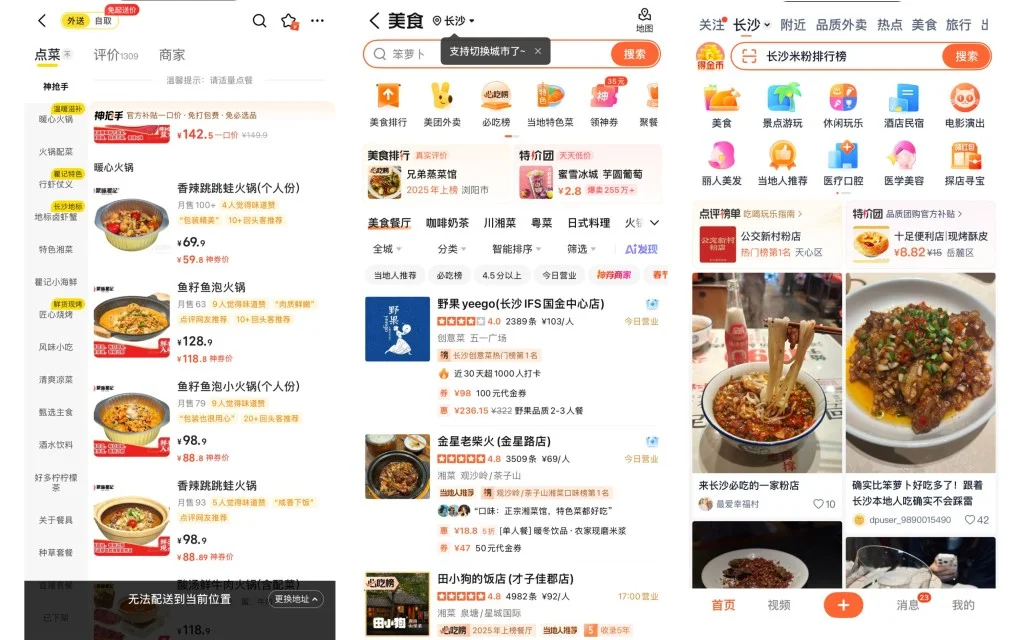
The value of the Trust Loop does not come from the existence of reviews, transactions, or recommendations on their own. The value comes from the quality of the connection across those functions and the speed at which the platform learns from completed outcomes.
This is where the gap opens between a feature set and a defensible system. The moat matters because the underlying market is massive and still moving. National Bureau of Statistics data shows RMB 56.18 trillion ($7.8 trillion) in catering revenue and RMB 152.287 trillion ($21.2 trillion) in online retail sales in 2024, which increases the value of reliable local ranking and fulfillment loops.
Density Improves Decision Quality Faster Than Rivals Can Catch Up
Local commerce rewards density more than broad coverage. This is also why density compounds in China. The National Bureau of Statistics reported a 67.00% urbanization rate at year end 2024, which increases the strategic value of neighborhood-level matching and recency-driven trust signals.
A platform can enter many cities and still remain weak if user participation and merchant participation stay shallow. The Trust Loop gains strength in places where many users compare options, complete transactions, and return fresh feedback at high volume.
That density improves ranking quality and recommendation quality with real local context. The platform sees which merchants perform well in specific neighborhoods, time windows, and service categories. The result is a better match that users can feel.
Better matching increases trust, and trust brings users back for the next decision.
This matters for leaders because density is a strategic sequencing decision. Expansion looks impressive, but concentrated market depth creates stronger learning and stronger defensibility.
Habit Cadence Feeds the Loop With Fresh Signal
A local platform becomes stronger when it serves daily needs and considered choices in the same ecosystem. Daily usage keeps engagement active and refreshes behavior data. Considered choices produce richer trust signals because users care more, compare more, and react more strongly to outcomes.
This combination gives the platform an advantage in recency and judgment. Recency improves relevance. Judgment improves recommendation quality. Together, they raise the odds that the next recommendation fits the moment.
Leaders can apply this idea without copying a full super app model. The practical lesson is category design. A high-frequency category can improve performance in a lower frequency category if the platform connects the data and user identity in a useful way.
The AI Opportunity Comes From Closed Loop Data, Not Surface Activity
The strongest AI opportunity in local commerce comes from outcome-rich data, not from raw interaction volume alone.
This is also where Wang Xing’s strategic framing of Meituan as “Retail + Technology” becomes directly relevant, because the advantage comes from connecting real-world fulfillment with a learning system, not from adding an AI interface on top of fragmented workflows. This creates the foundation for an AI concierge that can move beyond search support and into guided action.
A useful concierge layer needs to learn from intent, purchase behavior, and post-purchase sentiment in one connected system. The Trust Loop provides that structure.
This creates the foundation for an AI concierge that can move beyond search support and into guided action. The product can recognize repeated patterns, infer context from past choices, and recommend a next step with more confidence.
The user can accept, adjust, or decline, yet the recommendation starts from a stronger base because the model has learned from real outcomes.
This point matters in 2026 because many companies will launch AI features. Few will have the local training environment required for consistent recommendation quality. Leaders should focus on the data loop before they focus on the interface.
What Leaders Usually Misunderstand About Meituan-Dianping and Trust-Led Local Commerce
Executives rarely misread the interface. They misread the economics behind it. That is why many local platforms copy reviews, add delivery, and still fail to build durable trust.
They Copy Reviews and Miss the Closed Trust Loop
A common mistake starts with surface imitation. A team builds ratings, comments, and photos, then assumes trust will compound on its own. That approach creates content, but it does not create a self-reinforcing system.
The compounding effect appears when social proof connects to transaction outcomes and then returns as fresh verified experiences. Dianping matters here because it captures decision-stage behavior in a format that people can use immediately. The value rises when the platform can connect that decision stage to actual fulfillment and recent customer outcomes.
The executive lesson is simple. Reviews alone create a signal. A closed Trust Loop creates learning, ranking improvement, and stronger repeat choice.
They Treat Merchant Tooling as Support Instead of Growth Infrastructure
Many leadership teams underinvest in merchant tools because they classify them as operational support. That framing weakens the model. In trust led local commerce, merchant tooling directly affects service quality, response speed, offer accuracy, and reputation management. Those outcomes shape user confidence and conversion quality.
Meituan itself frames merchant enablement as growth infrastructure, not back office support. In its 2024 chairman statement, it said in store order volume rose by over 65% and described providing merchants with digital tools and services to improve operations.
Meituan-Dianping built strength because merchants could participate in the system with real visibility into performance and demand patterns. A serious local services platform needs dashboards, service metrics, review response workflows, and clear quality signals that merchants can act on.
Leaders who miss this point often spend heavily on demand generation while neglecting the tools that improve supply quality. The result is a platform that acquires traffic but struggles to improve outcomes.
They Let Paid Placement Distort Ranking Quality
Another misunderstanding appears in monetization design. Teams often push paid placement too early or too aggressively, then weaken trust in the very surfaces that drive decisions. Short-term revenue can rise, yet recommendation quality drops and user confidence erodes.
In a trust-led system, ranking logic needs a strong relationship with real service outcomes. Decision intelligence loses value when users suspect the top result reflects budget more than performance. Merchants also receive the wrong signal. They learn to buy visibility instead of improving quality.
This is a strategic discipline issue. Monetization belongs inside a trust framework with clear boundaries. If ranking quality declines, the platform loses the decision moment that anchors long-term value.
What Local Commerce Leaders Must Protect in 2026
The Trust Loop only compounds when people keep believing the next recommendation will be reliable. In 2026, that belief faces pressure from faster AI-assisted discovery, heavier promotion incentives, and more sophisticated review manipulation. Any local services platform that wants a durable advantage needs to treat trust protection as a core capability that shapes growth, monetization, and product quality across the entire system.
Protect Review Integrity Before Discovery Quality Slips
When discovery surfaces lose credibility, conversion drops first, then repeat behavior follows. The damage is hard to see in a dashboard because traffic can stay flat while decision confidence erodes. The practical goal is to make manipulation unprofitable.
Strong controls focus on pattern detection, added friction where abuse clusters, and clear consequences that reset incentives toward service quality.
Meituan itself has framed this as an operating issue. In its 2024 chairman statement, the company referenced stronger governance against malicious negative reviews and also announced a RMB 1 billion ($139 million) merchant support program. That combination matters because it shows a practical leadership approach, protect ranking trust while strengthening merchant quality at the same time.
Strengthen Verification to Protect Ranking Credibility
Local experiences change by location, staff, and time, so recency and proof matter more than simple volume. Reviews tied to completed transactions should carry greater weight.
Photo evidence and specific detail should raise confidence for high-friction choices. This approach creates clearer tiers of trust, so Verified Experiences influence ranking more than low signal content, without blocking casual participation.
Align Merchant Enforcement With Trust and Revenue Signals
Merchant behavior is part of the product. Slow responses, inaccurate listings, and defensive review replies all weaken trust at the point of choice. The platform should reward service recovery and consistent responsiveness, then penalize repeated manipulation with visible impact.
Demotion in key discovery placements and loss of promotional privileges often change behavior faster than warnings. Consistency matters, because merchants follow what the system tolerates.
Build Moderation Capability Before Abuse Scales With Volume
At scale, manual review cannot keep pace with content velocity, so the platform needs automated detection that improves over time. Look for unusual rating spikes, repeated wording patterns, abnormal photo reuse, and coordinated account activity across neighborhoods.
Catching every bad actor is unrealistic. What matters is reducing the success rate of fraud so honest participation stays worthwhile, and the marketplace stays credible.
Keep Paid Promotion Boundaries Clear in Local Commerce Discovery
Paid placement can support monetization, but it should not dominate the most sensitive decision surfaces. Users return when top results feel earned through performance and reliability.
Clear labeling, strict limits on where promotions appear, and ranking inputs anchored in customer outcomes protect long-term trust and reduce acquisition waste.
Design Feedback Incentives That Lift Quality Without Distorting Participation
Feedback prompts can flood the system with vague reactions if the product rewards volume over usefulness. Recognition-based incentives tend to work better than cash for quality.
Badges for helpful reviewers, visibility for strong photo contributions, and status signals for consistent participation raise standards. Templates that ask for specific details, such as service accuracy, cleanliness, and value improve downstream recommendations and help merchants act on what they learn.
How Ashley Dudarenok Helps Leadership Teams Decode the Meituan-Dianping Trust Loop

The Meituan-Dianping case raises a deeper leadership question than platform features alone. It asks how a business turns trust into operating logic across discovery, ranking, fulfillment, feedback, merchant incentives, and governance. This is where Ashley Dudarenok brings unusual value to executive audiences.
Ashley helps senior teams understand why the Meituan-Dianping model works at a structural level in China. Her keynotes connect platform behavior to strategic decisions that leaders actually control, including ranking credibility, merchant tooling, review integrity, category mix, and AI-driven recommendation design. The result is a clearer view of what to build, what to protect, and what not to copy blindly.
For companies in retail, marketplaces, travel, hospitality, and local services, Ashley can tailor keynote speeches, executive briefings, and workshops around the exact issue behind this article.
She can unpack how trust drives conversion in dense local markets, why feedback loops create defensibility, how governance protects platform economics, and how AI can improve local commerce recommendations without weakening user confidence.
If your leadership team wants a sharper understanding of China-style local commerce systems and practical lessons from Meituan-Dianping, book Ashley Dudarenok for a keynote, executive session, or strategy workshop focused on trust-led platform growth and the future of local commerce.
FAQs About Local Commerce Trust Loops and the Meituan-Dianping Model
-
Why is Meituan-Dianping considered a trust-driven local commerce model?
It is considered trust-driven because Meituan-Dianping integrates discovery, transactions, and feedback within a single system. That structure turns completed services into fresh proof, better rankings, and stronger confidence in local commerce decisions over time.
-
What makes Dianping more influential than a typical review platform in China?
Dianping influences decisions before payment, not only opinions after visits. In a crowded review platform environment in China, recency, detail, and ecosystem integration build user confidence fasterand give merchants stronger incentives to improve service quality
-
What is the strategic value of feedback loops in Chinese local commerce platforms?
The strategic value of feedback loops is faster learning from real outcomes. In Chinese local commerce platforms, feedback improves ranking quality, reveals weak service patterns, and helps merchants adjust operations before trust loss spreads across categories.
-
How can local services platforms apply lessons from Meituan-Dianping without building a super app?
A local services platform can apply lessons from Meituan-Dianping by linking trust signals, fulfillment, and feedback into a single journey. The advantage comes from the operating logic and data flow, not from copying the full breadth of a super app.
-
What makes local service rankings harder to get right than product search rankings?
Local service rankings are harder because quality changes by staff, timing, and context. Product search relies on more stable attributes, while local experiences depend on recency, execution quality, and expectation matching in real situations.
-
How can AI improve local commerce recommendations without damaging user trust?
AI improves local commerce recommendations by explaining why suggestions fit and by keeping user control visible. Trust drops when AI recommendations feel opaque, push users too hard, or ignore actual preferences and recent outcomes.
-
What is the role of merchant response quality in local commerce trust systems?
Merchant response quality signals discipline to users and to the platform. Fast, respectful, specific replies can recover trust after problems, improve perceived reliability, and help local commerce trust systems distinguish serious operators from careless ones.
-
What category mix helps local platforms build daily habits and stronger recommendation quality?
The best category mix combines high-frequency needs with higher consideration services. Daily usage keeps signals fresh, while occasional decisions add richer preference data, which strengthens recommendation quality across the platform over time.
-
How should platforms balance paid placement and ranking credibility in local discovery?
Platforms should separate paid placement from core ranking signals and label promotions clearly. Ranking credibility drives long-term value because users return when top results feel earned through service performance, not budget size.
-
What are the biggest risks of fake reviews for local commerce platform economics?
Fake reviews hurt the economics of local commerce platforms by corrupting rankings, lowering conversion quality, and pushing honest merchants away. The deeper cost is weaker trust, which raises acquisition waste and reduces repeat usage over time.
-
How can a local services platform reduce review fraud without hurting user participation?
A local services platform can reduce review fraud by adding stronger verification for high-impact reviews, using anomaly detection, and keeping feedback prompts simple. Honest users stay active when the process feels fair, fast, and useful.
-
What is the best way to design feedback prompts after a local service transaction?
The best feedback prompts arrive soon after a local service transaction and ask for specific details that users can easily recall. Short guided prompts improve response quality and reduce vague comments that add little decision value.