

Many people searching what is Kuaishou expect the name of a Chinese short video platform similar to Douyin. That description captures only a small part of how the platform operates inside China’s digital economy.
Over the past few years, the company has built an environment where creators interact with audiences in real time and purchasing decisions develop through ongoing viewer relationships.
The platform’s rise also reflects structural shifts in China’s commerce ecosystem. Live interaction, creator credibility, and community engagement now influence how millions of consumers discover and evaluate products. Kuaishou’s growth is part of a broader transformation in social commerce in China, where entertainment, community interaction, and retail transactions increasingly occur inside the same digital platforms.
As a result, Kuaishou live streaming has become a major channel for product discovery, discussion, and purchase across many consumer categories.
Understanding how Kuaishou works requires looking beyond video content and examining the social relationships that shape its commerce system.
What Is Kuaishou? A Short Answer
Kuaishou is a Chinese short-video and livestreaming platform that has grown into one of the country’s largest social commerce ecosystems. The platform combines video content, livestream interaction, and integrated ecommerce tools that allow creators and merchants to sell products directly to audiences during broadcasts.
Unlike some discovery-driven platforms, Kuaishou’s distribution system emphasizes long-term relationships between creators and viewers, which helps build trust and encourages repeat purchasing within creator communities.
Kuaishou Meaning: How a Video App Became a Commerce Platform
To understand the meaning of Kuaishou, it helps to examine the platform’s development and user base. Kuaishou grew through grassroots creator networks and regional communities across China. These foundations later supported the rise of Kuaishou’s e-commerce and livestream commerce.
Origins of Kuaishou
Kuaishou was launched in 2011 as a mobile app that allowed users to create and share animated GIFs. The product was developed by a Beijing-based company, Kuaishou Technology. In 2013, the platform shifted toward short video publishing as smartphone adoption and mobile internet usage accelerated across China.
Over the following decade, the platform grew into one of the country’s largest video ecosystems. In 2025, Kuaishou reported 731.1 million monthly active users and 416.2 million daily active users on its main application, according to the company’s investor disclosures.
These figures illustrate the scale of the platform before considering its commerce ecosystem.
Community Culture and Creator Identity
Kuaishou’s growth was shaped by a user base that differs from many other Chinese social platforms. Industry research from QuestMobile shows that a significant share of Kuaishou users live in smaller cities and regional markets rather than top-tier urban centers.
About 56.3 percent of users were located in tier three cities and below in 2025. This audience structure influenced the type of content that spread widely on the platform.
Many early creators shared videos related to agriculture, food preparation, local manufacturing, and everyday routines. These patterns also reflect broader shifts in Chinese consumer behavior, where audiences increasingly rely on social platforms to evaluate products through peer experiences.
Frequent interaction between creators and viewers also became common. Comment sections and livestream chat features enabled audiences to communicate directly with creators, gradually deepening viewers’ familiarity with individual channels.
The Shift Toward Social Commerce
The platform began building its commerce infrastructure during the late 2010s. The company introduced tools that enabled creators to sell products during livestreams. These tools evolved into the platform’s Kuaishou ecommerce system.
The platform launched integrated stores called Kuaishou Shops. Merchants and creators could list products directly inside the app. Viewers watching Kuaishou live sessions could open product pages and complete purchases without leaving the livestream.
Commerce activity expanded quickly. According to company disclosures and research by Chinese firms, gross merchandise volume generated through Kuaishou e-commerce reached about RMB 358.9 billion in Q2 2025.
These developments gradually transformed the platform from a video-sharing network into a commerce environment built around creators and live interaction.
The Relationship Graph: The Architecture That Shapes Kuaishou
Kuaishou’s content distribution model differs from many short-video platforms in that it emphasizes ongoing relationships between creators and viewers. Instead of constantly introducing new content through pure discovery feeds, the platform prioritizes interaction history and follower connections when determining what users see.
This structure is often described as a relationship graph, where user interactions with specific creators influence future content distribution.
Relationship Graph vs Algorithmic Discovery
Many short video platforms rely heavily on algorithmic discovery, continuously surfacing unfamiliar content. Kuaishou’s system behaves differently. When viewers follow a creator and interact with their videos or livestream sessions, the platform continues to show that creator’s content more frequently.
As a result, audiences often return to the same creators repeatedly rather than moving rapidly between new accounts. Over time, this pattern forms stable communities of viewers around individual channels.
Kuaishou’s own investor communications emphasize that interaction between creators and audiences remains central to the platform’s ecosystem.
Trust Signals in Audience Interaction
The platform evaluates multiple engagement metrics when deciding how widely a video or livestream should circulate. These signals include:
- Viewing time
- Comments and discussion activity
- Likes and shares
- Repeated visits to the same creator channel
This interaction-driven model closely resembles China’s social CRM approach, in which long-term engagement with audiences underpins customer relationships.
In 2025, Kuaishou reported an average daily viewing time of about 134.1 minutes per user, which reflects the depth of engagement within its creator communities.
Why Relationship Graphs Encourage Repeat Commerce
Because the platform’s distribution system reinforces ongoing interaction with familiar creators, viewers often develop consistent viewing habits. Many users follow specific creators whose content they watch regularly.
Stable viewing relationships are one of the reasons commerce works so effectively on the platform. They explain why audiences often return to the same creator channels rather than relying exclusively on algorithmic discovery.
Live Commerce Mechanics on Kuaishou
Once the platform’s relationship-driven distribution model is understood, the next step is examining how transactions occur during livestream broadcasts. Kuaishou integrates content viewing, audience interaction, and purchasing tools within the same broadcast environment. This structure allows viewers to evaluate products and place orders without leaving the livestream session.
Livestream Room Structure
A typical Kuaishou live broadcast presents the host on the main video screen, with interactive elements appearing around the video feed. Viewers can see product cards, comment streams, and viewer engagement signals while the broadcast continues.
When a host introduces a product, a product card appears inside the broadcast interface. Viewers can open the product listing while still watching the livestream and review details such as price, specifications, and seller information. Because the purchasing interface remains within the broadcast, the viewer does not leave the content environment during the transaction.
Demonstration Driven Selling
Product sales on the platform rely heavily on live demonstrations rather than static product listings. Hosts show how items perform in real situations. Clothing sellers try products on camera, food merchants prepare dishes during broadcasts, and electronics sellers test devices live.
Viewers, therefore, evaluate products as they watch the demonstration rather than relying solely on catalog images. The format also shares characteristics with viral marketing dynamics in China, where engaging content spreads quickly through creator communities and platform algorithms.
Real Time Interaction and Audience Feedback
Audience interaction also plays a central role in livestream commerce sessions. During Kuaishou live streaming, viewers frequently submit questions about product features, delivery conditions, or usage instructions. Hosts respond directly during the broadcast, which allows viewers to gather information before deciding whether to purchase.
These conversations create a shared decision environment. When one viewer asks a question, thousands of others watch the response and factor that information into their own purchasing decisions.
Timing and Purchase Windows
Many livestream sessions introduce products during specific segments of the broadcast. A host may present an item for a limited time while explaining its features and pricing. Viewers who want to purchase must complete the transaction during the presentation window.
Because the product is introduced within an ongoing broadcast, the buying decision often occurs while the audience is actively engaged with the host and the surrounding community discussion.
The Creator Economy: How Hosts Power Kuaishou’s Commerce System
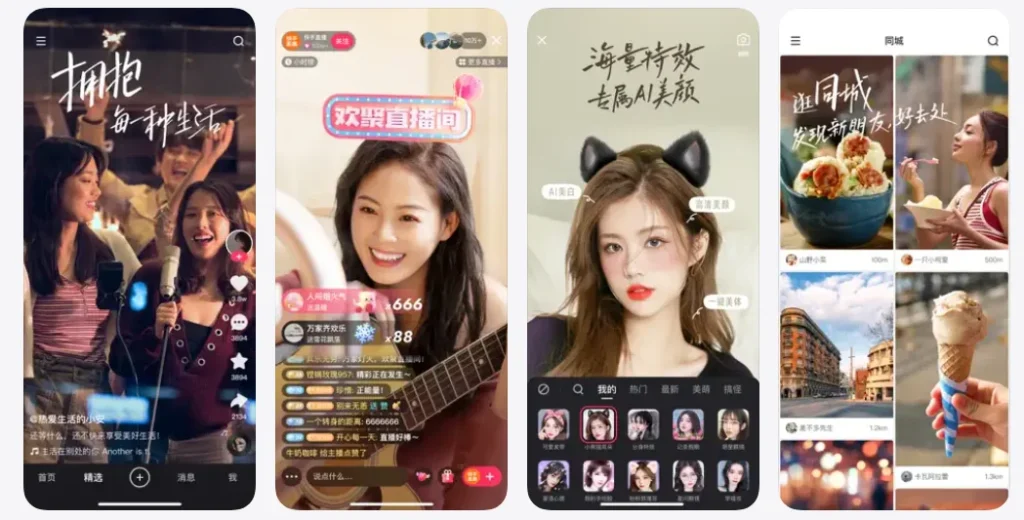
Kuaishou’s commerce ecosystem relies heavily on creators who act as product presenters and retail intermediaries. These hosts build audiences through short videos and livestream broadcasts, then introduce products to their followers.
Over time, many creators develop independent retail channels in which audience attention serves as a distribution mechanism for merchants and brands.
Creators as Commerce Intermediaries
On Kuaishou, creators often function as the front end of the retail process. A creator builds an audience through regular video content and livestream broadcasts. Once the audience becomes stable, merchants collaborate with the creator to introduce products during livestream sessions.
In this model, the creator controls the audience relationship while the merchant supplies the product inventory. The host presents the product, explains its features, and answers viewer questions during the broadcast. Viewers who trust the creator’s recommendations may choose to purchase the product during the session.
This structure differs from conventional digital advertising, where brands promote products directly to consumers. On Kuaishou, many brands rely on creators who already maintain strong engagement with their audiences. These creator relationships illustrate several customer engagement strategies developed by Chinese digital platforms to maintain continuous interaction with audiences.
Monetization Models for Creators
Creators participating in livestream commerce typically earn revenue through several mechanisms connected to product sales.
The most common model involves commission-based transactions. When a product is sold during a livestream, the creator receives a percentage of the transaction amount. This arrangement allows creators to generate income without managing product manufacturing or inventory.
Some creators eventually move beyond commission-based sales and begin launching their own product lines. In these cases, the creator’s audience becomes a built-in customer base for newly introduced products.
Other creators develop long-term partnerships with merchants who supply products specifically for their livestream channels.
Stable Communities and Repeat Buyers
Successful creators on Kuaishou often maintain stable viewer communities that regularly return to their broadcasts. Followers watch product demonstrations, participate in discussions during livestream sessions, and observe product feedback from other viewers.
Because audiences interact repeatedly with the same hosts, purchasing decisions often develop gradually. Viewers learn which creators provide reliable recommendations and return to those channels when they are interested in specific product categories.
These creator communities illustrate how Kuaishou’s commerce ecosystem depends on ongoing relationships between hosts and audiences.
Merchant Infrastructure and Platform Systems
After the creator layer, the key question for brands becomes operational. By 2025, the platform had moved beyond livestream selling and developed a broader merchant infrastructure. This shift reflects broader retail technology innovation in China, where social platforms are increasingly functioning as full-scale digital retail environments.
Companies now operate across creator traffic, short video commerce, shelf-based discovery, and closed-loop marketing within a single ecosystem.
Kuaishou’s 2025 disclosures show the platform positioning itself as an omnidomain commerce environment, where content-driven discovery and traditional ecommerce browsing work together.
From Livestream Sales to Omni-Channel Commerce
Kuaishou increasingly emphasizes pan-shelf ecommerce alongside livestream selling. Pan-shelf commerce refers to product discovery through search, category browsing, and shopping mall traffic, rather than solely through creator broadcasts.
In the first quarter of 2025, pan-shelf ecommerce accounted for about 30 percent of total ecommerce GMV on the platform. By the third quarter, that share had increased to more than 32 percent.
This shift signals a strategic transition. Kuaishou is developing a retail infrastructure that supports both impulse purchases driven by content and deliberate purchases driven by product browsing.
Merchant Supply and Assortment Expansion
Merchant supply on the platform has expanded rapidly. In the first quarter of 2025, average daily active merchants in Kuaishou’s shopping mall increased more than 40 percent year over year. Growth continued in the second quarter with 30 percent year-over-year merchant expansion.
In the third quarter, the average number of daily active merchants participating in pan-shelf ecommerce increased by 13 percent year over year. At the same time, the number of product categories carried by active merchants expanded significantly, with the number of level-three product categories per store rising by nearly 30 percent year over year.
For brands assessing the platform, these signals indicate growing merchant density and deeper product assortment across the ecosystem.
Automated Traffic Allocation
Traffic distribution on Kuaishou is also becoming more automated. The platform increasingly relies on algorithmic systems to match products, creators, and audiences.
In the third quarter of 2025, Kuaishou reported that its omni-platform marketing solution accounted for more than 65 percent of its closed-loop marketing spending. Automated placement tools, known as Universal Auto X, accounted for more than 70 percent of external marketing spending.
The company also introduced AI-driven bidding systems that reduce the need for manual campaign adjustments. For merchants, this means performance depends less on manual media buying and more on content quality, conversion signals, and operational execution.
Merchant Tools and Operational Efficiency
Kuaishou has also introduced tools designed to simplify merchant operations. Features such as Super Links provide recommended product placement within platform traffic channels. Marketing host tools connect products with relevant content scenarios across the platform.
The company has also introduced AIGC-powered commerce tools. These include AI-generated short videos, digital human presenters, and automated digital assistants that support product promotion and storefront management.
These systems reduce the cost of producing content and managing campaigns, allowing merchants to operate at a greater scale.
Strategic Implications for Brands
For companies entering the ecosystem, Kuaishou should be understood as a commerce infrastructure rather than a creator booking channel.
The platform now combines creator-driven demand generation, shelf-based product discovery, automated marketing systems, and merchant tools that support large-scale operations.
Brands that approach the platform solely through livestream campaigns may overlook the ecosystem’s evolution. Kuaishou is building a hybrid model in which content distribution, product browsing, paid traffic, and merchant operations reinforce one another.
For executives evaluating China’s social commerce landscape, this integrated structure is the key factor that now defines the platform. The platform, therefore, illustrates how customer-centric digital ecosystems reshape how brands interact with consumers in China’s digital economy.
Lower Tier Consumers: The Market That Powered Kuaishou’s Growth
One of the most important structural differences between Kuaishou and other Chinese digital platforms lies in its audience distribution.
While many consumer internet companies initially grew in China’s largest metropolitan areas, Kuaishou expanded strongly across smaller cities and regional markets. This demographic structure continues to influence how commerce operates on the platform.
Industry research indicates that more than half of Kuaishou users live in tier-3 cities and below, with about 56 percent of users in these markets in 2025. These regions include hundreds of smaller urban centers and rural communities that have experienced rapid growth in digital consumption over the past decade.
These audiences also represent a growing share of Gen Z shopping behavior in China, as younger consumers in regional markets rapidly adopt mobile commerce.
A Different Consumption Environment
Consumers in smaller Chinese cities often engage with digital commerce differently from audiences in top-tier metropolitan markets. Product discovery frequently occurs through content channels rather than through direct product search.
Kuaishou’s creator ecosystem aligns closely with this behavior. Many creators produce content that reflects everyday experiences in smaller cities, including food preparation, local manufacturing, farming, and family life. These topics resonate strongly with viewers who recognize similar experiences in their own communities.
Because audiences already identify with these creators, product recommendations during livestream sessions often feel more like community advice than traditional advertising.
Practical Product Categories Dominate
Purchasing patterns on Kuaishou also reflect the platform’s demographic profile. A large share of product categories sold through creator channels are for everyday practical use.
Popular categories frequently include:
• Agricultural products
• Packaged foods and local specialties
• Household goods
• Affordable apparel
• Beauty and personal care products
These categories differ somewhat from the luxury and premium fashion segments that dominate marketing campaigns on many global social platforms.
Why Brands Should Pay Attention
For companies evaluating Chinese social commerce channels, Kuaishou provides access to a large, often underrepresented consumer segment. Many of these consumers are digital natives who rely heavily on mobile video platforms for product discovery and community interaction.
As purchasing power continues to expand across China’s regional markets, these audiences represent one of the most significant growth opportunities within the country’s consumer economy.
For brands that understand how to work with creator communities and localized product demand, Kuaishou provides a channel into markets that traditional advertising channels often struggle to reach.
Kuaishou vs Douyin: Two Different Social Commerce Architectures
Kuaishou and Douyin are often grouped together as China’s two major short video platforms. For brands operating in China, however, the two ecosystems function very differently. Their traffic systems, merchant infrastructure, and commerce strategies follow distinct models that influence how products are discovered and sold.
Traffic Systems: Relationship Graph vs Interest Graph
Kuaishou’s content distribution emphasizes follower relationships and repeated interaction. Once users engage with a creator, the platform tends to continue showing that creator’s content. This reinforces long-term viewer communities and stabilizes audience relationships.
Douyin’s system prioritizes interest-based discovery. Its recommendation algorithm aggressively introduces new creators and new content into the feed. The system evaluates engagement signals such as watch time, completion rate, and interaction patterns to determine which videos reach larger audiences.
The result is a different traffic dynamic. Kuaishou tends to build stable creator communities, while Douyin tends to drive rapid discovery cycles through algorithmic distribution.
Commerce Structures on the Two Platforms
These traffic models directly influence how commerce operates.
Kuaishou’s commerce ecosystem developed primarily through creator relationships and livestream selling. Creators cultivate audiences over time and later introduce products during livestream broadcasts. Purchases often occur within repeated interactions between the same hosts and viewers.
Douyin expanded commerce through a broader retail infrastructure. The platform introduced Douyin Mall, search-based shopping, and large-scale merchant advertising tools. In 2025, Douyin continued expanding shelf-based commerce, enabling consumers to browse product categories without relying solely on creator content.
This means Kuaishou commerce activity often begins with creator relationships, while Douyin commerce increasingly resembles a hybrid of social discovery and traditional ecommerce.
Merchant Strategy Differences
These structural differences change how brands operate on each platform.
On Kuaishou, brands often succeed by building long-term partnerships with specific creators whose audiences trust their recommendations. Commerce growth depends on sustained interaction between creators and viewers.
On Douyin, brands frequently rely on large-scale content production and paid traffic amplification to push products into the algorithmic discovery feed. Viral product exposure can generate rapid sales spikes if content spreads widely.
Many companies, therefore, approach the two platforms with different operating strategies.
- Kuaishou tends to reward relationship-driven commerce built around creator communities.
- Douyin tends to reward high-velocity discovery, supported by content scale and advertising investment.
Strategic Lessons for Brands Entering Kuaishou

For companies evaluating China’s social commerce ecosystem, Kuaishou requires a different operating mindset than conventional digital advertising platforms. Success on the platform usually comes from long-term creator partnerships and consistent operational execution across content, inventory, and logistics.
These dynamics reflect broader China digital marketing strategies where brands combine content, community engagement, and commerce infrastructure. Brands that approach the ecosystem only through short campaign bursts often struggle to build stable distribution.
Build Long-Term Creator Partnerships
Kuaishou’s commerce system favors stable creator communities. Because viewers frequently return to the same hosts, brands benefit from working with creators over extended periods rather than launching one-time promotional campaigns.
Many successful merchants on the platform collaborate with creators across multiple livestream sessions, allowing audiences to observe repeated product demonstrations and gradually develop trust in the brand.
Align Product Categories with Audience Demand
Kuaishou’s user base includes a large share of consumers from regional markets and smaller cities. Products that address everyday consumption needs often perform strongly in this environment.
Categories such as packaged food, household goods, agricultural products, affordable apparel, and personal care items frequently appear in successful livestream campaigns. These categories align with the practical purchasing patterns observed across the platform’s audience.
Integrate Content and Commerce Operations
Kuaishou’s ecosystem connects content creation, product promotion, and transaction systems within a single platform. For brands, this means marketing and ecommerce operations cannot operate independently.
Successful merchants coordinate product launches with creator content schedules, livestream events, and promotional campaigns. This integration allows brands to maintain consistent product visibility across the platform’s content channels.
Invest in Operational Infrastructure
Brands entering the ecosystem must also maintain reliable supply chain operations. Livestream commerce often generates sudden spikes in demand when a broadcast attracts large audiences.
Merchants that cannot fulfill orders quickly risk damaging consumer trust and creator partnerships. Reliable inventory management, logistics coordination, and customer service support are therefore essential components of Kuaishou’s commerce strategy.
Evaluate Kuaishou as a Long-Term Channel
Kuaishou’s commerce model rewards companies that treat the platform as a sustained retail channel rather than a temporary marketing experiment. Creator relationships, audience familiarity, and repeated interaction develop over time.
Brands that commit to long-term collaboration with creators and consistent content activity often achieve more stable sales performance than companies that rely solely on short-term promotional campaigns.
Learn More from Ashley Dudarenok

China’s digital platforms evolve quickly. Livestream commerce, creator-driven retail, and integrated social ecosystems are reshaping how companies reach consumers. Understanding these systems requires deep knowledge of China’s technology and consumer landscape.
Ashley Dudarenok is an internationally recognized expert on China’s digital economy, consumer trends, and technology innovation. She has spent more than 15 years analyzing how Chinese platforms such as Kuaishou, Douyin, and WeChat influence global commerce.
Organizations work with Ashley through:
• Keynote speeches on China’s digital economy and consumer trends
• Executive briefings and leadership workshops
• Strategy sessions on China market entry and digital platforms
Organizations seeking deeper insight into China’s digital platforms and consumer ecosystems can work with Ashley Dudarenok through executive briefings, keynote presentations, and strategy workshops.
FAQs About Kuaishou and Its Commerce Ecosystem
1. Who founded Kuaishou and who runs the company today?
Kuaishou was founded by Su Hua and Cheng Yixiao. Cheng Yixiao currently serves as CEO, while Su Hua stepped back from day-to-day management in 2021 but remains influential in the company’s long-term strategy.
2. Is Kuaishou publicly listed?
Yes. Kuaishou Technology is listed on the Hong Kong Stock Exchange (HKEX: 1024). The company went public in February 2021 in one of the largest technology IPOs in Hong Kong in recent years.
3. How does Kuaishou make money besides ecommerce?
Kuaishou generates revenue from several sources including online advertising, livestream virtual gifting, ecommerce service fees, and marketing services for merchants and brands.
4. What industries sell the most products on Kuaishou?
Common product sectors on the platform include food and agricultural products, beauty and personal care, apparel, household goods, and consumer electronics. Many categories benefit from demonstration based livestream selling.
5. Does Kuaishou operate outside China?
Kuaishou operates international apps such as Kwai and SnackVideo, which target markets in Latin America, Southeast Asia, and parts of the Middle East. These apps focus on short video content rather than full livestream commerce ecosystems.
6. How does Kuaishou handle logistics for ecommerce orders?
Most logistics operations are handled through third party courier networks and merchant fulfillment systems. Sellers integrate inventory, shipping, and customer service through Kuaishou’s merchant management tools.
7. Can international brands sell products on Kuaishou?
Yes, but most brands enter the platform through local partners, distributors, or Chinese ecommerce teams. This approach helps manage logistics, regulatory compliance, and collaborations with creators.
8. What role does advertising play on Kuaishou?
Advertising on Kuaishou supports product discovery through in-feed video ads, livestream promotion tools, and performance marketing systems that help merchants distribute content and products across the platform.
9. How does Kuaishou moderate product quality and seller behavior?
The platform uses merchant verification processes, product review systems, and regulatory compliance checks to monitor sellers. Violations can result in content removal, product restrictions, or account penalties.
10. Why do analysts consider Kuaishou important for China’s digital economy?
Researchers often study Kuaishou because it illustrates how social interaction, creator communities, and commerce infrastructure can merge into a single digital ecosystem, influencing how products are marketed and sold online.