
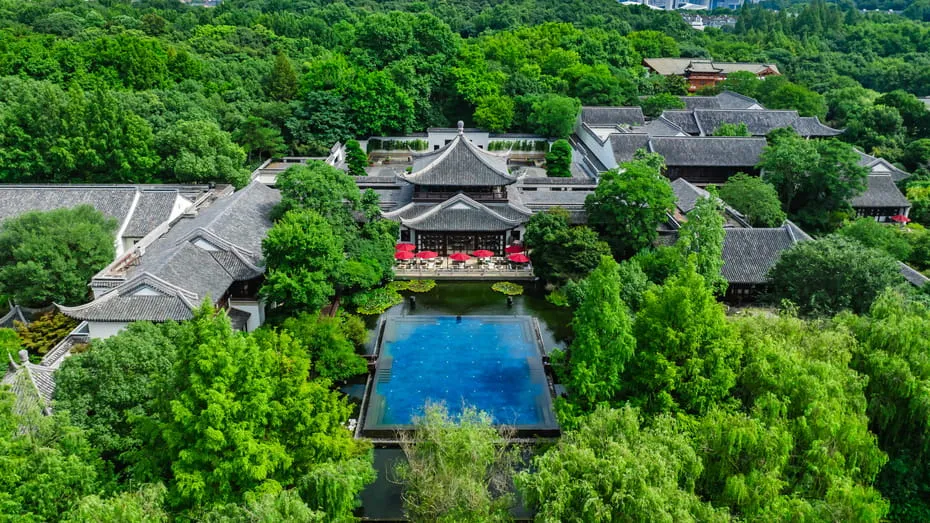
The Four Seasons Hotel Hangzhou at West Lake is a luxury garden hotel whose appeal lies in the blend of Chinese architecture, regional dining, and access to Hangzhou’s cultural traditions. Its lakeside setting and courtyard accommodations give the stay a clear identity, while Jin Sha supplies a culinary reason to visit.
The business interest lies in how these elements work together. A global hospitality brand draws on local architecture, food, and expertise to create an experience tied to its address. This makes the property a useful case in place-led luxury.
How Four Seasons Hotel Hangzhou Makes the Garden Part of the Stay
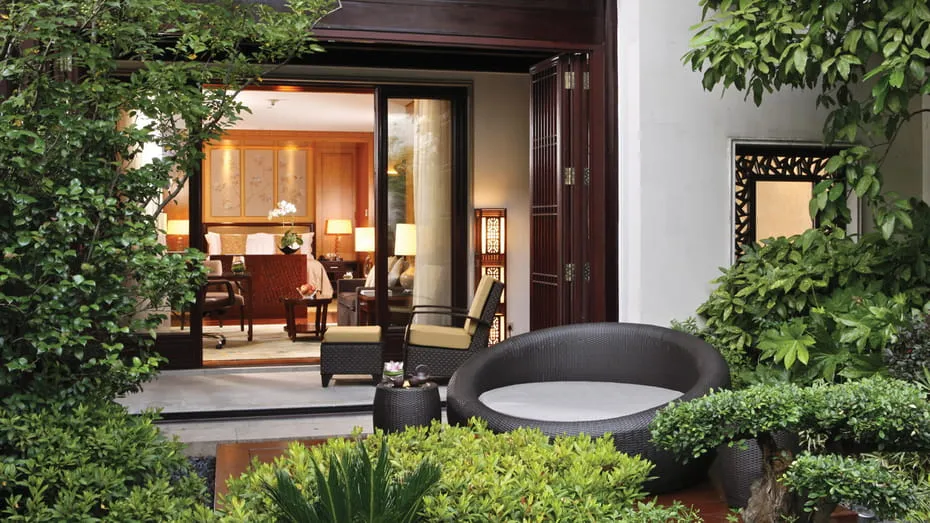
The hotel fact sheet lists 81 accommodations across rooms, suites, and villas. The main hotel rises just two stories, giving its garden setting a different scale from a tower hotel.
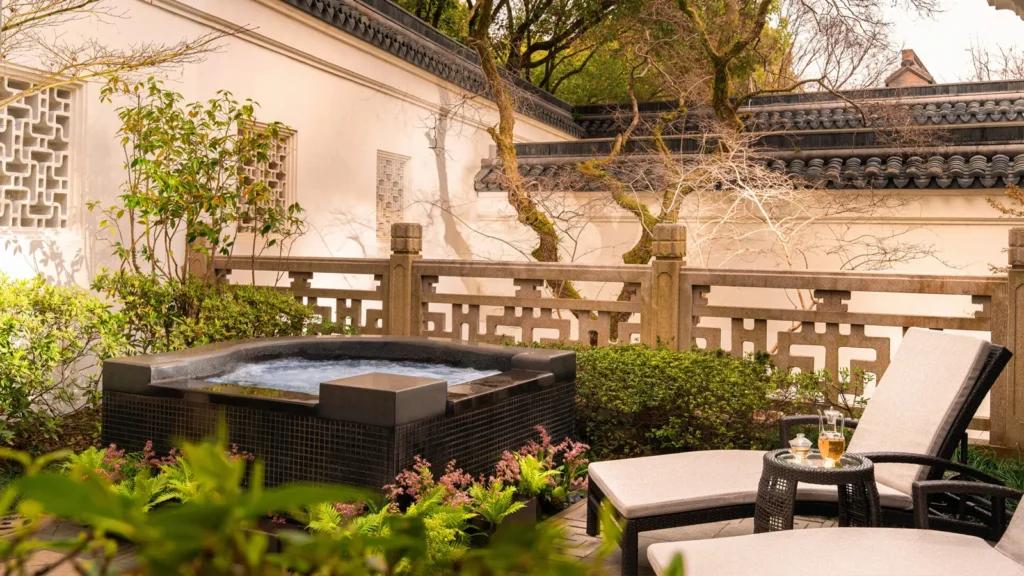
The architecture has a deliberate sequence. In its project description, GOA explains how the entrance courtyard, lobby, pool, water and villas connect along a central axis. Guest rooms extend along two wings, with courtyards between them. Traditional Suzhou construction methods inform the woodwork, roof tiles and stonework.
These Jiangnan gardens influence how guests move through the property. The linked spaces create changing views and smaller settings for conversation, dining and time outdoors.
The hotel’s one-bedroom pool villa brings Song Dynasty aesthetics into a more private accommodation, with a garden, indoor pool, exercise room and cinema. Its cultural references accompany practical space for spending time together.
Jin Sha Gives Regional Cuisine a Commercial Role
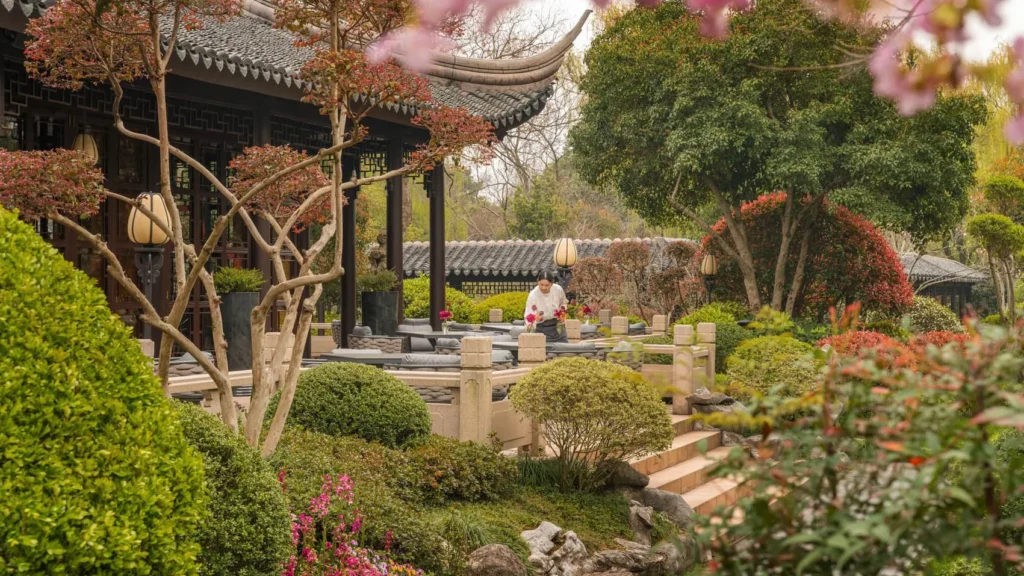
Jin Sha’s current restaurant page identifies Jiangsu-Zhejiang cooking, local and seasonal ingredients, fine tea and Chinese yellow wine as central to its offer under chef Wang Yong.
Independent recognition adds substance. The restaurant holds one Michelin star in the 2026 guide and ranks No. 85 on Asia’s 50 Best Restaurants’ 2026 extended list. These distinctions recognize the restaurant. MICHELIN’s assessment highlights its contemporary treatment of Zhejiang dishes and its dim sum lunch.
The commercial logic extends beyond feeding overnight guests. The restaurant accepts reservations through its own online booking link, giving diners a separate route into the property. A meal becomes an accessible encounter with the hotel’s service and regional identity, without requiring an overnight stay.
The October 2026 dining program also confirms Italian cuisine at West Lake Bistro. This gives guests another dining option while regional cooking anchors the hotel’s destination identity.
Cultural Immersion Depends on Service Design

At Four Seasons Hangzhou at West Lake, cultural immersion includes participation. The Song Culture Experience combines a tea ceremony with calligraphy and currently includes complimentary participation for two people per room.
The June 2026 family program adds more specific examples: Song brocade fan making, herbal sachet workshops, and birdwatching led by Zhejiang Wild Bird Society experts. Families visiting Hangzhou Botanical Garden receive an exploration kit containing a map, water, cooling patches, and mosquito-repellent stickers.
That kit reveals a useful service choice. Parents get help with practical preparations that can complicate a family outing. Local knowledge becomes easier to use because the hotel organizes the activity and its supporting details.
Recent consumer evidence helps explain the relevance. Hurun’s January 2026 survey of 470 Chinese high-net-worth respondents reported plans to increase experience spending by 12%. Travel and culinary experiences led entertainment preferences. The sample leaned toward first-tier cities, which supplied 78% of respondents; it does not establish this hotel’s guest profile.
The spa offers another form of personalization. Its Five Elements Consultation uses questions and a choice of massage oils to shape the treatment experience. Guests make a concrete choice about their session, while staff receive a structured way to understand individual preferences.
The Business Separates Management From Development
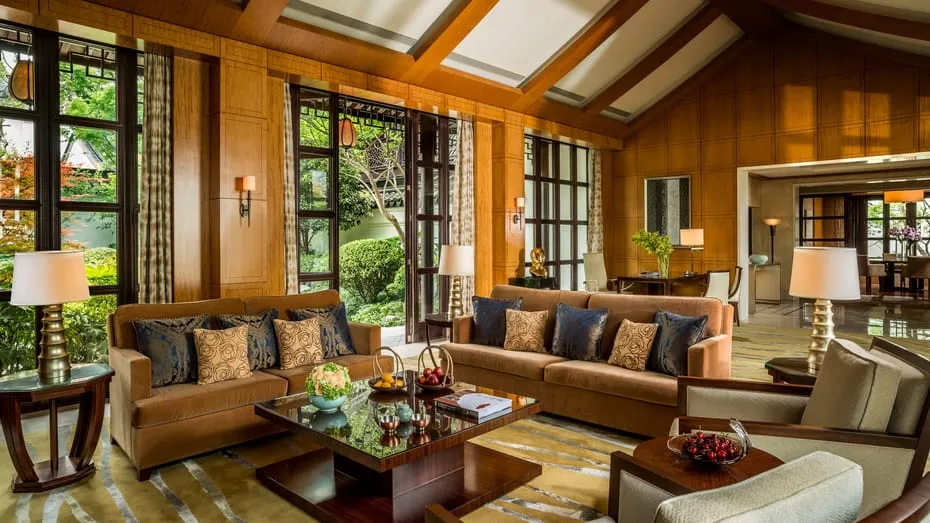
Four Seasons identifies FS Hangzhou B.V. as its management entity for the property, including the residences. Its official residences page separately names Hangzhou Golden Sand Harbor Travel Culture Co. Ltd. as the residential developer, lists ten private residences, and states that the development has sold out. These disclosures distinguish management from residential development.
The residences show a tangible brand extension: private homes connect to Four Seasons services, including a dedicated concierge. The commercial proposition carries hospitality into everyday living. The published information does not establish resale premiums or hotel profitability.
Distribution also has several entry points. Hotel guests can book through the brand’s website or platforms such as Ctrip, while the restaurant maintains its separate reservation route. This gives the property ways to serve different occasions without making every visit depend on a room booking.
How the Hotel Connects to Hangzhou’s Visitor Economy
The property also markets 515 square meters of event space, including a 320-square-meter ballroom. Meetings and celebrations create a reason to purchase venue services and catering alongside accommodation. The regional menu and specialist-led activities connect the guest offer to culinary skills and local expertise.
The hotel’s October 2026 autumn program extends that connection through tea plantation visits arranged for guests. The mechanism is specific: hotel service makes nearby cultural experiences easier to access.
The wider market provides context. Hangzhou’s 2025 statistical bulletin recorded 1.44 million inbound overnight visits, up 26.5% year over year. That citywide measure cannot establish this property’s bookings, spending contribution, or financial performance.
What Another Business Can Learn
The lesson for destination hospitality starts with identifying local experiences that guests find difficult to access. The botanical kit and specialist-led activities show how local knowledge can become a usable service.
A retailer could apply the same principle through a craft demonstration or service grounded in a product’s actual origin. The conditions matter: credible expertise, trained staff, and reliable arrangements must support the story.
A practical first test would measure participation and customer satisfaction before attributing commercial returns to the experience.
Customer Experience Lessons With Ashley Dudarenok
Four Seasons Hotel Hangzhou demonstrates how regional culture, personalized services, and local experiences can differentiate a luxury hospitality brand. Understanding these preferences is essential for businesses targeting China’s evolving experience-oriented luxury market.
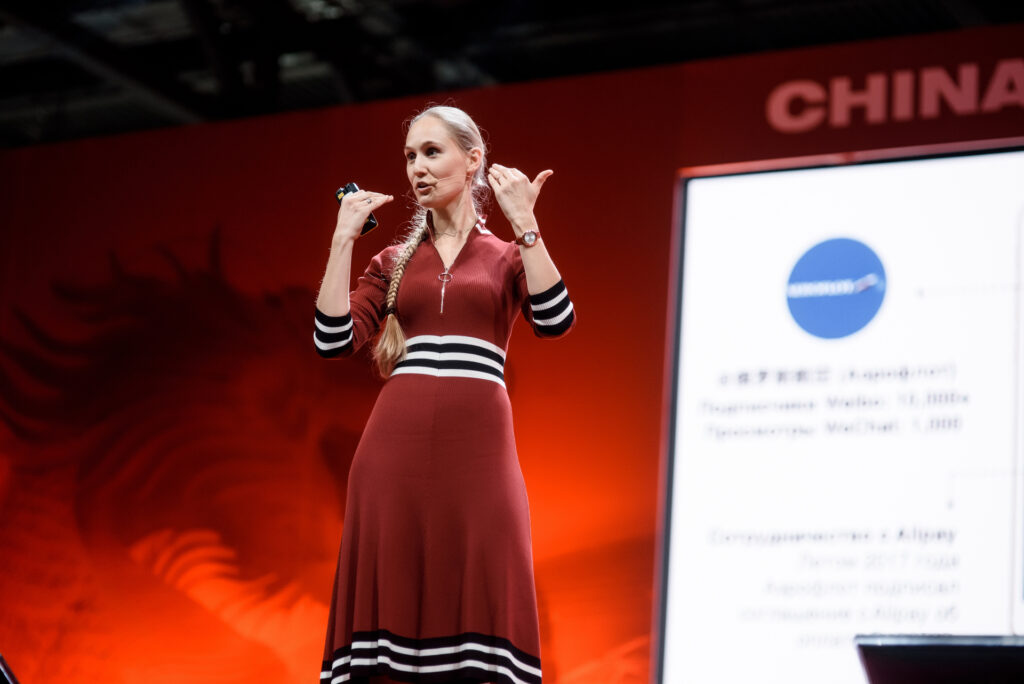
Ashley Dudarenok, a China business expert, bestselling author, and keynote speaker, helps global brands understand Chinese consumer behavior and improve customer experiences. Her work focuses on customer-centric strategies, digital innovation, and changing consumption trends.
Explore Ashley’s books for insights into China’s consumer market, or book a keynote or executive session to explore strategies relevant to your business.
FAQs
What are the check-in and check-out times at Four Seasons Hotel Hangzhou at West Lake?
Check-in begins at 3 p.m., and check-out is at noon. Guests who need guaranteed access outside those hours should book an additional night; the hotel’s published policy also allows luggage storage when rooms are unavailable.
How far is the hotel from Hangzhou Xiaoshan International Airport?
The hotel lists the airport distance as 45 kilometers, with a driving time of 50 to 75 minutes. Its concierge can arrange a limousine transfer; guests should confirm the transport arrangements and charges before arrival.
How large is a Garden-View Room?
A Garden-View Room measures 63 square meters (678 square feet). The official room description lists one king or two double beds and occupancy for three adults, or two adults with two children.
Is breakfast included in every reservation?
Breakfast inclusion depends on the reservation and offer selected. The hotel’s Bed and Breakfast package includes daily American breakfast for two at WLB restaurant; additional guests incur extra charges, so check the confirmed inclusions.
Can children stay in their parents’ room without an additional accommodation fee?
Children aged 18 and younger can share a parent’s or guardian’s room without an additional accommodation fee, where space permits. The hotel’s family policy requires suitable room capacity; confirm meal charges and other inclusions separately.
What ages does Kids For All Seasons accommodate?
Kids For All Seasons offers a complimentary, supervised program for children aged five to twelve. The hotel’s family information describes educational garden activities and an outdoor playground; confirm the current timetable and participation arrangements before arrival.
Can the hotel arrange babysitting?
The hotel can arrange babysitting with 24 hours’ notice, and an hourly fee applies. Its family services page says staff will try to accommodate shorter notice, so confirm availability directly for the required time.
Which villas have private swimming pools?
The One-Bedroom Villa with Private Pool and Three-Bedroom Ambassador Villa list private pools and gyms. The hotel’s villa descriptions distinguish these facilities from standard room amenities, so confirm the exact accommodation category before reserving.
How far in advance should spa treatments be reserved?
Spa reservations are required at least 24 hours in advance, according to the hotel’s current spa information. Guests should discuss treatment preferences when booking and confirm the appointment time, applicable charges, and any preparation instructions.
What is the cancellation policy for the West Lake boat tour?
The hotel’s boat tour policy requires cancellation at least 24 hours before the scheduled activity, or the full cost applies. This condition concerns the excursion; accommodation cancellations follow the terms attached to the room reservation.