
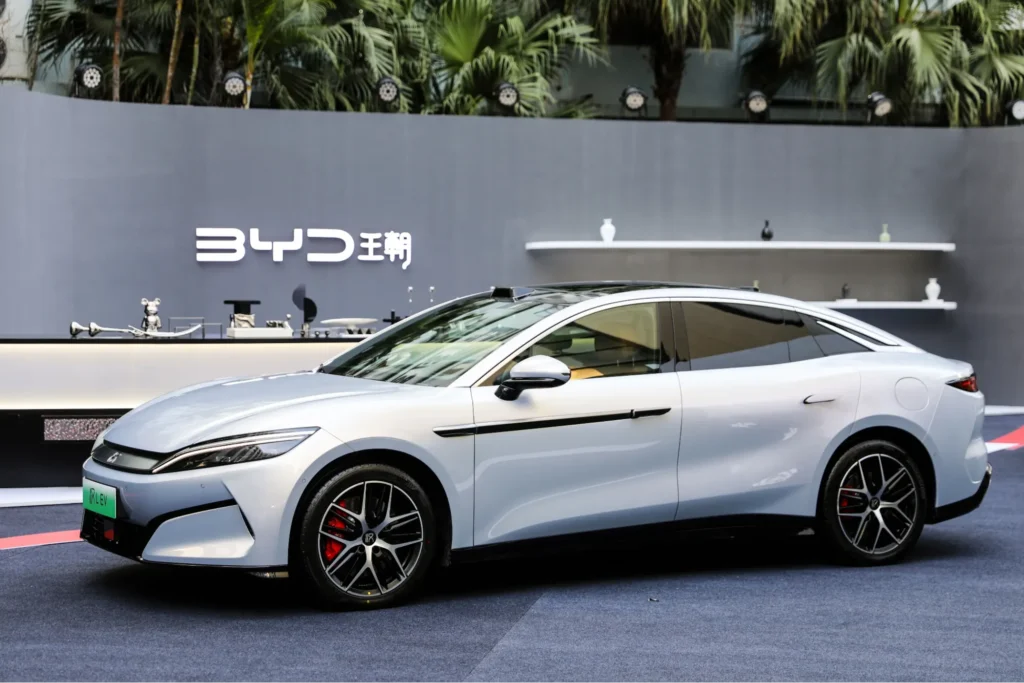
BYD sold 4.6 million new energy vehicles in 2025, including 2.26 million battery electric vehicles. Overseas sales reached 1.046 million units. Behind that volume sits a distinctive industrial model: BYD develops and manufactures batteries, motors, electronic controls and chips within the group.
Understanding BYD electric cars requires examining how that ownership shapes product development, charging infrastructure and manufacturing economics. Its expanding international operations also show where the model must adapt to local markets.
Why BYD Electric Cars Are Built Differently
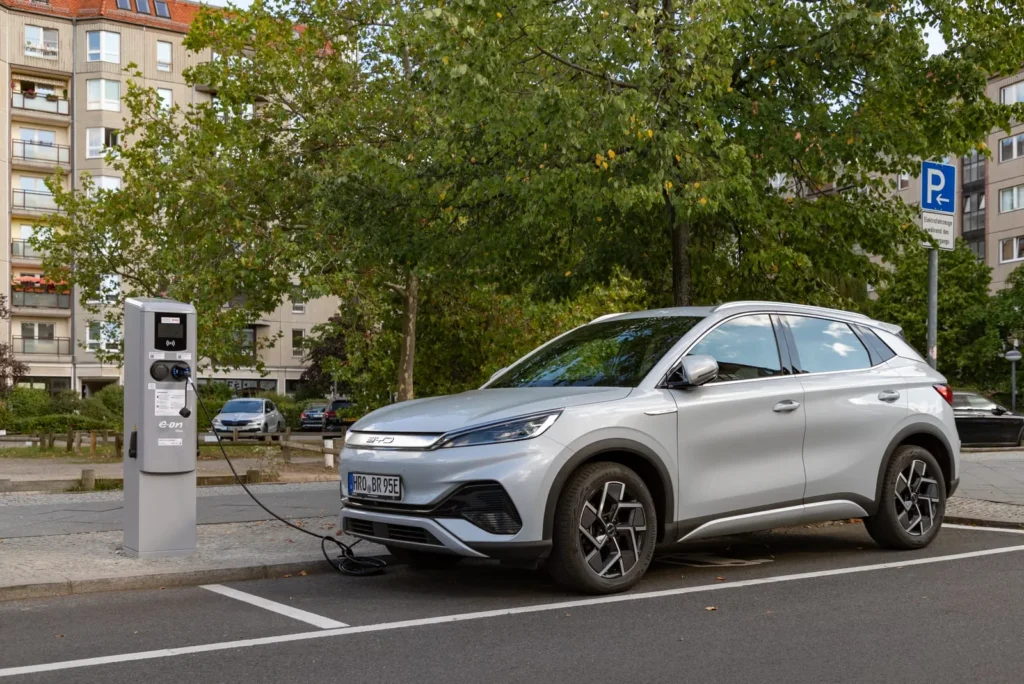
BYD’s 2025 annual report describes vertical integration as a strategic direction for its automotive supply chain. The company maintains in-house R&D and produces core components. Its e-Platform 3.0 combines the Blade Battery, an 8-in-1 electric drive system, a heat pump and BYD’s own operating system.
A battery decision can affect thermal management, power electronics, software and vehicle packaging. Internal ownership gives BYD direct control over these interfaces and can reduce coordination across separate suppliers.
The 2025 Super e-Platform shows how this works in a product launch. It introduced a full-domain 1,000V architecture, a 10C Flash Charging Battery, a 30,000 rpm motor and self-developed automotive silicon carbide power chips rated up to 1,500V.
BYD also developed a liquid-cooled megawatt charging terminal. The company reported vehicle charging power of up to 1,000kW and 400 kilometers of added range in five minutes for the Han L under its stated test conditions.
The Blade Battery Has Become Part of a Wider Charging System
In March 2026, BYD introduced its second-generation Blade Battery and newer charging technology. The company says the system can charge from 10% to 70% in five minutes and from 10% to 97% in nine minutes under stated conditions. At minus 30°C, it reports a 20% to 97% charge in 12 minutes.
Delivering that performance requires infrastructure beyond the vehicle. BYD developed a 1,500kW single-connector charger and pairs Flash Charging stations with high-discharge energy storage. The storage recharges at lower power, then supplies energy when a vehicle needs very high charging power.
By September 24, 2026, BYD had built 11,586 Flash Charging stations across 341 Chinese cities, including 2,000 highway stations, as it worked toward its target of 20,000 stations by year-end.
That distinction matters: announced vehicle capability and access to compatible charging stations are separate measures of readiness.
Manufacturing Scale Turns R&D Into a Commercial System
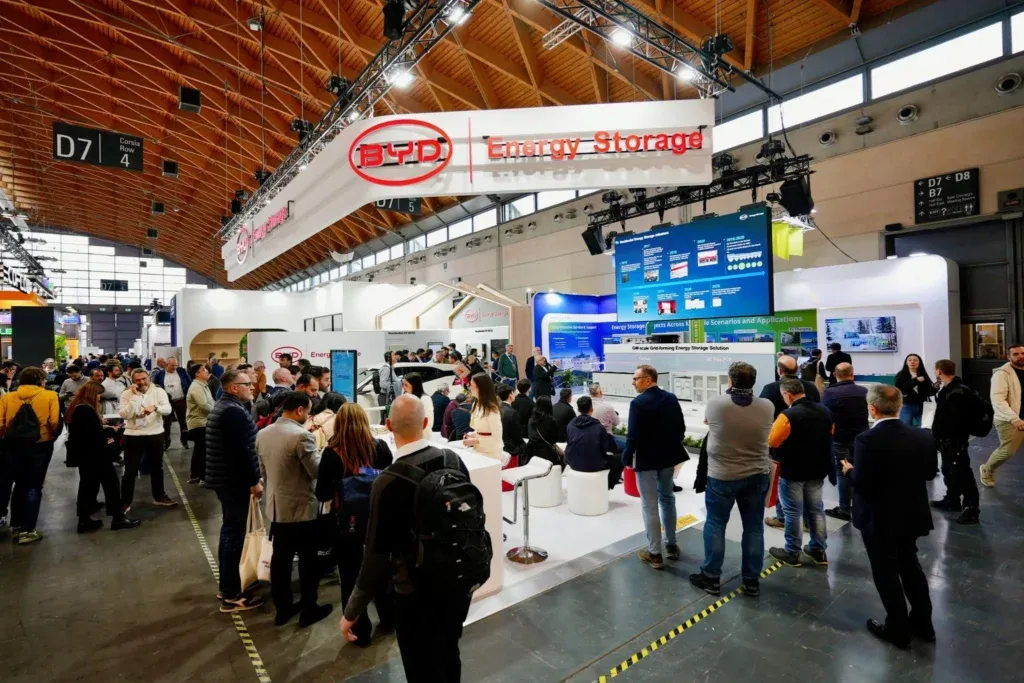
BYD reported 2025 R&D investment of RMB 63.4 billion (US$8.7 billion), up 17% year over year. Its annual report listed more than 120,000 engineers. In July 2026, BYD produced its 17 millionth new energy vehicle.
Engineering teams, factories and production equipment require substantial spending before a vehicle reaches a customer. Large sales volumes create the opportunity to spread those costs across more units. Commercial returns depend on how much production capacity the company uses and the margins its vehicles earn.
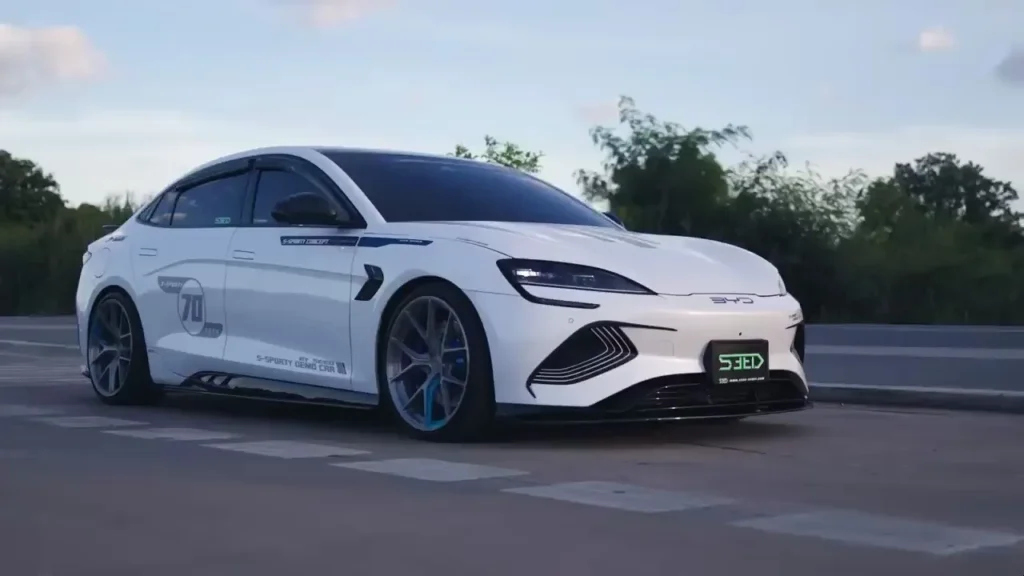
BYD serves several vehicle segments. Seal and Han cover different parts of the sedan market, Atto 3 addresses compact crossover demand, and Dolphin serves hatchback buyers.
Its European lineup also includes Sealion 7 and Tang. That breadth gives the company access to several demand sources, but it also adds production and inventory-planning requirements.
Global Exports Are Turning Into Local Operations
BYD is building local R&D, manufacturing and sales capabilities alongside its export business.
In Europe, its Budapest headquarters and R&D center are designed to handle sales, after-sales service, certification, testing, localized vehicle design and feature development. BYD also committed to working with Hungarian universities, startups and suppliers. In 2026, it reported local production milestones in Brazil and continued operations from its Thailand plant.
In September 2026, overseas passenger vehicle and pickup shipments reached 179,877 units, up 153.9% from a year earlier. BYD’s global sales rose 17% that month even as domestic demand remained weak.
Local operations let BYD address market requirements before delivery. Certification, software, equipment and service arrangements become part of regional product planning, rather than decisions handled entirely from China.
The BYD EV Strategy Also Uses a Brand Ladder
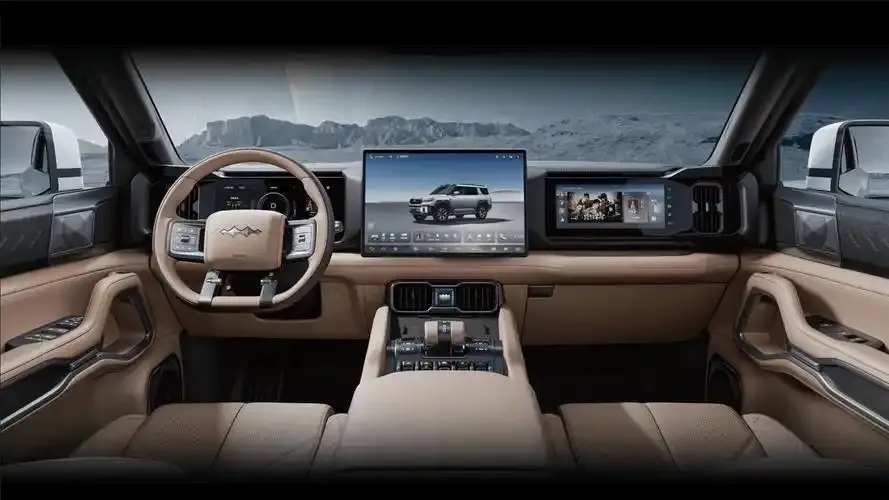
Denza serves BYD Group’s premium technology tier, Yangwang sits at the luxury end, and Fangchengbao covers more specialized and personalized vehicle formats in China. BYD’s 2025 annual report said combined sales across these three brands doubled year over year.
In 2026, Denza launched the Z9GT in Europe with the second-generation Blade Battery, Flash Charging and the e3 platform. That platform combines three-motor independent drive, rear-wheel dual-motor steering, vehicle motion control, Cell-to-Body construction and DiSus-A suspension.
Cell-to-Body integrates the battery pack into the vehicle structure. These premium architectures provide a place to introduce newer systems before selected technologies reach higher-volume models. BYD’s 2025 annual report already documented DiSus body-control technology moving from flagship products into more mainstream nameplates.
The brand ladder therefore has a distinct role from manufacturing scale: it provides a route for technology deployment across price tiers. The pace of that transfer depends on each model’s engineering requirements and economics.
Vertical Integration Does Not Remove Market Risk
Internal ownership brings fixed costs, workforce requirements and capital commitments. Strong engineering control cannot create demand on its own.
That constraint became visible in 2025. BYD’s net profit fell 19% to RMB 32.6 billion (US$4.72 billion), while revenue rose 3.5%. The pressure continued into the first half of 2026, when BYD’s revenue declined 7.13% and net profit attributable to shareholders fell 20.54% year over year, despite continued overseas expansion. Gross margin for BYD’s automobiles and related products segment fell to 20.5%, down 1.8 percentage points year over year.
The commercial test is how much value BYD earns from the assets it controls. Pricing, product demand and factory utilization determine the return on those investments. Overseas expansion adds another task: earning customer demand while funding local operations.
What the BYD EV Model Says About China’s Technology Strength
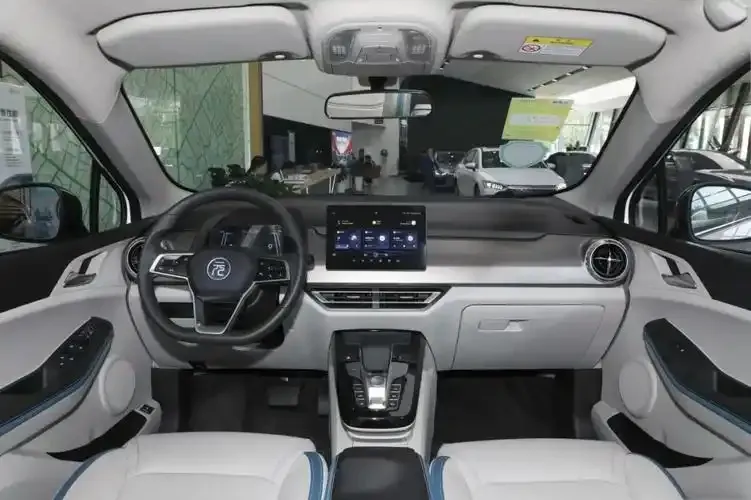
The most useful part of the BYD EV story is the coordination between technologies that external coverage frequently treats as separate subjects.
BYD’s case illustrates one route through which China’s industrial depth can become technology capability. Battery engineering, semiconductor development, vehicle manufacturing and charging infrastructure can interact at commercial scale inside the same company.
For companies studying China, BYD Electric Cars offers a case in system design. The transferable lesson is to identify which technologies share critical interfaces, where supplier handoffs slow iteration, and which capabilities merit deeper internal control.
BYD’s advantage comes from the connections among those choices, while its 2025 profit decline shows that engineering strength and market economics remain separate tests.
Turn China’s Business Moves Into Strategic Insight

Which lessons from BYD belong in your organization’s strategy? Ashley Dudarenok helps executive teams assess Chinese business models in the context of their own markets, capabilities and priorities.
Through keynote speaking, executive briefings and strategic discussions, Ashley connects developments in China with decisions about innovation, competition and business models.
Book a consultation with Ashley Dudarenok to discuss the China developments most relevant to your organization.
FAQs About BYD Electric Cars
1. Are BYD Electric Cars all fully electric?
No. BYD produces both battery electric vehicles (BEVs) and plug-in hybrid electric vehicles (PHEVs) using its DM technology. Its European lineup includes pure BYD electric cars and Super Hybrid models, depending on the market.
2. What is the difference between BYD and Denza?
BYD is the group’s main automotive brand, while Denza is positioned as a premium technology brand. Its 2026 European rollout includes the Z9GT and other models that carry newer BYD Group battery, charging and chassis technologies.
3. Does BYD manufacture its own automotive chips?
BYD does manufacture automotive chips. Its 2025 annual report says its vertical integration strategy includes internal R&D and chip production alongside batteries, motors, and electronic controls. The Super e-Platform also uses BYD-developed 1,500V silicon carbide power chips.
4. How long is the BYD Blade Battery warranty?
In Europe, BYD extended Blade Battery coverage to eight years or 250,000 kilometers in 2026, with at least 70% state of health guaranteed. The policy applies to eligible new and existing battery electric and Super Hybrid vehicles.
5. Is Flash Charging available on every BYD EV?
Flash Charging is not available on every BYD EV. It is tied to newer batteries, platforms and selected models, while supporting infrastructure is still expanding. BYD introduced the second-generation system in 2026 and plans a broader international rollout.
6. What battery chemistry does BYD use in the Blade Battery?
The Blade Battery uses lithium iron phosphate, or LFP, chemistry. BYD highlights its thermal stability, durability, and nickel-free, cobalt-free composition. Real battery performance still depends on vehicle design, thermal management, charging conditions and software calibration.
7. What does Cell-to-Body mean in a BYD car?
Cell-to-Body integrates the battery pack into the vehicle structure, letting it contribute to structural rigidity and packaging efficiency. BYD uses the approach on several electric platforms, including its current e-Platform and premium architectures.
8. Where are BYD vehicles manufactured outside China?
BYD has developed local vehicle production in markets including Thailand and Brazil, while European production capacity has been under development in Hungary. Its broader overseas model also includes regional R&D, certification, testing, sales and service functions.
9. What is BYD’s European localization strategy?
BYD’s Budapest headquarters and R&D center combine sales, after-sales service, certification, testing and localized vehicle development. The company has also committed to cooperation with Hungarian universities, startups and suppliers as its European operating base expands.
10. Can other automakers copy BYD’s vertical integration model?
Some parts of the model can be replicated, but the economics depend on scale, engineering depth, and capital. Greater component ownership can improve interface control, yet it adds fixed costs and requires enough demand to keep capacity productive.