
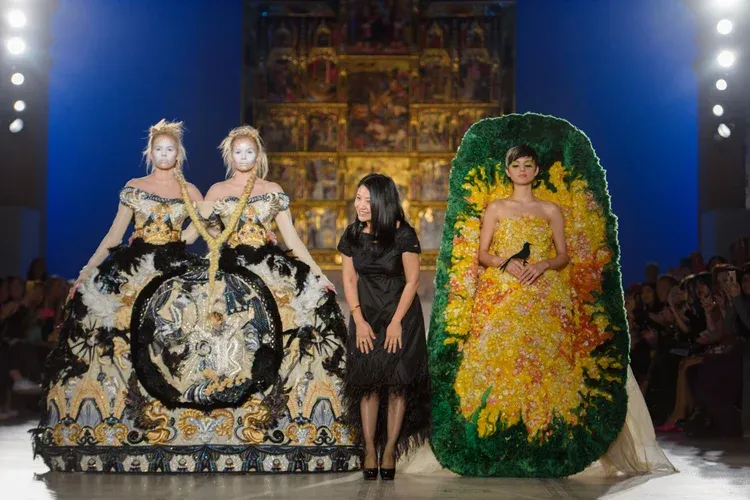
The luxury market is no longer rewarding labels that rely on logo visibility alone. In China, the more important question is cultural authority: who has the right to speak, design, interpret heritage, and translate identity into desire. This is why Guo Pei matters now.
Bain reported that mainland China’s personal luxury market contracted by 3% to 5% in 2025, while domestic brands gained share through stronger cultural connections and greater alignment with local preferences.
McKinsey’s 2026 luxury outlook also identifies emotional connection, recognition, service, and discovery as key drivers among Chinese luxury consumers. For global luxury brands, Guo Pei is a case study in how Chinese craftsmanship, theatrical storytelling, and museum-level legitimacy can become strategic brand capital.
Why Guo Pei Matters in China’s Luxury Now
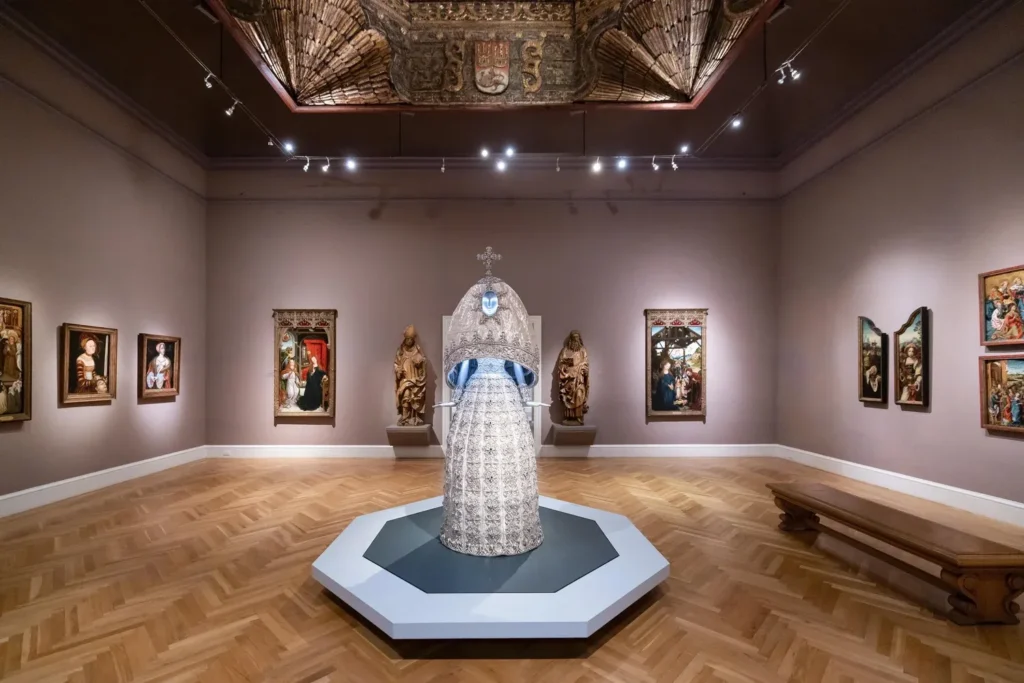
Guo Pei sits at the intersection of couture, art, cultural memory, and China’s premium identity shift. She is widely regarded as China’s leading couture artist, with a practice spanning almost four decades. M+ Museum describes her work as a blend of historic Chinese craftsmanship, contemporary aesthetics, global inspiration, and Chinese and Western tailoring.
That makes Chinese fashion designer Guo Pei more than a red carpet name. She represents a new luxury grammar from China. This grammar does not copy Western luxury codes. It builds from embroidery, mythology, imperial visual language, architectural form, and ritual dress. For leaders monitoring Chinese luxury brands, the lesson is clear: Chinese premium culture is shifting from “local pride” to cultural authorship.
This is the next phase after Guochao. Post Guochao luxury is less about adding a dragon motif to a product. It is about creating a design system that feels Chinese without becoming costumed. Guo Pei fashion does this through scale, symbolism, and technical depth.
Guo Pei Biography: From Beijing Atelier To Global Recognition
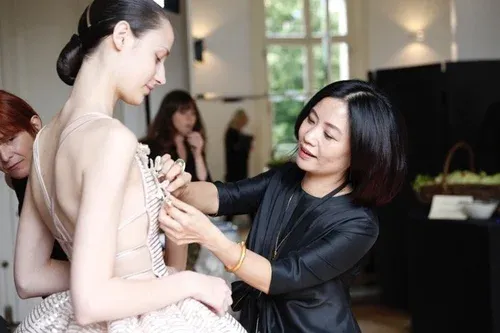
According to her official profile, Guo Pei founded Rose Studio in 1997 after years in ready-to-wear design in Beijing. Her atelier model depends on trained artisans, patternmakers, and embroiderers personally selected and developed through the studio.
Her official philosophy is “Eastern learning as root, Western learning as application.” This matters for business strategy. The phrase shows how Chinese designer Guo Pei treats cultural origin as the base, not as a decorative layer. For global houses working in China, this is the difference between local adaptation and cultural fluency.
The Guo Pei Dress That Turned Couture Into Cultural Spectacle
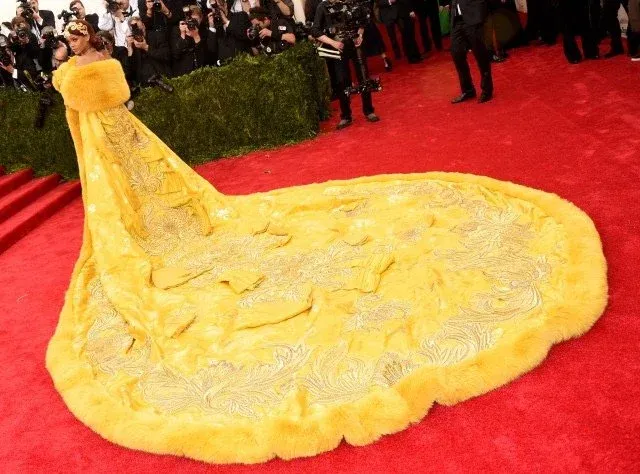
The global breakthrough came through the Guo Pei Rihanna moment. Rihanna wore The Yellow Queen to the 2015 Met Gala, and M+ later described the gown as a 25-kilogram dress with a four-meter train. The museum also noted that this Guo Pei Rihanna dress made the designer an international household name.
The Rihanna Guo Pei moment is still discussed because it compressed several luxury signals into one image: celebrity power, Chinese symbolism, couture labor, museum context, and internet virality. The Rihanna Guo Pei dress was not a simple product placement. It was an act of visual domination on one of fashion’s most watched stages.
For marketers, the lesson is useful. A single Guo Pei dress succeeded because the underlying story was already strong. The color, volume, embroidery, and imperial references had coherence. Many brands chase red carpet visibility. Guo Pei dresses show that spectacle works best when the object has cultural weight before the camera arrives.
Guo Pei Haute Couture And The Value Of Craft As Strategy
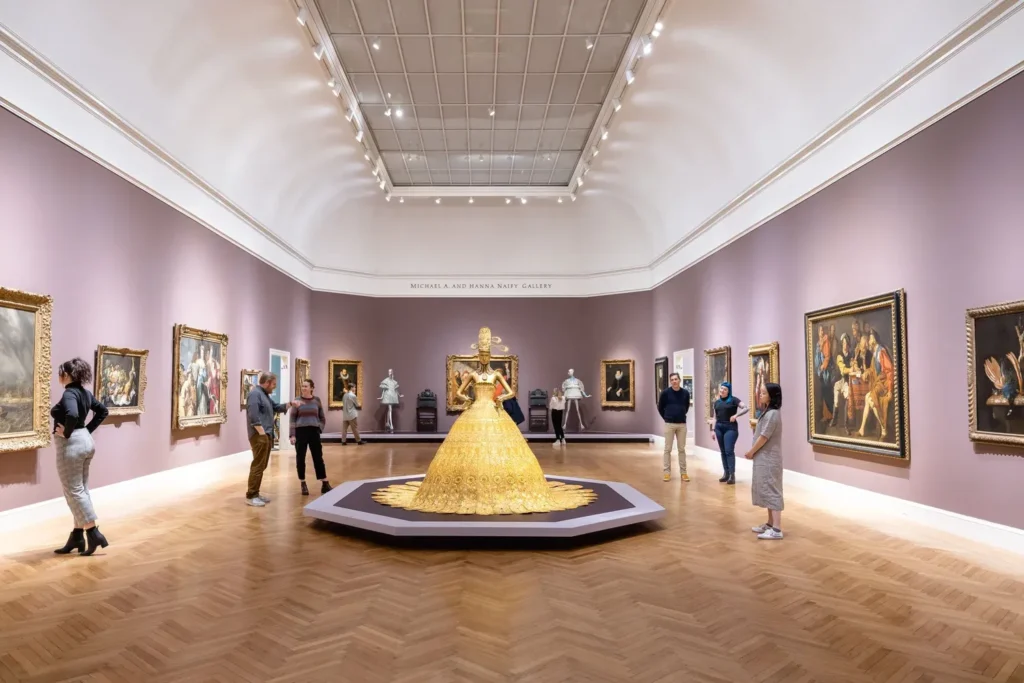
Guo Pei haute couture is built around couture craftsmanship as proof of seriousness. M+ highlighted her role in rejuvenating traditional Chinese embroidery and adapting embroidery techniques within couture practice. The exhibition also placed more than 40 haute couture pieces from Rose Studio in dialogue with works from the M+ Collections.
This is why Guo Pei Couture is relevant to luxury executives. Craft is not only a production method. It is a trust signal. When Chinese consumers become more knowledgeable, more selective, and more value-aware, brands need more than price increases. Bain’s 2025 China luxury analysis points to more cautious consumers who seek quality, exclusivity, practicality, and emotional experience.
For luxury houses, Chinese couture offers a framework for deeper engagement with China. The question is no longer how to localize a campaign. The question is how to build work that Chinese audiences feel has earned its place in culture.
Museum Fashion, Exhibitions, And Cultural Authority
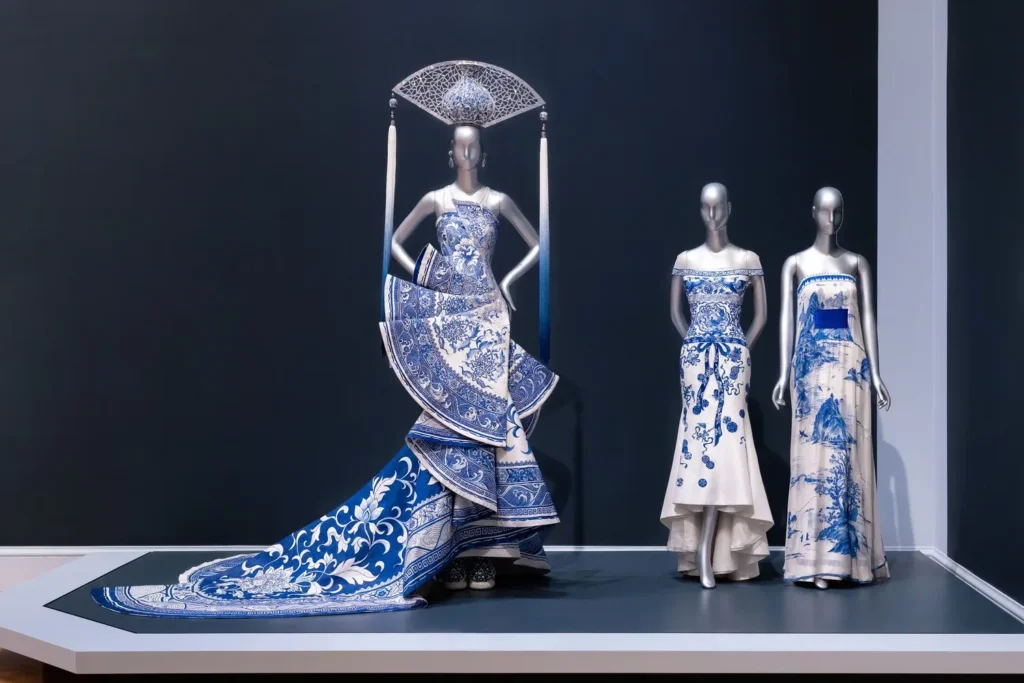
The rise of Guo Pei exhibition visibility shows how luxury credibility increasingly comes from institutions, not only boutiques. The M+ exhibition Guo Pei: Fashioning Imagination ran from September 2024 to April 2025 and presented the first major exhibition of her work produced in China. It connected her garments with art and design objects across cultures, eras, and materials.
Her official exhibition page also lists 2025 appearances at Paleis Het Loo in the Netherlands and Musée du quai Branly Jacques Chirac in Paris. This matters because museum fashion creates a slower form of brand legitimacy. It invites study, interpretation, education, and collection value.
For global luxury brands, Guo Pei art of couture reflects a broader shift. Consumers want to understand why something matters. The strongest brands will translate craft into cultural knowledge, not only product content.
Guo Pei Barbie, Accessories, And The Power Of Scalable Codes
The Guo Pei Barbie collaboration shows how couture codes can travel into collector culture. Mattel Creations describes its Barbie Lunar New Year Doll, designed by Guo Pei, as a red traditional Chinese dress honoring Lunar New Year heritage, featuring phoenix symbolism and signature embroidery details.
This is a smart example of luxury storytelling at a smaller scale. The doll does not copy every couture detail. It carries recognizable codes: red, gold, phoenix, embroidery, celebration, and cultural occasion. For executives, that is the lesson. Brand extensions work when the symbolic system is already clear.
The same logic applies to search demand around Guo Pei shoes and Guo Pei wedding dresses. Audiences are not only searching for gowns. They are searching for access points into a couture universe. The Guo Pei brand has value because its codes can be read across categories without losing identity.
What Global Luxury Brands Can Learn From Guo Pei
Build Cultural Authority Before Scaling Visibility
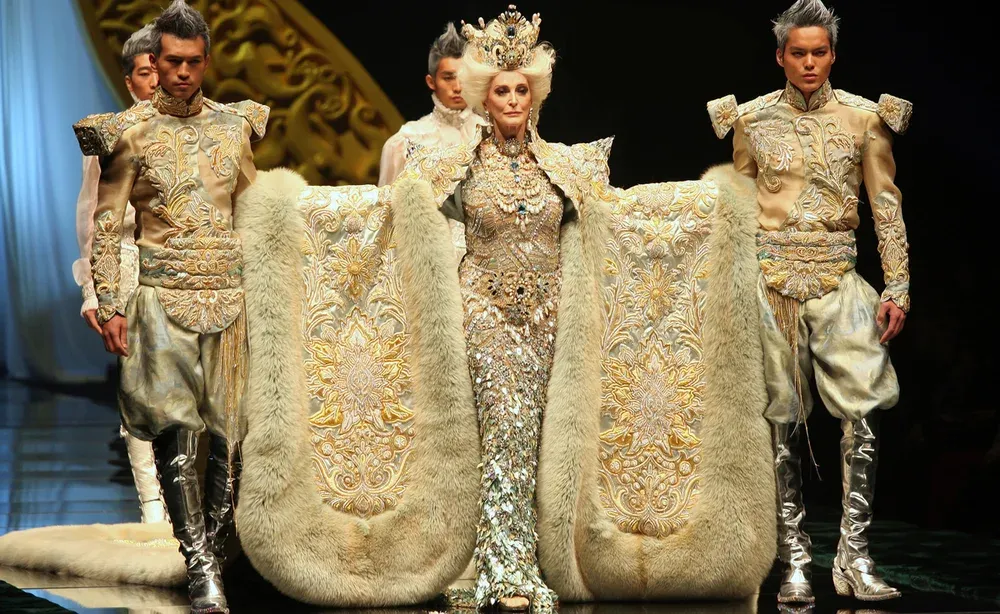
Global brands in China can learn from Chinese couture designer Guo Pei that visibility should follow authority. A campaign can create attention. It cannot create cultural depth on its own. Authority comes from craft, language, institutional partnerships, creator credibility, and long-term consistency.
Treat Craft As Content And Proof
Luxury consumers already hear endless claims about heritage. Guo Pei turns craft into visible proof. Embroidery, weight, structure, and time are part of the storytelling. For brands, the opportunity is to make process part of desirability, rather than hiding production behind polished campaign imagery.
Make Cultural References Specific
Generic “China-inspired” visuals are weaker than specific cultural imagination. Guo Pei uses porcelain, architecture, dragons, imperial dress codes, mythological figures, botanical forms, and gold thread in a layered way. Specificity gives luxury storytelling authority.
Connect Product, Experience, And Institutional Memory
McKinsey’s 2026 report notes that luxury consumers in China value trust, recognition, brand authority, emotional connection, and high-touch service experiences. Guo Pei shows how a brand can integrate runway spectacle, museum education, celebrity memory, and collectible collaborations into a single cultural ecosystem.
The Strategic Meaning Of Guo Pei For Luxury Leaders
Guo Pei teaches global luxury brands that China’s next chapter in luxury will be won through cultural intelligence. The strongest brands will not simply sell to Chinese consumers. They will understand how Chinese consumers assign meaning, status, memory, and emotional value.
For executives, investors, and marketers, the case is clear. Guo Pei proves that Chinese luxury identity can be global without becoming diluted. It can be theatrical without becoming shallow. It can be deeply Chinese and internationally legible at the same time.
That is the strategic lesson. Luxury in China is moving toward authority rather than surface. Brands that understand this shift will build stronger relevance in a more selective market.
Learn China Luxury Strategy With Ashley Dudarenok
Understanding brands like Guo Pei requires more than following fashion headlines. It requires understanding the broader forces shaping China’s consumers, luxury market, digital ecosystems, and cultural shifts.
Ashley Dudarenok has spent more than 15 years helping global brands decode China’s fast moving business environment. A recognized China expert, bestselling author, and keynote speaker, she advises executives on Chinese consumers, premium brand strategy, retail innovation, digital transformation, and emerging business models. Her work has been recognized by Thinkers50, and she has advised leading global companies across luxury, retail, FMCG, technology, and consumer goods.
Whether your organization is preparing for China’s next wave of premium consumption or looking to apply China’s innovation playbook globally, Ashley provides practical, executive level insights through:
- Executive keynotes and leadership workshops
- China learning expeditions
- Custom market research and strategic advisory
- Innovation and consumer trend briefings
- Digital transformation consulting
If you want to understand where China’s luxury market is heading and what global brands can learn from it, book a consultation with Ashley Dudarenok and gain actionable insights grounded in real market experience.
FAQs
1. Is Guo Pei part of the official Paris Haute Couture calendar?
Yes. Guo Pei presents collections within the Paris Haute Couture framework after becoming the first Chinese designer invited as a guest member of the Chambre Syndicale de la Haute Couture. That recognition elevated Chinese couture on the global fashion stage.
2. Where can you buy an authentic Guo Pei dress?
Authentic Guo Pei dresses are primarily available through the designer’s Paris maison and by private couture appointment. Most creations are bespoke rather than stocked in retail stores, reflecting the exclusivity and craftsmanship of true haute couture.
3. How much does a Guo Pei haute couture gown cost?
Guo Pei haute couture gowns do not have public list prices because each commission is individually designed and handcrafted. Final pricing depends on embroidery complexity, materials, construction time, fittings, and customization requested by the client.
4. Does Guo Pei create custom wedding dresses?
Yes. Guo Pei wedding dresses are available as bespoke couture commissions for private clients. Each gown is created through consultations, multiple fittings, and hand embroidery, making every bridal design unique rather than produced in standard collections.
5. What makes Guo Pei different from other Chinese fashion designers?
Designer Guo Pei stands apart through her exclusive focus on couture, artisanal craftsmanship, and museum quality creations rather than ready to wear. Her work prioritizes artistic expression, making her one of China’s most internationally recognized couture specialists.
6. Has Guo Pei designed for celebrities other than Rihanna?
Yes. Beyond the famous Guo Pei Rihanna collaboration, her creations have been worn by international entertainers, royalty, and Chinese celebrities at major cultural events. Celebrity commissions have helped introduce Chinese couture to wider global audiences.
7. Are Guo Pei shoes and accessories available for purchase?
Yes, but availability is limited. Guo Pei shoes and selected accessories are produced in much smaller quantities than her couture gowns and are typically offered through the brand’s official channels or special collections rather than mass retail.
8. Why do museums collect Guo Pei’s designs?
Museums collect Guo Pei fashion because her garments combine textile artistry, historical references, and exceptional craftsmanship worthy of preservation. Institutions increasingly recognize couture as cultural heritage, placing her work alongside decorative arts and design collections.
9. Can Chinese couture compete with established European luxury houses?
Yes. Chinese couture is becoming increasingly competitive by offering distinctive cultural narratives, advanced craftsmanship, and original design languages instead of replicating European luxury traditions. This differentiation is strengthening China’s position within the global luxury industry.
10. What is the future of China’s couture industry after Guo Pei?
China’s couture sector is expected to expand as affluent consumers seek personalized luxury, collectible fashion, and cultural authenticity. Chinese couture designers are likely to gain greater international visibility through museums, global fashion weeks, and cross industry collaborations.