
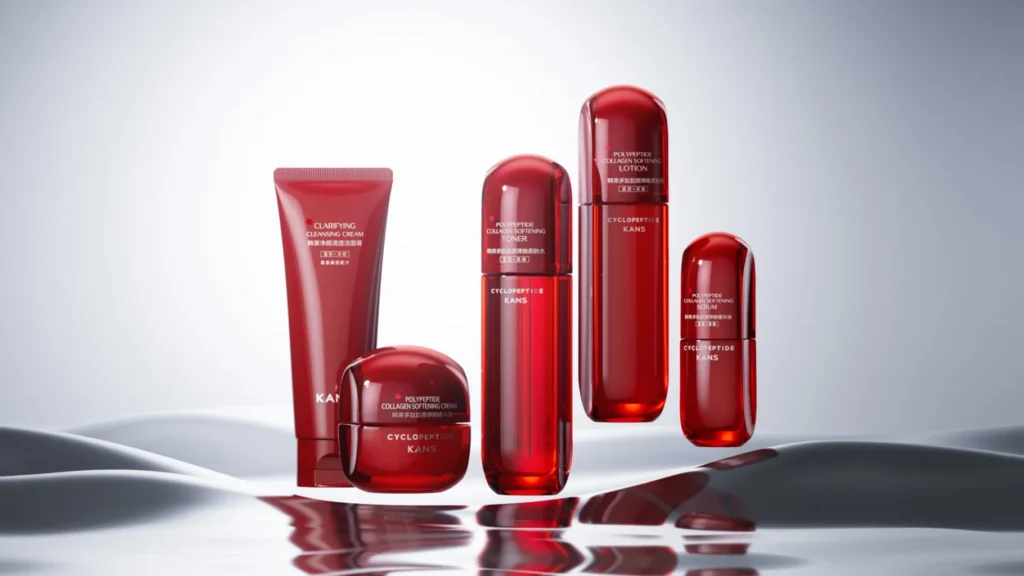
KANS became a major Chinese skincare brand through a tightly connected system: Douyin created discovery and conversion, the Red Waistline concentrated demand, and peptide research gave the brand a more defensible anti-aging story.
Attractive red packaging helped recognition, but it does not explain the scale. The deeper advantage came from connecting short-form entertainment, livestream sales, online direct distribution, hero-product economics, and consumer-friendly product claims.
That model matters because it shows how a C-Beauty brand can turn content into revenue while building enough scientific substance to support premiumization.
What Is KANS, and Which Country Does It Come From?
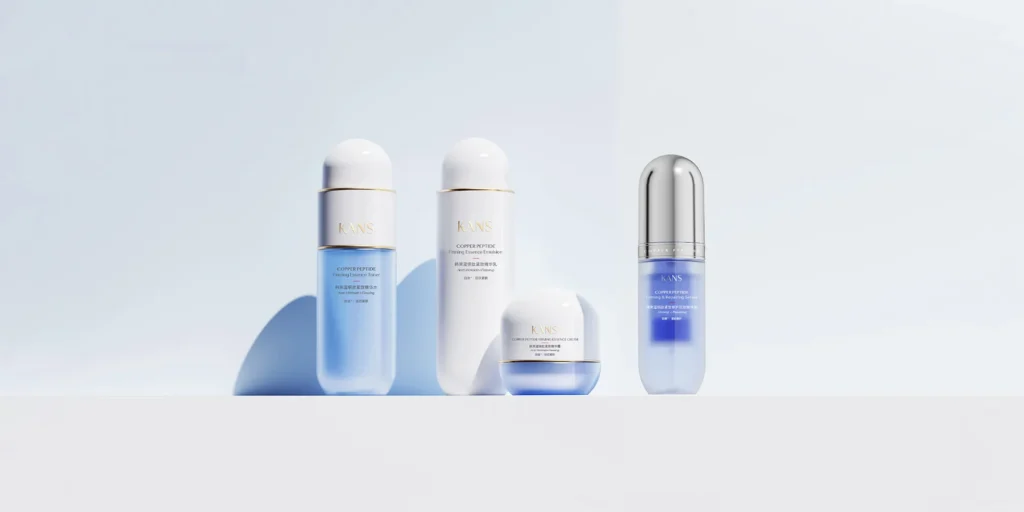
KANS is a Chinese cosmetics and skincare brand owned by Shanghai Chicmax Cosmetic Co., Ltd. The brand launched in 2003 and now positions itself around scientific anti-aging for Asian women across age groups, according to Shanghai Chicmax’s 2025 annual report.
The commercial scale is substantial. Shanghai Chicmax reported RMB 7.36 billion ($1.09 billion) in KANS revenue for 2025, up 31.6% from 2024. The brand supplied 80.2% of group revenue. Those figures make KANS cosmetics the parent company’s economic center, rather than one label in a balanced portfolio.
This concentration cuts two ways. It gives Chicmax a clear engine for funding research, content, and new categories. It also exposes the group to changes in Douyin traffic costs, hero-product demand, or consumer interest in peptide-led anti-aging.
How Douyin Turned KANS Into a Content-Commerce System
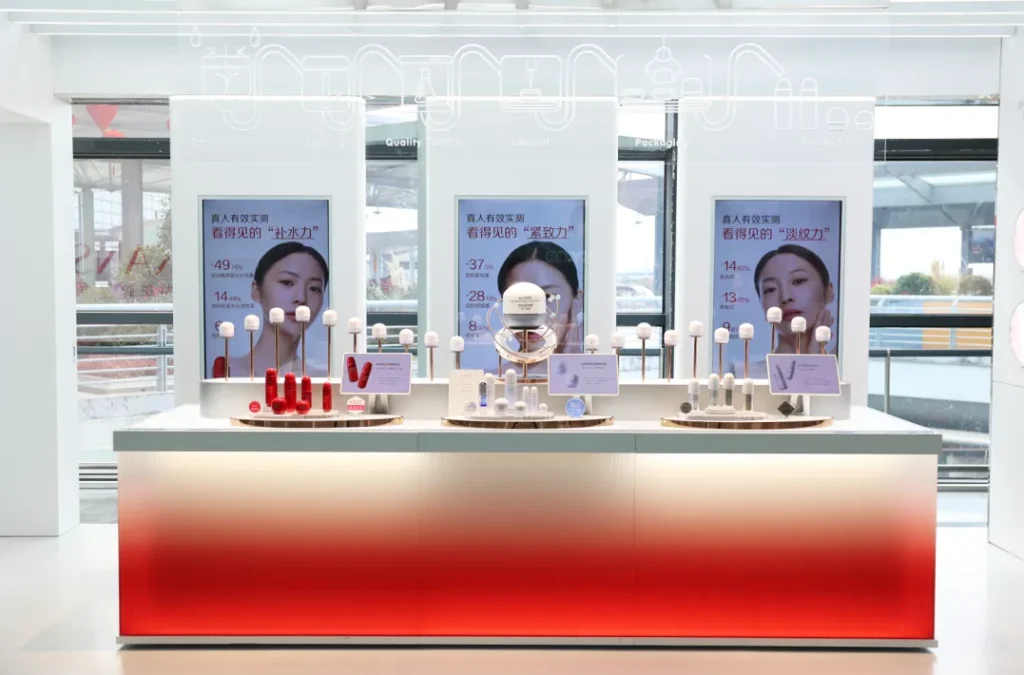
Douyin did more than give the brand reach. It compressed entertainment, product education, creator endorsement, livestream demonstration, and checkout into one measurable journey.
Mini Dramas Moved Viewers Toward Livestream Checkout
Vogue Business reported in January 2025 that KANS worked with KOL Jiang Shiqi on Douyin mini dramas. A company spokesperson said the stories drew audiences toward livestream sessions and focused investment on one popular skincare product.
That concentration solved a common beauty problem. Consumers need repeated exposure to understand an anti-aging regimen, but conventional ads leave little time for education. Serialized content gave the hero product recurring roles, while livestreams handled explanation, bundles, objections, and conversion.
Platform Leadership Became Measurable Business
KANS led Douyin’s skincare brand ranking in January 2025. Caixin later reported that KANS topped Douyin’s full-year 2025 cosmetics GMV ranking with more than RMB 8 billion, based on Qingyan data.
GMV and recognized revenue are different measures. Douyin GMV records transaction value on the platform, while Shanghai Chicmax’s RMB 7.36 billion ($1.09 billion) figure records KANS revenue under accounting rules. Returns, channel arrangements, and recognition timing can create a wide gap. A combined sales figure would overstate performance.
Online channels produced 93.9% of Shanghai Chicmax revenue, and online direct sales produced 85.4%. The filing attributes direct-sales growth partly to KANS, although it does not disclose a brand-level channel split.
KANS Red Waist Skincare Made Science Easy to Sell
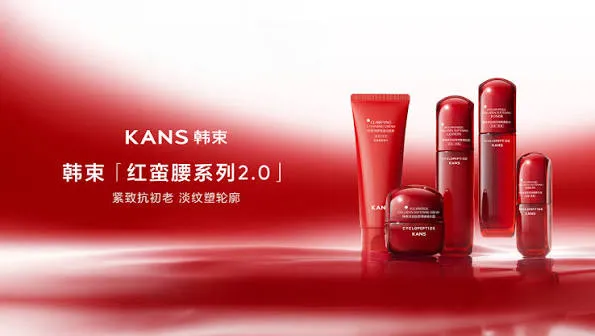
The Red Waist series links a visible product identity with a focused ingredient story. Shanghai Chicmax says the 2025 range centered on cyclohexapeptide-9, or CHP-9. The company also expanded its higher-tier X-Peptide line with an essence, toner, lotion, ampoule, and cleanser.
This is a useful product architecture. The hero line recruits buyers with a memorable color, name, and anti-wrinkle proposition.
A broader regimen then raises basket size and gives the brand more chances to retain customers. The same scientific concept can support several formats without requiring a new message for every SKU.
The Peptide Evidence is Promising but Narrower than the Marketing Story
A 2025 randomized, double-blind, vehicle-controlled study in the Journal of Cosmetic Dermatology compared serums containing 0.002% CHP-9, 0.002% retinol, or vehicle. Researchers enrolled 96 Asian participants, and 91 completed 56 days of twice-daily use.
The CHP-9 group recorded greater improvement than the low-dose retinol group across several measured wrinkle outcomes.
The limits matter. All authors listed affiliations with Shanghai Chicmax and Shanghai Kans Biotech. The trial lasted eight weeks, studied one test serum, and used a 0.002% retinol comparator.
It does not prove that every KANS skincare product delivers the same result. It also does not establish that CHP-9 outperforms the range of retinoid products consumers may encounter at other concentrations.
The commercial value lies in the shift from ingredient naming to a human clinical trial. KANS can cite measured outcomes, while responsible communication should preserve the study’s population, duration, formula, comparator, and company affiliations.
Research and Customer Acquisition Worked Together
Shanghai Chicmax spent RMB 224.7 million ($33.2 million) on R&D in 2025, a 24.9% annual increase. The group also filed 61 patent applications, received 49 patent grants, and published ten research papers across peptide anti-aging, skin repair, and child skincare.
Science did not replace media spending. Group marketing and promotion expenses reached RMB 4.71 billion ($696 million) in 2025, up 42.0%. This company-level figure covers several brands and channel investments, so it cannot serve as a KANS customer acquisition cost. It does show that product evidence and distribution power grew together.
That distinction matters for other Chinese skincare brands. A patented ingredient without sustained consumer education may remain invisible.
Heavy media buying without repeatable product value can create a short sales spike. KANS connected a research asset to a hero SKU, then repeated the message through content and commerce.
Can KANS Grow Beyond Red Waist and Douyin?
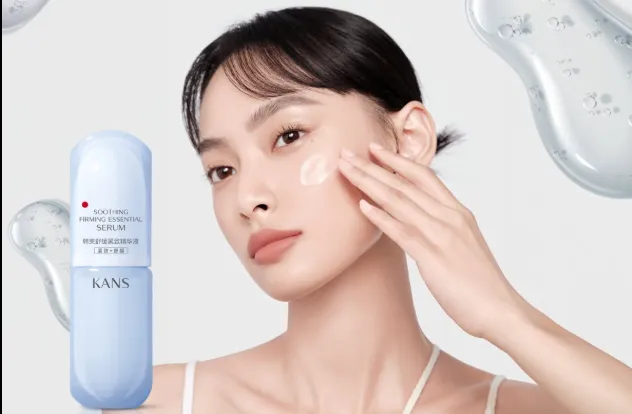
The brand added makeup products in 2025 and expanded men’s, haircare, and body-care categories. This makes KANS men part of a broader effort to expand use cases around the master brand. Shanghai Chicmax also built a tiered ambassador roster led by global ambassador Jackson Wang, alongside Liu Haocun, Tian Xuning, and Zhang Hao.
Category expansion can lower dependence on a single anti-aging line. It can also weaken the association between KANS and peptide skincare if new launches lack the same product logic.
A celebrity roster may accelerate awareness, but it does not prove strong overseas demand. Shanghai Chicmax does not report separate international revenue for KANS, so claims that the brand has already achieved global scale would go beyond the public evidence.
The next commercial test is retention. Public filings show revenue, channels, and spending, but they do not disclose brand-level repeat purchase, Douyin customer acquisition cost, or movement from Douyin into Tmall, JD, and offline retail. Those measures would show how much demand persists without continued platform spending.
What a KANS Beauty Products Review Should Examine
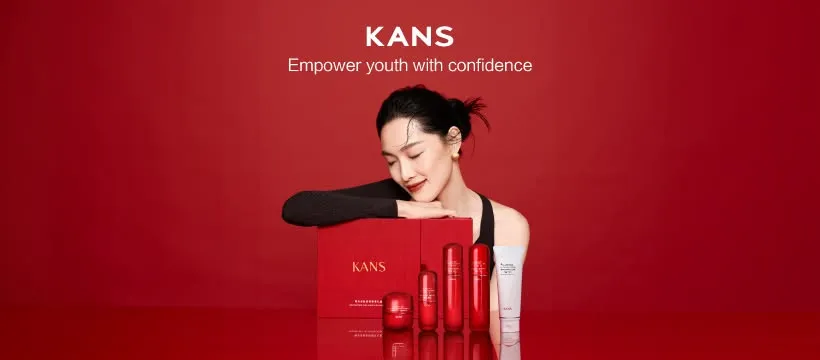
A useful review should evaluate the exact formula, rather than transfer the brand’s peptide research to every item.
- Product identity: Match the English and Chinese product names, size, batch information, and seller authorization. Regional ranges may differ.
- Ingredient relevance: Confirm that the reviewed SKU contains the ingredient connected to the cited study. A range name alone does not verify concentration or formula equivalence.
- Evidence quality: Check the test product, participant group, duration, comparator, outcome measures, and researcher affiliations.
- Skin fit: Assess texture, fragrance, irritation, hydration, and compatibility with the rest of the routine. Mature skin is not one uniform skin type.
- Value: Compare the full regimen cost with the specific concern it addresses. Bundles can raise order value without making every step necessary.
The strategic takeaway is precise. KANS built scale because product, science, content, and checkout reinforced one another. Its next stage depends on proving repeat demand, extending that logic across categories, and translating a China-native commerce model for markets with different platforms, regulations, and skincare habits.
Decode China’s Beauty Growth With Ashley Dudarenok

KANS shows how Chinese brands connect consumer insight, product research, cultural storytelling, and platform commerce. Ashley Dudarenok helps global teams interpret these shifts through tailored keynotes, executive workshops, and China market advisory grounded in first-hand experience.
If your team is assessing Chinese consumers, social commerce, retail innovation, or lessons that can travel beyond China, book a consultation to discuss the questions most relevant to your business.
FAQs
Is KANS skincare from China?
Yes. KANS is a Chinese skincare and cosmetics brand owned by Shanghai Chicmax Cosmetic Co., Ltd. The parent company is based in Shanghai, and its public filings identify KANS as a core scientific anti-aging brand launched in 2003.
Is k.a.n.s the same brand as KANS?
In most searches, k.a.n.s refers to KANS, the Chinese beauty brand. The official English name appears as KANS in Shanghai Chicmax filings and brand materials. Buyers should still verify the seller, packaging, and product name before ordering.
Are KANS skincare products suitable for mature skin?
Some KANS skincare products target wrinkles, firmness, and other concerns associated with mature skin. Suitability still depends on the exact formula, fragrance, texture, sensitivity, and current routine. Check the ingredient list and patch-test a new product first.
What is the KANS Red Waist skincare series?
The KANS Red Waist skincare series is an anti-aging range built around a recognizable red identity and a peptide story. Shanghai Chicmax’s 2025 report names cyclohexapeptide-9 as a core ingredient, but formulas can vary across products.
Does KANS use peptides or retinol?
KANS promotes peptide-centered anti-aging research, including cyclohexapeptide-9. Individual formulas may contain different active ingredients, so consumers should read each INCI list. The 2025 CHP-9 study does not confirm the composition or performance of every retail product.
Is KANS a luxury skincare brand?
KANS is better described as a scaled Chinese scientific anti-aging brand with mass and higher-tier product lines. Its market position varies by range and country, so price, formulation, retailer, and service provide better guidance than a single luxury label.
Where can I buy KANS skincare outside China?
Availability differs by market. Look for an official regional store or an authorized retailer that provides importer details, full ingredient lists, batch information, and a clear return policy. Avoid assuming every marketplace seller has direct brand authorization.
Is KANS men a separate company?
No public filing identifies KANS men as a separate company. Shanghai Chicmax describes men’s skincare as a category developed under the broader KANS brand, alongside haircare, body care, skincare, and makeup expansion during 2025.
Are all KANS products supported by clinical trials?
No public evidence supports that conclusion. A 2025 clinical trial evaluated a specific CHP-9 test serum, not the entire catalog. Product-level proof should identify the finished formula, participant group, study duration, measured outcomes, and research sponsor.
How can I check if a KANS product is authentic?
Buy through an official or clearly authorized seller, then compare the product name, Chinese labeling, ingredient list, size, batch code, seal, and importer information. Contact the regional brand representative if packaging or claims differ from official materials.