
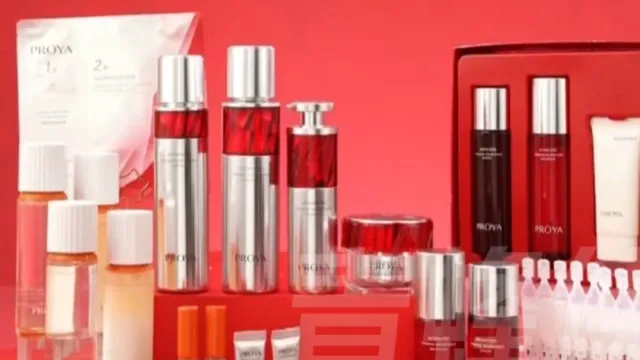
PROYA became a Chinese skincare leader through a repeatable commercial system: identify a precise skin concern, turn it into a science-led hero product, explain the benefit clearly on Tmall and Douyin, then improve the line with new research. Attractive packaging supports discovery, but research conversion and channel learning explain more of the brand’s scale.
The latest results add an important warning. Growth slowed in 2025 and early 2026, so the next phase will test 珀莱 雅’s ability to reduce flagship dependence and carry Chinese beauty technology into overseas retail.
Why PROYA Matters in China’s Beauty Market
China’s cosmetics category still grew while consumer demand became more selective. The National Bureau of Statistics reported RMB 465.3 billion ($68.7 billion) in 2025 cosmetics retail sales by enterprises above the designated size, up 5.1% year over year.
PROYA Group did not keep pace with that category’s growth. Its 2025 annual report recorded approximately US$1.57 billion in revenue, down 1.68%, and approximately US$221 million in profit attributable to shareholders, down 3.50%. The namesake brand generated approximately US$1.14 billion in main business revenue, down 10.39%, and still represented 72.64% of the total.
Those figures show a large business under pressure. Leadership still needs sharper product choices, less reliance on acquisition, and new growth engines. The brand remains commercially important because it shows how local companies can pair efficacy skincare with rapid product iteration and platform-specific selling.
Consumer Insight Became a Product Architecture
Kantar Worldpanel’s 2025 China beauty analysis found that consumers were placing less weight on brand size and more on personal fit and product experience. Demand was also shifting from single functions toward scenario-led, multi-benefit care. Morning routines favored antioxidants and sun protection, while evening routines leaned toward anti-aging and repair.
The PROYA product plan closely matched that pattern. Its 2025 filing says the Double Effect series added serum, lotion, and cream versions that paired early anti-aging positioning with a whitening claim.
The Ruby series remained an anti-aging franchise and used peptide-led care in its messaging. The company also divided brightening offers across age bands and introduced PROYA MED for repair needs linked to intensive skincare and post-procedure care.
The same logic shaped sun care. The company positioned its Silver Tube product around high protection plus post-sun repair, rather than presenting UV defense as a single benefit. These are company product claims, not independent clinical findings. Their commercial value lies in making a complex routine easier to understand and shop.
Hero products also reduce launch risk. A known series gives new formulas an established identity, while iteration keeps the franchise tied to new concerns. This approach turns consumer insight into a practical brief: define the user, problem, occasion, claim, format, and channel before media spending begins.
How PROYA Turns Skincare R&D Into Marketable Claims
The group spent RMB 216.8 million on R&D in 2025, equal to 2.05% of revenue, and employed 334 R&D staff. The report also listed research centers in Hangzhou, Shanghai, and Paris, plus 303 patents at year-end, including 143 invention patents.
Stronger evidence lies in research conversion. Four self-developed ingredient projects reached industrial application during 2025. The company also completed a regulatory filing for bicyclic octapeptide-68, extending its ingredient innovation work into peptides.
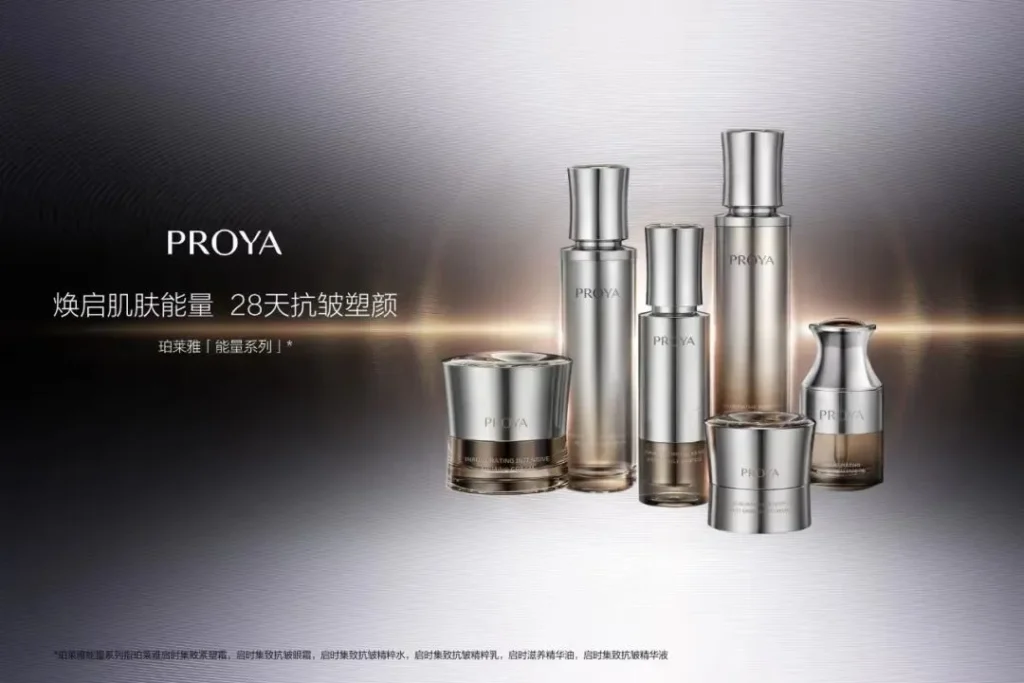
At the 2025 International Federation of Societies of Cosmetic Chemists Congress, the group presented 14 research projects and received a Top 10 Papers of Basic Research award. The company’s announcement says its joint study with Zhejiang University used deep learning to screen natural compounds associated with mitochondrial function and skin aging. The resulting Cellergy pro formulation entered the Energy 2.0 line, according to the same source.
R&D alone did not build the business. PROYA reported an image-promotion expense rate of 44.03% in 2025, compared with a 2.05% R&D expense rate. The two categories serve different purposes and do not form an ROI comparison. They show that scientific credibility, product communication, celebrity reach, and paid distribution still operate together.
Tmall, Douyin, and Xiaohongshu Close the Feedback Loop
Online channels contributed 95.58% of main business revenue in 2025. The company reported that its flagship store ranked first by transaction value in Tmall Beauty for the year, while the brand ranked second in Douyin Beauty. Those are platform rankings disclosed by the company.
Each platform served a distinct role. Tmall combined hero products, gift sets, membership, and major shopping festivals. Douyin linked short video, official livestream commerce, creator broadcasts, and channel-exclusive sets. Xiaohongshu supported longer cultural and social conversations, including a 2025 International Women’s Day live dialogue.
This structure can shorten the time between product launch and commercial response. The filing also describes AI-supported content and advertising optimization on Tmall, but it does not disclose the underlying consumer-research methods or attribution model. That limit matters when evaluating claims about data-led decision-making.
The company describes an omnichannel beauty strategy, yet offline channels supplied only 4.42% of 2025 main business revenue. Department stores can support premiumization and product trial, but e-commerce remains the financial center. Platform traffic costs and algorithm changes therefore remain material operating risks.
PROYA Group Is Building Beyond One Skincare Brand
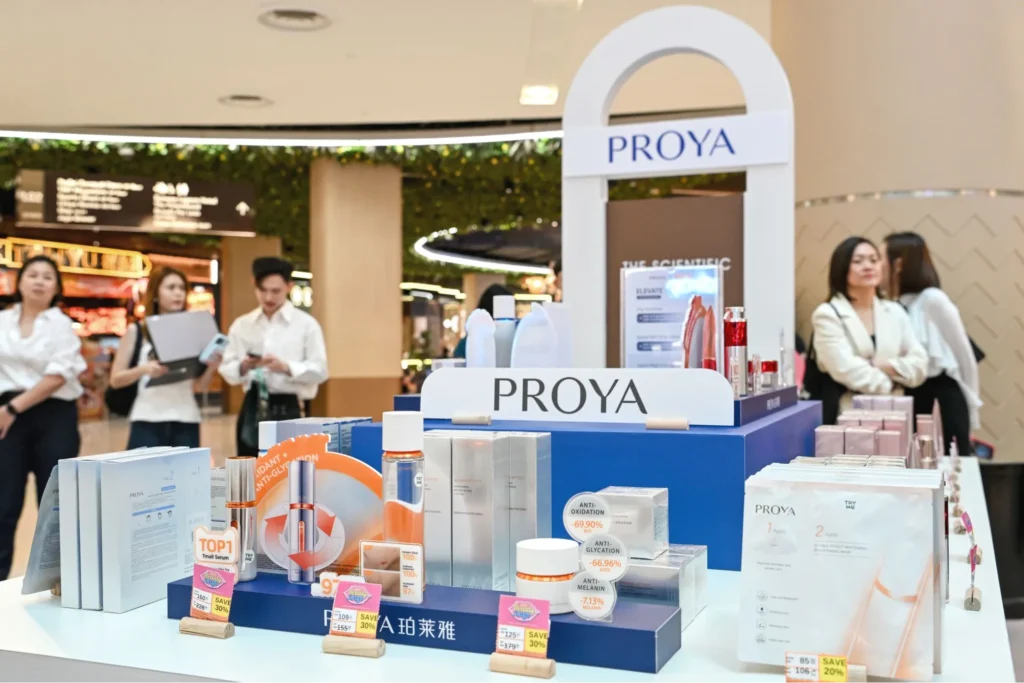
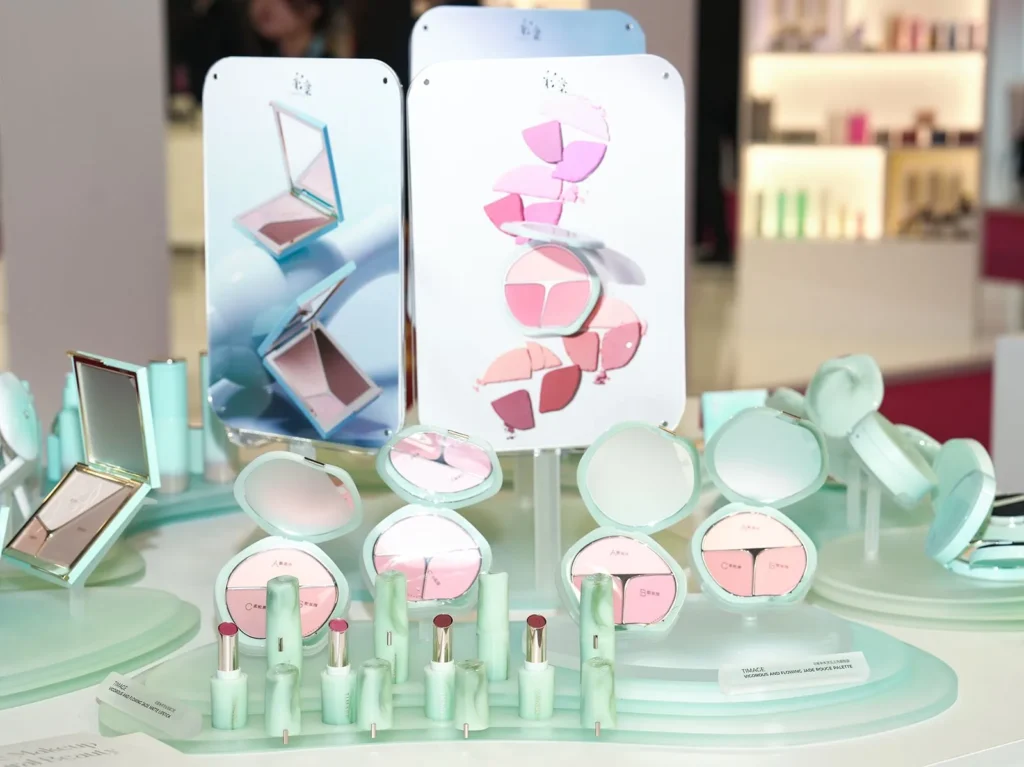
In May 2026, PROYA paid RMB 351 million ($51.8 million) for an additional 12.6% of Flower Knows, taking its indirect holding to 51%. The same report said Flower Knows generated RMB 1.7 billion ($251 million) in 2025 revenue and would become the group’s second-largest cosmetics brand. The deal gives the portfolio a larger color cosmetics business and reduces reliance on skincare.
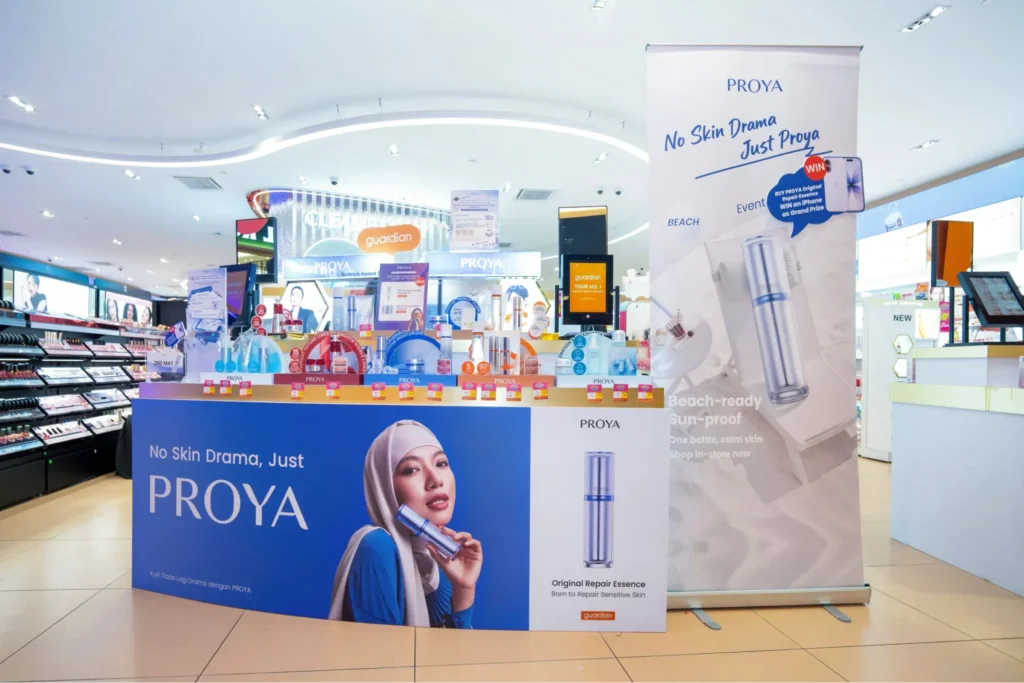
International expansion has also moved into physical distribution. Guardian Malaysia included PROYA in its Asian Derma retail range in April 2026. For C-Beauty, this is early channel proof, rather than evidence of broad global scale.
The ambition is much larger. Reuters reported in June 2025 that the group’s ten-year plan targets a place among the global top ten and would require at least RMB 50 billion in annual revenue. That is a management goal, not a forecast.
Recent numbers show the size of the task. First-quarter 2026 revenue fell 2.29% to RMB 2.305 billion ($340 million), while attributable profit declined 6.05% to RMB 366.7 million ($54.2 million). Global growth must therefore add durable demand rather than hide softness in the core business.
What Chinese Beauty Brands Can Learn From PROYA
- Translate consumer tension into one clear product promise. Multi-benefit products work when shoppers can still understand the main use case.
- Improve recognized franchises instead of replacing them with constant novelty. Hero lines compound memory, reviews, search demand, and retail education.
- Treat skincare R&D as an operating capability. Patents matter less than the path from ingredient research to formula, claim, evidence, and repeat purchase.
- Separate domestic proof from global readiness. Chinese brands going global need local compliance, retailer trust, relevant claims, and market-specific assortment.
The strategic takeaway is direct: PROYA built its advantage through the speed and discipline connecting consumer insight, science, product, and commerce. Global beauty competition will test the system’s ability to earn trust outside China while the group repairs growth at home.
Explore China’s Consumer and Innovation System With Ashley Dudarenok

PROYA shows how Chinese consumer behavior, cultural branding, scientific innovation, and platform execution connect. Ashley Dudarenok helps global teams turn those signals into decisions through China market intelligence, advisory, executive education, keynotes, workshops, and learning expeditions.
Book a consultation to examine what China’s innovation system means for your brand.
FAQs
What is PROYA skincare?
It is the flagship science-focused brand of Proya Cosmetics Co., Ltd. According to its 2025 annual report, the company positions it for young professional women, mainly in the RMB 200 to RMB 500 band, across online and offline channels.
Is PROYA the same as 珀莱雅?
Yes. PROYA is the English brand name, while 珀莱雅 is the Chinese name used in company filings and local commerce. Both refer to the flagship skincare brand, though the parent company owns a broader beauty portfolio.
What does PROYA cosmetics refer to?
The phrase usually refers to Proya Cosmetics Co., Ltd., the Shanghai-listed parent company behind PROYA and brands such as Timage and Off&Relax. The company develops, produces, and sells skincare, makeup, haircare, and efficacy-focused beauty products.
Is PROYA a luxury brand?
No. The company defines PROYA as popular exquisite skincare with a main price band of RMB 200 to RMB 500. Its premiumization relies on science, hero products, and upgraded retail presentation rather than luxury-house positioning.
What is the PROYA Double Effect series for?
PROYA’s Double Effect series targets early aging and brightening concerns. The company expanded it in 2025 with serum, lotion, and cream versions carrying a whitening claim. Buyers should check the exact formula and local product label.
What is the PROYA Ruby series?
The Ruby series is PROYA’s anti-aging hero line, linked in 2025 marketing to peptide care and firming. Formulas can change across versions and markets, so compare the product number, ingredient list, and authorized seller before buying.
What should buyers know about PROYA sunscreen?
The current Silver Tube line pairs high-protection positioning with post-sun repair messaging. That description reflects the company’s claim, not an independent clinical verdict. Check the local SPF and PA label, application directions, and reapplication guidance.
Where can I buy PROYA products?
PROYA products are available on Tmall, Douyin, Xiaohongshu, and other e-commerce platforms. The brand also distributes through offline retail channels and livestream commerce in China.
Where can I buy PROYA outside China?
Availability remains market-specific. Guardian Malaysia carried PROYA within its Asian Derma range in April 2026. Elsewhere, confirm the seller’s authorization, regional ingredient label, expiration information, and return policy before purchasing imported stock.
Is Proya skincare suitable for sensitive skin?
Suitability depends on the exact formula and your skin condition. Proya skincare includes brightening, anti-aging, sunscreen, and repair products, so review the ingredient list, patch test first, and seek dermatology advice if you have active irritation.