

Chinese AI in 2026 is defined by execution, not model size.
While much of the global AI discussion focuses on benchmarks and research milestones, China’s emphasis has shifted toward deployment. AI systems are embedded directly into industrial processes, public infrastructure, enterprise software, and consumer platforms.
In 2026, AI in China influences manufacturing output, healthcare workflows, financial risk management, logistics routing, and digital commerce systems.
Three structural dynamics shape this landscape:
- Industrial embedding over experimentation. AI is integrated into production environments rather than isolated in pilots.
- Platform-native distribution. AI capabilities are layered into digital ecosystems already serving hundreds of millions of users.
- Policy–industry alignment. Regulatory frameworks provide defined parameters that allow scaled institutional deployment.
Competition is no longer centered on chatbot performance. It is centered on measurable productivity, cost efficiency, and operational integration.
For leadership teams outside China, the relevant question is structural readiness. AI generates economic impact only when embedded into transaction systems and decision workflows.
In 2026, Chinese artificial intelligence functions as infrastructure.
Chinese AI in 2026: What Has Structurally Changed

To truly understand Chinese AI in 2026, you have to look past the noise and focus on how the ecosystem has evolved in substance — not just in headlines. What was once dominated by flashy chatbot releases and model bragging rights has matured into something very different: integrated intelligence systems woven directly into industry, governance, and enterprise infrastructure.
China’s AI industry has grown rapidly. According to 新华社 (Xinhua) reporting, the number of AI companies in China has exceeded 6,000, and the core AI industry’s output is forecast to surpass 1.2 trillion yuan, with nearly 30% year-on-year growth — signaling deepening commercial activity and economic commitment.
Open-source Chinese models have been downloaded over 100 billion times globally, and China now holds the largest share of AI patents worldwide.
How Chinese AI in 2026 Is Moving Beyond Chat-Centric Models
In early technical discussions across Chinese institutions and industry forums, there’s a growing consensus that the era of “chat-centric” models is coming to an end. Instead, AI is increasingly built to execute tasks autonomously or with minimal human intervention, from handling complex business logic to making integrated decisions within enterprise systems.
These systems are not standalone interfaces; they are embedded into workflows and software stacks across sectors. AI is measured by its utility — the outcomes it produces — not by the length of its training dataset or by how cleverly it responds to prompts.
Regulation and Governance in Chinese AI in 2026
One reason this operational maturity has accelerated is regulatory clarity. After China introduced interim generative AI measures in 2023, governance frameworks became more defined by 2025–26. This includes structured expectations around data security, content accountability, and real-name registration for public-facing AI services.
While some outside observers initially viewed these as restrictive, the effect has been to reduce ambiguity, making it easier for enterprises to integrate AI into core processes without running afoul of uncertain regulations.
How Chinese AI Is Embedded Across Enterprise Systems
Most global discussions about China’s AI activity still focus on consumer-facing innovations. China’s AI capability is increasingly embedded in sectors such as:
- Manufacturing: AI systems are used for predictive maintenance, quality control, and production scheduling, reducing downtime and optimizing throughput.
- Healthcare: Tertiary hospitals are deploying advanced AI — for example, integrated imaging analysis and diagnostic support — to improve decision-making and workflow efficiency.
- Finance and Compliance: AI models are applied to risk analysis, fraud detection, and real-time monitoring, turning reactive compliance into proactive risk management.
- Public Administration: Models like DeepSeek have been integrated into government services for document drafting, policy interpretation, and administrative workflows.
Unlike early pilots that lived in innovation labs, these deployments are happening in operational environments where performance outcomes are measured and tied to organizational efficiency.
How Chinese AI Companies Are Competing in 2026
In 2023–24, Chinese AI headlines were filled with new foundation models and benchmark scores. By 2026, the competitive terrain will have stabilized into a more strategic segmentation:
- Platform-backed models integrated into major cloud and data platforms
- Industry-specialized systems tuned for logistics, healthcare, finance, and governance
- Open-weight, developer-oriented ecosystems promoting innovation outside dominant platforms
- Public-sector aligned deployments that prioritize national and municipal services
Infrastructure Constraints Shaping Chinese AI Development
China’s AI development is occurring under non-trivial infrastructure constraints, especially around access to semiconductors. Rather than focusing exclusively on larger training runs, many Chinese companies and research consortia have shifted their attention toward efficiency engineering — optimizing models for local inference, quantization, compression, and co-design with domestic hardware.
Reports indicate burgeoning activity among Chinese GPU startups that aim to challenge global inference leaders by focusing on cost-effective performance.
This pragmatism has significant implications for global leaders: sustainable advantage often comes from deployment economics and cost-effective inference strategies, not simply training scale.
Why Chinese AI in 2026 Is Treated as Infrastructure
Perhaps the most important change in 2026 is cultural. Within Chinese enterprises, AI is increasingly discussed alongside core productivity systems — ERP platforms, automation tooling, data analytics, and organizational workflow engines — rather than as an add-on experiment.
This shift is critical because when AI stops being a “project” and becomes a permanent component of operational systems, it changes budgeting, governance, organizational structure, and performance measurement. And that’s a structural change — not a hype cycle.
Why Chinese AI Feels Faster Than Global AI Ecosystems
From the outside, Chinese AI often appears to be “moving faster” than other ecosystems. But speed here isn’t just about raw research breakthroughs. It’s about structural mechanics — how technology gets distributed, financed, integrated, and iterated.
Platform Leverage: Distribution Is Already Solved
One of the defining characteristics of AI in China is that it does not start from zero distribution.
China’s major digital platforms — spanning e-commerce, payments, short-form video, cloud services, and messaging — already serve hundreds of millions (and in some cases over a billion) users. When AI capabilities are introduced, they are layered directly into these ecosystems rather than launched as standalone tools.
This drastically reduces adoption friction.
- Commerce platforms optimizing recommendations and pricing
- Payment ecosystems are improving fraud detection and credit scoring
- Enterprise cloud dashboards are generating reports and summaries
- Content platforms assisting with script generation and moderation
This “embedded-first” model compresses time between innovation and mass usage.
According to the China Academy of Information and Communications Technology (CAICT), China’s AI industry continues to integrate closely with cloud computing and platform ecosystems, with AI increasingly delivered as part of broader digital infrastructure rather than as isolated applications.
Policy–Capital Alignment Reduces Strategic Drift
In many markets, AI innovation is driven primarily by venture capital and private research labs. In China, the dynamic is more layered.
National strategies such as the “New Generation Artificial Intelligence Development Plan” (originally launched in 2017 and continually updated through sectoral action plans) and subsequent “AI+” industrial integration initiatives have explicitly advanced AI in manufacturing, healthcare, transportation, and governance.
By 2025–26, this alignment between industrial policy and enterprise investment has created a feedback loop:
- Policy identifies priority sectors.
- Capital flows toward those sectors.
- Enterprises receive incentives to adopt AI.
- Deployment data informs further refinement.
A 2025 peer-reviewed study published in Scientific Reports (Nature Portfolio) analyzing China’s AI policy pilot zones found measurable improvements in corporate supply chain resilience and digital capability upgrading among firms participating in AI integration initiatives.
Iteration Velocity: Short Feedback Loops at Massive Scale
Another reason China AI feels faster is iteration density.
When AI systems are embedded into platforms with hundreds of millions of daily interactions, feedback is constant. User behavior, transaction data, content engagement metrics, and enterprise workflows all generate real-time signals that can rapidly refine models.
China’s digital economy already accounts for over 40% of national GDP, according to official government data, providing a dense data environment for continuous optimization. High interaction density shortens learning cycles. And shorter learning cycles compound.
For leaders outside China, this highlights an uncomfortable truth: if your AI pilots are siloed, with small user bases and limited integration, your iteration speed will be structurally slower — regardless of model quality.
Enterprise Procurement Is Pragmatic, Not Ideological
In 2026, many large Chinese enterprises are not asking, “Is this the best model in the world?” They’re asking, “Does this reduce cost or increase throughput?”
This commercial pragmatism compresses decision timelines.
The core AI industry’s output in China is projected to exceed 1.2 trillion yuan ($174 billion USD) in 2026, with nearly 30% year-on-year growth, according to Xinhua. Growth at that scale suggests enterprise adoption is not stalled in proof-of-concept mode.
In contrast, many Western enterprises remain stuck in pilot purgatory — running small AI experiments that never graduate into operational budgets.
Infrastructure Constraints Forced Efficiency
There’s another factor that rarely gets discussed: constraint.
Ongoing semiconductor export restrictions have forced Chinese AI developers to focus heavily on efficiency — model compression, quantization, optimized inference, and co-design with domestic hardware.
Rather than pursuing unlimited scale, many firms have shifted toward maximizing performance per compute unit. This constraint-driven engineering culture has pushed attention toward deployment economics. Inference cost reduction has become as strategic as training capability.
For leadership teams globally, that’s a critical insight. Most organizations do not have unlimited compute budgets. Efficiency is not a compromise — it’s a competitive discipline.
Cultural Framing: AI as Industrial Upgrade
Perhaps the most powerful driver behind the speed of Chinese artificial intelligence is narrative framing.
Inside China, AI is frequently discussed as part of industrial upgrading — a mechanism to enhance manufacturing, logistics, healthcare delivery, and public services.
That framing influences executive decision-making. When AI is positioned as infrastructure modernization rather than optional experimentation, leadership teams treat it as a strategic necessity.
What Leaders Should Extract from This
- Built-in distribution via dominant platforms
- Policy–capital alignment around industrial outcomes
- High-density feedback loops
- Pragmatic procurement tied to ROI
- Efficiency-first engineering under constraint
- Cultural framing as infrastructure, not novelty
If your organization lacks these mechanisms, AI will feel slower — regardless of how advanced your models are.
Speed is systemic. And that’s the real lesson.
How Chinese AI in 2026 Is Transforming Everyday Life
AI in China is no longer confined to enterprise systems. It is embedded in daily routines at the national scale. By late 2025, official data indicated more than 602 million users interacting with AI-enabled services, representing one of the fastest large-scale technology adoption curves globally.
Public sentiment reinforces this trajectory: roughly 83% of surveyed respondents describe AI as more beneficial than harmful, lowering cultural resistance to adoption across consumer and civic contexts.thi
1. Everyday AI Assistants With Massive Usage
AI assistants are now embedded inside platforms that Chinese consumers already use daily. Baidu’s AI assistant, integrated across search and partner ecosystems including JD.com, Meituan, Trip.com, and Baidu Health, surpassed 200 million monthly active users.
During the 2026 Lunar New Year period, ByteDance’s AI chatbot Doubao reached over 100 million daily active users, processing nearly 2 billion queries during the Spring Festival Gala broadcast.
These figures demonstrate behavioral integration. AI is not being downloaded as a standalone tool. It is functioning as a layer inside commerce, travel booking, health inquiries, content generation, and entertainment ecosystems.
The economic implication is increased decision velocity. When booking, purchasing, searching, or planning is assisted in real time, friction declines. Lower friction increases transaction frequency and platform stickiness.
2. Healthcare: AI Expanding Clinical Capacity

AI deployment in healthcare is moving from pilot to an institutional layer. China’s AI healthcare market projections suggest it could exceed $18 billion by 2030. The growth rate reflects systemic adoption, not isolated experiments.
In leading tertiary hospitals, AI systems assist with imaging analysis, triage prioritization, and clinical documentation. For example, AI-supported cardiology imaging trials in Shanghai have demonstrated that diagnostic throughput can increase without a proportional increase in staffing.
The daily-life consequences are tangible: shorter diagnostic backlogs, faster report generation, and reduced waiting times in high-density urban hospitals. AI augments clinician capacity, effectively increasing service supply without expanding physical infrastructure.
3. Chinese AI in Education and Family Life

China is embedding AI into the education system at scale. For example, cities like Beijing have mandated AI education from elementary through secondary school, with structured courses and frameworks that guide young learners in practical applications of AI.
In pilot schools supported by China’s Ministry of Education, AI-enabled classrooms now include intelligent blackboards, real-time pronunciation feedback tools for language learning, and automated assignment evaluation. These systems help teachers provide personalized support while reducing administrative burden.
At the household level, adaptive learning platforms such as Squirrel AI restructure homework itself. Instead of assigning uniform exercises, the system breaks subjects into granular knowledge points, diagnoses individual error patterns, and dynamically adjusts difficulty. Millions of students use AI-driven tutoring tools that shorten learning cycles and reduce repetitive practice.
4. AI Integrated Into Urban Services and Utilities
AI is embedded in city management systems in major urban centers. Platforms such as Alibaba Cloud’s City Brain analyze real-time traffic flows and have reported traffic efficiency improvements of roughly 15% in pilot districts. Smart parking systems, intelligent weather-prediction tools, and AI-assisted governance dashboards are now part of municipal operations in cities such as Shenzhen.
The daily benefit is cumulative rather than dramatic: reduced congestion, smoother commutes, faster logistics routing, and more predictable public services. Small efficiency gains at the metropolitan scale translate into meaningful productivity savings across millions of citizens.
5. AI Agents Moving From “Chatting” to Task Completion
In 2025–26, AI agent technologies systems that can autonomously complete sequences of tasks rather than just answer questions entered public view. Companies such as Butterfly Effect and Tencent have piloted AI autonomous agents that help with complex workflows and practical use cases, signaling a shift from conversational AI to functional task achievement.
This shift means people may soon interact with AI that does things for them — not just replies to them.
6. Smart Logistics, Robots, and Daily Services
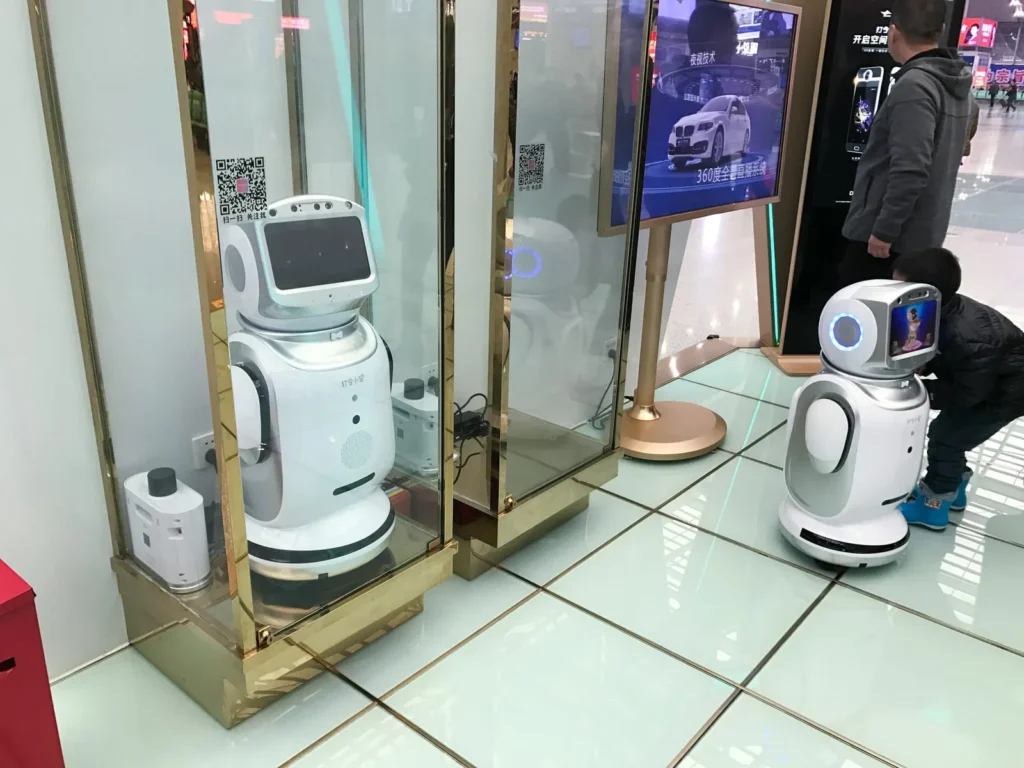
Major Chinese platforms like Meituan have deployed unmanned aerial vehicles (UAVs) for urban deliveries, especially in first-tier cities such as Shanghai, Beijing, and Shenzhen. These UAVs can carry orders within local delivery radii and operate in diverse conditions, accelerating food and goods delivery and reshaping expectations for service speed.
In hubs like Shenzhen, “embodied AI” systems such as delivery robots, autonomous food delivery drones, and robotic service platforms are becoming visible parts of daily life in parks, streets, and public spaces. These systems perform practical tasks — ranging from dropping off meals to patrolling urban zones — and are part of broader smart city deployments supported by regional authorities.
The Strategic Insight: AI as Everyday Infrastructure
Across China, AI is transitioning from buzzword to functional infrastructure — analogous to the spread of broadband or mobile payments in the 2010s.
What makes this different is scale + integration:
- Massive daily engagement (hundreds of millions of users interacting with AI assistants)
- Government and city-level deployments affecting mobility, services, and public planning
- Changing cultural and educational norms that normalize AI use from childhood onward
- AI functions that go beyond the interface to task execution
AI systems are embedded in the rhythms of daily life — from how people shop, travel, learn, and obtain information to how governance, services, and cities operate. And importantly, public trust in AI’s benefits remains high, easing further adoption.
Chinese AI in 2026: Four Enterprise Deployment Snapshots
If you want to understand Chinese AI in 2026, don’t look at demos. Look at where AI is tied directly to operational metrics.
Below are four grounded deployment patterns emerging across China’s AI ecosystem — each followed by what leadership teams should actually take from it.
Snapshot 1: Manufacturing — AI as a Production Control Layer
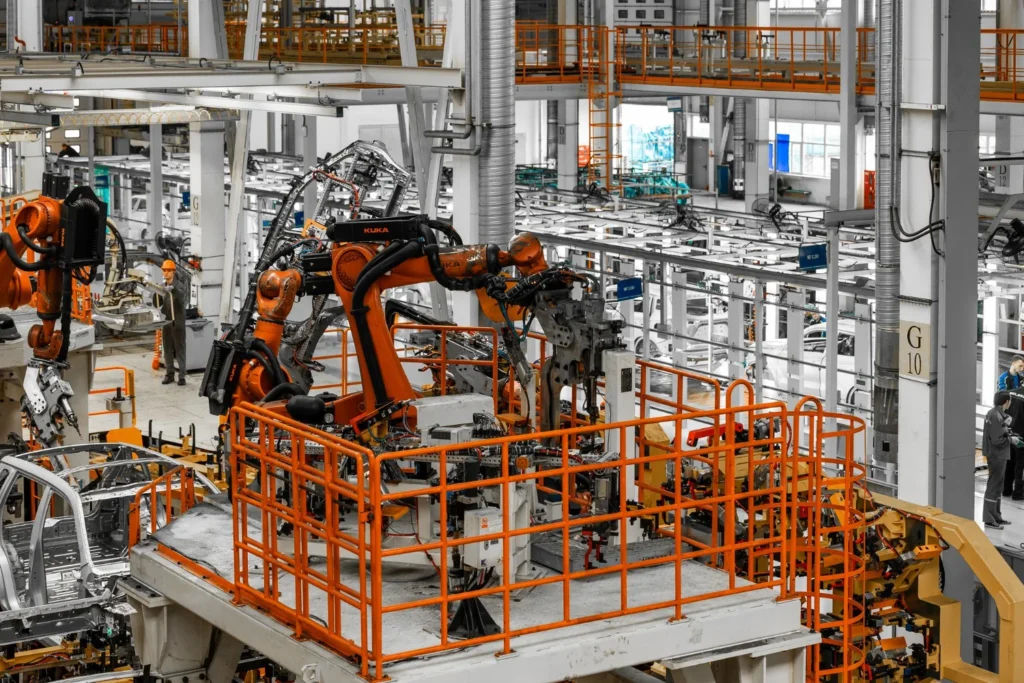
China’s manufacturing sector remains one of the largest in the world, contributing over 27% of global manufacturing output, according to UN data. That scale creates enormous incentive for efficiency. In 2025–26, AI is increasingly embedded into:
- Predictive maintenance systems
- Computer vision–based quality inspection
- Dynamic production scheduling
- Supply chain risk monitoring
For example, AI-driven visual inspection systems in electronics and automotive factories now detect micro-defects at speeds impossible for manual inspection, reducing scrap rates and downtime. Policy-backed AI pilot zones have shown measurable improvements in supply chain resilience and digital upgrading among participating firms.
Leadership lesson: Start AI where operational variance costs you real money. Production bottlenecks, downtime, rework, and supply unpredictability are high-leverage entry points. If AI cannot be tied to throughput or margin, it will stall.
Snapshot 2: Healthcare — AI as Clinical Infrastructure, Not App Layer
China’s healthcare system faces pressure from urban hospital concentration, aging demographics, and physician shortages. AI has been positioned as part of a broader modernization effort.
In 2025, peer-reviewed research highlights the deployment of AI systems across tertiary hospitals for diagnostic imaging, triage assistance, and clinical documentation automation.
In leading urban hospitals, AI tools are assisting radiologists with image interpretation, flagging anomalies for human review, and generating structured reports. These are not replacing clinicians — they are compressing time and reducing diagnostic backlog.
What’s different in 2026 is the depth of integration. AI outputs are fed directly into hospital information systems rather than presented in external dashboards.
Healthcare leaders in China increasingly treat AI as:
- A triage accelerator
- A documentation reducer
- A workflow smoother
Not as a novelty diagnostic chatbot.
Leadership lesson: AI adoption accelerates when it reduces professionals’ cognitive load rather than attempting to replace them. Identify where your knowledge workers are overloaded — and design AI as relief infrastructure.
Snapshot 3: Financial Services — AI as Compliance Engine
Financial institutions in China operate under intense regulatory scrutiny. That makes them prime candidates for structured AI deployment.
In 2026, AI systems will be widely used for:
- Real-time transaction anomaly detection
- Anti-money laundering pattern recognition
- Regulatory document analysis
- Credit risk modeling
The driver here is not innovation theater. It is risk mitigation and regulatory alignment.
As regulatory frameworks around generative AI matured, financial institutions became more willing to integrate models into compliance workflows because legal ambiguity decreased. Structured governance reduces hesitation.t
Leadership lesson: Highly regulated industries are not AI laggards by default. They can be leaders if governance frameworks are clear. If your organization cites regulation as a blocker, ask whether the real issue is ambiguity rather than restriction.
Snapshot 4: Platform Ecosystems — AI as Revenue Multiplier
China’s large digital platforms provide a different kind of insight into China’s AI acceleration.
AI is embedded into:
- Dynamic product recommendations
- Live commerce optimization
- Content moderation
- Advertising targeting
- Merchant analytics
China’s digital economy accounts for more than 40% of national GDP, according to CAICT’s Digital Economy Report (2025). That density of digital interaction creates enormous training and optimization feedback loops.
In 2026, AI isn’t just supporting content creation or search. It continuously optimizes revenue pathways within platform ecosystems.
This produces compounding effects:
- More engagement
- More data
- Better model refinement
- Stronger monetization
That feedback velocity makes the system feel fast — because it is constantly self-improving.
Leadership lesson: AI scales fastest when embedded inside systems that already generate high-frequency user interaction. If your company lacks dense digital touchpoints, your AI iteration speed will lag. Consider where you can create more measurable interaction loops.
Structural Risk and Trust at Scale
As Chinese AI becomes embedded in finance, manufacturing, healthcare, and public administration, risk shifts from model error to system exposure. Early AI failures were contained. In 2026-scale deployments, failures affect revenue, compliance, and public trust.
Governance Is an Engineering Function
China’s regulatory approach has shifted toward lifecycle accountability, including draft rules addressing AI systems that simulate human-like interaction and requiring provider responsibility across the design and deployment stages.
The structural implication is straightforward: oversight must be embedded into architecture.
That means:
- Continuous monitoring of outputs in production
- Logged decision pathways
- Defined human override authority
- Predefined escalation procedures
Post-hoc compliance review is insufficient once AI operates inside core workflows.
Automation Drift
When China AI models are embedded in high-frequency workflows, review intensity declines over time. AI recommendations become default actions. Human intervention decreases.
This “automation drift” reduces active oversight and shifts accountability without formal acknowledgment.
Mitigation requires deliberate controls: audit sampling, mandatory review thresholds for high-impact decisions, and named business owners for AI-assisted outputs.
Reputational Risk Scales with Anthropomorphism
AI systems that simulate conversational or emotional interactions increase trust exposure. Chinese regulators have proposed oversight for AI services that may create dependency risks (Reuters, 2025).
The operational lesson is that customer-facing AI requires:
- Explicit disclosure
- Clear human escalation paths
- Logged and reviewable interactions
Failure in relational AI systems carries a higher reputational cost than transactional automation errors.
Infrastructure Increases Blast Radius
AI integrated into underwriting, clinical triage, or industrial scheduling cannot fail locally. Errors propagate across systems.
Containment mechanisms are necessary:
- Segmented deployment
- Rollback capability
- Real-time anomaly detection
- Stress testing under adversarial conditions
Without containment design, scale amplifies the downside.
Organizational Trust
AI alters role definitions. Analysts validate outputs rather than produce them. Managers rely on system-generated insights. If authority boundaries are unclear, teams either over-trust or resist the system.
Sustained adoption requires defined human accountability and training focused on judgment, not just tool usage.
Leadership Implication
The 2026 evolution of AI in China demonstrates that operational scale increases both productivity and exposure.
Competitive advantage will depend less on model capability and more on structural resilience:
- Embedded monitoring
- Clear accountability
- Defined override authority
- Containment design
Five Signals That Will Define Chinese AI Through 2026

The real indicators are structural: integration depth, cost economics, regulatory evolution, market consolidation, and measurable productivity.
First, Enterprise Agent Penetration
The critical shift underway is from chatbot interfaces to task-executing systems embedded in enterprise software. The signal to watch is not how many new models launch, but how deeply AI agents are integrated into manufacturing systems, financial workflows, hospital operations, and logistics platforms.
If AI moves from advisory copilots to transaction-level execution inside core systems, operational dependence will increase, and productivity effects will compound. If it remains peripheral, growth will plateau.rethi
Second, Inference Economics
The sustainability of China’s AI development depends more on deployment cost than training scale. Semiconductor constraints have pushed Chinese firms toward model compression, quantization, and hardware–software co-optimization.
If inference costs fall materially at enterprise scale, AI adoption will expand beyond large incumbents into mid-market firms. Efficiency per compute unit — not parameter count — is the relevant metric in 2026.
Third, Regulatory Specificity
As AI systems become more agentic and embedded, regulation typically becomes more granular. Monitor whether governance frameworks evolve from general generative AI guidance to sector-specific compliance standards in finance, healthcare, and public administration.
Increased regulatory detail signals that AI deployment has moved from experimental status to systemic importance.
Fourth, Vertical Consolidation Among Chinese AI Companies
The early model proliferation phase is giving way to strategic positioning. Watch whether leading firms secure durable sector dominance through integration with industry incumbents and cloud ecosystems. Consolidation around vertical value chains — rather than horizontal model competition — indicates economic capture and market stabilization.
Fifth, Measurable Productivity Data
The most decisive indicator is sector-level performance improvement. China’s AI strategy has been framed as an industrial upgrading strategy. The question is whether manufacturing output quality, supply chain resilience, administrative processing speed, and compliance efficiency show sustained, attributable gains. If productivity metrics move consistently, structural adoption is underway.
Leadership Conclusion: What Global Executives Should Do Now
For global executives, the question is not whether China is ahead. It is whether your organization is prepared for AI to operate as infrastructure.
Three conclusions matter.
- Integration determines value: Model performance is secondary to workflow integration. AI creates economic impact only when embedded in transaction systems and decision processes.
- Governance must be built into architecture: As AI influences credit, clinical, and operational decisions, monitoring, traceability, and override authority must be engineered into production environments. Oversight cannot be informal.
- Productivity is the only meaningful metric: China’s AI development will be measured by improvements in cost efficiency, cycle time, quality, and resilience. The same standard applies everywhere.
AI maturity is defined by integration depth and institutional resilience — not by model size. That is the competitive standard now.
Bring China’s Digital & AI Insight to Your Team with Ashley Dudarenok

If you want strategic clarity beyond generic commentary about Chinese AI and digital markets, Ashley Dudarenok is one of the few global practitioners who turns China’s fast-moving reality into actionable advantage for business leaders.
Ashley is a serial entrepreneur, award-winning digital strategist, bestselling author, and founder of both a China digital transformation consultancy (ChoZan) and a China-focused marketing agency (Alarice) — bringing more than 15 years of direct operational experience in the world’s largest and most digitized market.
Ashley’s work goes far beyond inspirational talks. Her services help organizations translate China’s rapid AI and digital evolution into strategic moves that matter:
- Keynote Speaking & Virtual Events: High-impact presentations tailored to your audience on China’s digital economy, AI adoption in real business settings, new retail and customer engagement models, and how global firms can extract practical insights from China’s market dynamics.
- Strategic Advisory & Consulting: Customized guidance for leadership teams on how to interpret China’s innovation patterns and apply them to digital transformation, customer centricity, e-commerce strategy, and market expansion planning.
- Executive Workshops & Training: Focused masterclasses on China consumer behavior, digital platform dynamics, AI implementation lessons, retail transformation, and technology trend interpretation — designed for senior leaders and boards.
- Research & Reports: Proprietary insights such as China Mega Reports, industry analyses, and trend forecasts that equip executives with an up-to-date, data-driven understanding of China’s digital and AI ecosystem.
If your goal is to help your leadership team cut through surface-level narratives and build a strategic, executable understanding of China-driven digital and AI trends, booking Ashley for a keynote, workshop, or advisory session will deliver the kind of insight that drives decisions—not just applause.
Contact Ashley Dudarenok today to bring real, China-based digital strategy insight to your next executive meeting or event.
FAQs about Chinese AI in 2026
-
How is Chinese AI regulation in 2026 different from Western AI regulation?
Chinese AI regulation in 2026 is more centralized and focused on deployment. Instead of debating abstract AI ethics, China emphasizes structured compliance frameworks that allow scaled rollout. This clarity reduces uncertainty for enterprises and encourages faster operational adoption across industries.
-
What industries benefit most from AI in China’s enterprise adoption?
The biggest gains in AI adoption in China’s enterprises are in manufacturing, finance, healthcare, and logistics. These sectors see measurable efficiency improvements because AI is embedded into core workflows, not used as standalone experimental tools.
-
Why is China AI development focused on efficiency rather than scale?
China’s AI development increasingly prioritizes efficiency because hardware constraints require smarter engineering. Companies optimize inference costs and deployment economics, often delivering more practical business value than simply training larger foundation models.
-
Are China’s AI models competitive with global foundation models?
Yes, leading Chinese AI models are competitive in practical enterprise applications. While benchmark comparisons vary, their strength lies in integration, cost control, and vertical specialization, not in public chatbot performance alone.
-
What makes Chinese artificial intelligence adoption faster in large enterprises?
Chinese artificial intelligence adoption is accelerating because distribution channels already exist on major digital platforms. Enterprises can integrate AI into systems serving millions of users, accelerating iteration and delivering measurable returns on investment.
-
How should global companies evaluate Chinese AI companies for partnership?
When evaluating Chinese AI companies, focus on integration capabilities, alignment with compliance standards, and industry specialization. Strong partners demonstrate real deployment case studies and sustainable cost structures rather than relying only on technical marketing claims.
-
What role does open source play in Chinese AI innovation?
Open source plays a significant role in Chinese AI innovation, enabling faster experimentation and global collaboration. Many Chinese models are distributed as open-weight systems, which helps developers test, adapt, and deploy solutions across industries.
-
Is AI in China manufacturing driving measurable productivity gains?
Yes, AI in Chinese manufacturing is closely tied to predictive maintenance, quality control, and supply chain optimization. These deployments target measurable outcomes such as reduced downtime and improved throughput rather than theoretical innovation metrics.
-
How does platform integration influence China’s AI ecosystem growth?
The China AI ecosystem growth is accelerated by platform integration. AI features are embedded directly into commerce, payments, and enterprise systems, eliminating adoption friction and enabling continuous real-world data feedback for refinement.
-
What can leaders learn from the Chinese AI strategy 2026 without copying China?
The key lesson from the Chinese AI strategy 2026 is disciplined execution. Leaders should embed AI into measurable workflows, design governance into systems early, and prioritize productivity outcomes over model prestige or media visibility.