
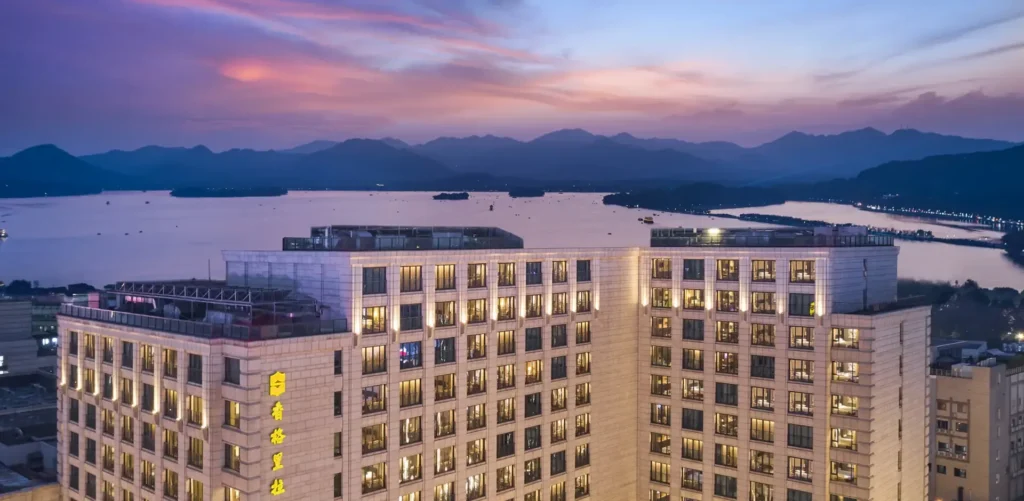
Midtown Shangri La opened in March 2016 at 6 Changshou Road within Hangzhou Kerry Centre, a mixed-use development near West Lake.
The hotel is useful to study because it operates within a wider commercial ecosystem. Its accommodation, dining, meetings, wellness, and entertainment offerings sit alongside offices and retail, showing how an urban luxury hotel can meet multiple customer needs within one central development.
Midtown Shangri-La Turns Location into the Product
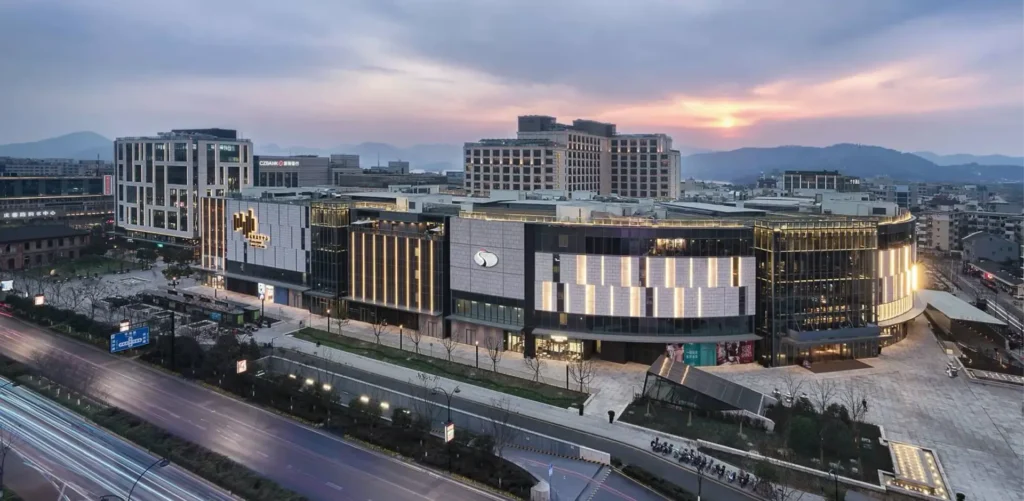
Midtown Shangri-La is a 414-room hotel inside Hangzhou Kerry Centre, close to West Lake and Metro Lines 1 and 2. Its urban luxury proposition combines accommodation, dining, meetings and leisure with access to one of Hangzhou’s main attractions.
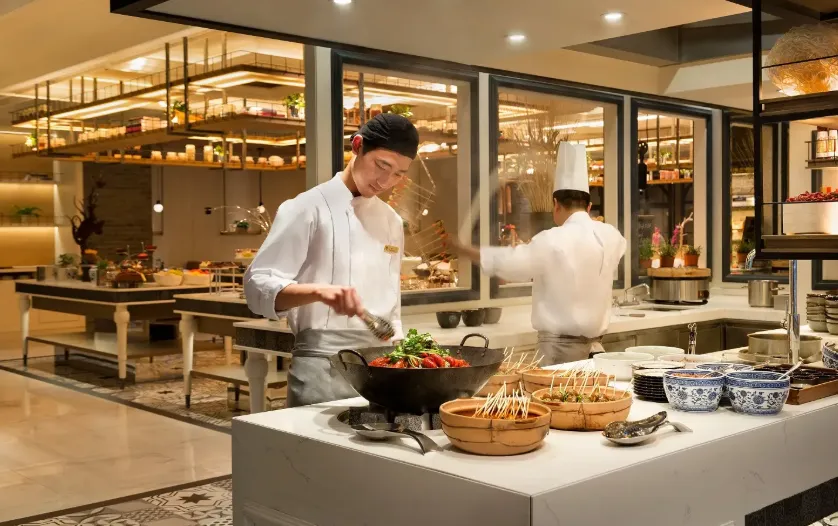
The hotel also connects its experience to Hangzhou. The Great Lounge uses a wall-light motif inspired by Three Pools Reflecting the Moon, while Cheng Zhong Bistro serves Zhejiang cuisine, including Dongpo pork.
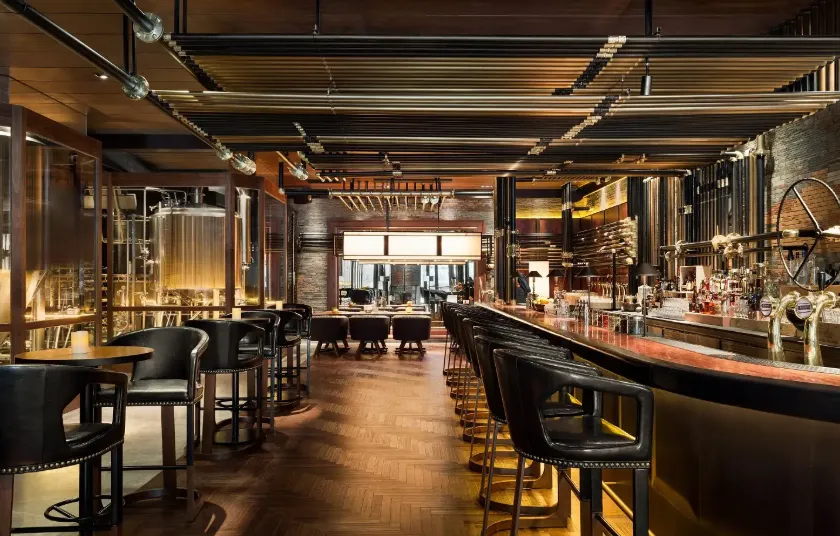
Other venues address different occasions. Midtown Brewery combines craft beer, Asian small plates, grilled dishes and live entertainment. Central Market provides international all-day dining.
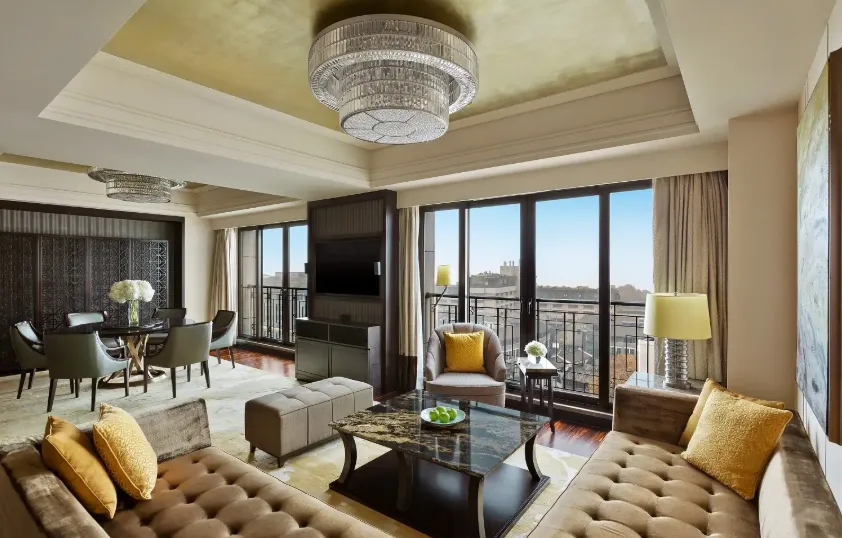
Rooms and suites start at about 43 square meters and offer city or West Lake views. Lake-view categories connect guests directly to Hangzhou’s best-known attraction while keeping them close to the city’s commercial center.
The property’s positioning comes from this combination of location, local references, dining, meetings and wellness.
How Hangzhou Kerry Centre Makes the Mixed-Use Model Work
Kerry Properties’ 2025 annual report records a 75 percent attributable interest in Midtown Shangri-La, while Shangri-La Asia reports a 25 percent equity interest. Kerry Properties describes the wider Hangzhou Kerry Centre as a development combining office, retail and hotel space.
That structure creates several demand channels. Offices can support corporate stays, meetings and weekday dining. Retail and leisure facilities provide additional services for hotel guests. Hotel restaurants and event spaces can also attract people who are not staying overnight.
The development includes a cinema, supermarket, dining and leisure facilities, reducing the need to travel between activities.
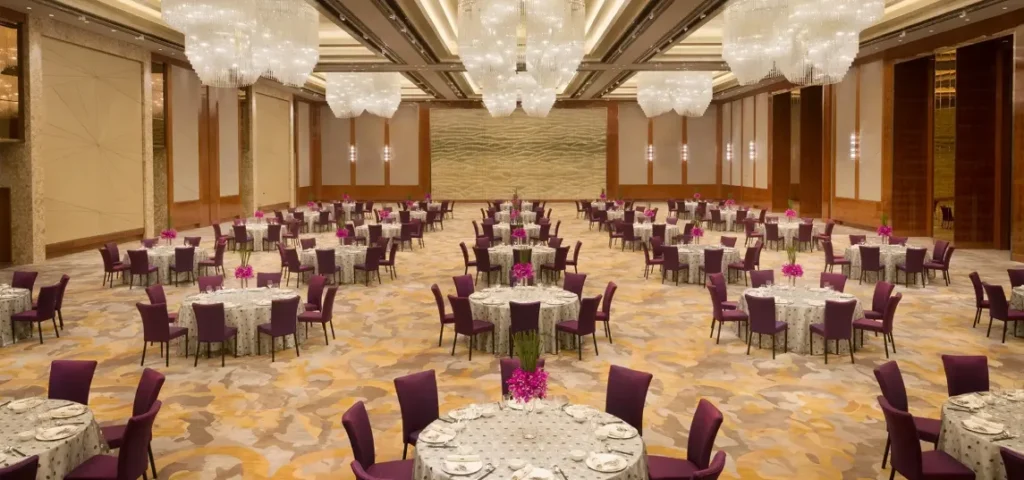
Events add another source of demand. Midtown Shangri-La lists function spaces ranging from about 28 to 1,583 square meters, along with meeting rooms, videoconferencing, printing, and other business services.
Kerry Properties reported that Hangzhou Kerry Centre was 90% occupied as of June 2026, compared with 92% at the end of 2025, excluding the hotel portion.
Customer Experience, Chinese Travel Demand, and the City Economy
China’s tourism growth provides context for Midtown Shangri-La’s positioning, but does not establish the hotel’s individual performance.
The Ministry of Culture and Tourism recorded 6.522 billion domestic trips in 2025, up 16.2 percent year over year, while domestic tourism spending increased 9.5 percent. The latest data show that domestic tourism remained positive in the first half of 2026, with 3.463 billion domestic trips, up 5.4 percent year over year, and domestic tourism spending of RMB 3.21 trillion, up 2.0 percent.
During the 2025 May Day holiday, the ministry also highlighted growing demand for diverse and personalized tourism experiences.
Midtown Shangri-La addresses this demand through a range of experiences within one property. Guests can choose city or lake views, Horizon-level accommodation, Zhejiang cuisine, afternoon tea, craft beer and live music, and pool and spa facilities.
This positioning also aligns with Hangzhou’s tourism strategy. During the 2025 May Day period, the city promoted integrating commerce, tourism, culture, sports, and exhibitions within major commercial districts.
Hangzhou’s 2026 tourism measures also target 1.9 million inbound overnight visitors by 2028. Central hotels with accommodation, dining and meeting facilities near major attractions are positioned to serve this demand.
The Business Model Separates Property Ownership from Hotel Management
The corporate structure explains how the development works commercially.
Shangri-La Asia’s 2025 annual report states that Kerry Properties owns 75 percent of the Hangzhou hotel-owning company, and Shangri-La Asia owns 25 percent. Shangri-La Group management entities provide hotel management and marketing services under agreements linked to the property’s 2016 opening, with terms running to 2036.
For 2025, Shangri-La Asia reported aggregate transactions of US$2.756 million under those Hangzhou management arrangements.
This distinction is useful. The hotel brand contributes operating expertise, distribution, and service systems, while the real estate company retains the larger ownership position in an asset within its broader development.
The commercial logic of hospitality ecosystems is therefore more concrete than simply putting several businesses side by side. Different components can serve overlapping customer journeys, while specialist operators handle the parts where their capabilities matter.
There is no public property-level evidence showing that the model increases room profitability, retail spending or asset value, so those outcomes should not be assumed. The documented structure shows how the system is designed, not the financial return from every connection.
What Midtown Shangri-La Teaches about Hospitality Ecosystems
Midtown Shangri-La shows how a hospitality ecosystem can organize complementary services around the same customer journey.
A business traveler can stay, hold meetings, dine and access public transportation from the Kerry Centre area. A leisure guest can visit West Lake, shop, eat and return to the hotel without adding complicated transfers.
This proximity matters more than the number of facilities alone. A mixed-use development can create more value when its components serve overlapping customer needs.
Midtown Shangri-La therefore offers a practical example of urban luxury built around convenience and coordination. Rooms, restaurants, meeting facilities, wellness, transportation and nearby attractions each serve different parts of the visit.
The broader lesson for mixed-use developments is clear: co-location has greater value when the surrounding services support real customer activities. Public data can show this model’s structure, though it cannot prove it delivers superior financial returns.
Work With Ashley Dudarenok on China Customer Experience and Innovation
Midtown Shangri-La illustrates how retail, hospitality, dining, mobility and service can support different parts of the same customer journey. That principle sits closely with Ashley Dudarenok’s work on Chinese consumers, customer centricity, New Retail ecosystems and seamless online and offline experiences.
Ashley delivers tailored keynotes for companies and events looking to understand what China can teach them about changing consumer expectations, future retail, innovation and customer experience.
Explore how you can work with Ashley Dudarenok to bring these China-focused business lessons to your team or event.
FAQs
Where is Midtown Shangri-La Hangzhou located?
Midtown Shangri-La Hangzhou is at 6 Changshou Road inside Hangzhou Kerry Centre, near Yan’an and Qingchun roads. Shangri-La says West Lake is about a five- to ten-minute walk away, and Metro Lines 1 and 2 are nearby.
What is the relationship between Midtown Shangri-La and Kerry Centre?
Kerry Centre is a mixed-use development containing retail, offices, apartments, and the hotel. Kerry Properties developed the complex and holds a 75 percent interest, while Shangri-La Asia holds the remaining 25 percent. Shangri-La operates the hotel under its brand and management systems.
Does Midtown Shangri-La Hangzhou have a spa?
Yes. Chi, The Spa offers treatments, plus an indoor swimming pool, gym, whirlpool, steam room, and sauna. These facilities serve hotel guests and support the property’s wellness positioning within the Kerry Centre complex.
Is Midtown Shangri-La Hotel Hangzhou good for business travel?
Yes, Midtown Shangri-La Hotel Hangzhou suits business travel, offering central access and on-site meeting support. The hotel offers boardrooms, videoconferencing, printing, and event services, while its Kerry Centre location keeps you close to offices, retail, and dining.
What is the Horizon Club at Midtown Shangri-La Hangzhou?
Horizon Club rooms on levels 12 and 13 include extra benefits and access to a private lounge. The club format addresses demand for privacy and personalized service among business travelers and high-net-worth guests.
What restaurants are inside Midtown Shangri-La Hangzhou?
The hotel has four main food and beverage venues: Central Market, Cheng Zhong Bistro, Midtown Brewery, and The Great Lounge. Together, they cover international buffet dining, Zhejiang cuisine, craft beer with live music, local tea and afternoon tea.
What awards has Midtown Shangri-La Hangzhou received?
Recent recognition includes Trip.com Gourmet Golden Restaurant 2024, Best City Wedding Hotel 2024, and Best Hotel in East China from TTG China Travel Awards in 2024. These awards reflect specific operational categories rather than overall luxury rankings.
How does Shangri-La Circle work at this hotel?
Shangri-La Circle benefits vary by booking and membership tier, but the hotel’s current dining page confirms a children’s buffet meal benefit for eligible members. Travelers should verify room, club and member inclusions for their specific reservation dates.
What are the gym and pool hours?
The gym is open 24 hours, although it is unstaffed from 11:00 PM to 6:00 AM. The indoor pool and steam room operate from 6:00 AM to 11:00 PM. Some guest reports indicate the gym can be accessed outside standard hours by request at the concierge desk
Is parking available at the hotel?
Yes, the hotel provides free on-site parking in an underground garage connected to the hotel entrance. No advance reservation is required, though height restrictions apply. Guests driving to Hangzhou can park directly and access the lobby without leaving the Kerry Centre complex