

Vivo mobile offers a useful lesson for leaders studying consumer technology in China. In smartphones, every brand competes for attention long before a buyer compares specifications. The brand stays relevant through product range, imaging identity, channel access, and close reading of daily user behavior. That mix makes Vivo Mobile a strong case study in competitive visibility.
The point matters because smartphone competition has entered a more demanding stage. Growth alone cannot protect a handset brand. Consumers replace devices more carefully, rivals copy features quickly, and digital lifestyles change faster than product cycles. In that environment, a visible brand continues to earn consideration at every step of the purchase journey.
Vivo Mobile Reflects A New Phase Of Smartphone Competition
The global smartphone category now rewards brands that can defend their memory, build trust, and manage upgrade timing. Reuters reported that global smartphone shipments rose 2 percent year-on-year in 2025. Apple led with 20 percent share, Samsung followed with 19 percent, and Xiaomi ranked third with 13 percent.
That narrow growth picture changes the meaning of competition. A smartphone company can no longer rely on category expansion to lift every brand. It must defend upgrade cycles, retail mindshare, and consumer trust inside a crowded field.
Reuters also reported expectations for a softer global smartphone market in 2026 due to chip shortages and rising component costs. That pressure makes visibility more operational. A brand needs demand before a launch, retail attention during launch, and service confidence after purchase.
For Vivo, the strategic lesson starts here. The company competes in a market where every product generation must re-earn attention. Product relevance becomes a rhythm, not a one-time campaign.
China Smartphone Market Rewards Brands That Stay Present
China gives Vivo Mobile its toughest visibility test because the market combines scale, maturity, and intense domestic competition. The China Academy of Information and Communications Technology (CAICT) reported 220 million mobile phone shipments from January to September 2025. That total fell by 0.3 percent year-on-year.
CAICT also reported 202 million smartphone shipments during the same period. That figure fell 2.1 percent year-on-year, suggesting a cautious replacement market rather than simple category expansion.
The same report showed that 398 new mobile phone models were launched in China during that period, up 20.6 percent year-on-year. This creates a sharp competitive reality. Demand may be cautious, yet product supply continues to move fast.
Domestic smartphone brands also dominate the field. CAICT reported that domestic brands accounted for 87.6 percent of China’s mobile phone shipments from January to September 2025. For Vivo, the challenge is staying present among many familiar local names.
A Chinese government report said China shipped nearly 32.27 million mobile phones in October 2025. Fifth-generation mobile network technology (5G) phones accounted for 90.9 percent of shipments. Once advanced connectivity becomes common, brand positioning and channel execution carry greater weight.
Vivo Phones Use Product Segmentation To Stay Close To Different Buyers
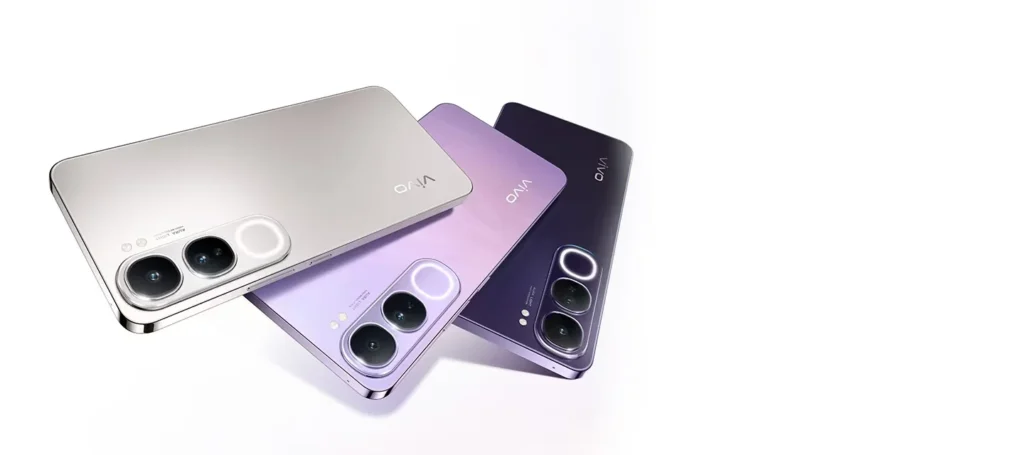
Vivo phones benefit from a portfolio that speaks to different needs without forcing one product story across every audience. Vivo’s official site lists models under visible labels such as V, Y, and X. Those labels give shoppers clear entry points across price tiers and usage styles.
This matters because the Chinese smartphone market is not one audience. A student may care about battery life and appearance. A young professional may compare camera output and screen quality. A family buyer may focus on durability, after-sales support, and price stability. A good device strategy turns those different needs into separate product pathways.
The broad portfolio also supports retail conversations. A salesperson can move a buyer across Vivo phones without losing the brand relationship. That reduces the risk of a shopper leaving the brand because one model feels too expensive or too basic.
For consumer tech brands, this is a useful pattern. Product segmentation should reduce confusion, not create a wall of names. Vivo’s range works when each tier has a clear reason to exist in the buyer’s mind.
Mobile Imaging Gives Vivo A Recognizable Consumer Memory
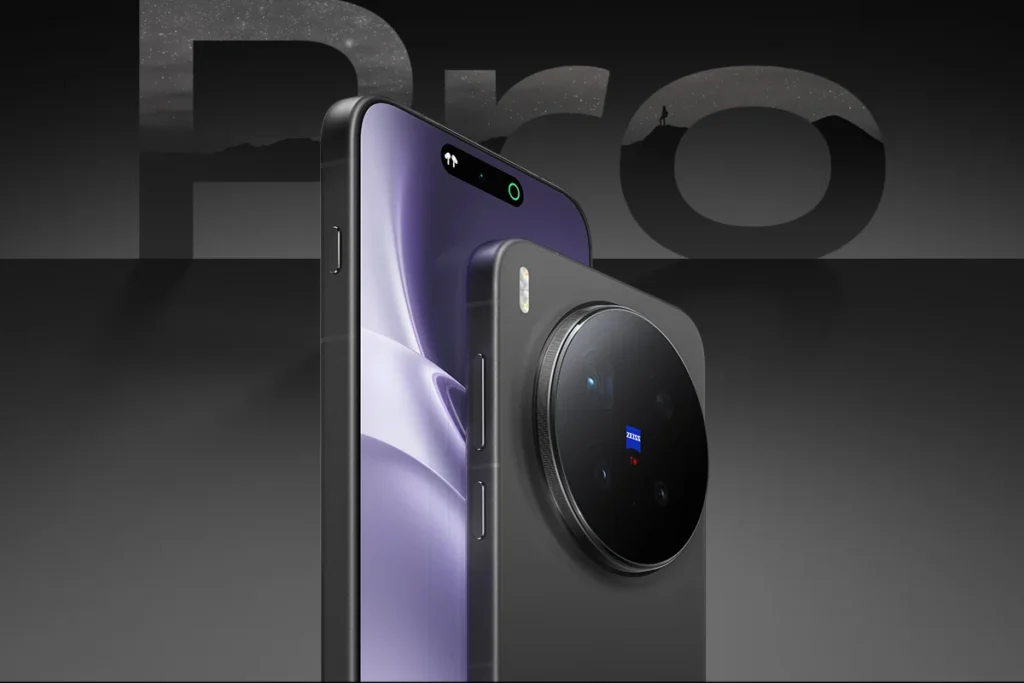
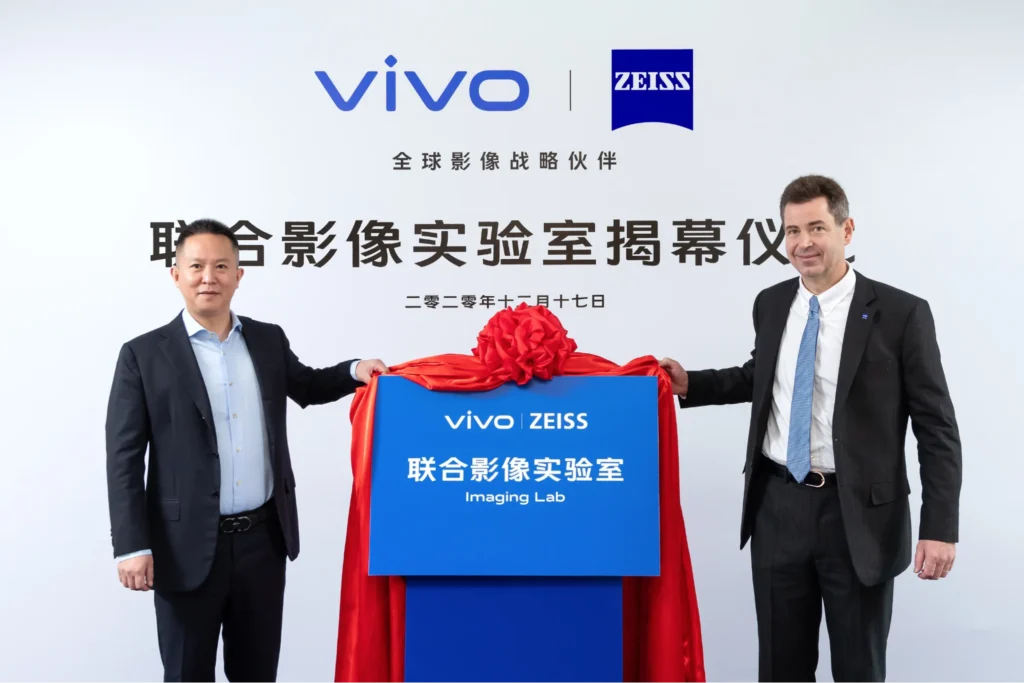
Vivo has made imaging one of its strongest memory cues. The vivo and ZEISS partnership gives the brand a premium signal in a category where camera quality drives daily use, social sharing, and peer influence.
ZEISS said in August 2025 that the companies renewed and expanded their global imaging partnership. The partnership began in 2020 and covers ZEISS optics, T-star coating, portrait styles, telephoto, and broader imaging scenarios beyond smartphones.
The same ZEISS release said vivo ZEISS co-engineered imaging technology had reached more than 22 million users worldwide. That scale matters because imaging partnerships gain value through repeated consumer experience, not through logo placement alone.
For Vivo, imaging creates a distinctive reason to remember the brand. Many Android phones compete on speed, display, battery, and price. Camera identity gives vivo a clearer emotional hook because photos are closely tied to identity, travel, food, friendship, and self-expression.
This is also why imaging matters in youth market dynamics. Young consumers do not treat the camera as merely a technical feature. They use it as a social tool, a content tool, and a way to build taste. Vivo turns that daily behavior into brand relevance.
Software and AI Are Becoming Part of Vivo’s Relevance Strategy
Software now plays a larger role in smartphone differentiation because hardware upgrades feel less dramatic to many consumers. A phone must not only look good on launch day. It must feel smooth, useful, and intelligent throughout daily use.
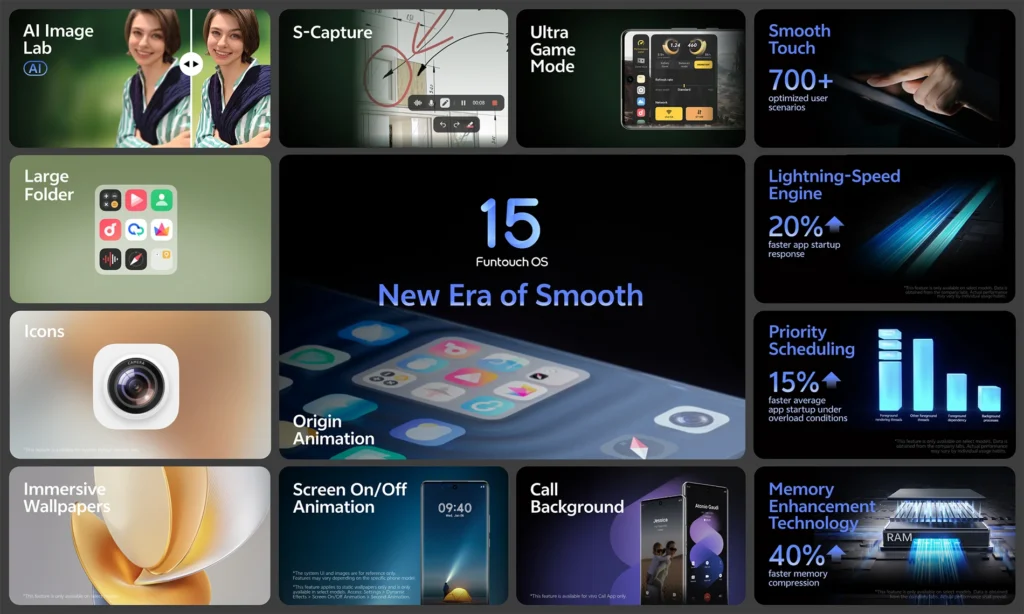
Vivo’s OriginOS 6 reflects this shift. The system emphasizes smoother interactions, design details, improved responsiveness, memory handling, battery-related tools, and AI-supported creative features. Vivo says OriginOS 6 improves app cold-start speed and sliding-frame rate stability.
This matters because consumers judge phones based on repeated micro-experiences. Opening apps, switching tasks, editing images, managing battery, and taking photos all shape satisfaction. A smoother system can quietly strengthen brand loyalty.
AI also gives Vivo another way to refresh relevance. The vivo X300 page highlights AI Landscape Master and Live Photo AI Erase, which help remove distractions, optimize weather, and improve creative output.
For vivo, AI does not need to sound futuristic to matter. It needs to improve the visibility of everyday actions. Better photos, cleaner edits, faster performance, and smarter personalization can make AI feel practical rather than abstract.
This is an important direction for consumer electronics brands. AI features will only strengthen brand positioning when consumers quickly understand their value. Vivo’s challenge is to connect AI with simple outcomes that people can see.
Channel Presence Keeps Vivo Visible Near The Moment Of Purchase
Visibility also depends on where the buyer meets the brand. Vivo’s official information indicates global offline sales and after-sales service centers. It also says the company has an intelligent manufacturing network with an annual production capacity of nearly 200 million smartphones.
This physical layer matters in consumer electronics because phones remain high involvement purchases for many families. People may discover a Vivo phone online. Many still want to hold the device, compare the camera, feel the screen, and ask about repair support.
Channel presence also protects trust after purchase. Service access can influence the next upgrade because consumers remember repair friction, battery issues, software help, and store experience. For domestic smartphone brands, those details can shape loyalty more than a launch slogan.
Vivo’s channel strategy shows that competitive visibility is partly a matter of logistics. A brand can win attention online, only to lose momentum if availability, staff explanations, or service support falters at the point of purchase.
Vivo Brand Positioning Connects Devices, Services, And User Habits
Vivo describes itself as a technology company built around design-driven value, smart devices, and intelligent services. The company also names user orientation as one of its core values. This language situates the phone within a broader digital life, rather than a pure hardware race.
Vivo also says its research network focuses on consumer technologies, including fifth-generation mobile networks, artificial intelligence, industrial design, photography, and other emerging technologies. That mix points to a strategy based on practical experience, not abstract innovation language.
For Vivo Mobile, this positioning helps connect product development with everyday use. A phone has to look right, capture strong images, run smoothly, connect reliably, and feel simple enough for repeated daily use. Each part supports product relevance.
The broader lesson is clear for consumer electronics brands. People rarely reward technology for complexity alone. They reward technology that fits into habits with less friction and more confidence.
Strategic Lessons From Vivo Mobile For Global Consumer Tech Brands
The first lesson from Vivo Mobile is that visibility needs structure. A brand cannot rely on a single campaign if the category moves quickly. It needs product tiers, channel habits, service trust, and a clear consumer memory cue.
The second lesson is that competitive visibility must connect to real use. Vivo’s imaging focus works because photos matter in daily life. Its channel presence matters because people still need confidence before purchase and support after purchase.
The third lesson is that brand positioning should simplify choice. In a crowded consumer tech competition, people do not want more claims. They want a faster way to understand which device fits their life.
For global brands, Vivo offers a China-based example of relevance under pressure. The company competes in one of the world’s most demanding handset markets, where domestic smartphone brands move quickly, and consumers constantly compare options. Its strategy shows that staying visible requires discipline across product, channel, service, and culture.
Learn From China’s Consumer Tech Playbook With Ashley Dudarenok
Vivo’s visibility strategy illustrates how China’s consumer tech brands compete by leveraging product relevance, channel presence, and user behavior. Ashley Dudarenok helps global leaders decode these shifts and turn China market lessons into practical business strategy. Her work focuses on China’s modern consumers, digital transformation, and customer-centric growth.
Book a consultation with Ashley to understand how China’s fast-moving consumer tech ecosystem can inform your brand, retail, or innovation strategy.
FAQs about Vivo Mobile
Is Vivo a Chinese smartphone brand?
Yes, vivo is a Chinese consumer technology brand with a global presence in the smartphone market. The company lists production facilities and research centers across China, India, Indonesia, and the United States.
What does Vivo Mobile mean?
Vivo mobile usually refers to Vivo smartphones and mobile devices sold under the Vivo brand. The company offers X, V, Y, and other series across different markets.
The X Series usually targets premium users who want stronger camera systems, display quality, and higher performance. Vivo’s global product pages place X Series models beside other flagship-level devices.
Which Vivo mobile series is best for everyday buyers?
The Y Series usually serves everyday buyers who want practical features, accessible pricing, and reliable daily performance. Vivo lists Y Series phones alongside V and X models to offer broader shopper choice.
Does Vivo make its own phone software?
Yes, Vivo develops its own phone software experience. Funtouch OS is described by vivo as a customized mobile system for vivo users, while OriginOS 6 now supports newer global models.
Do Vivo phones receive security updates?
Yes, vivo releases monthly, quarterly, and regular security updates for selected models. These updates include Android security patches from Google, though availability varies by device and market.
Does Vivo provide official repair support?
Yes, Vivo provides official support through service centers in many markets. Its support pages mention professional repair, system updates, IMEI authentication, spare parts queries, and repair progress tracking.
Is Vivo active outside China?
Yes, Vivo Mobile operates beyond China. The company says it has developed smartphone markets across China, India, and Southeast Asia, including Indonesia, Malaysia, Vietnam, Thailand, Myanmar, and the Philippines.
Does Vivo focus only on smartphones?
No, Vivo focuses on smart devices and intelligent services, although smartphones remain central to its brand. Its research areas include 5G, artificial intelligence, industrial design, and photography.
Why do people compare Vivo mobile with other Android brands?
People compare Vivo mobile with other Android brands because many phones compete on camera quality, software smoothness, battery life, design, updates, and price. Vivo’s broad portfolio makes those comparisons common across markets.