
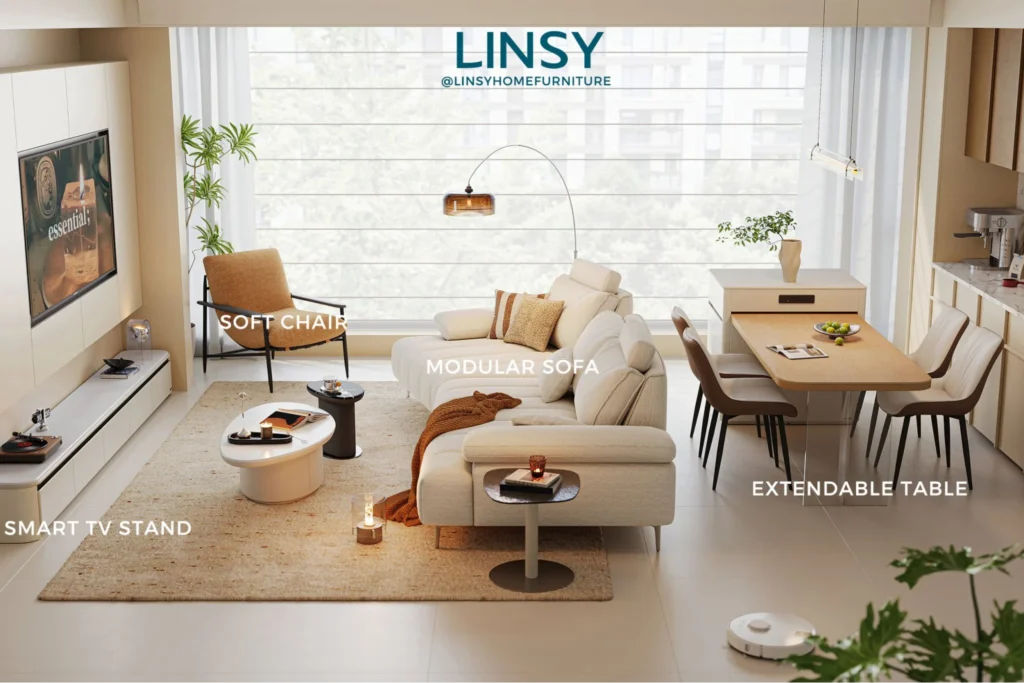
Linsy Furniture shows how an online-first brand can scale a traditionally offline category in China. Furniture usually depends on showrooms, local trust, delivery support, and installation service. Yet Linsy built national relevance by connecting e-commerce demand with product breadth, data-led assortment, and offline experience.
China’s retail market gives this case wider importance. In 2025, total retail sales of consumer goods reached RMB 50,120.2 billion, up 3.7 percent. Online retail sales reached RMB 15,972.2 billion, up 8.6 percent. Physical goods sold online accounted for 26.1 percent of total retail sales. Furniture sales among designated enterprises reached RMB 209.2 billion, up 14.6 percent.
For executives, Linsy matters because it shows how digital retail now reaches categories once considered too tactile, expensive, and operationally complex for national online scale.
What Is Linsy Furniture?
Linsy Furniture is a China-born home furnishing company founded in 2007. It integrates research and development, manufacturing, sales, and after-sales service. The company covers multiple home styles, product categories, and living spaces through a one-stop home retail model.
Linsy’s online first orientation began before it became a national home retail name. Founder Lin Zuoyi started by selling affordable furniture on Taobao in the mid 2000s. The early model targeted young urban households that wanted stylish, budget-friendly pieces without visiting a furniture mall.
That origin shaped the company’s later growth. Linsy learned how to read consumer intent, pricing pressure, and product feedback inside platform commerce before expanding into larger showroom networks.
Linsy’s official site lists more than 1,000 global showrooms, a presence across 67 countries and regions, and 200 stock-keeping units updated monthly. This pace shows how the company built assortment refresh into its operating model.
Why Linsy Stands Out in China’s Online Consumer Brand Rankings
Linsy stands out because its strength shows up in a consumer-behavior-based ranking, not just in a brand-awareness list. That distinction matters because furniture purchases occur less often than purchases of apparel, beauty, food, or electronics.
In the 2025 first-quarter CBI500 top 50 list, LINSY ranked 12th. It appeared in the Home Furnishing and Home Decos category with an overall score of 86.97. That placed it alongside major consumer names such as UNIQLO, L’Oréal, SUPOR, Chow Tai Fook, vivo, FILA, and ANTA in the same top 20.
This ranking makes the Linsy case important for China retail analysis. Furniture brands usually struggle to build frequent consumer interaction because the purchase cycle is long. Linsy’s ranking suggests that it turned low-frequency household demand into measurable online consumer strength.
Why Furniture Is Difficult to Scale Through Digital Retail
Furniture remains difficult to scale online because purchases entail practical risk. Shoppers need to judge size, comfort, color, material, delivery timing, installation quality, return policy, and durability. Product images and search traffic cannot remove all hesitation.
Peking University’s CBI report captures this structural challenge. It notes that home furnishings have a relatively low CBI, although the category has grown rapidly since 2023. The report links the category’s historic regional structure to high delivery and service costs.
The report also states that e-commerce consumption and logistics improvements have supported the rise of national furniture brands in the online market. This explains why home retail in China requires more than platform visibility. Brands need logistics, service coverage, installation support, and enough product clarity to reduce decision anxiety before purchase.
Linsy fits this shift because it combines online demand generation with the operating capacity needed to support large household purchases.
How Category Breadth Helps Linsy Build Home Retail Scale

Category breadth helps Linsy move beyond single-item sales. Furniture shoppers often buy around life moments, such as moving into a new apartment, upgrading a bedroom, preparing a child’s room, or replacing storage. A broader catalog lets Linsy stay relevant across these connected needs.
A buyer may start with a sofa, then compare dining tables, storage units, bedroom furniture, lighting, textiles, or smaller home decor items. A family furnishing a new apartment may need several rooms solved at once. A narrow product brand cannot hold that journey for long.
This gives Linsy an advantage over single-category furniture players. Its catalog can act as a planning tool rather than a product list. Category expansion works best when it reduces the customer’s decision effort.
For China’s home decor market, breadth also supports repeat contact. Large furniture has a long replacement cycle, but accessories, storage, seasonal upgrades, and changes in children’s rooms create more frequent reasons to return.
How Product Analytics Help Linsy Move Faster Than Traditional Furniture Retail

Linsy’s product speed comes from data, not only merchandising instinct. The company uses customer feedback and sales data to guide product development, then turns demand signals into new designs. This helps its assortment move faster than traditional furniture retail cycles.
The clearest example is its 30-day concept-to-shelf cycle. In furniture, design, materials, sourcing, production, and delivery, usually slows down product change. Linsy’s faster cycle lets the brand respond to emerging home lifestyles while consumer interest remains active.
The bag chair shows this system in practice. Linsy identified demand from young consumers who needed portable seating for outdoor festivals and camping. It then developed a foldable sofa chair that also worked as a carry bag. The product reportedly sold 30,000 units in its first year.
This example shows why product analytics matter in home retail. Data has value only when the company can convert demand signals into available products before the trend fades.
Why Physical Stores Still Matter for an Online-First Brand
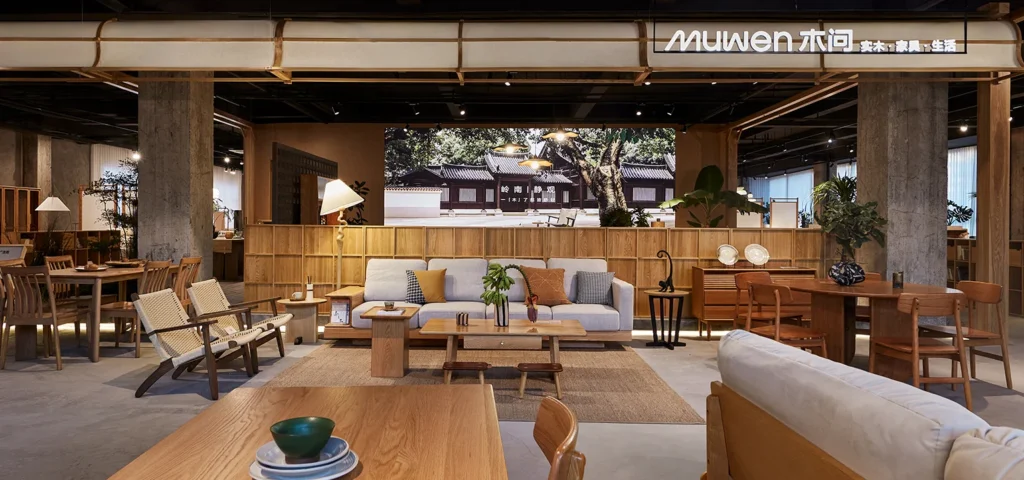
Linsy’s store network matters because furniture buyers still need physical confirmation before purchase. Online content can show style, price, and dimensions, but shoppers often need to test sofa texture, seat depth, mattress height, table finish, and storage function in person.
Linsy’s official site lists more than 1,000 global showrooms. That footprint supports a model where online discovery creates demand, while physical stores reduce purchase hesitation.
In furniture retail, stores do more than process sales. They work as experience centers, service points, and conversion channels. They help buyers confirm comfort, scale, materials, and fit before placing an order.
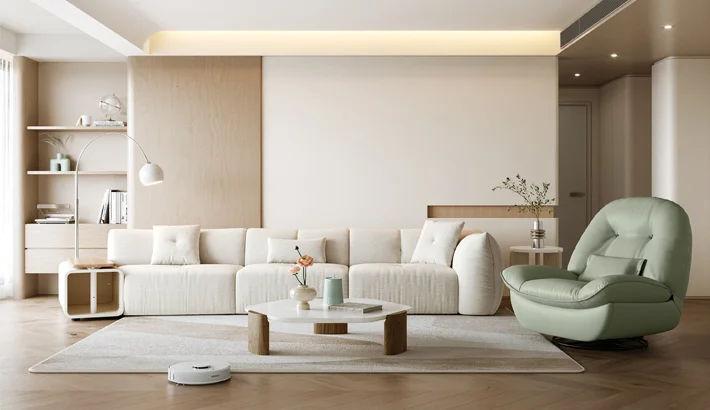
A linsy home sofa search signals strong purchase intent. The shopper may want fabric comparison, size planning, comfort checks, or style confirmation. For that reason, the Linsy store helps answer questions that product pages cannot fully resolve.
Linsy also turns digital traffic into store traffic. Its official Douyin account has more than 1.84 million followers, according to the latest visible result. Another report cited more than 1.78 million followers and noted that celebrity-led livestreams helped drive group buying and store visits during promotions.
How Linsy Reflects China’s New Consumer Brand Logic
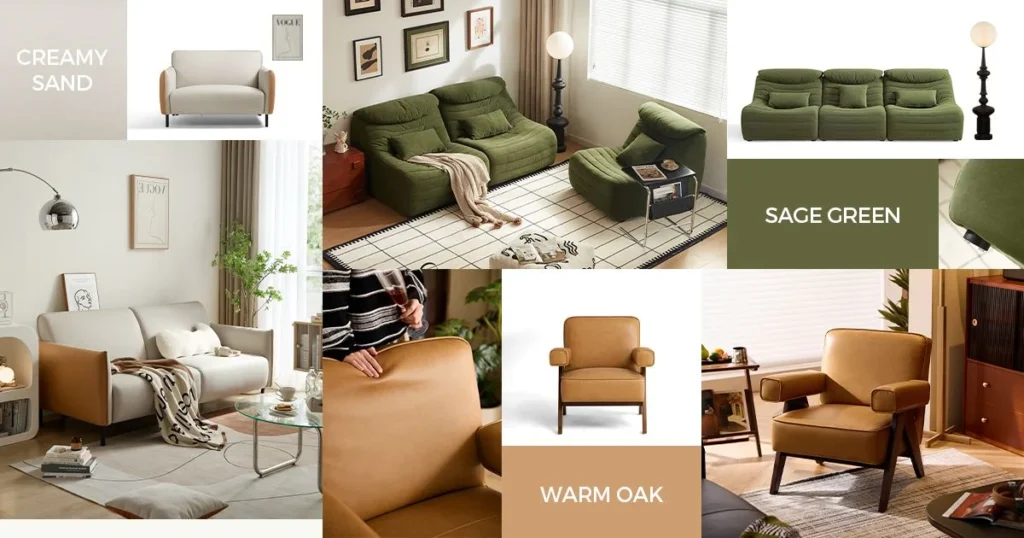
Linsy reflects a wider shift in China’s consumer market. Brand growth now depends on turning online attention into structured operations. That includes assortment planning, retail experience, logistics, content, service, and post-purchase support.
The CBI methodology gives this point more substance. It measures brand awareness, brand novelty, customer loyalty, and customer satisfaction. It also gives brand novelty significant weight, reflecting China’s fast-moving e-commerce environment and its younger consumer base.
This matters for national home brands. Older furniture companies could rely on local dealer relationships, store location, and periodic promotions. Today, a furniture brand must stay visible, fresh, reliable, and service-ready across many decision points.
Linsy’s model shows how this logic works. Online content creates discovery. Product analytics guide assortment. Showrooms reduce purchase hesitation. Service systems support delivery and after-sales expectations. Together, these capabilities turn attention into trust and conversion.
What Global Brands Can Learn From Linsy Furniture
Linsy Furniture offers a clear lesson for global brands. Digital expansion in complex categories requires more than advertising, product photography, and discounts. Brands need the operating depth to connect demand creation, product development, local experience, and service delivery.
- The first lesson is to treat stores as conversion infrastructure. In tactile categories, stores do not disappear. They become places where customers reduce risk, compare options, and complete digitally influenced purchases.
- The second lesson is to build category logic around customer needs. Linsy’s home furnishings and home decor model works because households rarely buy in isolation, in single-product boxes. They solve rooms, routines, and life stages.
- The third lesson is to measure brand strength through behavior, not visibility alone. Follower counts can indicate attention, but purchase behavior, satisfaction, and loyalty reflect greater commercial value.
Linsy’s presence in the CBI500 should therefore be read as a signal of operating maturity. It shows how e-commerce furniture can become a national brand strength when product, service, retail, and data systems work together.
Work With Ashley Dudarenok To Decode China’s Retail Future
Linsy’s growth shows how fast Chinese retail can move when ecommerce, showrooms, social platforms, product data, and consumer insight work together. For global leaders, the bigger question is how to read these signals early and turn them into a practical strategy.
Ashley Dudarenok helps companies understand China’s consumer market, digital ecosystems, retail innovation, artificial intelligence, and customer-centric transformation.
Through Ashley’s advisory and speaking work, companies can study how Chinese brands use platform data, livestreaming, private traffic, offline stores, and consumer insight to scale faster.
Book Ashley Dudarenok for a keynote, workshop, or executive session if your team wants sharper guidance on China’s retail innovation and consumer strategy.
FAQs
Is Linsy furniture a Chinese brand?
Yes. Linsy was founded in 2007 under Guangdong LINSY Home Co., Ltd. The company describes itself as a home-furnishing brand that covers research, manufacturing, sales, and after-sales service.
What types of furniture does Linsy sell?
Linsy sells home furniture across categories such as modular sofas, reclining couches, storage cabinets, coffee tables, TV stands, bedroom furniture, and space-saving pieces. Its product pages show sofa and cabinet collections.
Is Linsy furniture good for small apartments?
Many Linsy products suit compact homes because the catalog includes modular couches, storage cabinets, sleeper sofas, and convertible furniture. These formats help shoppers combine seating, storage, and sleeping functions in tighter living spaces.
How long does Linsy Home delivery take?
Linsy Home says processing usually takes one to two working days. After that, items typically arrive in 5 to 7 days, though holidays, weather, and other disruptions can delay delivery.
Does Linsy furniture require assembly?
Some Linsy furniture requires assembly, although the difficulty varies by product. Customer reviews on Linsy Home mention easy assembly for modular couches and smaller pieces, but buyers should still check each product page first.
Does Linsy sell furniture outside China?
Yes. Linsy says it exports furniture worldwide and lists 67 countries and regions on its official manufacturer site. The same page shows examples of stores in several overseas markets.
What should buyers check before ordering Linsy furniture?
Buyers should check product dimensions, fabric type, assembly needs, delivery method, return rules, and room access. Large furniture may require less truck loading, and indoor placement may incur extra labor fees.
Why does Linsy appeal to younger Chinese consumers?
Linsy speaks to younger households through affordable design, fast product refresh, multifunctional furniture, and digital discovery. This fits smaller homes, lifestyle upgrades, and value-conscious consumption.
How does Linsy show the future of home retail in China?
Linsy shows that home retail is moving toward integrated journeys. Discovery, comparison, showroom testing, delivery, installation, and after-sales support now shape one connected buying experience.
Why should executives study Linsy’s retail model?
Executives should study Linsy because it turns a slow, offline category into a faster consumer brand system. It shows how China scales complex retail through digital operations.
What does Linsy reveal about China’s consumer brand competition?
Linsy reveals that Chinese consumer brands now compete through speed, relevance, operational quality, and ecosystem thinking. Brand strength depends on how well each part supports the purchase journey.