
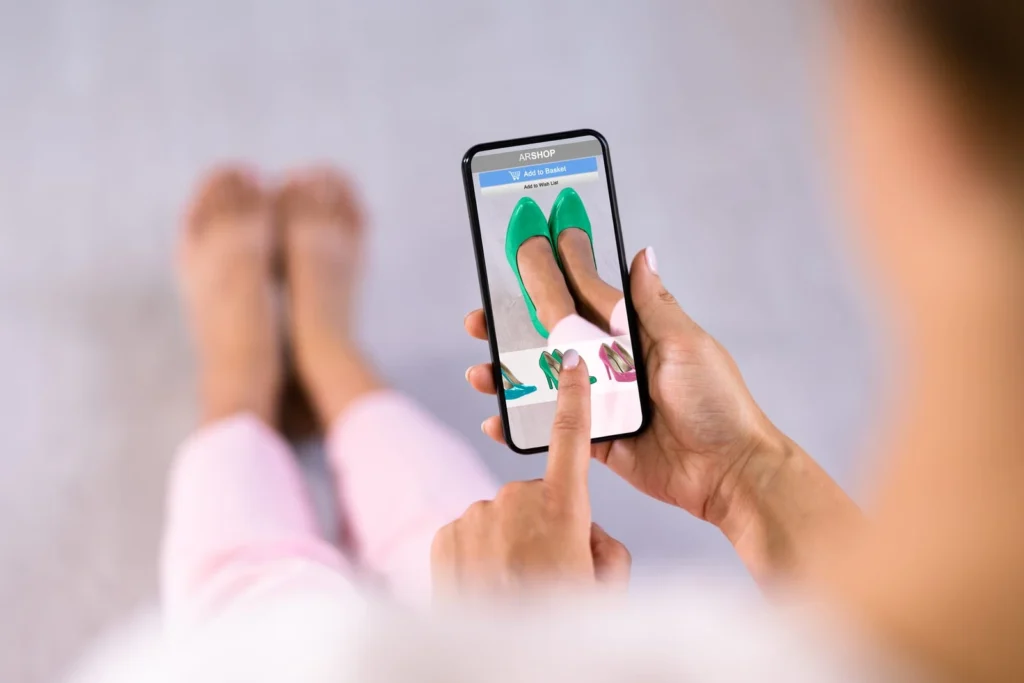
In China, virtual shops are no longer experimental tech showcases — they’re becoming core engagement engines. Built with 3D modeling, AR/VR, and AI, these digital environments seamlessly merge the emotional impact of in-store experiences with the convenience of e-commerce.
Consumers don’t just browse; they enter branded worlds where avatars try products, digital humans offer guidance, and purchases happen in real time. What makes China distinct is execution. Here, virtual retail isn’t metaverse fantasy — it’s measurable business.
Alibaba’s “Meta-Tmall” and Douyin’s virtual pop-ups already link immersive exploration with direct conversion and loyalty data. Government policy backing “virtual-real integration” and the nation’s 1.1 billion-plus digital users have turned these concepts into scalable retail systems.
For brands, the value isn’t just novelty. Virtual shops are new data frontiers: every gesture, dwell time, and interaction becomes insight for personalization and product design. They represent how China is reframing retail — from selling products to building living customer ecosystems that learn, adapt, and engage continuously.
What Virtual Shops Are
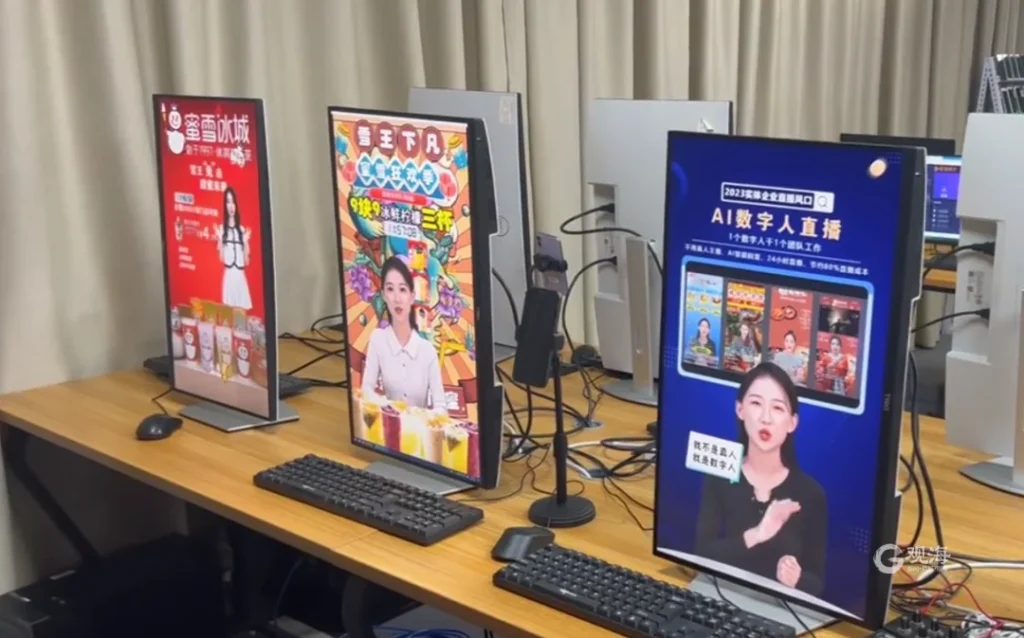
In Western markets, “virtual shops” are often associated with the metaverse or VR headsets. In China, the concept is far broader—and more commercially grounded. It encompasses:
- Pure digital storefronts built inside super-apps like WeChat, Douyin, and RedNote.
- 3D or AR-enhanced product environments where users can browse, try on, or customize goods.
- Persistent livestream venues—virtual rooms where brands host events and maintain ongoing audience engagement.
- Digital twin stores, replicating physical flagships for nationwide access.
These virtual spaces are not isolated experiences. They’re part of a phygital (physical + digital) network where every interaction feeds data back into a brand’s ecosystem. A consumer might watch a Douyin livestream, interact with a virtual avatar, and later visit a physical flagship—all within one integrated journey.
Understanding this convergence is vital. The virtual shop isn’t a side project; it’s a new operating layer in China’s retail architecture, where engagement, data, and experience merge to define a competitive advantage.
Where China Stands – The Virtual Shopping Retail Landscape
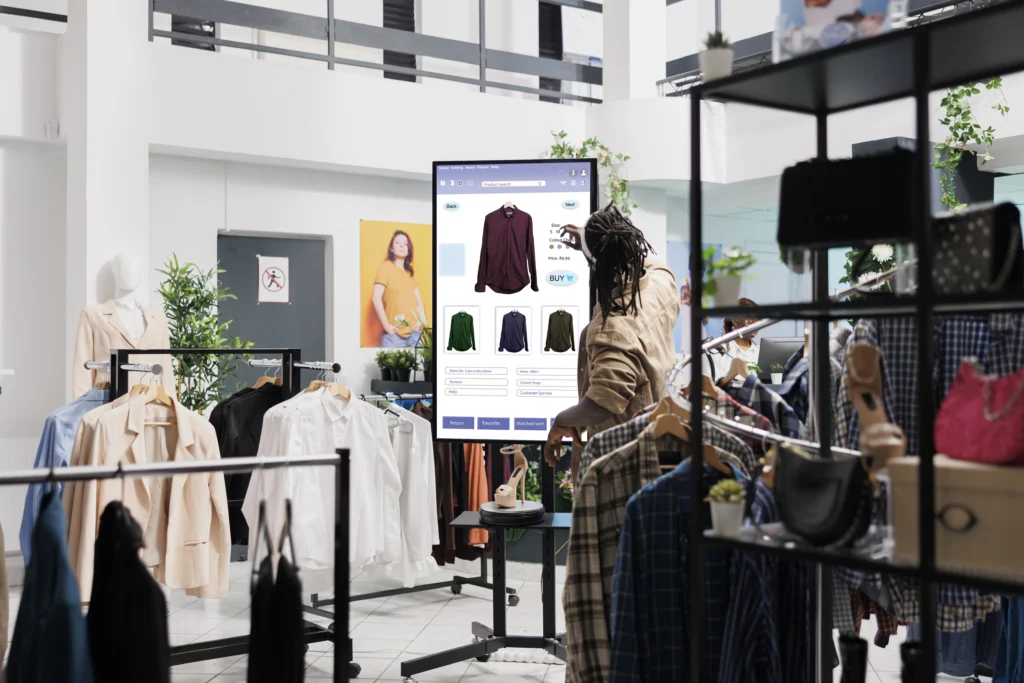
Macro Trends and Consumer Sentiment
China’s retail sector is stabilizing but evolving fast. After years of hyper-growth, consumption patterns are shifting toward quality, experience, and emotional value rather than pure volume.
According to NielsenIQ’s Q2 2025 China Consumer Behavior Index, online retail of physical goods grew 6% year-on-year, outpacing overall retail growth of 5%. Consumers are spending, but they’re selective—especially when it comes to brands that deliver tangible value and memorable experiences.
Post-pandemic caution persists. Surveys by McKinsey China (mid-2025) show that while discretionary spending is slowly recovering, savings remain high and confidence uneven. Yet, categories linked to self-expression, well-being, and entertainment continue to outperform. This shift favors virtual retail formats that connect emotionally, entertain visually, and personalize the engagement experience.
For executives, the message is clear: promotions alone no longer drive loyalty. Modern Chinese consumers expect storytelling, immersion, and two-way interaction—all areas where virtual shops outperform static e-commerce pages.
Omnichannel and Smart Retail Enablers
The retail innovation driving this change is what Chinese analysts call “智慧零售” (wisdom retail)—a model integrating data, AI, logistics, and experience across every consumer touchpoint. The 2025 China Retail Channel Report highlights four key enablers powering this transition:
- Data middle offices (数据中台): unify consumer, product, and logistics data across online and offline networks.
- Instant fulfillment systems: powered by cloud-based workforce management and same-day logistics.
- Precision recommendation engines: using real-time data and spatial behavior within virtual environments.
- Near-field retail formats: blending physical proximity with virtual access for silver-economy and Gen Z users alike.
Offline retail still accounts for approximately 70% of total sales, but its structure is changing. Stores are becoming experience hubs supported by digital overlays, AR navigation, and mini-program integration. On the supply side, China’s 3D-content ecosystem—valued at over ¥40 billion in 2024—is scaling rapidly, providing the foundation for lifelike virtual store assets, avatars, and product simulations.
For brand leaders, this means the infrastructure for immersive retail is already mature. The next challenge is strategic orchestration—linking these capabilities into cohesive virtual experiences that deliver measurable engagement.
Results and Impact of Virtual Shopping

Immersion and Experience as Engagement Currency
In 2025, China’s “emotional economy” will have redefined what engagement means. Shoppers no longer enter digital stores just to buy—they enter to feel. Virtual shops serve as immersive storytelling environments where brands build connection through sensory depth, narrative, and interactivity.
Platforms like Douyin Mall, JD.com’s XR showrooms, and WeChat’s 3D mini-shops are transforming browsing into an interactive experience. Consumers can walk through a virtual store, watch a live product demo, or explore a branded metaverse world. A 2024 study reported that users spent 2.7× more time exploring 3D stores compared to standard product pages.
A recent PwC China study found that 37% of mainland consumers expressed interest in in-store VR or AR experiences—well above the global average of 26%. These consumers expect retail to feel intelligent, personalized, and visually rich. For brands, this means that every interaction must now deliver value in both emotional and informational terms.
For executives, this immersion translates into measurable ROI: longer dwell times, higher recall, and stronger emotional attachment. The leading brands treat virtual shops as brand theaters, not catalogs—spaces that sustain attention in an era where consumer fatigue is a constant risk.
Personalization and Real-Time Interaction
Virtual shops in China thrive on personalization. AI-powered avatars, dynamic product displays, and adaptive interfaces allow shoppers to interact as if speaking to an intelligent assistant. A customer viewing lipstick shades in a Tmall virtual store, for example, sees color options matched instantly to their skin tone via AR camera input.
Douyin’s live-commerce experiments show how personalization drives conversion. AI sales hosts adjust product recommendations in real time based on user reactions and chat behavior. This shift transforms engagement into an ongoing conversation, rather than a one-way pitch.
For CMOs, the implications are strategic. Virtual shops seamlessly integrate data analytics, AI, and storytelling into a unified loop. The more a user interacts, the smarter the system becomes—feeding insights back into product design, pricing, and marketing.
Blurring the Physical and Digital – The Phygital Shift in Virtual Shopping
The boundary between offline and online retail is dissolving. Virtual shops extend the physical store experience rather than replace it. A shopper can use AR navigation to preview how furniture fits in their apartment, then visit a physical showroom to confirm the materials before completing the payment online.
China’s 智慧零售 model reinforces this fluidity. Retailers like Suning and Hema have built hybrid stores where every in-person interaction triggers digital engagement through QR scans, mini-programs, or livestream sessions. For luxury brands, virtual replicas of flagship stores offer national reach without physical expansion costs.
From a boardroom perspective, this convergence changes KPIs. Executives now measure “virtual footfall”, cross-channel conversion, and experience-driven sales uplift—metrics reflecting engagement depth, not just transaction volume.
Social Commerce and Community within Virtual Shops
China’s retail power lies in its ability to merge commerce with community. Virtual shops extend that social fabric. They host live events, limited-edition drops, and co-creation sessions where fans contribute designs or vote on future products.
WeChat mini-program stores often feature integrated chatrooms or “club zones,” transforming browsing into a social experience. Douyin virtual malls organize real-time events with influencer avatars, blending entertainment with exclusivity. A 2025 report notes that communities built inside virtual retail environments see 40–60% higher repeat engagement rates.
The takeaway is clear: in China, engagement is a form of social currency. Virtual shops are not transactional endpoints—they’re digital neighborhoods where relationships grow, data flows, and advocacy scales.
Why Virtual Shopping is a Strategic Imperative for Brands in China
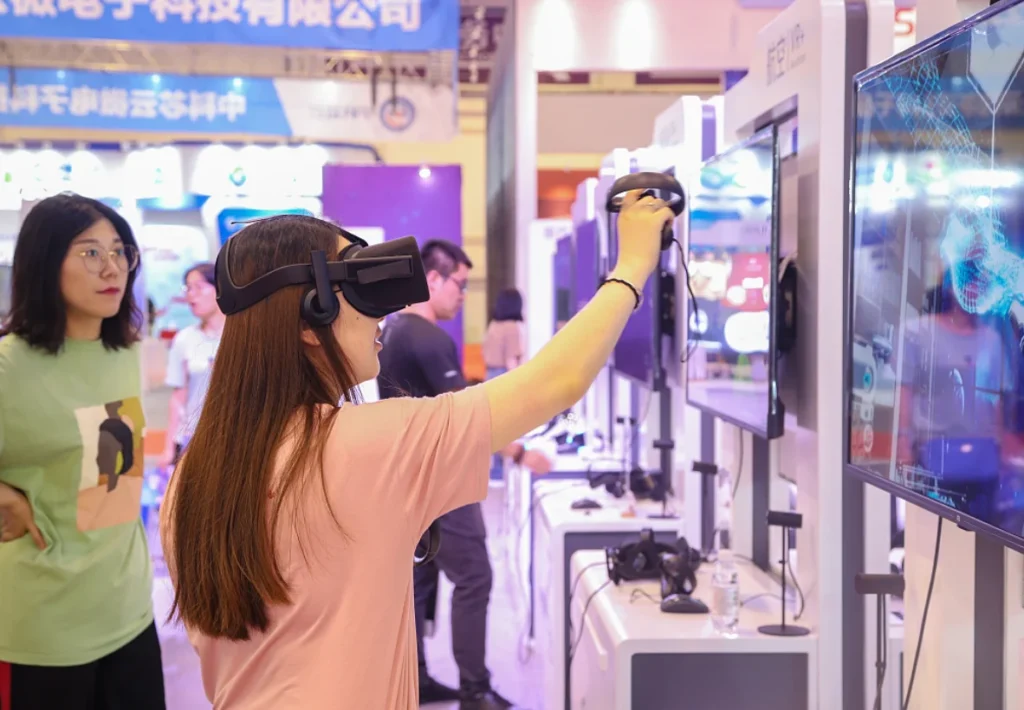
1) Supply-chain Reach Without Store CAPEX
Virtual shops enable you to showcase a comprehensive catalog nationwide—without maintaining inventory in every city. In China’s “seamless commerce” playbook, 3D/AR showrooms and virtual assortments extend the shelf far beyond a physical footprint, while orders route to the optimal fulfillment node. Treat the physical store as an experience hub; let the virtual shop handle long-tail SKUs and pre-orders to smooth demand.
Exec KPIs: SKU exposure per visit, virtual-to-fulfillment cycle time, pre-sale accuracy vs. production plan.
2) A Richer Data Spine (and a better flywheel)
China’s “智慧零售” (wisdom retail) push centers on unified data middle offices that stitch together identity, behavior, and logistics across channels. Virtual shops generate high-value signals—such as 3D pathing, avatar interactions, and AR try-on events—and feed them into targeting and replenishment. The near-term lift shows up in recommendation accuracy and instant retail promise rates; the mid-term win is faster, data-informed merchandising.
Exec KPIs: identifiable traffic share, interaction density (events/session), recommendation-driven AOV uplift, stockout reduction after virtual demand sensing.
3) Experience Differentiation that Commands Attention (and margin)
In a slower-growth, promotion-heavy market, experience is the moat. Leading players pair physical flagships with digital layers—such as content studios, WeChat-bookable services, and extended virtual venues—to deepen dwell time and justify premium positioning.
Zara’s 2025 Nanjing flagship exemplifies the model, featuring a content-creation studio and concierge services integrated directly into its digital estate. Your virtual shop should mirror this—programmed events, creators, and utilities that make visits repeatable and enjoyable.
Exec KPIs: dwell time in virtual zones, repeat session ratio, premium mix shift vs. baseline, content-assisted conversion.
4) Faster Tier-Down Expansion with Lower Risk
Consumer demand in lower-tier cities is real, but store economics can be tough. Virtual shops give you immediate presence, live-commerce reach, and community-building without requiring a capital commitment.
China’s 2025 online retail rankings and analysis highlight the role of instant retail and live commerce as growth engines, underscoring the penetration potential of “下沉市场” (lower-tier markets). Use virtual to seed demand and only backfill with physical where the data proves it.
Exec KPIs: new-city activation cost, virtual footfall by city tier, CAC vs. physical-first benchmarks, time-to-break-even by market.
5) Content & Asset Scalability (3D, avatars, virtual goods)
China’s 3D digital-content supply chain is mature and cost-efficient: vendors, model libraries, and AI-assisted pipelines can generate SKUs, scenes, and digital humans at scale. That enables continuous “store rehabs” (seasonal reskins, limited drops) and new revenue lines (virtual goods, membership experiences) inside your shop. Build your own 3D asset library and standards now to avoid lock-in and compress lead times later.
Exec KPIs: asset reuse rate, time-to-launch for new scenes/SKUs, virtual-goods attach rate, cost per 3D asset vs. sales influenced.
6) Operations that Match China’s Instant-Retail Expectations
Virtual shops only delight if the back end delivers—think 24/7 “cloud staff,” rapid-promise logistics, and service SLAs that mirror live-stream velocity. The smart-retail research emphasizes instant fulfillment and “云值守” (cloud attendance) as core practices. Align staffing, OMS, and service playbooks with your virtual traffic curve; place operations leaders within the virtual PMO, not just IT and marketing.
Exec KPIs: promise-kept rate, response latency in live/virtual chat, return cycle time on virtual-origin orders, CSAT by virtual channel.
7) Governance Readiness (so growth doesn’t trigger friction)
Virtual shops enhance data capture and algorithmic decision-making—precisely the areas under close scrutiny. Bake compliance into the architecture: PIPL-aligned consent flows, audit trails for recommendation logic, controls for digital-human usage, and clear boundaries on synthetic content in commerce. Look for platform partners with proven compliance tooling in China to shorten the path to scale.
Exec KPIs: consented profile rate, audit-ready lineage coverage, incident count (data/algorithm), time-to-approve new virtual features.
Case Studies: Chinese Pioneers of Virtual Shopping

Alibaba/Tmall
Beyond the examples above, Alibaba has invested heavily in research and development for virtual retail. Its DAMO Academy (Alibaba Research) operates an XR Laboratory focused on VR/AR shopping technology. On Singles’ Day 2022, Alibaba launched a VR shopping environment called “Buy+” and an XR marketplace across its apps. Tmall introduced a virtual influencer, “Timo,” to host 3D exhibitions, and users could try on digital outfits via AR camera features.
During the same festival, the Tmall mobile app’s new version turned shopping into an adventure: users could walk through animated jungle and savanna scenes while browsing products in 3D. AR features let them try on clothing or drop virtual furniture into their real homes with a tap.
Altogether, Alibaba’s immersion strategy led to measurable gains: luxury products with AR/3D content experienced ~50% higher engagement and sales lift compared to normal listings.
JD.com
JD Retail Cloud has developed an “XR Retail” service suite that Chinese brands utilize to integrate AR/VR capabilities. For example, JD helped launch a “Cloud Expo” concept for auto shows and home furnishings fairs, allowing visitors to tour exhibitions virtually at any time, overcoming location/time barriers.
In partnership with Shopee and supply chain groups, JD also showcased an AR-enabled car showroom: an interactive 3D model lets customers rotate and inspect a vehicle from every angle on their phone, effectively replacing (or supplementing) a trip to a physical dealership.
These 3D visualizations, powered by WebGL and AR kits, enrich the user experience and build customer trust. JD also promotes “AR摆摆看” across its marketplace, allowing vendors to incorporate AR models of their products so shoppers can preview items in situ.
According to JD, customers using AR to try products report higher purchase confidence, and brands see better conversion and lower return rates as a result.
Virtual Influencers
Some Chinese companies even use entirely digital spokespeople. Although not the focus here, it’s worth noting that several brands have deployed AI-driven virtual avatars to host live streams and answer queries.
While still emerging, these digital hosts ensure 24/7 engagement and novelty. (For example, at 11.11, Alibaba partnered with Baidu to have only virtual hosts present a data report.)
These digital characters appeal to younger consumers and integrate with virtual storefronts, making the shopping experience feel more interactive and futuristic.
Automotive and Home Brands Using Digital Twins
In 2025, carmakers such as BYD and NIO are pioneering virtual showrooms that are linked to physical test-drive centers. Consumers can explore configurations, view 360° interiors, and book appointments instantly. Similarly, home-appliance firms like Haier now use digital twins of retail floors, allowing customers to visualize kitchen setups in AR before making a purchase.
Strategic takeaway: Virtual twins solve complexity. They reduce showroom clutter, shorten decision cycles, and create continuity between online exploration and offline fulfillment. For executives, this means lower cost per lead and richer data to refine product design.
Risks, Challenges, and Mitigation Strategies of Virtual Shopping
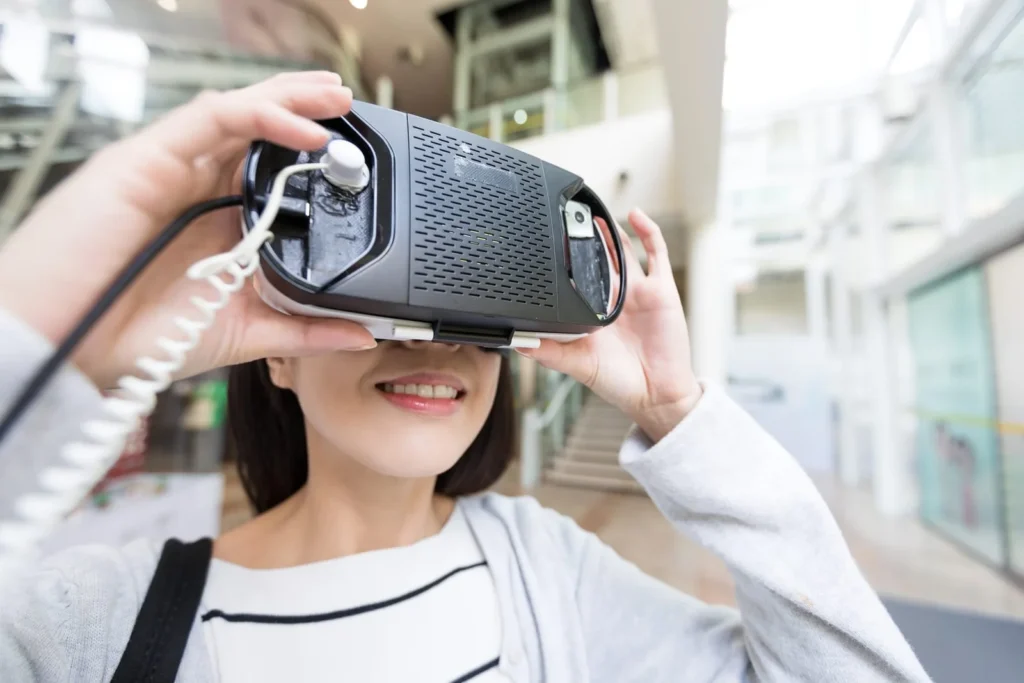
Virtual shops offer unmatched engagement potential—but scaling them in China’s complex digital ecosystem comes with real risks. The following are board-level considerations that determine whether a virtual retail initiative accelerates or stalls.
1. High Setup Costs and Unclear ROI
Building a virtual shop requires investments in 3D modeling, platform integration, and live-ops staffing. For many brands, early expenses often seem disproportionate to the immediate returns, especially when revenue attribution is unclear.
Mitigation strategy:
Begin with pilot experiences tied to a single high-margin category or campaign. Measure engagement depth, data quality, and conversion lift before scaling. Treat the first 6–12 months as a learning phase, not a profit phase. Success in China’s virtual retail comes from iteration, not one-time build-outs.
2. Technology Complexity and Maintenance
3D stores, AI avatars, and AR integrations require constant updates. Bugs, lag, and poor device compatibility can destroy the immersive effect—especially among Gen Z users who expect perfection.
Mitigation strategy:
Outsource tech maintenance to certified Chinese ecosystem vendors familiar with WeChat, Douyin, and Alibaba SDKs. Build an internal “virtual experience PMO” that coordinates tech, design, and content teams. Prioritize lightweight, modular architecture to enable frequent updates without complete rebuilds.
3. Data Security and Regulatory Compliance
China’s Personal Information Protection Law (PIPL) and algorithm regulations impose strict requirements on user data, AI use, and recommendation transparency. A non-compliant virtual shop can result in penalties or damage to its reputation.
Mitigation strategy:
Embed compliance into product design. Use local data hosting, clear consent flows, and algorithm disclosures inside the experience—partner only with platforms already approved under China’s Cybersecurity Administration guidelines. Compliance is not a checkbox—it’s a competitive differentiator that enables scale and trust.
4. Consumer Novelty Fatigue
Virtual environments risk fading into gimmicks once the novelty wears off. Many early experiments failed because brands treated virtual shops as one-off stunts, not evolving ecosystems.
Mitigation strategy:
Plan content refresh cycles and seasonal redesigns in the same way you would for physical stores. Integrate live events, exclusive drops, and social features to sustain momentum. Assign a virtual content lead responsible for cadence and engagement renewal every 60–90 days.
5. Integration Gaps with Fulfillment and Service
A great virtual experience means little if delivery, returns, or customer support fail. Chinese consumers expect instant retail—fast, trackable, and responsive.
Mitigation strategy:
Link your virtual shop’s backend to local logistics networks and cloud-based customer service hubs. Establish a “one-system” dashboard where marketing, fulfillment, and after-sales data flow together. Use chatbots for Tier-1 issues, but ensure human agents are one tap away within WeChat or Douyin.
6. Measuring What Actually Matters
Traditional KPIs, such as “page visits” or “conversion rate,” often miss the mark in capturing the essence of immersive engagement. Without proper metrics, executives can misjudge performance and underfund promising pilots.
Mitigation strategy:
Build an engagement intelligence framework. Track dwell time, interaction depth, social share velocity, and virtual-to-physical conversion. Present ROI as a combination of sales impact + data enrichment + brand equity. In China’s virtual economy, engagement data itself is a monetizable asset.
7. Talent and Culture Gaps
Western retail teams often lack the hybrid skills necessary for China’s virtual commerce, which combines retail operations, live streaming, and data fluency. Without local expertise, execution slows.
Mitigation strategy:
Hire Chinese digital producers, AR designers, and platform-native content strategists. Create cross-functional “China squads” empowered to make fast, creative, and data-driven decisions. For the global headquarters, prioritize knowledge-transfer programs rather than central control.
Executive Summary
The risks are real—but manageable with foresight. The leaders in China’s virtual retail space aren’t those who avoided complexity; they’re the ones who built governance, agility, and cross-team orchestration into their operating DNA. Virtual shops succeed when treated as living products, not marketing campaigns.
What This Means for Global and Multinational Brands Operating in China
For multinational executives, China’s virtual retail revolution isn’t a niche experiment—it’s a strategic preview of global retail’s next phase. Virtual shops in China are setting the benchmark for how digital engagement, data intelligence, and immersive storytelling converge to drive growth. The implications extend far beyond China’s borders.
1. Rethink Store Networks: From Footprint to Presence
Physical stores alone no longer define market presence. In China, flagship stores serve as content and experience hubs, while virtual shops extend their reach to millions. A “flagship + virtual network” strategy is now the new normal. It enables national coverage without heavy CAPEX and allows brands to serve new city tiers instantly.
Executive priority: Reallocate expansion budgets. Invest less in square footage and more in digital infrastructure, 3D content, and platform partnerships. Treat every virtual shop as a new flagship, not an add-on to your e-commerce platform.
2. Redefine Marketing Budgets Around Experience
China’s marketing ROI is shifting from ad exposure to the quality of engagement. Virtual shops convert impressions into behavior data and brand interactions that compound over time.
Instead of spending on one-off campaigns, leading CMOs are funding continuous experience operations—teams that run virtual events, gamified interactions, and influencer collaborations inside immersive spaces.
Executive priority: Move budgets from paid reach to earned engagement. Incentivize teams on retention and lifetime engagement metrics, not just sales bursts.
3. Build Local Partnerships to Stay Platform-Native
Western-built digital ecosystems don’t integrate smoothly with China’s closed super-app architecture. Success comes from working within WeChat, Douyin, Tmall, or RED—not around them.
Local platform partners provide critical access to API compliance, real-time analytics, and algorithm optimization. For multinational retailers, this means adopting co-creation models rather than relying solely on vendor contracts.
Executive priority: Form long-term partnerships with Chinese tech enablers—AR studios, digital human developers, and live-commerce operators. Make your China team a co-architect of innovation, not just a localization arm.
4. Create a China-First Data and Content Pipeline
China’s virtual retail environment generates vast amounts of behavioral data, including movement paths, avatar interactions, voice inputs, and purchase triggers. Global firms often fail to harness this because their data systems aren’t localized.
Building a China-specific data middle office is crucial for translating engagement into actionable intelligence. Similarly, content pipelines must reflect Chinese cultural cues, including humor, symbolism, and social norms.
Executive priority: Develop a China content lab focused on 3D asset creation, cultural adaptation, and trend sensing. Localize both data models and storytelling frameworks to reflect consumer realities, not assumptions.
5. Prepare to Export Learnings Globally
China’s retail innovations often mature five years ahead of Western markets. Virtual shop formats perfected here—such as AI-guided tours, digital twins, and co-creation spaces—will define global consumer engagement models by 2027. The brands that learn early will carry that expertise into Southeast Asia, the Middle East, and Europe as digital shopping ecosystems catch up.
Executive priority: Treat China as your innovation engine, not just a revenue market. Build structured feedback loops from China teams to global leadership so virtual retail learnings inform worldwide strategy.
6. Align Leadership and Governance for Scale
Virtual retail in China spans multiple departments, including retail operations, data, technology, brand, and legal. Without clear accountability, global brands risk fragmented execution.
The most effective multinationals now appoint a “Head of Virtual Commerce China”—a hybrid leader responsible for P&L, experience quality, and compliance.
Executive priority: Establish an executive governance layer. Align KPIs across marketing, technology, and retail divisions to ensure one definition of success: sustained engagement that drives lifetime value.
7. Cultural Agility Is the Final Advantage
China’s virtual retail thrives on cultural fluency—knowing how to merge commerce with entertainment, and trends with authenticity. Western brands that cling to global creative guidelines risk looking out of touch. Consumers expect local humor, cultural symbolism, and shared experiences, not global uniformity.
Executive priority: Empower Chinese creative teams. Give them flexibility to interpret your global brand voice for domestic audiences. Cultural agility, not just technology, determines success in China’s virtual economy.
Executive Insight
China’s virtual shops aren’t a fad—they’re a structural shift in retail economics. They combine precision data with emotional depth, bridging commerce and culture in ways few markets can match.
For multinational leaders, the question isn’t whether to participate, but how fast to adapt. The companies that embed virtual engagement into their operating models today will lead not only in China, but also in the global retail ecosystem that follows in its path.
Ready to Translate China’s Digital Momentum into Your Global Growth Curve?
Ashley Dudarenok is one of the world’s leading voices on digital transformation, China’s retail innovation, and customer centricity. As a serial entrepreneur, bestselling author, and Thinkers50-recognized “Guru on Digital Marketing and Fast-Evolving Trends in China,” Ashley transforms complex market shifts into clear, actionable frameworks for global brands.
Her high-energy, insight-packed keynotes are trusted by Fortune 500 companies, tech leaders, and government organizations worldwide. Every session is custom-tailored—built after a strategic call to align with your audience, industry, and event outcomes.
From consumer engagement and loyalty programs to immersive retail and virtual commerce, Ashley’s talks inspire leaders to think differently and act faster.
What You’ll Gain
- A clear understanding of how China’s retail and digital models are shaping the global future
- Actionable frameworks for customer-centric transformation and smart retail execution
- A motivational experience that leaves your audience informed, inspired, and ready to act
Ready to give your business the digital transformation edge it needs? Book Ashley Now to discuss your event and explore a fully tailored keynote that energizes, educates, and empowers your audience. Subscribe to her bi-weekly China Insights newsletter.
FAQs on Virtual Shopping and Customer Engagement in China
-
What future developments will define China’s virtual retail by 2026–2027?
The next phase will merge virtual shops with generative AI, spatial computing, and 5G-powered cloud rendering. Consumers will design products collaboratively inside real-time 3D spaces. Expect deeper integration of biometric feedback, emotion recognition, and digital twin logistics, enabling retailers to predict intent before purchase. China’s goal is to make immersive commerce as routine as mobile payment.
-
How do virtual shops help brands reach younger Chinese consumers?
Virtual shops speak directly to China’s digital-native generations who expect retail to feel interactive and expressive. Gen Z and Gen Alpha consumers want entertainment and social participation, not passive browsing. Virtual stores enable them to co-create avatars, share branded AR clips, and participate in virtual events—transforming purchase moments into cultural experiences that span platforms like Douyin and Xiaohongshu.
-
What role do mini-program ecosystems play in virtual retail?
Mini-programs inside WeChat, Alipay, and Douyin serve as gateways to virtual stores. They host lightweight 3D experiences that load instantly without apps. This makes discovery seamless and drives repeat use through built-in payment, loyalty, and chat features. For brands, mini-program ecosystems reduce friction, shorten sales cycles, and integrate commerce directly into social behavior.
-
How are Chinese consumers responding to AI shopping assistants and digital humans?
Chinese shoppers are increasingly comfortable interacting with AI hosts for advice and entertainment. Surveys conducted in 2025 show that more than 60% of young consumers trust virtual assistants for product suggestions when they are transparent about their AI origins. These digital humans keep engagement alive 24/7, answer in natural Mandarin slang, and learn preferences over time, improving both satisfaction and conversion.
-
How do smaller Chinese brands or SMEs afford to build virtual shops?
China’s vendor ecosystem has made immersive retail accessible to smaller players. Low-code 3D engines, SaaS platforms like JD Retail Cloud, and public model libraries now enable SMEs to create interactive stores at a fraction of the cost of 2022.
Many rent shared digital spaces or partner with content studios that charge by asset, not by project—making entry financially feasible. -
Are virtual shops being used outside retail sectors in China?
Yes. Education, tourism, and healthcare now utilize virtual shops to showcase their services. Museums operate 3D gift stores after virtual tours, while travel agencies allow users to preview destinations in VR before booking. Hospitals use similar environments for wellness products and patient education. The same tools that sell fashion can personalize learning, leisure, and engagement in health.
-
What metrics do Chinese executives track to measure virtual shop success?
Executives focus on behavioral depth rather than clicks. Key measures include time spent per session, avatar interaction rate, product visualization frequency, and the share of repeat visitors. Many also link virtual activity to offline actions—such as bookings or redemptions—to calculate full-journey ROI. Engagement data itself is now considered a proprietary asset for modeling demand.
-
How is sustainability reflected in China’s virtual commerce expansion?
Virtual shops reduce environmental impact by eliminating physical displays, printed materials, and product-distribution transport for demos. Brands like Anta and Huawei use 3D catalogs instead of sample shipments. Virtual prototyping also helps factories test demand before production. This “digital-first merchandising” aligns with China’s 2060 carbon-neutral goals while trimming manufacturing waste.
-
What skills do Chinese retail professionals need to manage virtual operations?
Teams now blend creative, technical, and analytical skills. Retail managers must understand 3D content workflows, AI recommendation logic, and social commerce planning.
Many firms train “experience producers” who manage live events and optimize data flows simultaneously. The most in-demand professionals combine storytelling ability with fluency in WeChat APIs and AR toolkits. -
How do virtual shops change loyalty-program design in China?
Traditional points systems are evolving into experience-based rewards. Brands now issue exclusive digital collectibles, early-access passes, or avatar accessories instead of static coupons. These rewards carry emotional and resale value, encouraging long-term participation. Because every virtual interaction is tracked, loyalty programs can now respond instantly to consumer behavior inside immersive spaces.