

China’s silver economy refers to the market built around the needs, preferences, and spending power of people aged 60 and above. With more than 300 million seniors, older consumers are reshaping demand across healthcare, housing, financial services, smart devices, tourism, and community services. The government-linked estimate of the silver economy’s value is RMB 9 trillion (USD 1.26 trillion) in 2025, with projections rising to RMB 30 trillion (USD 4.2 trillion) by 2035, driven by demographic scale and rising per-capita consumption.
China’s silver economy is distinguished by policy coordination, urban infrastructure, and digital integration. Seniors actively use smartphones, mobile payments, telemedicine platforms, and community apps. Beijing has positioned population aging as a domestic demand lever, embedding senior-oriented industries into healthcare reform, industrial planning, and smart-city development.
This overview examines the silver economy as a commercial system, focusing on demand formation, market scale, and the convergence of policy and capital.
Defining the Silver Economy in China
In China, the silver economy is defined as an integrated market system serving longevity, health, and later-life consumption. It spans healthcare delivery, eldercare services, housing models, financial products, digital technology, and lifestyle sectors, treated as a unified economic domain rather than fragmented social services.
A defining feature is its life-cycle orientation. A 2024 State Council guideline expanded the silver economy beyond traditional eldercare to include “pre-aging” demand, reframing longevity planning, health management, and consumption upgrading as long-term economic drivers.
This approach differs from international interpretations that focus narrowly on pensions or institutional care. Chinese policy positions older consumers as contributors to economic growth, linking the development of the silver economy to improvements in quality of life and the expansion of domestic consumption.
As a result, China’s silver economy functions as a longevity economy, where aging population dynamics, consumer behavior, and industrial policy converge to drive sustained economic activity.
Structural Drivers Behind China’s Silver Economy Growth
China’s silver economy is underpinned by structural forces already shaping demand.
Demographic Scale and Longevity Pressure
By the end of 2024, China had approximately 310 million people aged 60 and above, about 22 percent of the population, with projections reaching around 400 million by 2035. Life expectancy has risen to approximately 78–79 years, extending post-retirement consumption.
The old-age dependency ratio is projected to double by 2050, confirming aging as a permanent structural condition beyond the capacity of informal family support.
Economic Capacity and Digital Reach
Many seniors enter retirement with pensions, housing assets, and high savings. Urban retirees, particularly those from government and state-sector employment, often receive monthly pensions in the thousands of yuan, which support discretionary spending on health care, services, and lifestyle consumption.
By 2024, nearly 70 percent of internet users over 60 had shopped online, and urban smartphone penetration exceeded 80 percent, making seniors economically active and digitally reachable.
Shift Toward Independent Aging
Family-based eldercare is weakening due to smaller households and geographic separation. Nearly 60 percent of seniors live alone or only with a spouse, and around 40 million live entirely alone. Government assessments warn that reduced family caregiving capacity is accelerating demand for paid home services, community care, and senior housing.
Market Size and Economic Weight of China’s Silver Economy

China’s silver economy has reached a macroeconomic scale.
Government-linked research estimates the senior economy at around RMB 7 trillion (USD 980 billion), equivalent to approximately 6 percent of GDP, covering healthcare, eldercare, consumer goods, housing, and financial services. Seniors account for about 24 percent of total consumer spending, a share that continues to rise.
Projections indicate the silver economy will exceed RMB 30 trillion by 2035, representing roughly 10 percent of GDP. By 2040, households led by people aged 60 and above are expected to account for around one-third of total consumption, reshaping demand across multiple sectors.
What Are the Key Silver Economy Trends in China?

China’s silver economy is demand-driven across multiple categories, reflecting a shift from basic needs to active consumption, prevention, and lifestyle optimization.
Health and Preventive Wellness
Health-related spending represents the largest and most durable demand area. Older consumers allocate significant portions of their income to medical care, pharmaceuticals, preventive screenings, nutritional supplements, and traditional Chinese medicine. The dominant shift is from reactive treatment to preventive wellness.
Urban retirees routinely pay for comprehensive annual physicals, early screenings, and chronic-condition management programs. Demand is rising for fitness and health programs tailored to seniors, including blood-sugar control, weight management, Tai Chi, yoga, massage therapy, and physical rehabilitation.
Seniors also spend on wellness tourism, healthy foods, supplements, and quality-of-life procedures such as dental implants and eye surgery. Health is treated as a priority category rather than a discretionary expense, supporting sustained demand.
Lifestyle, Leisure, and Experiences
Seniors account for over 20 percent of domestic tourists, favoring off-peak, slower-paced travel. Participation in lifelong learning, cultural activities, and digital entertainment is high. In the first half of 2025, revenues from senior-focused tourism, sports, wellness classes, and cultural activities grew 21–26 percent year-on-year.
Financial Security and Planning
Longevity is driving demand for wealth management, annuities, long-term care insurance, and supplemental health insurance. Major banks have introduced senior-focused products.
Access gaps persist: around 35 percent of rural seniors hold private pension or insurance products, compared with about 70 percent in urban areas.
Home, Mobility, and Daily Convenience
Most seniors prefer to age at home, consistent with the “9073” policy, which supports demand for home modifications, smart safety devices, mobility aids, and daily services such as home medical visits, meals, housekeeping, and transportation.
Platforms and startups are addressing this demand through senior-friendly delivery, assisted ride-hailing, and family-support tools.
Taken together, these demand-side shifts show how China’s silver economy is evolving from basic eldercare into a longevity economy driven by prevention, lifestyle optimization, and sustained senior consumption. As health, leisure, and financial planning converge, older consumers are becoming one of China’s most stable and valuable demand anchors.
How Brands Are Responding to Silver Economy Trends in China
As senior consumption expands, leading brands in China have adjusted their strategies not by isolating older consumers, but by adapting mainstream products, platforms, and services to better fit senior needs. The most effective responses focus on usability, trust, and ecosystem integration rather than age-based positioning.
Digital Platforms and Apps
Mainstream digital platforms have adapted existing ecosystems for senior use.
- Alipay and WeChat offer “Elder Mode,” which provides simplified navigation, larger text, and direct access to customer service, enabling independent use of payments, banking, ride-hailing, and e-commerce.
- Meituan’s “Deliver to Parents” function connects adult children to ordering and fulfillment, improving the reliability of grocery and meal orders.
- JD Health integrates medication refills, consultations, and household services.
High smartphone penetration among urban seniors enables services to be aggregated and delivered through unified interfaces, reducing friction in daily life.
Adapting Core Platforms Instead of Creating “Senior-Only” Products
Successful brands treat seniors as part of the core user base, not a separate market. Travel platforms such as Ctrip have refined booking flows to better serve older users by emphasizing clarity, customer support, flexible itineraries, and off-peak travel products. These adjustments improve accessibility without explicitly labeling offerings as “for seniors,” which often deters adoption.
How Ctrip Captured Senior Travel Demand Without “Senior-Only” Labeling
A clear example of effective silver economy execution comes from Ctrip’s Senior Citizens Club, which focuses on retired and near-retirement users without isolating them from the mainstream travel ecosystem. Since launch, the program has attracted more than 4.5 million members, demonstrating that senior travel demand in China is already operating at scale rather than remaining a niche experiment.
Ctrip’s approach reflects key trends in the silver economy. Its core users are predominantly “active seniors” aged 50–60, who prefer off-peak travel, value comfort and service quality over speed, and are strongly willing to pay for higher-quality transportation, accommodation, and curated experiences. More than half of members report spending above RMB 3,000 per trip, underscoring the purchasing power behind senior leisure consumption.
Instead of creating low-cost or medicalized “elderly products,” Ctrip adjusted itinerary pacing, emphasized transparent pricing with no forced shopping, and prioritized reliability and service continuity. Travel is positioned as self-reward, wellness, and social connection, aligning with seniors’ desire for independence, dignity, and enjoyment rather than dependency.
This strategy illustrates how brands can unlock senior demand by refining core offerings around trust, clarity, and experience quality—without segregating older consumers into a separate market.
Building Health-Centered Ecosystems Rather Than Single Products
In healthcare and financial services, ecosystem thinking has proven more effective than standalone offerings. Ping An integrates insurance, health management, telemedicine, and offline care into unified systems that support long-term engagement. For senior users, this reduces fragmentation and builds trust over time.
Health platforms such as JD Health combine prescription refills, consultations, and chronic-condition management within familiar digital environments. This aligns with senior preferences for continuity, reliability, and preventive care rather than episodic treatment.
Ping An’s Urban Senior Living Model Integrates Health, Finance, and Longevity
A non-travel example of silver economy execution can be seen in Ping An Insurance’s urban senior living strategy, which integrates financial security, healthcare access, and long-term living into a single ecosystem. In 2025, Ping An opened its first flagship urban senior health and wellness community in Shanghai’s Jing’an district, positioning senior living within a core city location rather than on the urban periphery.
The project is part of Ping An’s broader “finance + medical + elderly care” model, designed to reduce uncertainty around both payment and service continuity as people age. By integrating insurance coverage, healthcare services, and daily living support into a single, coordinated system, Ping An shifts senior care away from fragmented, reactive solutions toward long-term longevity management.
Importantly, this is not a one-off development. Ping An has already established multiple senior living projects across major Chinese cities and is accelerating nationwide expansion. The strategy reflects a core silver economy insight: older consumers are willing to commit significant, sustained spending when services provide predictability, dignity, and integrated support across health, housing, and financial planning.
Supporting Independence Through Services and Family Connectivity
Brands are also responding to the strong senior preference for independence by offering services that support aging in place while keeping families connected. Delivery and local service platforms such as Meituan enable adult children to support parents remotely through features that facilitate ordering, monitoring, and assistance without undermining autonomy.
This dual-user design—serving both seniors and family members—has become a critical success factor. It acknowledges the continued role of families while respecting seniors as independent decision-makers.
What Differentiates Effective Brand Responses
Across sectors, effective brand strategies share several characteristics. They prioritize usability over novelty, integrate human support alongside technology, and communicate value through reliability rather than aggressive promotion. Importantly, they avoid medicalized or patronizing language and instead position products around comfort, confidence, and everyday usefulness.
Brands that succeed in the silver economy tend to adapt existing strengths rather than build parallel systems. This allows them to scale faster, leverage existing trust, and serve seniors without segregating them from the broader consumer ecosystem.
Supply-Side Enablers: Platforms, Services, and Systems
China’s silver economy is enabled by integrated platforms and service systems that operate at scale. Supply-side strength lies in coordination rather than standalone products.
Smart Home and Assistive Technologies
Age-adapted home technology is expanding quickly. Companies are deploying voice-controlled appliances, simplified smart TVs and phones, fall-detection systems, emergency call devices, and health-monitoring wearables.
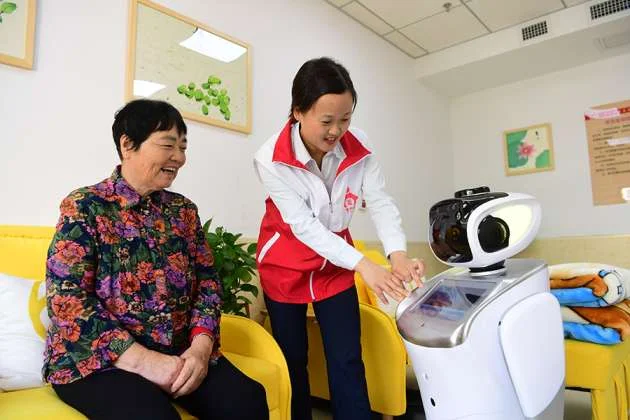
At the 2025 CIFTIS trade fair, firms showcased autonomous wheelchairs and AI-enabled care robots for medication reminders and companionship. Wearables from major brands track vital signs and falls, enabling remote monitoring by families and clinicians.
Community-supported home monitoring systems are becoming common, with scale-driven production accelerating cost reduction and adoption.
Telemedicine and Care Services Networks
Telehealth and home-based care address physical distance between seniors and families. Telemedicine platforms offer video consultations, prescription delivery, and chronic-condition monitoring.
Local governments support access through teleconsultation kiosks and tablets. Insurance and healthcare groups operate AI-based home monitoring systems that detect risks and trigger alerts.
Community care networks, including neighborhood clinics, nursing stations, meal centers, and on-call services, are increasingly bundled on digital platforms to support coordinated care.
Integrated Senior Living and New Retail Models
Senior living models are evolving toward integrated environments that combine housing, healthcare access, social engagement, and daily services. Community-level service hubs coordinate care, meals, recreation, and support within walkable neighborhoods, reducing isolation and logistical complexity.
Retail and service formats also adapt by simplifying layouts, offering assisted purchasing, and supporting multiple access points, including in-person, digital, and voice-based interactions. These adaptations ensure seniors remain included in mainstream consumption rather than diverted into separate systems.
Across platforms, devices, services, and housing, China’s supply-side advantage lies in system integration. Offerings that combine technology, human services, and coordinated delivery scale faster and achieve higher senior adoption than isolated products.
Why China’s Silver Economy Is Structurally Different
China’s silver economy differs fundamentally from that of other aging societies due to its consumption model, demographic dynamics, digital integration, cultural context, and state coordination.
Consumption-Led Rather Than Welfare-Led
In many Western economies, population aging is framed primarily as a fiscal issue tied to pensions and healthcare costs. China has taken a different approach, positioning aging as a consumption-driven growth opportunity.
Policy frameworks, including the 2024 national guideline, emphasize expanding senior-oriented industries and activating spending rather than relying solely on public welfare.
The silver economy is directly linked to the expansion of domestic demand, making it part of China’s macroeconomic strategy rather than a standalone social policy domain.
Scale and Speed of Aging
China is aging at a scale and pace unmatched globally. Tens of millions of seniors are added in a short time frame, and aging occurs at a lower per-capita income level than in countries such as Japan or Italy. This compressed timeline forces rapid commercialization of solutions, from community care networks to smart eldercare technologies.
Unlike economies that age after becoming wealthy, China must rely on innovation and market mechanisms to support a large senior population, driving faster experimentation and rollout of services.
Digital-First Integration
China’s silver economy is deeply embedded in its digital ecosystem. Around 70 percent of seniors online have engaged in e-commerce, and smartphone use is widespread even among older age groups.
Core services such as payments, shopping, transport, and healthcare are app-based, and senior services are typically adaptations of mainstream platforms rather than parallel systems.
This allows rapid scaling through super-apps and mini-programs, enabling startups to reach millions of seniors without building extensive physical infrastructure. Data generated through digital use further refines service design, reinforcing scale advantages.
Cultural Attitudes and Family Dynamics
Family involvement remains central in China’s aging model, even as seniors seek greater independence. Products and services are often designed to augment, not replace, family care. Monitoring devices share updates with adult children, and senior living facilities emphasize family access and integration.
Seniors also prioritize dignity and active aging, favoring offerings that emphasize vitality, appearance, and self-respect. Traditional practices such as TCM and tai chi coexist with modern fitness and healthcare, requiring hybrid product design and messaging.
Government Coordination and Market Alignment
The Chinese government plays a coordinating role that goes beyond regulation. National models such as the 9073 care structure are rapidly adopted across regions, creating consistent market signals. Alignment with policy goals reduces fragmentation and lowers execution risk for businesses.
For market participants, policy compliance is not administrative overhead but a competitive advantage, enabling faster scaling than in more decentralized systems.
Together, these structural differences explain why China’s silver economy is developing faster, broader, and more commercially integrated than in most other aging societies.
Strategic Risks and Misreads for Businesses
Despite strong demand, many companies misjudge China’s silver economy due to outdated assumptions, poor segmentation, or weak execution.
Over-Indexing on Youth and Ignoring Seniors
A common mistake is continuing to prioritize youth-only strategies. As birth rates fall and younger consumers face income pressure, demand from seniors is expanding and proving more resilient. Baby product markets are shrinking, while consumption among seniors is growing.
Firms that assume only the 18–35 segment matters risk stagnation. Products designed exclusively for younger users—such as apps with small fonts or youth-centric language—often exclude seniors by default. In 2026, any China strategy that lacks a senior component is structurally incomplete.
Stereotyping Seniors Through Medicalized or Patronizing Design
Many companies over-medicalize senior offerings or treat older consumers as frail and passive. This misreads the large “young-old” cohort, which prioritizes wellness, enjoyment, and self-expression over illness management. Branding that signals “for old people” often fails.
Seniors respond better to aspirational positioning that discreetly integrates functional needs. Products that combine usability with style and dignity outperform purely utilitarian designs.
Underestimating the Trust Barrier
Trust is critical and fragile in the senior market. Fraud and low-quality products have made many seniors cautious. Official data show a significant rise in scams targeting the elderly in recent years, reinforcing skepticism.
Seniors often rely on peer recommendations, family input, and institutional endorsements before making a purchase.
Weak after-sales service, unclear pricing, or credibility gaps can quickly derail adoption. Successful firms invest in transparency, certifications, partnerships, trial periods, and human-centered customer support.
Failing to Localize Foreign Solutions
Foreign companies often misread China by importing senior products or services without adaptation. Western-style retirement communities, healthcare products, or digital tools frequently underperform until localized for Chinese cultural norms, family dynamics, and platform ecosystems.
Localization includes integration with WeChat or Alipay, alignment with Chinese dietary and wellness preferences, sensitivity to design symbolism, and compliance with domestic regulatory standards. Price perception and promotion strategies also differ materially.
Treating Seniors as a Single Market
China’s senior population is highly segmented. Urban, affluent, active retirees differ sharply from rural or care-dependent seniors. Products aimed at an “average” senior often lack traction.
Effective strategies target defined sub-groups—by age band, income level, lifestyle, or geography—and scale only after validation. Generational differences within the senior cohort also require distinct messaging and channel strategies.
Strategic Takeaway
Success in China’s silver economy requires abandoning age-based assumptions, prioritizing trust, segmenting precisely, and localizing deeply. Companies that respect senior consumers as informed, diverse decision-makers can build durable growth. Those who misread the market face high costs and limited recovery.
The Silver Economy’s Role in China’s Next Growth Cycle
China’s silver economy is set to become a core driver of growth as demographic change reshapes the country’s economic structure in the late 2020s and 2030s.
Geographic Expansion and Domestic Demand Activation
The silver economy is expanding beyond Tier-1 cities into smaller cities and inland regions, where aging is often more advanced due to youth outmigration. Provinces such as Liaoning and Jilin already have over 25 percent of their population aged 60+, making them early testing grounds for eldercare and senior services.
As income levels rise in Tier-2 and Tier-3 cities, demand for healthcare, daily services, and senior consumption is spreading nationwide. Provincial governments, including Zhejiang, have issued regional silver-economy plans that extend services to the county and village levels.
This diffusion supports China’s internal circulation strategy by stimulating demand in regions that historically lagged behind.
Integration With Healthcare and Urban Development
The silver economy is increasingly embedded in healthcare reform and urban planning. Aging pressures are accelerating the shift toward preventive care, primary care, and community-based services, driving integration between hospitals, rehabilitation, and home care.
Cities are adopting “age-friendly” design standards, including barrier-free transport, retrofitted housing, safer street crossings, and senior-oriented public spaces.
These changes stimulate related industries such as construction, smart-city technology, and medical services while ensuring that eldercare is integrated into mainstream urban development rather than treated as a standalone sector.
Consumption Stability and the Longevity Dividend
Senior consumption provides relative stability compared with more cyclical consumer segments. Retirees maintain spending on healthcare, daily needs, and modest leisure even during economic slowdowns, supported by pensions and lower exposure to employment shocks.
As the working-age population contracts, this growing base of senior consumers can help stabilize domestic demand. Policies expanding rural pensions and retirement benefits further reinforce this effect.
Over time, preventive health and active-aging initiatives aim to convert longer lifespans into a longevity dividend, extending years of consumption and participation rather than dependency.
Employment, Productivity, and Structural Rebalancing
Growth in eldercare, health services, and age-tech is expected to generate large-scale employment, potentially offsetting job losses in contracting sectors. Aging pressures also accelerate automation and productivity gains, including robotics and AI-assisted care.
At the macro level, the silver economy aligns with China’s shift toward services and higher-value domestic activity, supporting a rebalancing away from export-led manufacturing and helping mitigate risks of the middle-income trap.
Global Spillovers and Export Potential
China’s scale gives it the potential to develop cost-effective, scalable eldercare and age-tech models that can be exported to other aging economies. Cross-border collaboration with Japan and Europe is already underway, positioning Chinese firms to become global suppliers of senior services, devices, and platforms.
In sum, the silver economy is not peripheral but central to China’s next growth cycle. As the country transitions from a demographic dividend to a longevity-driven model, the silver economy will anchor consumption, stimulate innovation, and reshape development strategy through the 2026–2030 period and beyond.
Work with Ashley Dudarenok to Turn China Insight Into Strategy

Understanding China’s consumer economy takes more than reports or headlines. It requires firsthand market experience, deep platform knowledge, and the ability to translate complexity into decisions that drive growth. Ashley Dudarenok helps global leaders do exactly that.
Ashley is a leading expert on China’s digital ecosystems, consumer behavior, and innovation models, advising multinational companies, investors, and leadership teams on understanding China and applying those insights globally. Her work is practical, commercially grounded, and rooted in real execution across fast-moving markets.
Ashley Dudarenok’s Services
- China market strategy and executive advisory for navigating digital platforms and consumer shifts
- Digital transformation consulting, translating China-born models into global strategies
- Keynote speaking and executive briefings on China’s consumer economy and innovation trends
- Leadership workshops and board-level sessions for senior decision-makers
- Immersive China learning programs offering direct exposure to digital ecosystems
- Consumer insights and trend intelligence through her work with ChoZan
- Market entry and localization support for China and China-inspired growth strategies
If you are exploring China’s silver economy, digital consumption trends, or long-term growth shaped by demographic change, Ashley provides clarity where others offer noise.
Engage Ashley Dudarenok for consulting, speaking, or leadership programs and turn China insight into a durable competitive advantage.
FAQs about China Silver Economy
-
How does China’s silver economy differ across Tier-1, Tier-2, and rural markets?
China’s silver economy differs by city tier mainly in income, service access, and demand maturity. Tier one cities show advanced senior services, while Tier two and rural areas focus on basic healthcare, home care, and affordability.
-
What industries will benefit the most from China’s aging population over the next decade?
Industries benefiting most from China’s aging population include healthcare, eldercare services, age-friendly technology, senior housing, and financial services. These silver economy sectors in China grow as longevity increases demand for care, prevention, daily support, and income planning.
-
How are Chinese companies designing products differently for seniors compared to younger consumers?
Chinese companies design senior products around dignity, usability, and lifestyle rather than age labels. In senior product design in China, brands integrate safer features, clearer interfaces, and modern aesthetics so older consumers feel capable, respected, and included.
-
What role does technology play in reducing eldercare labor shortages in China?
Technology helps ease China’s eldercare labor shortage by automating routine tasks and extending human care. AI and robotics eldercare in China support monitoring, mobility, and reminders, allowing fewer caregivers to safely serve more seniors at scale.
-
How does China’s silver economy impact healthcare costs and system efficiency?
China’s silver economy influences healthcare costs by shifting care toward prevention and community services. Aging population healthcare reform in China reduces hospital strain through early screening, chronic disease management, and home-based support, thereby lowering long-term system pressure.
-
What opportunities exist for foreign companies entering China’s silver economy?
Foreign companies entering China’s silver economy find opportunities in healthcare, senior technology, and services. Success in foreign companies’ silver economy in China depends on localization, platform integration, regulatory alignment, and trust-building with seniors and families.
-
How is the silver economy influencing China’s real estate and housing development?
China’s silver economy is reshaping real estate toward accessibility and service integration. Senior housing in China now emphasizes aging in place, medical proximity, community support, and flexible layouts that balance independence with long term safety.
-
What challenges do rural seniors face that differ from those of urban seniors in China?
Rural seniors face deeper gaps in healthcare access, income security, and service availability. Rural elderly challenges in China include fewer clinics, lower pensions, and limited digital access, leading to increased reliance on community networks and government support.
-
How reliable are projections about the size of China’s silver economy?
Projections of China’s silver economy are generally reliable because demographic trends are already fixed. China’s silver economy forecast models draw on predictable aging patterns, pension expansion, and observed consumption behavior among older households.
-
Can China’s silver economy model be replicated in other aging countries?
China’s silver economy model can inform other markets, but direct replication is unlikely. Economic strategy outcomes for an aging population depend on culture, income, and digital systems, while China’s scale and policy coordination remain uniquely powerful.