
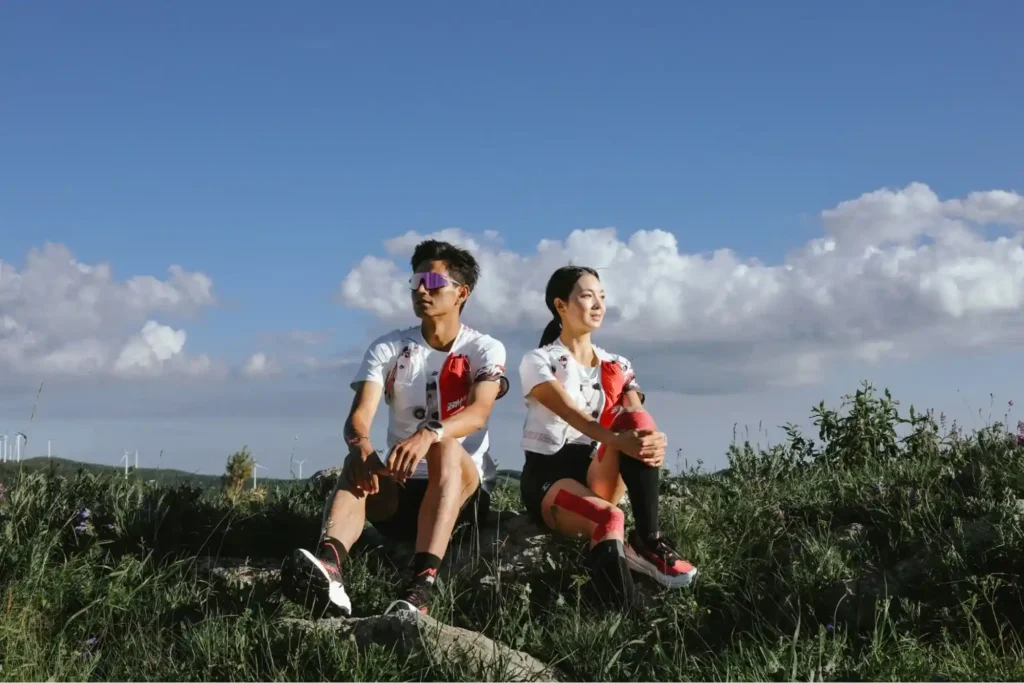
Chinese sportswear brands span broad sports companies, running specialists, and technical outdoor businesses. ANTA and Li-Ning develop products across several sports. Xtep and BMAI place running at the center of their identities, while Kailas FUGA concentrates on trail running.
These differences explain more than a list of shoe specifications. Each company’s background, sporting focus, and customer relationships shape the products it develops and how it reaches the market.
This guide introduces nine Chinese sports brands, explains their performance footwear strategies, and examines recent developments in sports technology, domestic competition, and international expansion.
Top Chinese Sportswear Brands at a Glance
The brands below represent different approaches to the sportswear market. This comparison highlights the categories explored in this guide; it does not rank product quality.
| Brand | Sporting focus covered here | What distinguishes its approach |
| ANTA | Basketball within a broad sportswear business | Athlete signature ranges supported by a wider footwear, apparel, and accessories offering |
| Li-Ning | Running, basketball, badminton, and training | An athlete-founded identity and cushioning technology used across different running needs |
| 361° | Basketball, running, and youth sports | Product development spanning adult competition and school-age sporting activities |
| PEAK Sport | Basketball and athlete equipment | Adaptive cushioning and customized equipment for individual sporting requirements |
| ERKE | Running within a broader sportswear range | University-linked biomechanics research informing footwear development |
| Xtep | Road running and marathon racing | Race shoes, daily training products, and a running community network |
| Qiaodan Sports | Running within a broader sportswear range | A dedicated Feiying racing range alongside other sporting categories |
| BMAI | Running | A focused identity organized around racing, road training, and trails |
| Kailas FUGA | Trail running | Mountain-sports heritage and footwear designed around specific terrain |
Which Chinese Sportswear Brands Should You Know?
Understanding each brand starts with its business and sporting identity. The recent products below show how those identities translate into equipment for different athletes and activities.
ANTA: Technical Basketball Shoes Built as a System
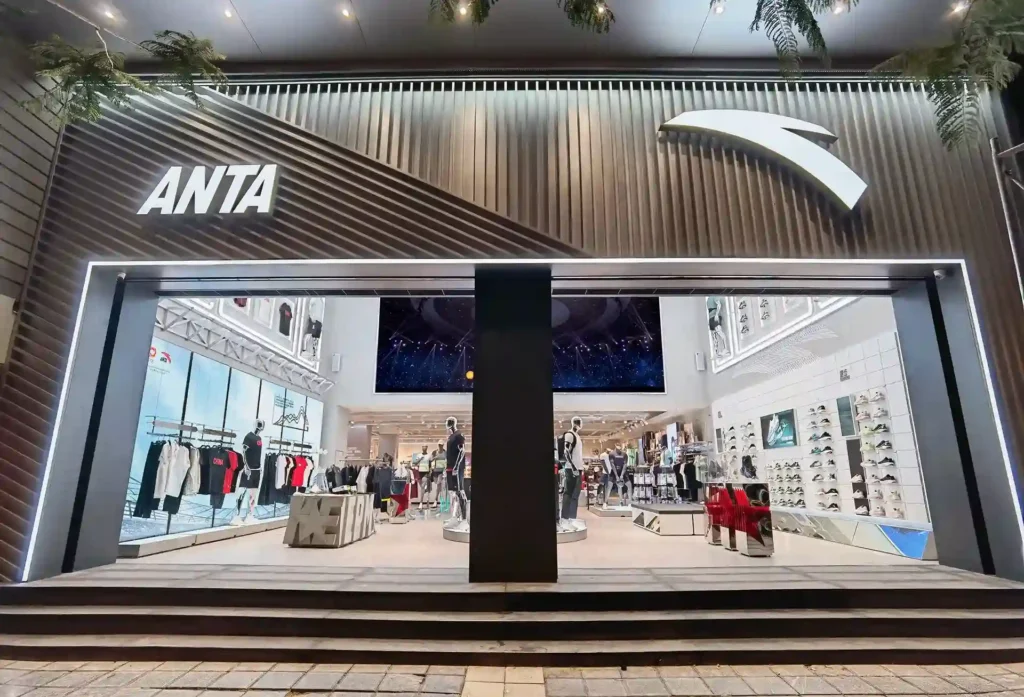
Established in 1991, ANTA develops footwear, apparel, and accessories for a broad sports market. Its parent, ANTA Sports, operates a portfolio that includes FILA, DESCENTE, and other brands. Readers should therefore distinguish ANTA-branded products from the wider group’s activities.
Its basketball offering includes Kyrie Irving’s KAI signature range, developed around the demands of court movements.
In its June 2026 KAI 3 announcement, ANTA describes full-length nitrogen cushioning, a midfoot carbon plate, and supportive sidewalls. These components address cushioning and structural support within one basketball shoe.
Li-Ning: Advanced Cushioning Across Racing and Training Shoes
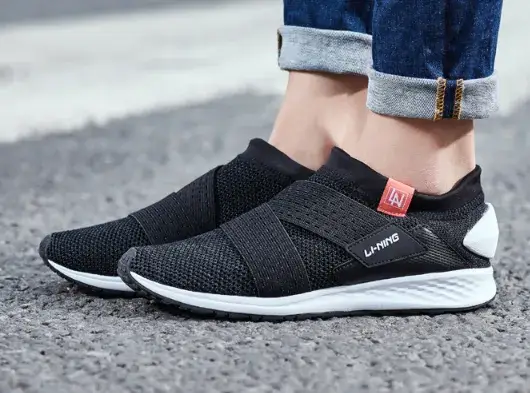
Olympic gymnast Li Ning founded the company in 1990. The brand’s identity combines competitive sport with Chinese cultural and design influences. Its core sporting categories include running, basketball, badminton, and training.
That breadth helps explain its approach to footwear technology. Li-Ning develops products for different sporting needs, including separate shoes for racing and regular training.
Its 2026 interim report identifies Super BOOM Capsule cushioning in the Feidian 6 ULTRA and ELITE racing models. The technology also appears in the plate-free Red Hare 9 ULTRA trainer.
This shared platform connects elite racing development with a broader training range. However, a material’s measured energy return does not translate directly into an equivalent improvement in running speed.
Xtep: Carbon Materials, Fit Data and a Complete Running Range
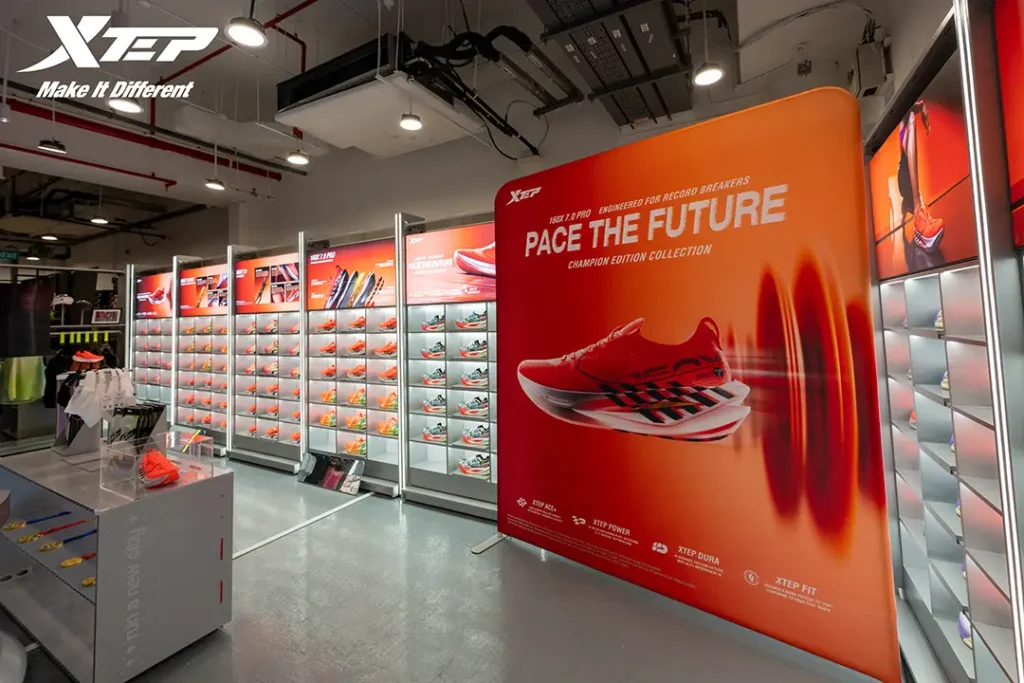
The Xtep brand launched in 2001. Running now provides a clear organizing theme across its products, clubs, and event activities. Its strategy connects competitive racing with equipment and services for everyday runners.
The company’s August 2026 launch reflects that range. It introduced the 160X 8.0 racing series, Airflow Zero cushioning shoes, and 2000KM 5.5PRO trainers.
Xtep says the 160X 8.0 ULTRA uses a carbon plate made with Zhongfu Shenying’s T1200 fiber. It also reports using 400,000 Chinese foot profiles to develop the Airflow Zero shoe last—the form that determines its internal shape.
Together, these examples connect materials development with fit and different running routines. They also show why Xtep’s identity is easier to understand through running as a whole than through one racing model.
361°: Specialized Products Beyond Adult Signature Shoes
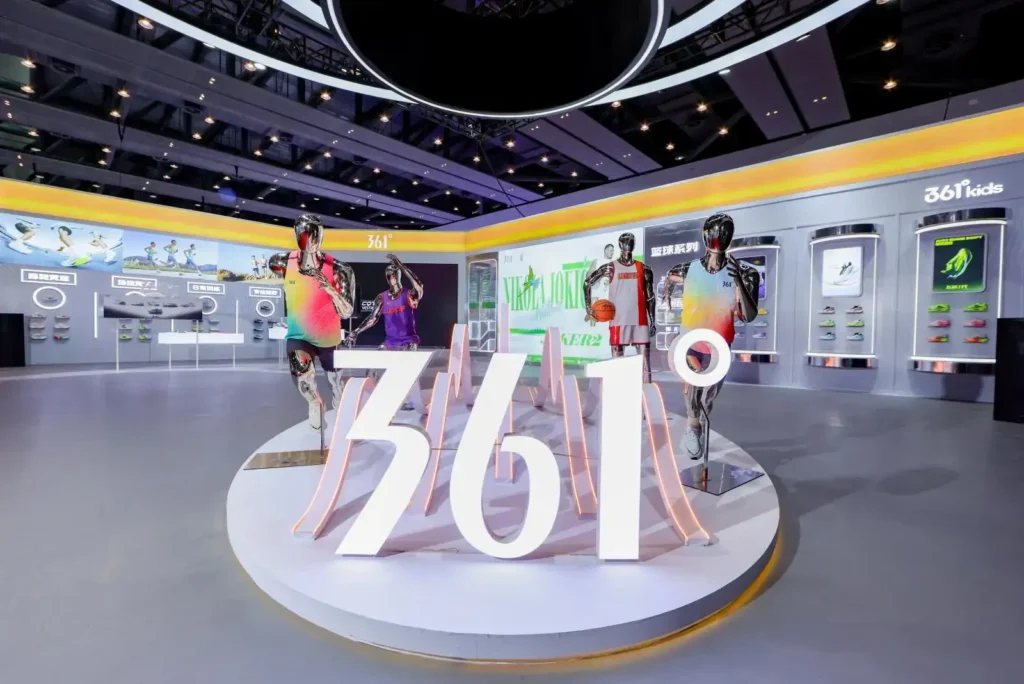
Founded in 2003, 361° operates adult sports, children’s, e-commerce, and overseas businesses. Its sporting activities include basketball and running, supported by athlete partnerships and event involvement.
Children’s sports form a distinct part of this structure. That gives the company a broader development brief than adult signature footwear alone.
At its April 2026 product showcase, 361° presented the JOKER2 GT basketball shoe alongside dedicated youth basketball, running, and rope-skipping products. The youth range supported activities tied to training and school sports.
For retailers, this creates different conversations with customers. An adult basketball player and a parent buying school training shoes need clear explanations of each product’s purpose.
Kailas FUGA: Technical Trail Shoes for Specific Terrain
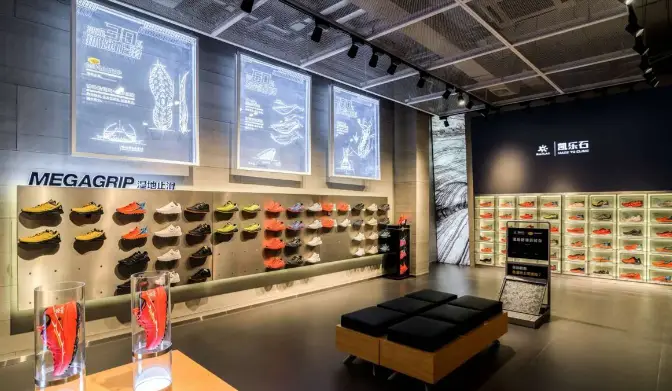
Kailas has operated in mountaineering and outdoor sports since 2003. It launched FUGA as a trail-running product line in 2016, extending that background into off-road running footwear.
This heritage explains FUGA’s emphasis on terrain, grip, and control. Its product requirements differ from those of road racing or indoor court sports.
The May 2026 DU MONSTER announcement describes development with Vibram, including 5 mm and 7 mm outsole lugs and additional heel support. The shoe targets steep, technical terrain.
Kailas FUGA therefore represents the specialist outdoor end of this comparison. Its relevance comes from addressing defined trail conditions through footwear, supported by a wider trail-running equipment range.
PEAK Sport: Adaptive Cushioning and Customized Equipment
PEAK Sport dates to 1989 and develops athletic footwear and apparel. Basketball forms part of its sporting identity, alongside equipment supplied through athlete and team relationships.
In June 2026, Xinhua reported that PEAK became an official partner of China’s delegation to the Aichi-Nagoya Asian Para Games. The report describes 3D printing for customized footwear, apparel, and protective equipment, alongside Taichi adaptive cushioning technology.
Qiaodan Sports: Marathon Racing With Measurable Tradeoffs
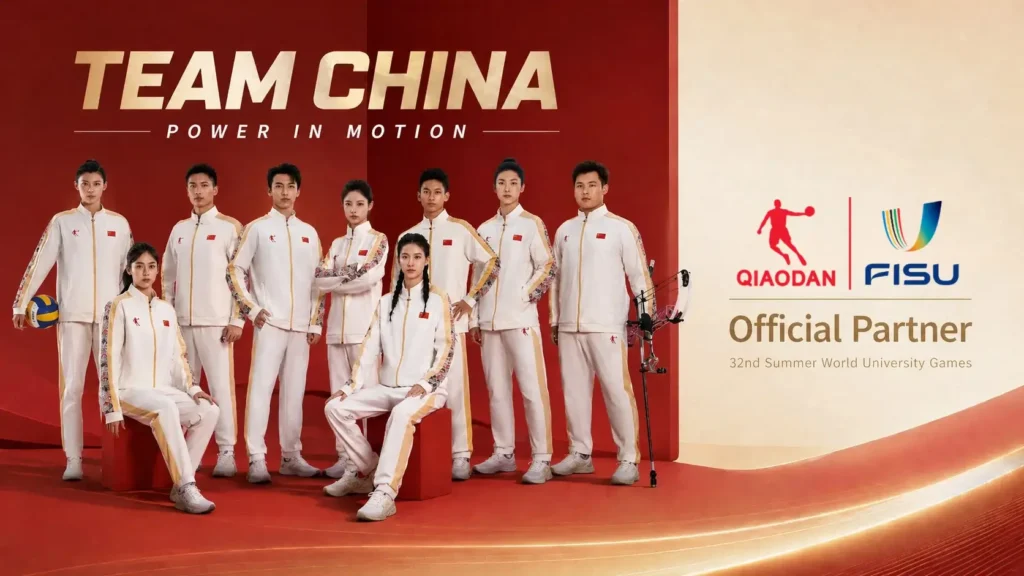
Qiaodan is a brand operated by Zhongqiao Sports, a company established in 2000. Its product categories include basketball, running, training, outdoor activities, and lifestyle sportswear.
Within that broader business, the Feiying range gives Qiaodan a dedicated presence in performance running. The Feiying Plaid 3.0 is a carbon-plated model developed for long-distance racing.
An October 2026 RTINGS laboratory review found strong cushioning and energy return, but also poor stability due to its narrow platform.
That combination helps explain the range’s specialized role. A marathon racing shoe should be assessed against the runner’s needs, rather than assumed to suit every workout.
BMAI: A Focused Running Brand
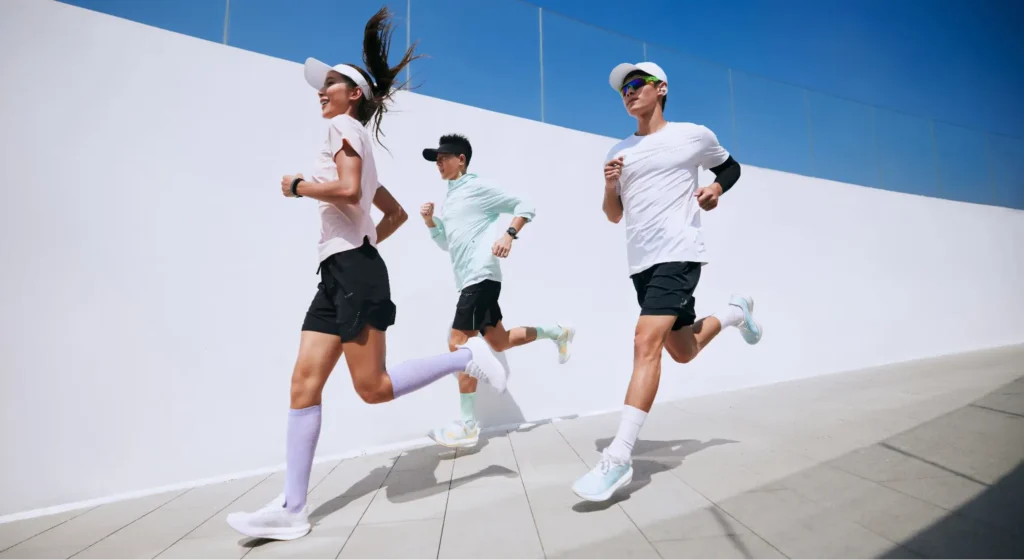
BMAI’s official international history traces its beginnings to 2015 near Beijing’s Chaoyang Park. Running defines its identity, supported by community activities and equipment developed for runners.
Its international range organizes footwear into racing, road, and trail categories. This gives customers a straightforward starting point based on where and how they run.
Retain the sentence only after identifying an accessible BMAI product page or catalog confirming both models and the plate-free specification of the 4.0SL.
BMAI illustrates a focused approach within China’s sportswear industry: building a recognizable identity around one sport while serving different training routines and terrain.
ERKE: Sports Science Linked to Product Development
ERKE was established in 2000 and is headquartered in Xiamen. Its business combines research, production, sales, and marketing, giving it a wider role than manufacturing shoes for other companies.
Running footwear provides a useful window into its product development. In September 2025, ERKE upgraded its cooperation with Shanghai University of Sport.
The company says work with the university’s biomechanics laboratory informs its INFINITE and Park Running footwear. That research considers Chinese body and foot shapes when developing performance products.
ERKE therefore brings a research partnership into the brand comparison. The relevant product questions concern fit, comfort, and how effectively laboratory findings translate into shoes customers use.
How Sports Technology Changes Sportswear Retail
Product launches reveal only part of the innovation. Li-Ning’s August 2026 operational review describes AI and 3DVR footwear design, RFID, and connected online and offline inventory. It also reports segmented production and rolling replenishment orders.
This connects product development to inventory discipline. A brand can offer more specialized shoes only if it places the right model and size where demand exists. Otherwise, broader technical choice can become slower-moving stock.
The benchmarking question is measurable: does a new tool shorten development time, improve full-price sales, or reduce aged inventory? Those outcomes give sports technology a commercial test beyond the launch presentation.
How Chinese Sports Brands Are Expanding Internationally
International expansion follows several routes, including physical retail, athlete partnerships, and overseas distribution. Recent announcements show how these approaches differ:
- ANTA: a physical retail presence. The company opened its first North American flagship in Beverly Hills during the 2026 NBA All-Star Weekend. The store gives its basketball-led international identity a dedicated consumer destination. Beyond physical retail, ANTA Sports completed its acquisition of a 29.06% equity stake in German sportswear company PUMA SE on October 7, 2026. The investment expands ANTA Sports’ international strategic presence while leaving PUMA as a separately listed business.
- Li-Ning: an international athlete partnership. Its 2026 interim results describe a long-term partnership with Stephen Curry and Curry Brand, including development of professional basketball equipment.
- Xtep: overseas sales and distribution. The company reported that overseas business revenue more than doubled in the first half of 2026. It attributed momentum to cross-border e-commerce and new-image stores in Southeast Asia.
These developments measure different things. A flagship establishes presence, an athlete partnership creates collaboration, and revenue growth records sales activity. Repeat purchases, local fit, and customer service remain useful indicators of longer-term progress.
What Domestic Competition Reveals About the Growth Story
Product development and international activity coexist with domestic market pressure. Third-quarter 2026 disclosures show weaker retail indicators at several established companies.
| Brand | Reported third-quarter 2026 retail indicator |
| ANTA | ANTA-branded retail sales declined by a mid-single-digit percentage year over year |
| Xtep | Core-brand retail sell-through declined by a mid-single-digit percentage |
| Li-Ning | Overall retail sell-through declined by a low-single-digit percentage, excluding LI-NING YOUNG |
These indicators use different definitions and coverage; they do not directly compare consolidated revenue.
Xtep also reported retail discounts of 25%–30% and channel inventory turnover of 4.5–5 months. This places pricing and stock management alongside technology when assessing commercial performance.
The figures support a more careful reading of the sector. New equipment can demonstrate product development, while sales, discounts, and inventory reveal whether that development supports a healthy business.
Bring China’s Sportswear Business Lessons to Your Team
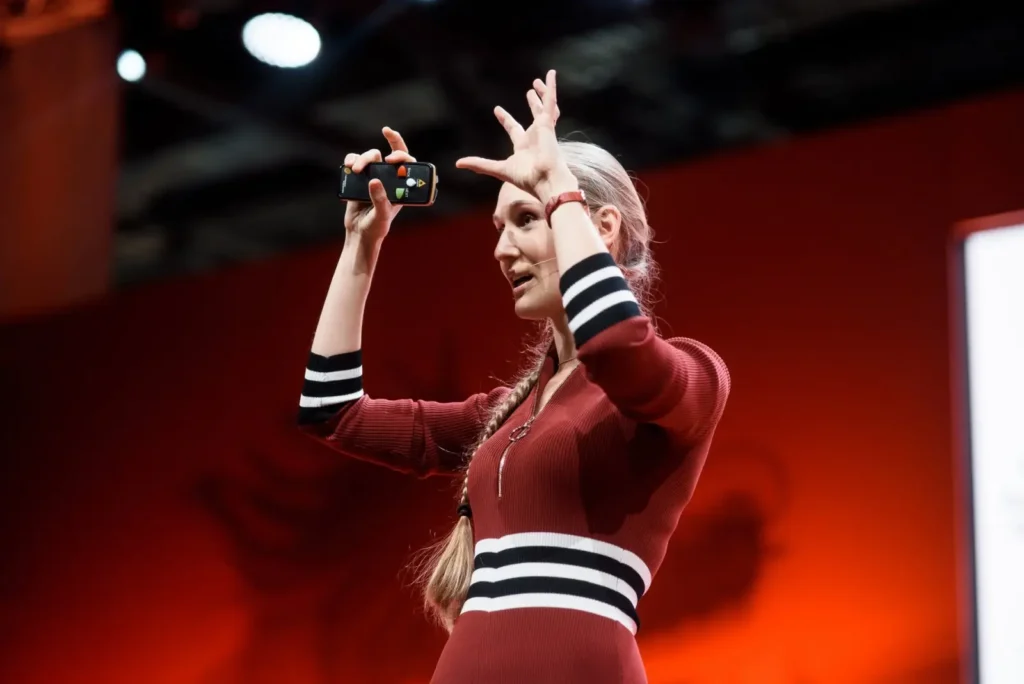
China’s sportswear brands offer lessons in specialist positioning, running communities, and connected retail. Understanding these approaches can help your team rethink how it reaches customers and builds a recognizable brand.
Ashley Dudarenok brings China’s consumer trends, innovation, and retail transformation into tailored keynotes. Invite her to your next leadership meeting or industry event for a session shaped around your audience and business priorities.
Discuss a tailored keynote with Ashley’s team
FAQs About Chinese Sportswear Brands
Which Are the Best Chinese Sportswear Brands for Wide Feet?
Start with the individual model’s width and internal shape. Compare forefoot room, heel hold and available width options. A generous size label cannot confirm a comfortable fit, so prioritize a reliable try-on or return option.
How Do Chinese Sports Shoe Sizes Compare With US Sizes?
Use the specific brand’s size chart and compare foot length in millimeters. Check men’s and women’s conversions separately. Leave room for your usual sports socks, and confirm whether the seller publishes measurements for that exact model.
How Can I Check Whether Chinese Sportswear Is Authentic?
Buy through the brand’s official store or a retailer the brand identifies as authorized. Keep the receipt and verify the model code. Treat packaging, verification codes, and unusually low prices as clues, rather than conclusive proof.
Are Shoes From Chinese Sportswear Brands Approved for Marathon Races?
Approval depends on the exact model and event rules. For competitions applying World Athletics requirements, check its approved-shoe database for the relevant discipline. Nationality and a carbon plate alone do not determine a shoe’s eligibility.
Can I Return Sports Shoes Ordered Directly From China?
Check the seller’s terms before paying. Confirm the return address, deadline, shipping responsibility, and how duties or taxes are handled. A brand’s domestic policy may differ from its overseas store policy, so save the terms for your order.
Are Carbon-Plated Chinese Shoes Suitable for Every Workout?
Choose footwear around the session. A racing shoe’s design doesn’t make it suitable for court movements, gym work, or easy mileage. Compare the model’s stated purpose, stability, and comfort with the activities you actually plan to do.
Is Performance Sportswear Different From Athleisure?
Performance sportswear targets the demands of a particular activity, while athleisure also serves everyday wear. Check the actual garment’s intended use, fabric properties, and construction. A sporty appearance alone cannot establish suitability for demanding training sessions.
How Should I Compare Sustainability Claims From Sportswear Brands?
Look for product-level evidence, including material composition, named certifications, and a clear comparison baseline. Ask which manufacturing stages the claim covers. A recycled component or a corporate target cannot establish the environmental impact of an entire shoe.
Are Chinese Sportswear Companies Publicly Traded?
ANTA Sports, Li Ning Company, Xtep International, and 361 Degrees International have Hong Kong listings. Check the exact legal entity before researching a stock. A listed group can include several businesses beyond the brand on its shoes.
Is a Chinese Sports Brand the Same as a Chinese Manufacturer?
A brand develops and markets products under its own name. A manufacturer produces goods and may supply several brands. The phrase Made in China describes manufacturing origin; it does not establish where the consumer brand originated.