

China has set a high-profile objective under China’s National AI Strategy: to become the world leader in artificial intelligence by the mid-2020s. Under President Xi Jinping’s directive that AI is a “strategic technology” reshaping industries and daily life, the Chinese government positions AI as a core pillar of its modernization drive, known as “科技强国” (technological strength).
In recent years, AI has been a prominent feature in China’s top policy agendas. The 14th Five-Year Plan (2021–2025) and the Central Economic Work Conference have explicitly prioritized “new generation AI” and “digital transformation.”
This Chinese push occurs amid a global AI race. The United States has enacted its own National AI Initiative, and the EU is drafting a comprehensive AI Act. China’s leaders frame their strategy as a response: they aim not just to catch up, but to set the agenda.
In official rhetoric, China’s AI drive is about seizing a historic opportunity. President Xi has said that “accelerating development of new-generation AI is the strategic issue of whether our country can seize the opportunities of a new tech revolution”. Thus, the coming years (2026–27) represent a critical window: they bridge China’s current five-year plan and the goal year for achieving its initial AI milestones.
China’s National AI Strategy and AI+ Policy Roadmap (2017–2035)
China’s leadership has outlined an explicit, multi-phase roadmap for AI. In 2017, the State Council published the New Generation Artificial Intelligence Development Plan (《新一代人工智能发展规划》), which defines three stages:
- By 2020: Establish AI research foundations and basic applications; ensure key technologies and products are world-leading.
- By 2025: Achieve “breakthroughs” in AI theory and technology, making some AI capabilities and applications world-leading; build an AI industry of roughly ¥4 trillion RMB.
- By 2030: Become a world-leading AI powerhouse, with a complete AI industrial chain and top international influence in theory and applications.
The 2025 milestone is thus a pivotal target. The plan explicitly calls for “core AI technologies, products, and systems at the world’s leading level” across key areas, including smart cities, healthcare, manufacturing, agriculture, and defense.
In practical terms, the government envisaged breakthroughs in deep learning, neural networks, and supercomputing that could transform Chinese industry and services. Importantly, the plan also commits to improving laws, standards, and ethics around AI as it expands.
Building on the 2017 plan, the central government continues to issue detailed updates. In August 2025, the State Council released the “AI+ Action Plan” (《关于深入实施“人工智能+”行动的意见》) for 2025–2035. This document sets concrete short- and medium-term milestones:
This plan sets concrete short- and medium-term milestones:
- By 2027, China aims to achieve deep AI integration across six major domains, with over 70% of users using next-generation smart devices and intelligent agents.
- By 2030, AI is expected to “comprehensively empower” China’s development, with more than 90% of new smart terminals and widely used intelligent applications, and an “intelligent economy” serving as a key growth driver.
- By 2035, China expects to complete AI-driven modernization, achieving an “intelligent economy and intelligent society.”
The 2025 AI+ Plan outlines priority actions across the economy. It pushes AI-driven scientific discovery (using AI for basic research breakthroughs); it accelerates “AI+ Industry” (applying AI in manufacturing, energy, transportation, finance and beyond); it expands smart consumer products and IoT (smartphones, vehicles, home devices, and wearables); and it improves people’s livelihood (AI in education, healthcare, eldercare).
These layered policies demonstrate that AI is integrated into all levels of Chinese planning. The 2017 blueprint, the 2025 action plan, and related five-year initiatives interlock to push AI adoption. In official terms, only by coordinating research, technology, industry, and governance can China “seize the global high ground” in AI.
Where China’s National AI Strategy Stands by Late 2025: Real-World Outcomes
China’s National AI Strategy in Robotics and Embodied AI
China remains the world’s largest industrial-robot market, producing about 430,000 industrial robots in 2023 and accounting for over half of new global installations in recent years. Policy has shifted toward humanoid robots as a “new engine of growth”, with MIIT roadmaps targeting mass rollout and advanced levels by 2025–27, and major EV makers like XPeng planning long-term multi-billion-yuan investment.
China’s National AI Strategy for Chips and Compute Self-Reliance
Huawei’s Ascend 910C began mass shipment to Chinese AI firms in 2025, and domestic AI chips from Huawei and Cambricon were added to official government procurement lists—essential steps toward reducing dependence on Nvidia. Yet Chinese AI chips still lag Nvidia’s H200 in raw performance and software ecosystem, even though some outscore the downgraded H20 that was briefly exported to China.
China’s National AI Strategy in EVs and Intelligent Vehicles
By early 2025, new energy vehicles (BEV + PHEV) are projected to make up nearly half of all passenger vehicle sales in China, and the country accounts for about 40% of global EV exports.Leading firms like BYD, NIO, XPeng and Geely combine EV platforms with autonomous-driving and AI-enabled features, embedding AI into both vehicles and factory automation.
Key 2025–26 Players and Live Trends Shaping China’s AI Strategy
China’s AI push now shows up clearly in a few headline players and model families:
- DeepSeek – Shook global markets with its R1 reasoning model: strong GPT-4-level performance at much lower cost, plus open weights that let companies run it on their own infrastructure.
- Alibaba Qwen / QwQ – Qwen3 and the QwQ reasoning model power Alibaba Cloud and its enterprise stack. They offer “fast” and “thinking” modes and are released as open weights, which makes them attractive for serious corporate use.
- ByteDance Doubao – China’s leading consumer chatbot, built into Douyin (TikTok China) and Toutiao. For hundreds of millions of users, AI is just “part of the app” for chatting, search, content and shopping.
- Baidu Ernie – Still central in search, cloud and autonomous driving, and now shifting toward open-sourcing to stay competitive.
- Moonshot AI (Kimi) – Focused on long-context and coding/agent work. Its Kimi K2 models are designed for big documents, research and software tasks.
Across these players, three trends define China’s AI race:
- Reasoning-first models,
- open-weight releases as the norm, and
- price wars that make Chinese AI cheaper and more accessible, even if it isn’t always at the absolute global frontier.
Building the Compute Backbone Under China’s National AI Strategy (算力基础)
To meet these national goals, China is investing heavily in computing infrastructure—the essential engine behind large-scale AI. The “East Data, West Computing” (东数西算) project, launched in 2022, connects data-intensive eastern cities, such as Shanghai, Beijing, and Shenzhen, with energy-rich western provinces, including Guizhou and Inner Mongolia.
This system now includes:
- 8 national computing hubs and 10 major data clusters.
- High-speed interprovincial data routes are reducing latency for AI workloads.
- Renewable-energy data centers are minimizing both costs and carbon emissions.
According to the China Academy of Information and Communications Technology (CAICT), China’s total computing power reached 230 EFLOPS by 2023, then 280 EFLOPS by the end of 2024, with a target of 300 EFLOPS by 2025. Intelligent computing accounted for over 30%. This national network forms the backbone of the AI+ Plan, supporting model training, industrial automation, and research initiatives across sectors.
City-Level Execution of China’s National AI Strategy and Public Accessibility
Local governments are also translating national policy into operational capacity.
- Shanghai offers compute vouchers that subsidize up to 80% of GPU and cloud costs for startups and research teams.
- Chengdu manages a shared AI service platform integrating computing resources, data labeling, and model testing.
- Beijing’s Zhongguancun hub provides model-evaluation environments and open-access AI tools for small and medium enterprises.
These city-level programs ensure that AI resources are widely distributed, enabling smaller firms and universities to participate in large-scale innovation—one of China’s strongest structural advantages.
Pursuing Compute Self-Reliance and Efficiency in China’s AI Strategy
China’s roadmap also emphasizes hardware sovereignty. Domestic chipmakers such as Huawei (Ascend), Biren, and Cambricon are developing advanced AI processors tailored for training and inference workloads. Their focus lies on:
- Energy-efficient accelerators for large-model computation.
- Distributed training systems that optimize inter-hub performance.
- Green computing technologies promote the adoption of renewable energy and innovative cooling solutions.
This focus on compute self-reliance strengthens China’s ability to continue scaling its AI ecosystem even amid global hardware export restrictions. By integrating policy, infrastructure, and technological independence, the roadmap transforms AI from a research goal into a strategic pillar of national modernization.
Strategic Advantages Powering China’s National AI Strategy
China’s confidence in its AI strategy is based on a set of national advantages that policymakers often cite:
Massive Data Resources Supporting China’s AI Strategy
China’s digital economy generates enormous amounts of data— the “fuel” for AI. A government report notes that in 2024, China’s total data production reached 41.06 zettabytes (ZB), accounting for approximately 26.7% of the global data.
This includes mobile internet usage, e-commerce transactions, social media content, and surveillance data. Such abundant data accelerates AI training, enabling models to learn from diverse real-world data.
China’s National AI Strategy and Its Complete Industrial Base
China is unique in having a full-stack industrial ecosystem. The country manufactures a wide range of products, including semiconductors, sensors, networking gear, robotics, electronics, and more, domestically. In other words, the entire hardware and device supply chain exists within China.
This end-to-end capability means new AI products (such as chips or robots) can be developed and built in-house, giving Chinese companies greater deployment agility.
Rich Application Scenarios Enabled by China’s AI Strategy
The breadth of China’s economy offers a vast array of AI use cases. Officials note that China has already deployed over 1,500 industry-specific AI models across more than 50 sectors. These encompass finance, manufacturing, retail, transportation, healthcare, and other sectors.
For example, AI-driven credit scoring is widely used in Chinese banking, and AI-enabled vision systems are in factories and cities. Having many scenarios enables Chinese AI developers to iterate and refine technology rapidly using real-world data.
Huge Market Demand Accelerating China’s National AI Strategy
With 1.4 billion people, China has the world’s largest internal market for AI products. More than 400 million Chinese are in the middle class, fueling consumer demand for smart devices and services.
There are also millions of businesses (from state firms to small shops) that can adopt AI solutions. This significant domestic demand allows AI innovators to scale quickly and amortize R&D costs: an AI app or gadget can find users in the hundreds of millions.
Abundant Talent and Research Output in China’s National AI Strategy
China produces a vast number of STEM graduates and researchers. It now has the largest number of computer scientists and engineers of any country.
China’s share of global AI research publications has also surged: by 2024, Chinese authors wrote roughly 30% of all AI-related scientific papers (more than the U.S. and EU combined). This extensive talent pool and research base ensure a continuous stream of new ideas and trained engineers for AI projects.
These factors combine into a virtuous cycle. Abundant data improves algorithms; a complete industry turns algorithms into products; a large market buys those products; revenue funds further research; and a skilled workforce drives innovation.
Chinese analysts explicitly cite this synergy as a “unique advantage” of China’s model. In short, China leverages its enormous scale and coordinated ecosystem to accelerate AI development in ways few other countries can match.
Key Sectors Accelerated by China’s National AI Strategy
China’s strategy calls for the adoption of AI across virtually every sector of the economy. Major focus areas include:
Intelligent Manufacturing Under China’s AI Strategy
China is aggressively transforming factories with AI. Robots perform tasks like welding and assembly; computer-vision cameras inspect products for defects; and AI software optimizes production flows.
For example, Chinese automotive plants utilize AI sensors to predict when machines require maintenance, thereby reducing downtime. Dozens of “smart factories” have been built by leading manufacturers. The government supports “AI+ manufacturing” initiatives in many industrial parks, which effectively automate and upgrade production lines.
Transportation and Intelligent Vehicles in China’s AI Strategy

China is building an autonomous, connected transportation ecosystem. It has dozens of pilot zones for self-driving cars and is developing smart highways that communicate with vehicles. At a 2025 auto tech conference, officials noted that AI has shifted from a “nice-to-have” to a “core variable” in vehicles.
Chinese companies, such as Baidu (Apollo), Didi, and Pony.ai, are testing Level 4 autonomous taxis and buses in cities like Beijing and Shanghai. Additionally, AI is utilized for traffic management—for example, smart traffic lights and digital road sensors help optimize traffic flow and reduce congestion.
Energy and Utilities Modernization via China’s National AI Strategy
In energy, China’s “AI+ Energy” plan aims to make grids, power generation, and resource sectors smarter. Chinese utilities now utilize AI to forecast electricity demand and supply, automatically balancing renewable energy sources (such as wind/solar) with traditional power plants. Smart grid systems use AI to detect faults and reroute power, thereby preventing outages.
In the oil, gas, and coal sectors, AI aids exploration (by analyzing geological data) and extraction optimization. Even urban utilities (water, heating) deploy AI sensors and predictive maintenance systems to improve efficiency and reduce waste.
Healthcare and Biotechnology in China’s AI Strategy
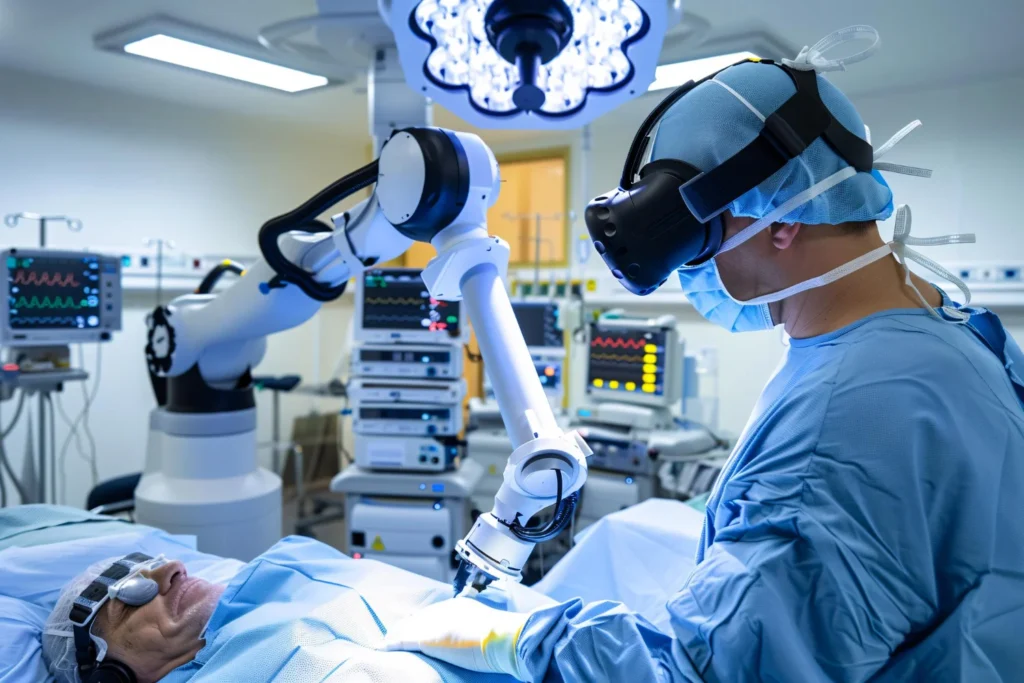
AI is transforming Chinese healthcare. Hospitals deploy AI diagnostic tools that analyze medical images (X-rays, CT scans, MRIs) to flag conditions such as pneumonia or tumors, often achieving expert-level accuracy.
Telemedicine platforms use AI chatbots to assist rural doctors by pre-diagnosing patients. In biotechnology, Chinese research teams are using AI to sift genomic and chemical data for drug discovery and precision medicine.
The government’s “AI+ Healthcare” initiatives fund projects such as AI-based medical imaging platforms and assistive diagnostics, aiming to scale these tools across China’s health system.
Agriculture and Food Systems Enabled by China’s AI Strategy
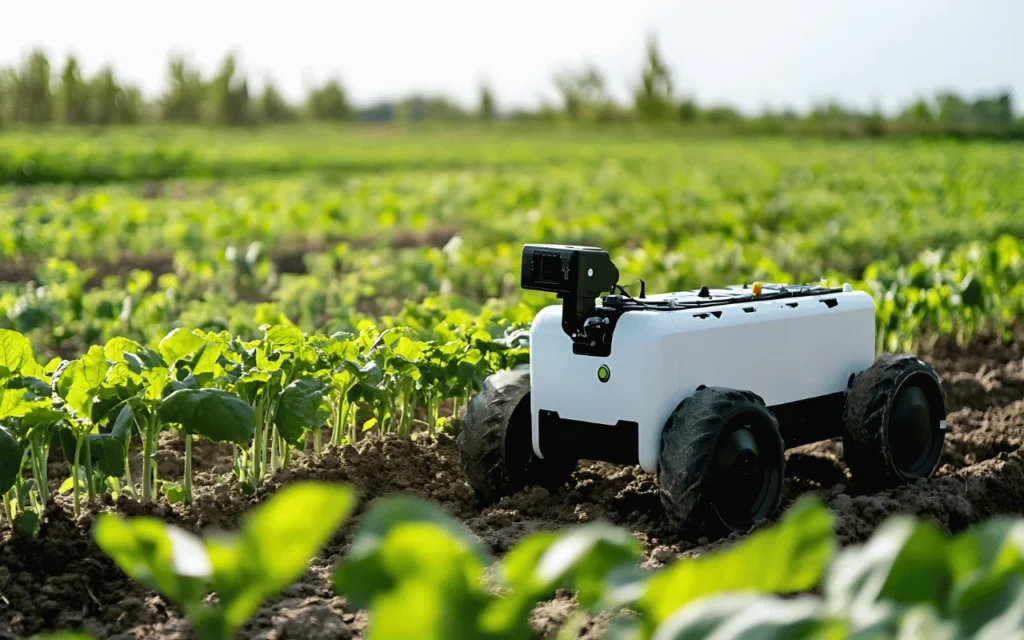
To boost agricultural productivity, China pursues smart farming. AI-driven drones and sensors monitor crop health, applying water or pesticides precisely where needed. Machine-learning models predict yields and detect plant diseases early, helping farmers optimize planting and harvest times.
Autonomous tractors and robotic harvesters are being piloted in large farms. National programs provide AI-based advisory services to millions of farmers, using mobile apps and SMS alerts. In short, AI allows Chinese agriculture to produce more food with less labor and risk.
Education Transformation Through China’s National AI Strategy
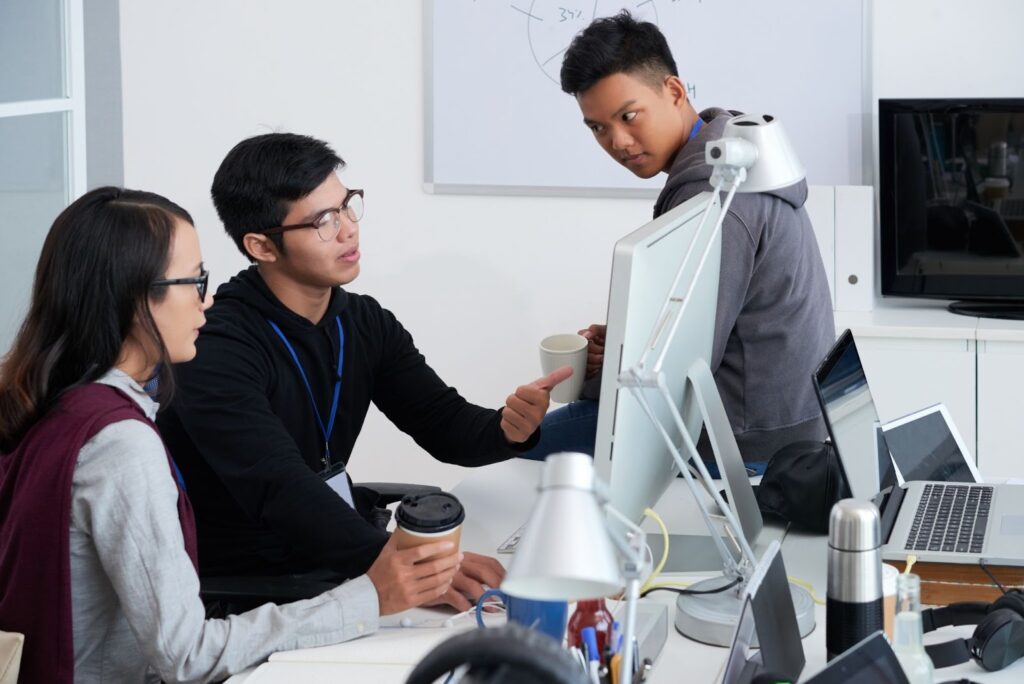
The Chinese education system is integrating AI to personalize learning. Many schools now use AI tutoring software that adapts math or language exercises to each student’s level. In smart classrooms, AI cameras can monitor student engagement and give teachers feedback on lesson effectiveness.
Universities offer numerous AI-related courses and labs, training the next generation of engineers. The national plan calls for “smart education” tools nationwide, aiming to use AI to close learning gaps and improve overall teaching quality across China’s vast school system.
Smart Cities and Governance in China’s National AI Strategy
China is a pioneer in applying AI to city management. Smart city projects deploy AI in traffic control, energy management, and public safety. For example, Beijing and Shanghai use AI-powered video analysis to detect traffic incidents or guide emergency responses.
AI algorithms optimize city resources (such as electricity distribution and waste management) using real-time data. Under the AI+ plan, municipal governments are upgrading infrastructure (power grids, water systems, public transit) with AI sensors and analytics.
Some cities are rolling out AI-driven e-government services (chatbots for public inquiries, automated permit processing) to improve citizen services.
Consumer Internet and Services Shaped by China’s National AI Strategy
Chinese tech companies embed AI into many consumer products. E-commerce platforms (Alibaba, JD.com) use AI to recommend products and streamline logistics. Mobile payment and finance apps use AI to detect fraud and offer personalized financial advice.
Social media and video apps, such as WeChat and TikTok (抖音), rely on AI for personalized content feeds and moderation.
Moreover, China has seen a surge in consumer AI devices, with millions of households utilizing AI assistants (such as smart speakers by Xiaomi and Baidu), AI-powered security cameras, and robots or appliances that learn user preferences. This broad consumer demand creates a rich environment for developing new AI features and services.
These sectors illustrate China’s holistic approach. Rather than betting on a single niche, China is spreading AI applications widely. The government believes that improvements in AI anywhere tend to lift the entire ecosystem – for instance, traffic AI can enhance ride-sharing services, and medical AI can spawn biotech startups.
By mobilizing every part of its economy simultaneously, China hopes to build momentum: early AI successes in industry and urban systems, for example, help justify and finance further AI expansion in other areas.
Innovation Ecosystem Behind China’s National AI Strategy
China’s AI strategy rests on an extensive innovation ecosystem combining state direction with market dynamism:
National Research Institutions Supporting China’s National AI Strategy
Top Chinese universities (Tsinghua, Peking, Shanghai Jiao Tong, etc.) and research institutes (Chinese Academy of Sciences, Institute of Automation) run major AI labs. In recent years, China has launched national-level AI projects under its five-year plans, directing substantial R&D funding to AI topics (machine learning, vision, and brain computing).
For example, the Beijing Academy of AI (BAAI) is a government-backed center focusing on foundational AI research. This state support has boosted basic research and created facilities (like supercomputers) for large-scale AI development.
Major Tech Companies Driving China’s National AI Strategy
China’s leading tech firms are deeply involved in AI.
- Baidu has transformed from a search engine into a flagship AI company, investing heavily in autonomous driving, cloud AI services, and its ERNIE large-language model series. In early 2025, Baidu announced plans to open-source its Ernie-4.5 model and to develop an even more powerful Ernie-5 later that year.
- Alibaba dedicates massive resources through its DAMO Academy to AI in cloud computing, logistics, and autonomous vehicles.
- Tencent is integrating AI into social media, gaming, and healthcare.
- Huawei works on AI chips (Ascend series) and 5G/6G network intelligence. These giants not only develop products but also release research (papers, code) and set industry directions.
Startups and SMEs in China’s AI Strategy Ecosystem
A vibrant startup scene also fuels AI development. Hundreds of Chinese AI startups (many now known as “unicorns”) focus on areas such as computer vision (SenseTime, Megvii), autonomous driving (Pony.ai, Momenta), robotics, financial AI, and more.
Thousands of smaller companies provide AI applications or components. These startups benefit from incubators and funding programs—many pilot projects (in cities or factories) partner with local startups. The result is a crowded and competitive market where new ideas can emerge rapidly.
Compute and Infrastructure Foundations of China’s AI Strategy
AI demands high-end computing, and China is rapidly building that capacity. Major cloud providers (Alibaba Cloud, Tencent Cloud, and Huawei Cloud) offer thousands of GPUs for AI training. The government’s “East Data, West Compute” initiative is constructing national AI supercomputing centers – for example, in Guizhou and Inner Mongolia – to handle the workload of Chinese data.
By 2024, China ranked among the world’s top supercomputing powers. Chinese firms are also developing domestic AI chip solutions (e.g., Cambricon, Biren), aiming to reduce reliance on foreign hardware. In fact, an analysis notes that China’s AI hardware/software ecosystem is now “basically self-controlled” domestically.
Open-Source and Data Platforms in China’s National AI Strategy
Recently, China has encouraged open-source development in AI. Baidu’s PaddlePaddle and Huawei’s MindSpore are widely used Chinese AI frameworks, similar to PyTorch or TensorFlow. The government has funded the creation of shared AI datasets (for Chinese language, Chinese cities, etc.) so researchers and companies can train models.
The aim is to create a common infrastructure that allows startups and academic teams to access these platforms and tools, rather than having to start from scratch. This open approach is part of China’s effort to make AI innovation more collaborative.
Talent Development and Workforce Pipelines in China’s AI Strategy
Recognizing the critical role of human capital, China is scaling up AI education. China has produced more AI graduates than any other country. According to the China Association for Science and Technology (CAST), over 300 universities now offer dedicated degrees in AI, and more than 2,000 programs combine AI with disciplines such as robotics, medicine, and finance.
The government funds AI competitions (like the national AI Olympiad) and graduate fellowships to groom talent. There are also programs to attract overseas Chinese experts back to their homeland with grants and positions.
Corporate training is also booming: major tech firms and regional governments are running boot camps to upskill engineers in AI. Overall, millions of students and workers are receiving training related to AI.
In summary, China’s AI innovation ecosystem is state-guided but market-driven. The government provides vision, funding, data, and platforms, while companies and researchers do much of the technical work.
Many analysts have noted the results of this model: by mid-2025, China had hundreds of enterprise AI systems and numerous deployed applications, demonstrating that lab breakthroughs are being integrated into real products. This coordinated effort – from labs to factories – is at the heart of China’s ambition to accelerate AI progress.
Governance, Ethics and Standards
China’s AI strategy explicitly addresses the governance, ethical, and standardization dimensions of the technology:
Standards and Technical Regulations
In 2024, China issued the “National AI Industry Comprehensive Standardization Guidelines.” These guidelines call for the development of an integrated AI standards system. Specifically, by 2026, China aims to issue over 50 new standards related to AI.
These will encompass technical aspects (such as data formats, algorithm testing, and interoperability) and ethical considerations (including fairness and safety checks). For example, draft standards include procedures for reviewing algorithms and assessing risks. The goal is to ensure China’s AI industry follows unified rules as it grows.
Governance, Ethics, and Standards in China’s National AI Strategy
Chinese authorities have begun codifying AI ethics. Official documents emphasize that AI must be “beneficial to humanity” and uphold principles like “fairness, controllability, and reliability.” Regulators have introduced requirements such as clearly labeling AI-generated content to prevent misinformation.
The AI+ plan itself mentions building a “theoretical system of AI for good”. At the same time, existing tech regulations apply to AI (for example, strict data privacy controls and prohibitions on certain content). In general, China’s approach is to encourage innovation while ensuring that systems are secure and aligned with social values.
Standards and Technical Regulations Under China’s AI Strategy
On the world stage, China aims to influence AI norms. In 2025, it released a Global AI Governance Action Plan at the Shanghai AI Conference, stating that AI should be an “international public good”.
This plan advocates for multilateral cooperation on AI standards and emphasizes the importance of assisting developing countries in adopting AI. Chinese diplomats often stress that AI standards should respect national sovereignty and inclusivity. For instance, they support UN-led discussions on AI ethics.
The Chinese plan emphasizes global cooperation, explicitly calling for the sharing of AI benefits with developing countries and underlining the need for multilateral rule-setting. In this way, China is presenting itself as a leader in AI governance, promoting an international agenda that aligns with its strategic vision.
In sum, China’s AI governance approach combines tightening domestic oversight with active diplomacy. Beijing sees creating its own standards and rules as part of taking leadership. While the West debates AI regulation, China is simultaneously drafting its own guidelines and promoting them globally. This could give China significant influence over the regulation of AI worldwide.
Regional Powerhouses Executing China’s National AI Strategy
City-Level AI Hubs and Their Strategic Roles in China’s AI Strategy
China’s national AI roadmap is executed locally through powerful regional ecosystems. Provinces and major cities operate as AI powerhouses, each specializing in unique areas of research, computing, or commercialization.
The central government’s AI+ Action Plan encourages cities to experiment, test, and scale innovations that can later be replicated nationwide.
These regional efforts create an interconnected innovation grid, allowing data, compute, and talent to circulate efficiently between hubs. By 2026–2027, several leading cities are expected to drive over half of China’s AI patents, pilot projects, and industrial applications.
Shanghai’s Role in China’s National AI Strategy for Applied AI

Image courtesy: People’s Daily Online. AI Robot Valley Future Experience Hall in Zhangjiang township, Pudong New Area
Shanghai has positioned itself as China’s flagship city for AI commercialization and global governance. Hosting the World Artificial Intelligence Conference (WAIC) every year, it serves as both a testing ground and a diplomatic platform for AI standards.
Key strengths include:
- The Pudong AI Innovation Zone is home to the Shanghai AI Laboratory and over 1,200 AI enterprises.
- Government funding to advance embodied AI and robotics, including humanoid prototypes and smart manufacturing pilots.
- City-level incentives for AI startups through compute vouchers, rental subsidies, and public data-sharing platforms.
By 2027, Shanghai aims to become a global demonstration city for AI, integrating intelligent systems into logistics, healthcare, and urban management.
Beijing as the Research and Regulation Core of China’s AI Strategy
Beijing remains the intellectual center of China’s AI ecosystem. Anchored by the Zhongguancun Science Park, it is home to leading research institutions, including Tsinghua University, Peking University, and Baidu Research.
Its focus areas include:
- Foundational model development and open-source LLM research.
- AI ethics, regulation, and evaluation frameworks coordinated through the Beijing Academy of Artificial Intelligence (BAAI).
- Integration of AI into public administration, including traffic systems, education, and urban safety.
Beijing’s mix of academic excellence and policy leadership ensures that it continues to define China’s AI standards and best practices.
Shenzhen and Chengdu Advancing China’s AI Strategy Through Industry
In Shenzhen, AI meets manufacturing. The city’s strengths lie in hardware-software integration, where firms like Huawei and DJI combine robotics, chips, and edge computing to enable real-time automation. Shenzhen’s government promotes “AI-driven industrial upgrading,” supporting SMEs to adopt intelligent production systems.
Meanwhile, Chengdu is emerging as a hub for Western AI. It focuses on accessible computing infrastructure and talent development, hosting shared platforms that provide startups with data labeling, GPU access, and testing environments. Together, these cities ensure AI benefits flow beyond China’s coastal centers.
Regional Synergy and the 2027 Outlook for China’s National AI Strategy
China’s regional strategy turns diversity into strength.
- Shanghai leads commercialization and governance.
- Beijing anchors research and regulation.
- Shenzhen drives industrial implementation.
- Chengdu and western provinces expand access and sustainability.
This distributed approach creates resilience and scalability. By 2027, these hubs will not only compete but collaborate, forming a national AI innovation network that aligns local progress with China’s global leadership ambitions.
AI Industry Growth and Market Trends Under China’s National AI Strategy
China’s AI industry has been expanding explosively. According to official sources, by 2024, China’s AI sector (including core technology and applications) exceeded roughly ¥700–800 billion RMB, growing over 20% annually.
Even the core AI segment (algorithms, chips, and software) was projected to be on the order of ¥600–700 billion by 2024. Projections suggest sustained rapid growth: for example, one analysis projects the Chinese AI market could surpass ¥1 trillion by the late 2020s.
Several market trends are noteworthy:
Generative AI and New Products in China’s AI Strategy
Following global interest in generative models (such as ChatGPT), Chinese firms rapidly rolled out their own. By early 2025, ByteDance’s AI chatbot had 78.6 million monthly users, far more than Baidu’s 13 million users.
Chinese companies have also developed AI tools for writing, art, and code. This consumer adoption boom demonstrates strong market appetite. Venture funding and tech investments in AI startups surged in 2024–25 as companies rushed to commercialize generative AI.
Enterprise AI Deployment Across China’s National AI Strategy
Chinese businesses are rapidly integrating AI. Manufacturing firms utilize AI for quality control and supply chain optimization. Banks and insurers deploy AI for credit assessment and fraud detection. Even “traditional” sectors like mining and construction have pilot AI projects.
In fact, analysts note that many Chinese companies have adopted AI faster than their Western counterparts in comparable industries. This means domestic demand for AI software and services is high and growing.
Investment and Capital Flows Supporting China’s AI Strategy
China has mobilized capital aggressively. National and provincial governments have established AI funds worth tens of billions of dollars. The stock market launch of AI-related companies (e.g., on the STAR Market in Beijing) has drawn investor interest.
Chinese venture capital for AI startups hit record levels. All this funding fuels new R&D and allows startups to scale rapidly. State-owned enterprises are also investing in AI acquisitions (for example, telecom operators buying AI analytics firms).
Hardware and Semiconductor Momentum in China’s AI Strategy
Recognizing AI’s computing demands, China is expanding its hardware industry. Domestic AI chip designers (Cambricon, Biren, etc.) have unveiled new processors, often subsidized by the state. Chinese fabs (SMIC, Hua Hong) are upgrading their processes to serve AI.
The government’s strategy explicitly calls for breaking foreign dominance by strengthening domestic AI chip supply chains. China had demonstrated prototypes of locally built GPUs and NPUs (neural network chips). While these chips still lag the top imports, they are improving quickly.
Platforms and Cloud Services Powering China’s National AI Strategy
The market is increasingly moving toward AI-as-a-Service. Major cloud providers (Alibaba Cloud, Tencent Cloud, etc.) offer platforms that enable businesses to train and deploy AI models without a large capital outlay.
The AI+ plan encourages these models-as-a-service and agent-as-a-service platforms. This enables even small enterprises to utilize advanced AI capabilities through the cloud. Analysts note that this trend will broaden AI adoption, as any company with internet access can leverage powerful Chinese AI models through subscription services.
Taken together, these trends show that China’s AI market is both massive and dynamic. Chinese consumers and enterprises are rapidly embracing AI features, and the ecosystem has the funding and infrastructure to support growth.
By 2026, it is plausible that China’s domestic AI market will rival or exceed those of other regions. For global observers, this means Chinese AI products and standards will increasingly shape technology and commerce worldwide.
Challenges and Forward Outlook for China’s National AI Strategy
China’s AI strategy is sweeping, but there are significant challenges and uncertainties ahead:
Core Technology Gaps
Despite progress, China still lags in some critical technologies. The most advanced semiconductor fabrication (sub-5nm chips) and specific world-leading AI software libraries are controlled by foreign firms.
China is spending heavily to catch up (by building fabs and funding chip startups), but it may take years. Chinese analysts note this and emphasize self-sufficiency, claiming their AI hardware/software ecosystem is becoming “basically self-controllable”. Progress is visible (China now produces some of its own GPUs), but the gap at the cutting edge remains.
Talent and Innovation Culture
China produces many AI engineers, but retaining the very top talent is a challenge. Leading AI researchers often seek opportunities in the U.S. and Europe. China’s response includes programs to attract overseas experts and to grant special resources to high-level research teams.
There have been successes – e.g., premier universities establishing AI research centers – but some top Chinese graduates still go abroad. China’s system is now emphasizing the quality of research and “market-oriented” innovation to address this.
International Environment
Geopolitics is a wildcard. Western nations are increasingly concerned about Chinese tech (for example, surveillance AI) and have imposed export controls on high-end chips. This complicates China’s plans, forcing it to depend on homegrown alternatives.
At the same time, China is exporting AI technology to Asia, Africa, and beyond, alongside infrastructure projects. Some countries welcome this, others are cautious.
The global stage will see competition and negotiation over AI: China’s vision (state-led and sovereignty-respecting) may clash with Western models (market-driven, individual-privacy-focused).
Looking to 2026, significant developments seem likely. If China successfully implements its plans, we will see AI ubiquitous in the Chinese industry and society. Smart factories, AI-driven cities, AI-enhanced healthcare and education – all could become commonplace. Chinese AI products (from apps to chips) may achieve notable market share abroad, especially in developing markets.
For international businesses and policymakers, the key takeaway is that China’s AI strategy will shape the future tech landscape. Chinese standards, products, and research will become influential worldwide.
Understanding China’s plans is therefore essential for anyone involved in AI research and development, markets, or regulation. The next few years will reveal how China’s AI ambition plays out in practice.
Book China’s National AI Strategy Session with Ashley Dudarenok

China’s AI momentum is rewriting global rules across data, innovation, and consumer engagement. If your organization wants to understand how these changes connect to real business impact, Ashley Dudarenok can help you see the whole picture.
As a China digital economy expert, speaker, and consultant, Ashley works with leadership teams, marketers, and policymakers who want clarity—not jargon—on China’s AI strategy, platform evolution, and innovation culture. Through keynotes, executive briefings, and custom research, she translates fast-moving trends into actionable insight.
Her sessions are designed to inform, challenge, and equip teams to make smarter, more informed global decisions grounded in China’s reality.
You can explore her latest articles, books, and consulting programs on this site, or reach out to discuss how she can tailor an insight session or strategy workshop to meet your goals.
No hard sell—just perspective, context, and expertise that helps you see what’s next. Book Now to schedule a strategy call or keynote session.
FAQs on China’s AI Strategy
How does China fund early-stage AI innovation and startups?
Public–private funds heavily support China’s early-stage AI ecosystem. Provincial governments run “AI guidance funds” that co-invest with venture capital firms, often matching private capital 1:1. Startups also access incubation zones with subsidized computing credits, shared lab spaces, and tax breaks. This hybrid financing model allows small AI firms to survive long R&D cycles before reaching commercialization.
What role do Chinese universities play in global AI collaboration?
Beyond domestic research, Chinese universities are increasingly co-publishing with international partners in fields like reinforcement learning and AI ethics. Institutions such as Tsinghua and Shanghai Jiao Tong maintain exchange programs with MIT, ETH Zurich, and NUS.
Despite geopolitical friction, academic AI collaborations persist through joint conferences, open-source datasets, and cross-border fellowships that focus on foundational, non-sensitive research topics.
How is AI influencing China’s environmental and climate initiatives?
AI now underpins China’s efforts to achieve carbon neutrality. Machine-learning systems forecast changes in air quality, track carbon emissions from factories, and optimize renewable energy grids.
In forestry and agriculture, satellite-based AI monitors deforestation and soil degradation. These initiatives are coordinated under the Ministry of Ecology and Environment, showing how AI is becoming a real-time governance tool for sustainability rather than just an industrial accelerator.
Are Chinese AI companies active in emerging markets outside Asia?
Yes. Chinese AI companies are expanding into Africa, Latin America, and the Middle East through infrastructure and smart-city projects. Firms like CloudWalk and Hikvision supply intelligent traffic and security systems under the Belt and Road framework.
These partnerships often involve technology transfer and training, enabling local governments to deploy AI solutions tailored to their specific economic and urban needs.
How is AI shaping the future of China’s creative industries?
AI is transforming China’s entertainment, design, and media sectors. Filmmakers use AI for automated editing and CGI rendering, while music platforms rely on algorithms for composition and personalization.
In 2025, major studios began experimenting with “AI-assisted storytelling,” in which scripts evolve dynamically in response to audience feedback. This convergence of art and computation redefines creativity while creating new jobs for hybrid tech-creative professionals.
What is China’s approach to AI literacy for ordinary citizens?
The government views AI literacy as essential for social inclusion. Public schools now teach basic coding and machine-learning logic at the primary level.
National TV programs and online platforms, such as Xuexi.cn, offer simplified courses explaining AI applications in daily life. This broad education push ensures that citizens understand — and can safely use — AI tools at work and home.
How are Chinese legal scholars addressing accountability in AI decisions?
Chinese legal experts are debating how to assign responsibility when algorithms make mistakes. Law schools and think tanks are drafting frameworks to define “algorithmic liability,” distinguishing between developer error and operational misuse.
Pilot courts in Hangzhou and Beijing are already utilizing AI to assist judges while exploring how to maintain judicial transparency when machines aid in legal reasoning.
What opportunities does China’s AI expansion create for foreign companies?
Foreign firms with expertise in niche areas, such as industrial sensors, green computing, and AI safety tools, can find partnerships in China’s industrial parks. Local governments increasingly encourage joint ventures that share intellectual property within defined limits.
Companies offering complementary tech or compliance solutions can integrate into China’s fast-growing supply chain while aligning with national innovation priorities.
How is AI integrated into China’s disaster management systems?
AI now plays a key role in early-warning networks for floods, typhoons, and earthquakes. Satellite imagery and IoT sensors feed machine-learning models that predict high-risk zones and coordinate rescue logistics.
During major events, AI dashboards assist provincial command centers in resource allocation. This predictive capability shortens response times and significantly reduces casualties in natural disasters.
What does China’s AI future mean for global workforce trends?
As China automates more industries, it’s reshaping global labor dynamics. Routine tasks in manufacturing and logistics are increasingly handled by AI systems, prompting workers to transition toward higher-skilled technical and service roles.
This shift influences global supply chains, as companies worldwide may adapt to Chinese automation standards. Over time, China’s workforce transformation could serve as a model for striking a balance between automation and employment growth.