
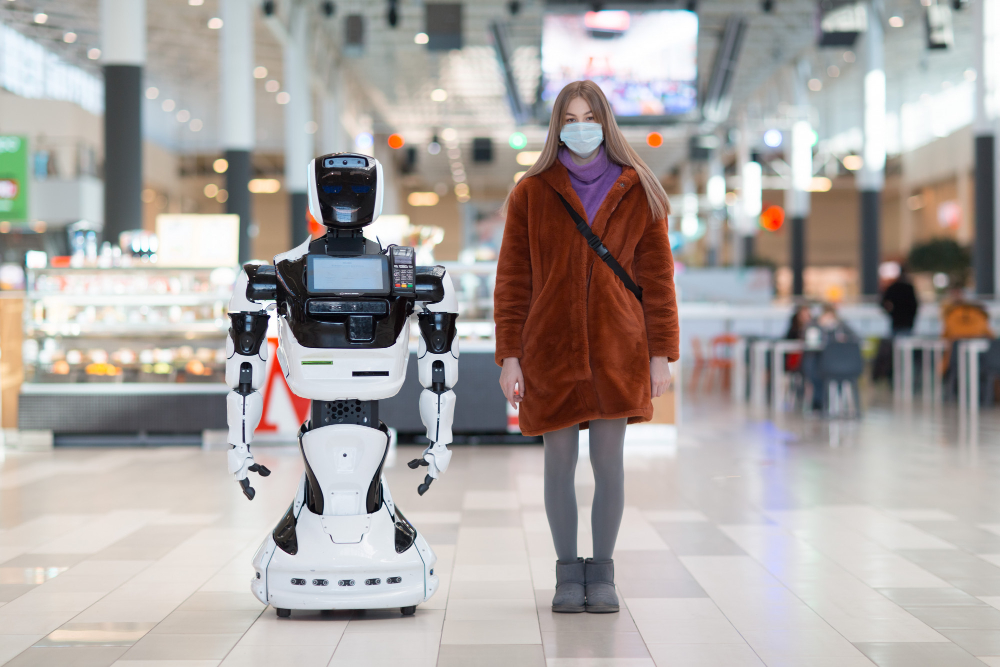
Robots in real life in China are no longer experimental or confined to laboratories. They are already embedded in factories, hospitals, hotels, logistics networks, and increasingly, in homes. Over the past decade, China has become both the world’s largest producer and user of robots, turning automation into a visible, everyday presence rather than a background industrial process.
Government plans, such as “Made in China 2025,” and heavy R&D investment have spurred the growth of thousands of robotics firms. By the end of 2024, China’s industrial robot fleet topped 2 million units – more than any other country – and Chinese plants doubled their robot count in three years.
Robots now build cars, phones, and appliances; deliver packages and meals; and even care for the old and infirm. The following examples show how robots are already woven into daily life in China.
Industrial Automation and Smart Manufacturing
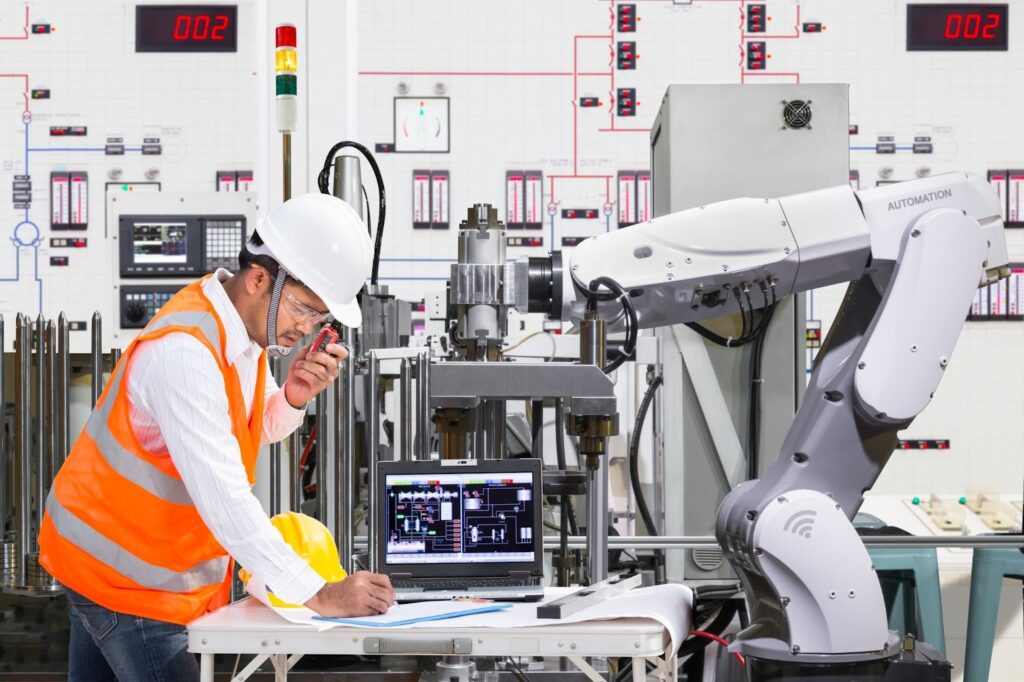
China’s factories are filled with robots. In production lines, robotic arms and automated guided vehicles (AGVs) work “day and night” on assembly and logistics. China has been the world’s largest market for industrial robots for over a decade.
According to the International Federation of Robotics, China’s operational stock of industrial robots exceeded 2 million units in 2024 – roughly half of all industrial robots in the world. That rapid growth (doubling from 1 million in 2021) means that cars, smartphones, and appliances sold globally are primarily manufactured by robots made in China.
For example, auto factories in Shanghai and Guangzhou now use thousands of robotic arms for welding and painting, increasing precision and speed. Smartphone maker Foxconn (Hon Hai) has deployed tens of thousands of collaborative robots (“cobots”) to stack and test phones. These machines can detect defects and operate continuously, thereby improving quality.
From Fixed Machines to Humanoid Workers
China is now moving beyond fixed robotic arms and AGVs toward general-purpose humanoid robots inside factories.
In 2025, Shenzhen-based UBTECH began mass production of its Walker S2 humanoid robot, a full-size biped designed specifically for industrial environments. Unlike traditional industrial robots, Walker S2 can move through human-designed spaces, perform repetitive factory tasks, and autonomously swap its own batteries — allowing for near-continuous operation without human intervention.
This marks an important shift: from single-purpose automation to flexible, humanoid labor that can adapt to different factory roles as production needs change.
One China Daily report notes products made by robots “symbolize quality and high standard” – even a hospital bed’s manual proudly notes “welded by robots”. This industrial automation underpins everyday life: whether you drive a car or hold a smartphone, robots play a key role in making it possible.
Service Robots in Public‑Facing Roles

Retail, Restaurants & Hospitality
In cities like Beijing, Shanghai, and Shenzhen, service robots aren’t just a novelty — they’re part of the daily customer experience. In the first half of 2025, production of service robots in China increased by 25.5% year-over-year, reflecting a significant shift from prototype to widespread deployment.
Major hotels, banks, and shopping centers across China now use robotic attendants and guides. In high-tech hotels, autonomous delivery robots navigate hallways and elevators independently to deliver meals or amenities to guests. Social media is full of clips showing foreign tourists surprised — and delighted — to open their doors and be greeted by a 1-meter-tall robot holding a dinner plate.
These robots can deliver dozens of orders a day, stopping only when their sensors detect someone nearby. In fact, nearly all three-star and higher hotels in China now deploy such robots. Guests expect them — and hotels that don’t use them may appear outdated.
Hotel lobbies feature humanoid concierge robots that assist guests with check-in and voice-controlled kiosks that provide answers to tourist questions. In some Chinese “smart hotels,” touches like automated curtains, wireless charging stations, and voice-controlled lights make the stay feel futuristic.
In restaurants and retail, robots are equally visible. China’s top hotpot chain, Haidilao, uses robots to ferry dishes to tables. Some upscale bars feature robotic arms that mix cocktails. And the automation goes kitchen-deep — in Beijing, authorities recently approved a fully automated robotic chef that makes pancakes and steam buns. Now, metro stations have “robot-made pancake” stalls where commuters grab a snack without any human staff.
Shopping malls feature robot tour guides and playful bots designed for children. In a Shanghai aquarium, a 4.7-meter robotic whale shark swims alongside real fish to teach visitors about marine life. These experiences blend tech, education, and entertainment in ways that stick with people.
Urban & Public‑Space Deployments
Beyond stores and hotels, robots are increasingly part of the cityscape.
Banks greet customers with robotic receptionists that help direct foot traffic and answer basic queries. Parks in cities like Hangzhou and Shenzhen have robot units patrolling paths on electric scooters, offering reminders about safety rules and assisting lost visitors.
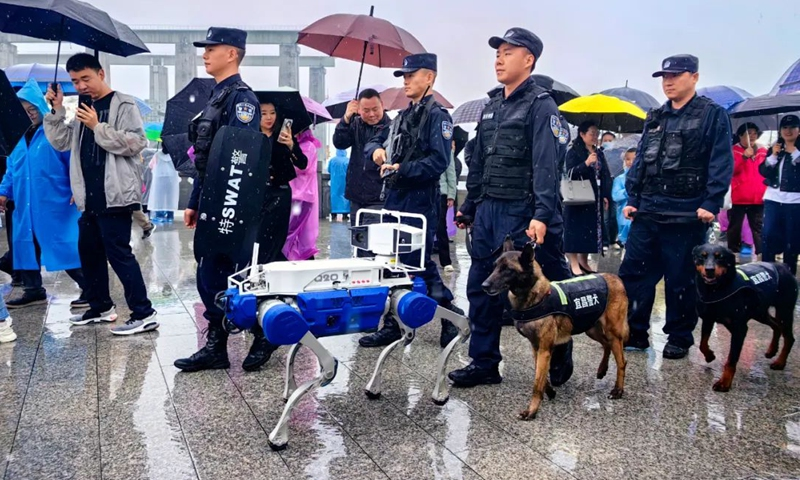
Image courtesy: Global Times. Hubei Province’s first robot police dog
Perhaps most futuristic: robot dogs — four-legged machines equipped with LiDAR — now help with security patrols in shopping districts and university campuses. These agile bots can climb stairs, step over flowerbeds, and operate in tight or uneven spaces where human guards might struggle. In one Shenzhen neighborhood, a robotic patrol dog reportedly shaved four hours off the nightly patrol shift.
Next-Generation Humanoids Enter Public Spaces
While delivery and guidance robots dominate today’s service environments, a new class of humanoid robots is emerging in China. In 2025, XPENG unveiled its humanoid robot “IRON,” designed for natural human interaction in public venues such as exhibitions, retail spaces, and corporate campuses. Unlike earlier service robots, IRON emphasizes lifelike movement and social presence rather than single-task execution.
Meanwhile, Unitree Robotics’ G1 humanoid — known for its agility and cost efficiency — is increasingly used in demonstrations, research labs, and semi-public environments. Its ability to walk, balance, and manipulate objects reflects how service robots are evolving from novelty displays into adaptable assistants capable of operating in crowded, unpredictable spaces.
Even appliance manufacturers are experimenting with radical designs. Midea’s six-armed humanoid robot, unveiled in 2025, highlights China’s willingness to rethink robot form factors entirely, optimizing for multitasking in service and industrial contexts.
Why This Matters
- Scale and Speed: China’s domestic robot ecosystem enables companies to rapidly prototype, produce, and deploy new models tailored to real-world needs.
- Consumer Expectation: In places like hotels and restaurants, robots are no longer optional — they’re part of the experience. This consumer expectation accelerates adoption.
- Public Familiarity: The more people see and use robots in daily life, the faster they’re normalized. China’s high urban density helps make this happen at scale.
- Function Meets Fun: Robots in China aren’t just functional — many are designed with entertainment and branding in mind, which enhances customer engagement and retention.
Robotics in Elder‑care & Personal Use
China is aging — people aged 60 and above numbered approximately 310 million, accounting for about 22% of the population. Faced with this shift and a shortage of caregivers (reports indicate a gap of roughly 5.5 million nursing workers in 2024), the government has made elder care robotics a priority.
For example, the joint guidelines issued by the Ministry of Industry and Information Technology and the Ministry of Civil Affairs call for pilot programs in homes, communities, and institutions that deploy hundreds of robotic systems. That policy momentum creates fertile ground for home-use and care robots to transition from experiments to everyday use in China.
Elder‑care Robot Examples
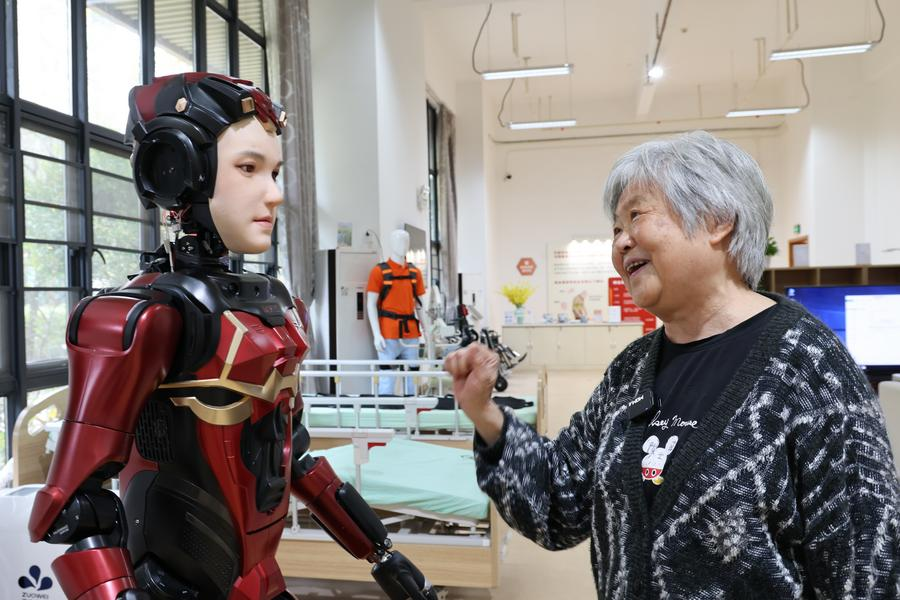
Image courtesy: XINHUANET. “Xia Lan,” a humanoid robot, at Shenzhen Nursing Home
China’s official media highlights the silver economy boom: the eldercare robot market was about ¥30 billion in 2024 and is projected to reach ¥50 billion in 2025 (over 30% annual growth). Policymakers even co-led the development of international standards for eldercare robots in 2025, marking China’s leadership in the field.
On the ground, “companion” robots are already in many nursing homes. These robots have friendly faces and voices to chat with lonely seniors, play music and games, and remind them to take medicine. Some have high-definition screens and AI that detects speech and mood; others use wheels to move around and deliver small items (water, snacks) to residents.
Data shows over 300 million Chinese are over 60 (22% of the population), and experts believe even modest adoption of these robots can significantly reduce family burdens.
Here are some of the concrete ways robots are entering Chinese homes and care settings:
- In a nursing home in Shenzhen, a humanoid robot named “Xia Lan” interacts with seniors — playing chess, chatting, and even offering AI‑assisted moxibustion therapy.
- Companies are rolling out mobile “care robots”: wheeled bases that navigate homes or care facilities, deliver items, sweep floors, assist mobility, and monitor health.
- At the World Smart Industry Expo 2025 (Chongqing), domestic smart‑robot products for households were prominently featured: from massage robots that detect muscle tension to robot lawn‑mowers to electronic pet companions.
- Wearable devices and ceiling “radar” lights are used to detect emergencies, such as bathroom slips. Smart intercom panels have replaced old call bells, making communication easier. These systems keep seniors safe and let them stay more independent.
- Pilot programs require participating organizations to deploy at least 200 robotic systems in households or at least 20 units in 20 care institutions by 2027.
Why this matters (and what’s unique in China)
- Massive scale + urgency: With hundreds of millions in the 60+ group and tens of millions of caregivers missing, China’s scale creates a demanding yet high‑reward context for care robotics.
- Policy & standards push: China led the development of the first international standard for elder-care robots (via the International Electrotechnical Commission) in March 2025. That means some of these robots are developed in China, not just for China, but also for global benchmarks.
- From lab to life: While many countries still test robots in care labs, Chinese sites are already moving into homes and communities. The transition from “industrial robot” to “domestic/care robot” is being accelerated here.
- Ecosystem advantage: Chinese robot makers benefit from cost advantages, local supply chains, domestic mass‑market pressure, and government subsidies in ways that many Western firms do not. For example, some local governments offer subsidies of up to 50,000 yuan per unit for elder-care robots.
What this means for 2025‑26 and beyond
- Expect rapid growth: The care‑robot market in China is projected to hit tens of billions of yuan in the coming years.
- Home robots will increasingly blur with care robots: domestic “assistants” will integrate with elder-care functions (such as mobility assistance and monitoring), and smart homes will leverage robots as part of their ecosystem.
- Care robots will shift from “functional substitution” to “quality of life enhancement” – meaning robots will also be designed for experience (companionship, social interaction), not just task‑completion.
- The line between public institutional care and home-based care will shift, with a greater emphasis on community and home deployments (pilot programs are already moving in this direction) rather than care homes alone.
Robots in Homes: Cleaning and Domestic Assistance
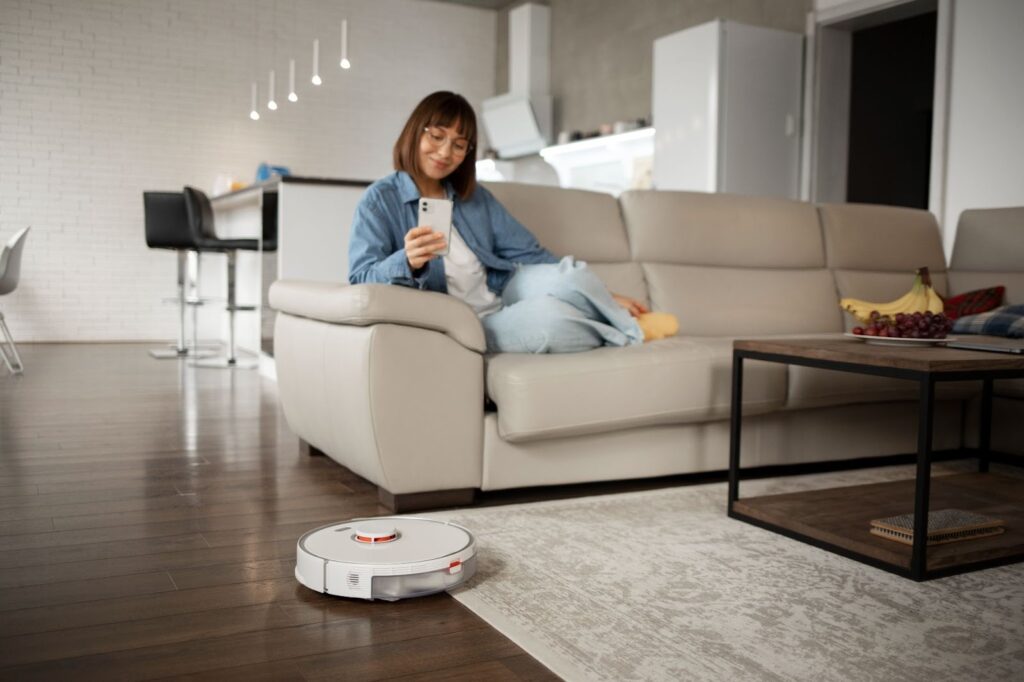
Robots are increasingly common in Chinese households, especially for cleaning. Robot vacuums and floor cleaners are the most widely adopted, with Chinese brands such as Roborock and Ecovacs leading the global market. These devices map homes, avoid obstacles, and operate on scheduled routines, reducing daily manual work.
Chinese companies now hold the top four global positions in the robot vacuum market, and roughly 15% of U.S. households already use robotic cleaners. What began as a convenience product has become a standard household appliance category.
Beyond Cleaning
Domestic robotics in China is moving beyond floor care. At technology exhibitions, companies have demonstrated robotic arms capable of sorting laundry and folding clothes — tasks that require object recognition and fine motor control.
X Square Robot, backed by Alibaba, has shown a two-arm system that can learn to fold unfamiliar garments from a single human demonstration. These systems remain in laboratories and pilot environments but demonstrate progress in embodied AI for household tasks.
Toward General-Purpose Home Robots
Several Chinese startups are developing general-purpose humanoid robots for future home use. In 2025, Shenzhen-based EngineAI introduced humanoid models such as SE01 and PM01, capable of walking, grasping objects, and navigating indoor spaces. These robots are not consumer-ready but reflect long-term development toward flexible domestic assistance.
Large appliance makers are also exploring this space. Haier has unveiled a prototype humanoid cleaning robot capable of basic household tasks, though it currently relies on remote control.
Fully autonomous humanoid home assistants are not yet commercially available. However, rapid hardware iteration, falling component costs, and China’s large domestic market suggest broader home adoption could emerge later in the decade.
Urban Infrastructure, Logistics & City‑wide Automation
Smart Logistics, Warehouses & Last-Mile Delivery
Robotics is deeply embedded in the infrastructure that keeps Chinese cities running, especially in logistics, where China has built some of the most efficient delivery systems in the world.
E-commerce giants like Alibaba and JD.com are leading the charge in unmanned delivery:
- Cainiao, Alibaba’s logistics arm, deployed hundreds of level-4 autonomous delivery vans in 2024. These vehicles — capable of operating with no safety driver — now handle 30–80 loads a day, delivering between logistics hubs and residential zones.
- Cainiao’s autonomous fleet has logged over 5 million km and completed over 40 million parcel deliveries. The company forecasts that 200,000 driverless delivery trucks will be in use nationwide within the next three to five years.
- JD Logistics operates over 600 autonomous delivery vehicles across more than 30 cities, including both commercial and residential zones. These bots can navigate elevators, crosswalks, and even interact with innovative access systems.
- Drones also shrink delivery times — especially in hard-to-reach rural areas. JD and Dada Group operate AI-powered drones that fly along fixed routes to remote villages, autonomously taking off, navigating, and dropping off packages like groceries or medical supplies. These drones cut delivery times from hours to minutes in many isolated communities.
Inside the warehouse, robotics dominates:
- Robotic arms pick, sort, and pack at a massive scale across Chinese distribution centers.
- In on-demand grocery services, Dada Group and Sam’s Club use fleets of sidewalk robots — about the size of a mini fridge — to deliver goods directly to doorsteps in residential areas.
- In one urban pilot, dozens of six-wheeled delivery robots buzzed around apartment complexes, each carrying grocery bags unlocked by customers who scanned a QR code. This micro-logistics layer reduces labor cost and supports high-speed fulfillment during peak demand.
The bottom line? For city dwellers in China, ordering fresh fruit or a phone charger online often means a robot — not a person — did most of the work. These systems are so efficient and affordable that human labor is mainly absent from the final mile of delivery in many urban settings.
Public-Space Robots & Urban Management
Robots are also entering more civic and public functions.
- In Shanghai, a humanoid traffic robot named “Xiao Hu” directs pedestrians at busy intersections, using vocal cues and hand signals.
- At the 138th Canton Fair, robotic dogs were showcased for patrols — navigating grass, sand, and gravel with ease — aimed at infrastructure inspection and night-time security in public zones.
- Across cities, robot dogs equipped with LiDAR now patrol shopping centers and school campuses, reducing human workload and extending coverage into hard-to-monitor areas.
These robots don’t just work — they represent a shift in how cities are managed, blending AI, physical mobility, and real-time data into visible urban systems.
Looking Toward 2026 and Beyond
- Expect robotic systems to operate as fleets, not as individuals, across logistics, cleaning, inspection, and emergency services.
- Integration with city data platforms and apps will blur lines between robots and everyday digital services — making them part of how people navigate and live in cities.
- Business models will mature, shifting toward robots-as-a-service for urban operators, residential communities, and retailers.
- Ethical and regulatory frameworks will need to evolve: Who’s liable when a robot malfunctions? How do you audit a city’s automated patrol force?
Agriculture, Environment, and the Outdoors
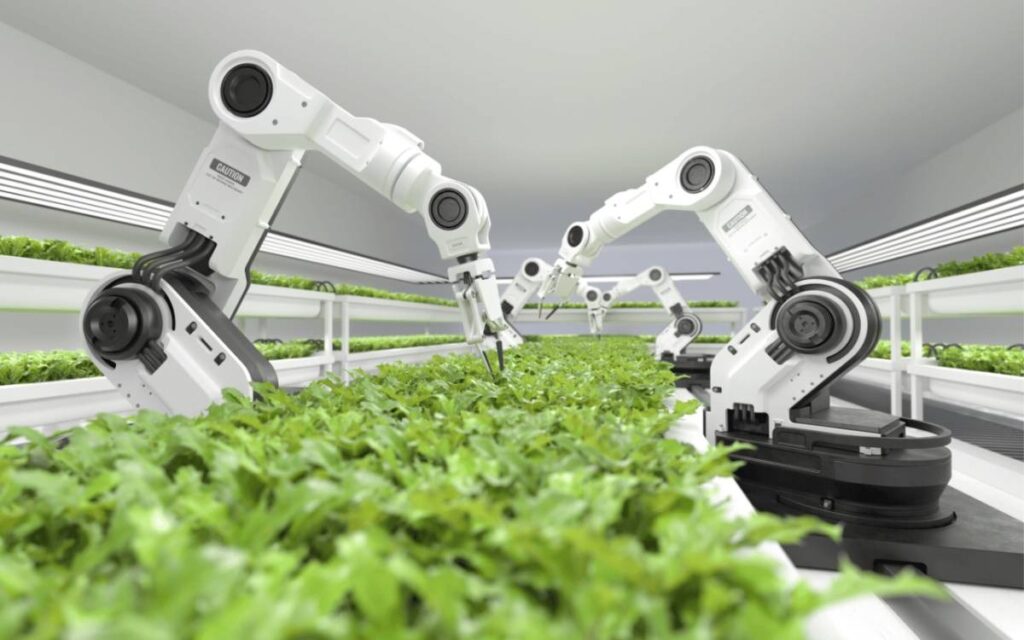
Even outside cities, robots are complex at work. In fields and farms across China, drones and machines are performing tasks that were once done by hand. Agricultural drones spray pesticides and fertilizers precisely over rice paddies and orchards, reducing chemical use and labor.
Harvesting robots also exist; for example, Shenzhen’s PaXini has built a vision-guided robotic hand that can pick strawberries by sensing each berry’s texture and ripeness. Similarly, harvesters for tea leaves, apples, and even cherries have been trialed, helping farmers meet labor shortages.
On roads and in public areas, other robots appear. Autonomous electric buses are being tested on fixed routes in some cities, with no driver on board. Self-driving street sweepers clean sidewalks efficiently. In parks, robots patrol after hours for security or even spray mulch on planting beds.
These environmental robots demonstrate China’s push to utilize automation even in remote landscapes – one report from Guizhou province described exploring a “real-life Sky City” using drone mapping and robot patrols in mountainous areas.
Education, Research, and Novelty
Robots in classrooms and labs are an emerging trend. Some schools in China are experimenting with AI teaching assistants— for example, robot tutors that can quiz students or demonstrate science experiments. Educational robot competitions (like the World Robot Olympiad) are popular, encouraging kids to learn coding and engineering by building simple robots.
At universities, humanoid robots are used as demo partners for engineering students. While not yet standard, these steps indicate a growing robotics curriculum – China’s Ministry of Education has even urged schools to teach AI literacy.
For entertainment, robots show off China’s tech pride. The 2025 World Robot Conference in Beijing featured boxing robots, tennis-coaching robots, and robot fashion shows. Visitors saw robotic arms making tea samples and AI avatars performing traditional arts.
At tourist sites, robot performers (like dancing panda mascots) entertain crowds. One striking example: a robot lion antelope was released in a nature reserve to observe wildlife without disturbing real animals. These novelty uses also serve a practical purpose by raising public awareness of robotics and testing the technology’s robustness in everyday settings.
Robots in Real Life in China: What This Means for 2026–2030
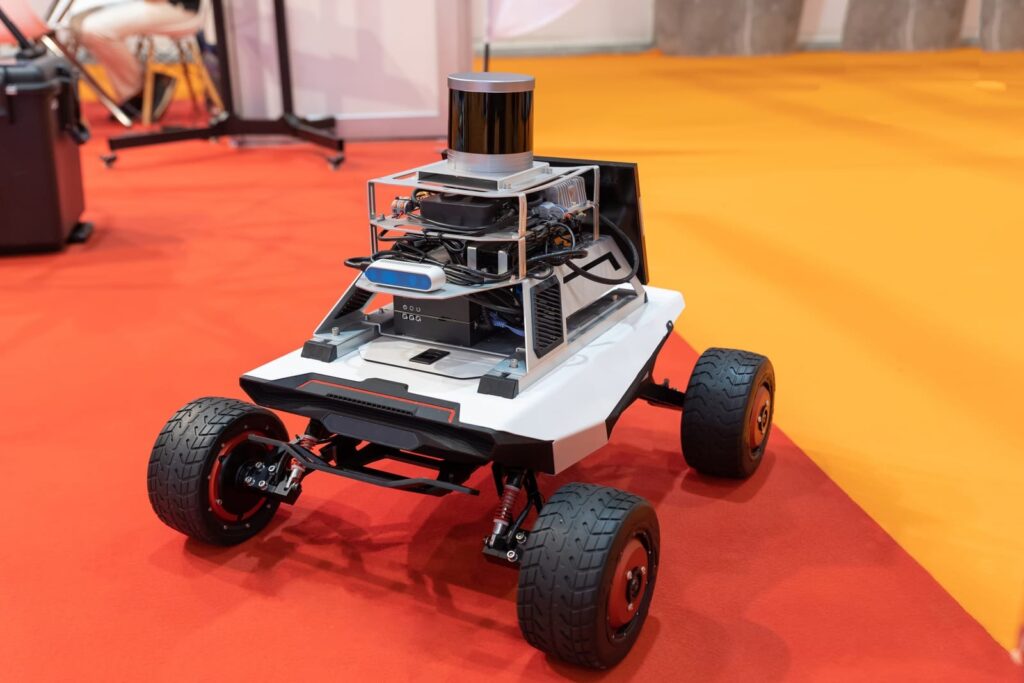
Construction and industrial drones at the technology exhibition
The emergence of industrial humanoids like UBTECH’s Walker S2, public-facing robots such as XPENG’s IRON, and general-purpose platforms from companies like Unitree and EngineAI shows how China’s robotics ecosystem is converging. These systems are no longer confined to demos or labs — they are being manufactured, delivered, and tested in real environments, from factories to public venues and pilot homes.
Economic and Strategic Impact
China’s robotics industry is rapidly scaling into a pillar of national strategy. The market is projected to surpass US$100 billion by 2028, doubling from 2024 levels. This surge reflects more than demand—it’s the result of full-stack integration across AI, hardware, logistics, and public services.
Chinese firms are not just producing robots; they’re building interconnected systems in which delivery vans, carebots, patrol units, and service bots work together across industries and cities. This gives them a clear edge in both cost and deployment speed.
Social Shifts and Workforce Pressure
As robots enter everyday environments—such as homes, hospitals, parks, and hotels—they’re shifting how people work and live. There are obvious benefits: fewer physical demands on workers, faster services, and improved access for rural or aging communities. But the trade-off is real.
Studies show that routine jobs are already declining in heavily automated sectors, and mental stress is rising among displaced workers. Without strong retraining efforts, the social divide could widen.
Policy, Ethics and Public Trust
China is advancing rapidly in robotics, but regulatory frameworks are still catching up. Drafts of ethical AI guidelines are in place, yet key questions remain—who’s responsible when a robot fails? How is personal data managed? As robots move deeper into homes and public life, building trust through clear, enforceable rules will be critical.
Everyday Life and Global Influence
By 2030, for many Chinese citizens, robots will be an integral part of their daily lives—delivering packages, patrolling neighborhoods, and assisting their elderly relatives.
For businesses, robot integration will become a cost-saving necessity, rather than just a technological gimmick. And globally, China’s model offers a real-time preview of how robotic ecosystems might function at the national scale.
Work With Ashley Dudarenok to Understand China’s Robot-Driven Future
China’s robotics boom is transforming how people live, work, and interact — from elder-care robots and driverless logistics fleets to service bots that are shaping hospitality and retail. To navigate these shifts, leaders need context, foresight, and credible interpretation — not headlines.
Ashley Dudarenok has spent over 15 years studying and working within China’s tech ecosystem, helping global companies interpret emerging trends and apply them strategically. Ashley is also a three-time bestselling author and founder of two companies — ChoZan and Alarice — which specialize in China insights, digital marketing, and executive learning.
She helps executives and global organizations decode these human-tech transitions in China. Through her keynotes, corporate workshops, and executive learning programs, she explains:
- How AI-robotics integration is redefining retail, logistics, and urban life in China.
- What the policy, consumer, and ecosystem drivers behind “Made in China 2025” mean for your sector.
- How brands and governments can adapt to the expectations of an increasingly automated society — where convenience, trust, and data ethics matter as much as hardware.
Her sessions combine data, case studies, and real-world examples from China’s frontlines of robotics, AI, and digital transformation — helping you turn rapid change into practical strategy.
Book a consultation with Ashley Dudarenok to explore how China’s robot revolution will reshape your industry and what your team can learn from it.
FAQs: Robots in Everyday Life in China
-
How are Chinese families adjusting to living with robots at home?
Families in China generally see robots as convenient assistants rather than novelties. Parents rely on them for cleaning, education, or monitoring of the elderly. Many households personalize robots with names or voice commands, making them an integral part of their daily routines. For most, the adjustment isn’t about technology—it’s about trust, reliability, and whether these machines truly make life easier.
-
How do schools in China use robots to improve learning?
Robots are now tools for hands-on education. Elementary and middle schools use AI teaching assistants for math and science practice. Robotics kits enable students to build and code machines, bridging the gap between theory and practical experience.
Universities also integrate humanoid robots into engineering labs. This early exposure helps students understand automation, teamwork, and design thinking well before they enter the workforce. -
What role do Chinese women play in the country’s robotics industry?
Women are assuming visible leadership roles in China’s rapidly growing robotics sector. Many head AI startups focused on service design, healthcare robotics, and emotional AI. Universities report a rise in female enrollment in automation programs. Their influence is shaping a design culture that prioritizes empathy, safety, and human interaction alongside technical efficiency.
-
Are small businesses in China using robots differently from large corporations?
Yes. Large firms deploy fleets for logistics and manufacturing, but small businesses favor single-function robots. Cafés use robotic baristas, while beauty salons adopt robots for customer greeting or product delivery. Leasing options make robots affordable for local owners. This approach demonstrates how automation isn’t just a corporate privilege—it’s becoming a ubiquitous part of everyday commerce.
-
How is China addressing privacy concerns with public-space robots?
Chinese regulators now require data transparency for robots that record images or audio. Many cities have issued guidelines that mandate local data storage and require visible indicators when sensors are active. Developers also utilize edge computing to ensure sensitive footage remains on the device. These safeguards help strike a balance between innovation and growing public concern about surveillance.
-
How are robots changing healthcare training in China?
Medical schools and hospitals are training nurses and doctors to work in coordination with robotic systems. Students learn to operate medication-delivery robots, interpret AI-driven patient alerts, and supervise automated disinfection units. The goal isn’t to replace caregivers, but to let them focus on complex treatments and patient interactions while machines handle repetitive or hazardous tasks.
-
Are rural communities in China embracing robotics?
Adoption in rural China is a practical, not a trendy, choice. Farmers use drones for crop monitoring and robots for precision fertilization. Cooperative programs train villagers to operate and maintain these machines. While skepticism exists among older generations, the tangible labor savings and improved yields are convincing many rural communities to accept automation as a helpful tool.
-
How are Chinese artists using robots creatively?
Artists are experimenting with robots in various artistic forms, including painting, dance, and performance. Robotic arms create calligraphy, while humanoid dancers perform synchronized routines in exhibitions. These collaborations explore the boundary between craftsmanship and algorithmic control. Many view it as a reflection of China’s evolving relationship with technology, where robots can serve as cultural partners, not just mechanical workers.
-
What challenges do Chinese robot companies face when selling overseas?
Global expansion brings compliance challenges. Robots must meet EU and U.S. safety standards and comply with stricter privacy laws. Some Western markets remain cautious about Chinese data security. To overcome this, Chinese firms are now establishing regional offices, providing multilingual interfaces, and pursuing international partnerships to build credibility and local trust.
-
How do Chinese citizens feel about robots replacing specific jobs?
Public opinion is mixed. Many appreciate shorter work hours and improved safety conditions in factories, but others fear job loss. The government funds retraining in AI maintenance, coding, and robotics operations. Workers who adapt often transition into supervisory or repair roles, demonstrating that automation can reshape rather than eliminate employment opportunities.