
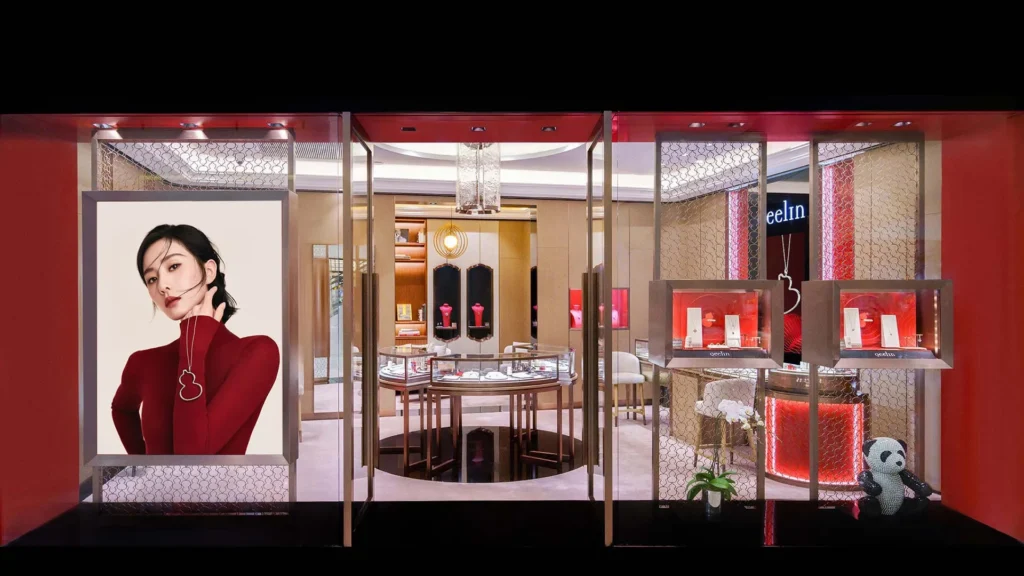
In a luxury market where heritage European houses have long defined the rules of fine jewelry, a brand founded in Hong Kong two decades ago is rewriting the playbook. Qeelin has emerged as one of the most strategically instructive cases in contemporary luxury branding, not because it mimics the Western playbook, but because it refuses to.
Under the umbrella of French luxury group Kering, Qeelin has built a position that global luxury leaders now study with genuine interest. The brand offers something increasingly rare in a homogenized industry: a distinct cultural point of view that travels.
The year 2025 marked a turning point. While Kering reported group revenue of €3.9 billion in the first quarter of 2025, down 14 percent, its jewelry houses, including Qeelin, posted double-digit revenue growth. This performance came against a backdrop of broader industry headwinds, making Qeelin a bright spot within the group.
In March 2026, Kering formalized its commitment to the category by creating a dedicated Kering Jewelry division, integrating Boucheron, Pomellato, Dodo, and Qeelin under a unified platform. The message from Place Vendôme to Shanghai is clear: Qeelin is no longer a niche experiment. It is a strategic asset.
The Cultural Foundation: More Than Ornament
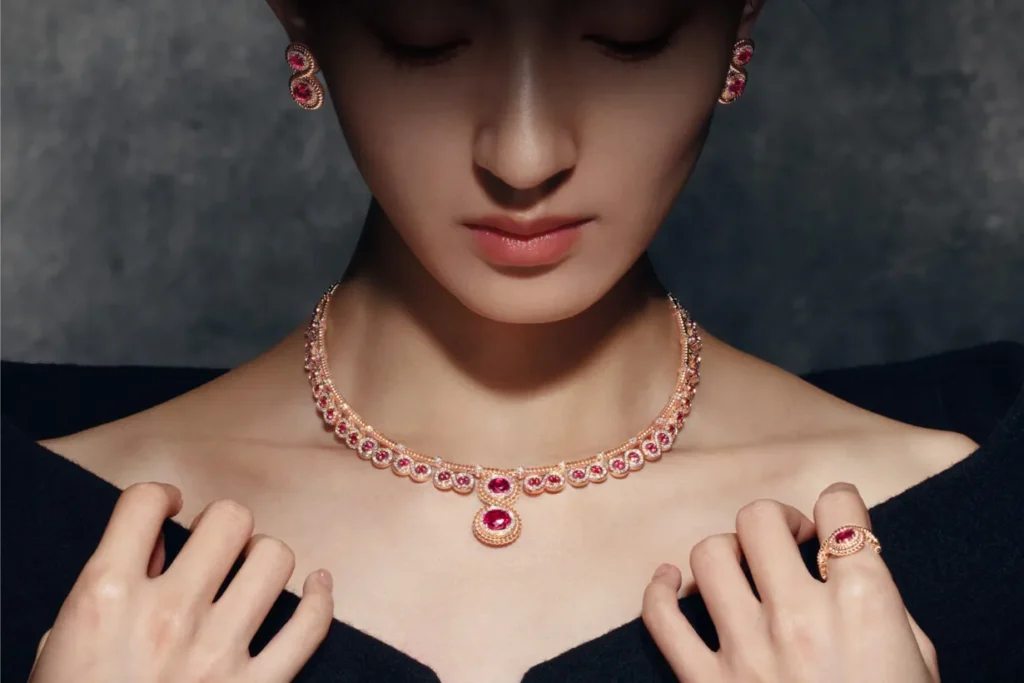
Qeelin was founded in 2004 by Dennis Chan. According to Kering, the brand’s story began with Chan’s encounter with ancient jewelry imagery in the Mogao Caves of Dunhuang, which shaped his approach to Chinese heritage design.
That origin matters because Qeelin built its identity around Chinese symbolism from the start. The brand takes its name from the Qilin, an auspicious mythical creature associated with love and good fortune. Its most recognizable design, the Qeelin Wulu collection, draws on the gourd, a traditional Chinese symbol associated with luck and positive energy.
The Wulu works because it is simple, recognizable, and culturally specific. It gives Qeelin a design code that can carry over across necklaces, bracelets, rings, earrings, and high jewelry without losing its meaning. This is where the brand’s competitive strength begins: Chinese heritage is not added as decoration. It shapes the product itself.
From Cultural Code To Commercial Positioning
Qeelin’s cultural foundation has become a clear market advantage. The brand sits between European fine jewelry tradition and modern Chinese design language, giving it a distinct role inside the global luxury market.
Kering’s ownership strengthens that position. Qeelin is part of Kering’s jewelry portfolio, alongside Boucheron, Pomellato, and DoDo. Kering also states that Qeelin became the first Chinese jewelry house to open a boutique on Place Vendôme in Paris, placing the brand inside one of fine jewelry’s most prestigious retail addresses.
Its Asian retail presence supports the same message. K11 MUSEA describes Qeelin as a brand that reinterprets traditional symbols for everyday wear, while The Exchange TRX lists the brand’s Kuala Lumpur boutique under the same Chinese heritage positioning.
For global luxury leaders, the lesson is clear. A strong cultural code can become a scalable jewelry strategy when it is simple enough to recognize, meaningful enough to gift, and flexible enough to support multiple product tiers.
The Qeelin Wulu Lesson: Build One Icon With Many Commercial Lives
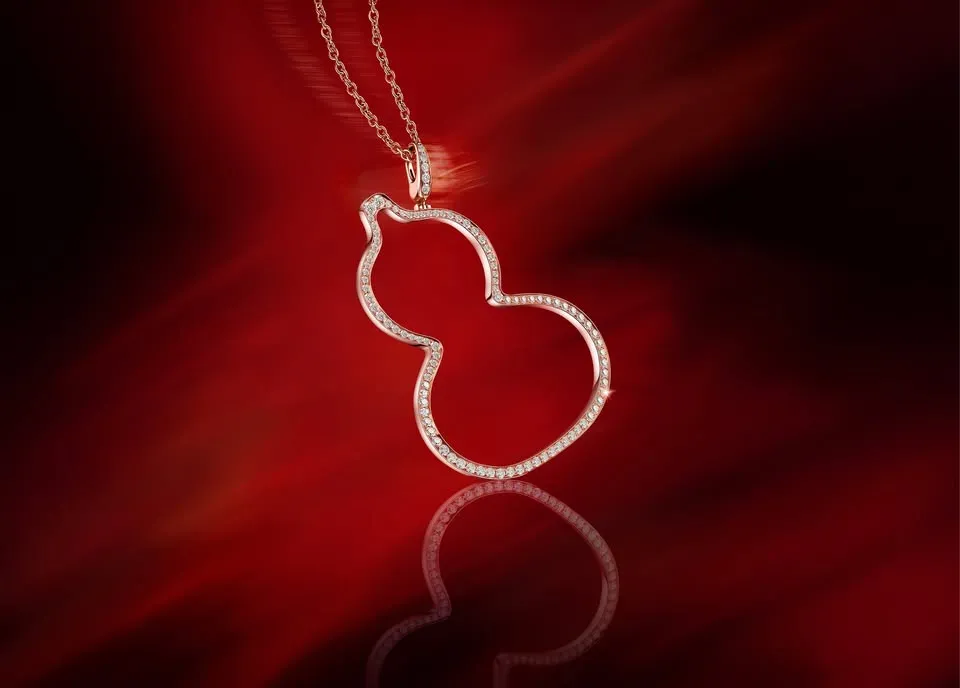
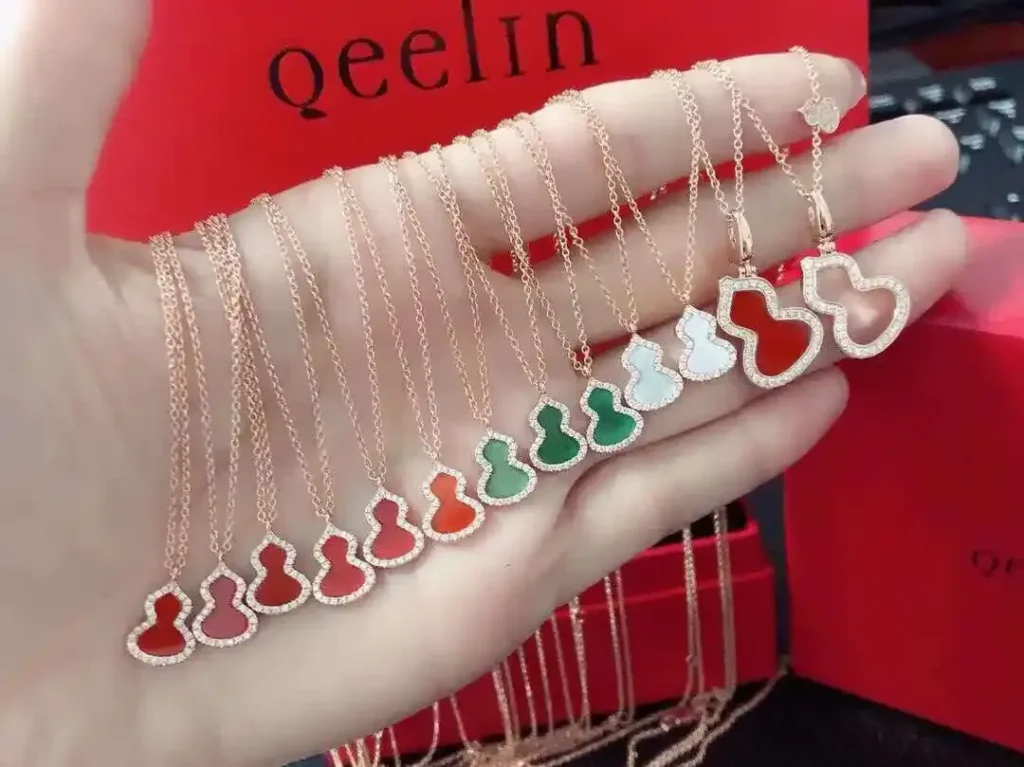
The Wulu is Qeelin’s clearest brand code. Qeelin describes Wulu as its most celebrated design, drawn from a traditional Chinese emblem and linked to luck, love, and everyday wear.
Wulu Mini Solitaire series, expanding the iconic silhouette into necklaces, hoop earrings, and knotted bracelets designed for everyday wear. Each piece features two diamonds set within the gourd form, a design choice that balances symbolic resonance with contemporary versatility
The Wulu Eternity collection represented a more ambitious design statement. The long necklace introduced a volumetric approach to the gourd form, moving beyond flat profiles into three-dimensional presence.
The collection paired brilliant-cut diamonds with Qeelin’s proprietary Qeelin Red HyCeram, a scratch-resistant ceramic material with lacquer-like depth. The band ring in the collection closed completely, a deliberate departure from the brand’s historical preference for open-band designs.
The 2025 Miracle Garden fine jewelry collection further demonstrated the brand’s creative range. The Wulu Fairy collection drew from Dunhuang mural dancers, translating flowing silhouettes into yellow diamond centerpieces. The Wulu Shanshui collection used openwork techniques to depict pine trees, goldfish, and magpies in layered gemstone tableaus.
The Bamboo collection paired the brand’s iconic panda motif with bamboo forms, using pavé techniques to integrate diamonds within articulated segments. The Qin Qin goldfish collection featured articulated tails inspired by Chinese paper cutting
Beyond Wulu: Qeelin Bobo, Qeelin Panda, and Qeelin Yuyi
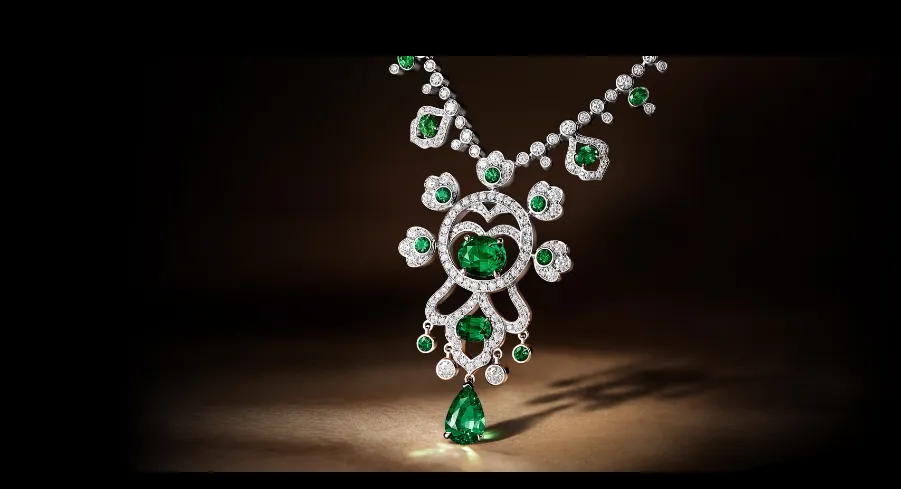
A single icon gives focus. A broader symbolic universe gives longevity. Kering describes Qeelin pieces as carrying rich cultural connotations, from Bo Bo, a precious articulated panda, to Yu Yi, a symbol of protection. The official collection structure also includes Wulu, Yu Yi, Bo Bo, and Xi Xi across necklaces, pendants, rings, earrings, bracelets, bangles, and bridal categories.
For brand builders, Qeelin Bobo and Qeelin Panda matter because they bring playful luxury into fine jewelry without weakening premium cues. The panda is instantly readable, but craftsmanship keeps it from becoming a souvenir.
Qeelin Yuyi adds another layer because protection is an emotional driver of purchase across gifting, family milestones, and self-reward. This is where Oriental symbolism becomes a product system rather than a seasonal decoration.
Qeelin China Strategy: Cultural Codes With Retail And Experience Power
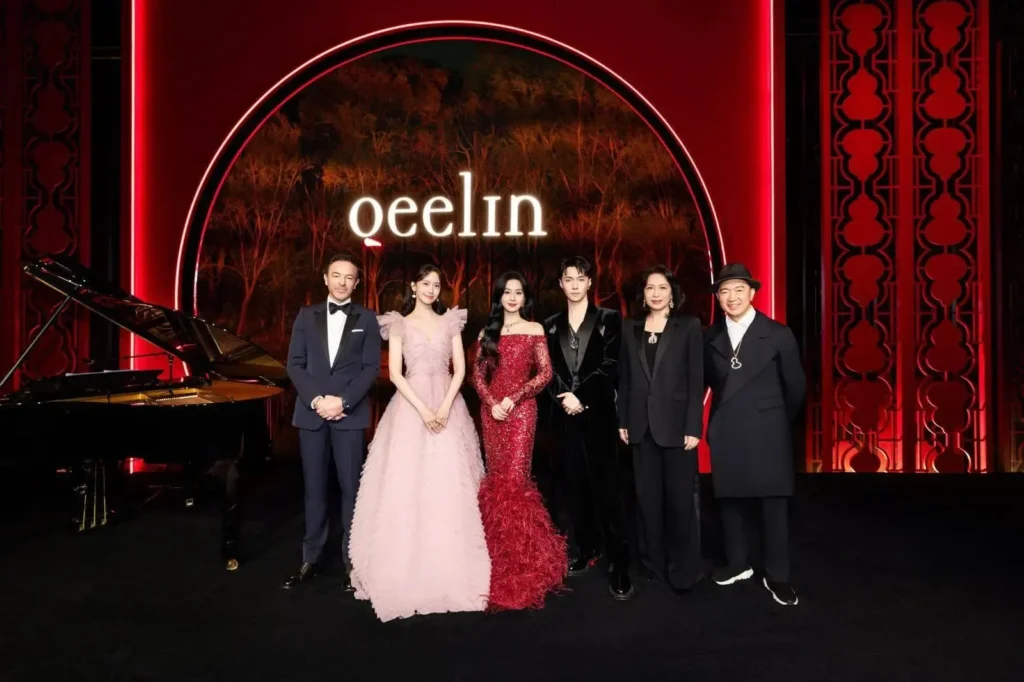
The next lesson is experience. In May 2026, Jing Daily reported on Qeelin’s private fine-jewelry exhibition in Beijing and its work with Dong culture, situating the brand’s cultural storytelling within an immersive luxury setting. This matters because Chinese premium consumers have matured. They expect brands to show knowledge, respect, and taste when using Chinese heritage design.
For Qeelin China, the commercial advantage is precision. The brand does not need to explain China through generic red-and-gold cues. It can work with Chinese symbolism, jade, gold, diamonds, micro craftsmanship, and contemporary silhouettes. That gives Qeelin Jewelry a language that feels recognizably Chinese and still suitable for Paris, Tokyo, Seoul, or Singapore.
Ambassadors As Cultural Amplifiers
Qeelin has assembled an ambassador roster that reflects its dual appeal to Chinese and international audiences. Global brand ambassadors include actress Liu Shishi, singer Lay Zhang, and Girls’ Generation’s Yoona Lim.
In May 2025, Qeelin announced table tennis champion Wang Chuqin as a brand ambassador. By January 2026, the brand elevated him to global brand ambassador, coinciding with the “Journey of Drum Spirit” Chinese New Year campaign. The campaign connected Wang’s athletic dedication with traditional Chinese drum culture and craftsmanship.
This ambassador strategy reveals something important about Qeelin’s market positioning. Wang Chuqin represents a distinctly Chinese form of excellence. His achievements in table tennis, China’s national sport, carry emotional weight for domestic consumers and the global Chinese diaspora.
The brand’s activation around his appointment included large-screen displays across major Chinese cities and fan-driven social media campaigns that generated over 40 million views on Weibo. The choice of ambassadors reflects a brand that understands cultural credibility cannot be manufactured. It must be embodied.
What Qeelin Teaches Global Luxury Leaders About Fine Jewelry Branding
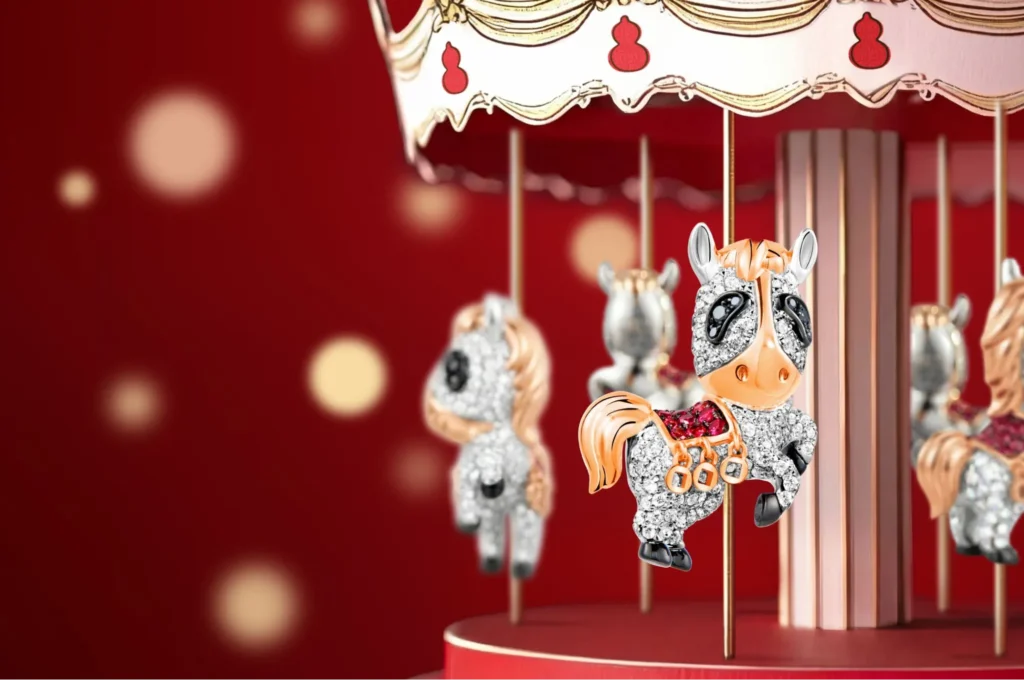
The first lesson is to build an icon before scaling a portfolio. The Wulu provides Qeelin with a memory structure, search demand, and repeatable commercial logic. Many luxury brands create beautiful objects. Fewer create a symbol that consumers can recognize across a red cord bracelet, a diamond pendant, a jade necklace, and a high jewelry exhibition.
The second lesson is to treat culture as design intelligence. Chinese craftsmanship becomes powerful when it shapes form, movement, materials, and storytelling. Cultural references lose value when they are applied as surface motifs. Qeelin shows that Chinese heritage design can be premium, playful, and globally fluent at the same time.
The third lesson is that group ownership works best when it protects differences. The Kering Q&A model gives access to platform strength, manufacturing discipline, and global legitimacy. Yet the brand’s value comes from its Hong Kong origin, Dennis Chan’s creative vision, and Chinese symbolism. For global luxury groups, scale should amplify distinctiveness.
Strategic Takeaway For Executives
Qeelin is a case study in post-Guochao luxury. It moves beyond patriotic consumption and into a more refined stage of Chinese design language. The strongest opportunity goes beyond Chinese consumers’ preference for Chinese brands. Chinese premium consumers increasingly recognize cultural intelligence, material quality, and storytelling discipline.
For marketers, Qeelin shows how to turn a symbol into a full-funnel luxury asset. For investors, it shows why jewelry remains attractive during a selective consumption cycle. For global business leaders, it proves that the next generation of Chinese luxury brands will win through cultural codes that are desirable, ownable, and commercially scalable.
Learn China Luxury Strategy With Ashley Dudarenok
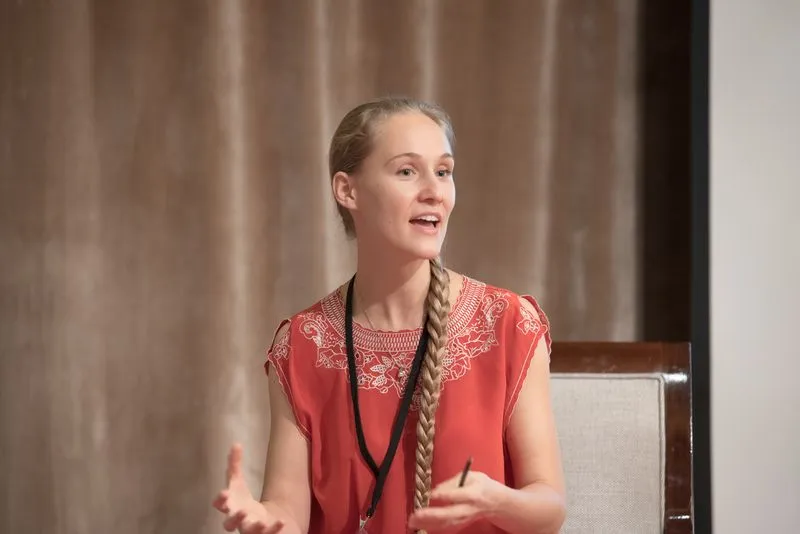
Qeelin demonstrates how Chinese heritage, product symbolism, and fine-jewelry strategy can shape the next stage of global luxury. For leaders who want to understand these shifts in depth, Ashley Dudarenok offers China-focused insight shaped by years of work with global brands, executive teams, and innovation leaders.
For teams studying Qeelin, Chinese luxury brands, or the next stage of premium consumption in China, Ashley offers executive briefings, China learning expeditions, custom research, advisory, workshops, and keynote sessions.
Book a consultation to understand what China’s most innovative brands can teach your leadership team about growth, relevance, and future-ready luxury strategy.
FAQs About Qeelin
1. Is Qeelin owned by Kering?
Yes, Qeelin is part of Kering’s jewelry portfolio. In 2026, Kering grouped Qeelin with Boucheron, Pomellato, and DoDo under Kering Jewelry, a dedicated structure for jewelry growth and coordination.
2. What does the qeelin wulu symbol mean?
The qeelin wulu symbol is derived from the Chinese gourd and is associated with good fortune, positive energy, and protection. Qeelin turns that familiar shape into necklaces, bracelets, pendants, rings, and fine jewelry pieces.
3. How do Qeelin Yuyi and Qeelin Bobo differ from Wulu?
Qeelin Yuyi leans into protection symbolism, while Qeelin Bobo uses the panda for playful luxury. Wulu is more minimal and widely recognized, so buyers choose based on personality, occasion, and symbolic preference.
4. How much does a Qeelin necklace start at in the US?
A Qeelin necklace price varies by collection, metal, stones, and size. Authorized retailer listings show some Wulu necklaces in the low four figures, while jade, diamond, or larger pendant designs can cost much more.
5. Is a Qeelin wulu necklace a good luxury gift?
Yes, a Qeelin Wulu necklace can make a great luxury gift because it combines symbolic meaning with fine jewelry craftsmanship. The Wulu shape carries wishes of luck, love, and positive energy.
6. What affects Qeelin jewelry prices?
Qeelin jewelry prices depend on material, size, stone setting, craftsmanship, collection, and the retail market. Jade, diamonds, gold weight, limited designs, and high jewelry pieces usually sit at higher price points.
7. What is qeelin bobo?
Qeelin Bobo refers to Qeelin’s Bo Bo design, an articulated panda jewelry concept. It reflects the brand’s playful luxury style and shows how Chinese cultural icons can become collectible fine jewelry.
8. Where can shoppers buy Qeelin jewelry online or in boutiques?
You can buy Qeelin jewelry at Qeelin boutiques, through the official store locator, and from authorized luxury jewelers. For high-value pieces, boutique consultation is safer because sizing, stones, delivery, and aftercare can vary by market.
9. How does Qeelin compare with Western fine jewelry brands?
Qeelin competes through Chinese symbolism, playful design, and Kering-backed craftsmanship. Western maisons may lean on European royal, couture, or Place Vendôme heritage, while Qeelin builds desire from Chinese cultural codes.
10. Why is Qeelin relevant for global luxury leaders?
Qeelin shows how a Chinese luxury brand can scale inside a global group while keeping a distinct cultural identity. It offers lessons in icon creation, jewelry storytelling, premium retail, and Chinese consumer insight.