
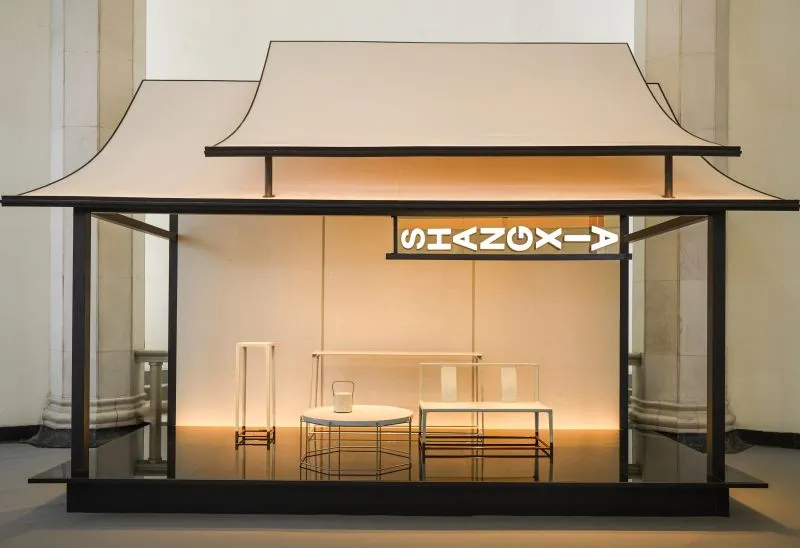
The global luxury industry has spent decades perfecting a formula. European heritage, Italian craftsmanship, French savoir-faire. For any brand outside that lineage, the path to global prestige has meant either mimicking the West or remaining a regional player. Shang Xia broke that pattern.
Founded in 2010 as a collaboration between Hermès and Chinese designer Jiang Qiong’er, the brand set out to do something no other Chinese luxury house had attempted. Build a global luxury lifestyle brand rooted entirely in Chinese cultural memory, Asian craft traditions, and a design language that makes no apology for its origins.
For global luxury leaders watching the post-Guochao evolution of Chinese luxury brands, Shang Xia offers something more valuable than a case study. It offers a blueprint.
The Hermès-Backed Brand That Refused to Translate
The Shang Xia origin story matters because it explains the brand’s unusual position in the market. Conceived in 2008 and launched in 2010, Shang Xia was never a local brand trying to go global. It was a global brand built from local roots, with Hermès providing the commercial infrastructure and Jiang Qiong’er providing the cultural authority.
This Hermès Shang Xia partnership created something rare: a Chinese luxury brand that could access Hermès distribution, production standards, and retail discipline while maintaining complete creative sovereignty over its Chinese design language.
The name itself signals the ambition. “Shang Xia” draws from ancient Chinese poetry and translates to “up and down,” symbolizing a bridge between past and future, tradition and modernity. This duality runs through every product category, from Shang Xia furniture to clothing to bags.
Jiang Qiong’er And The Power Of Chinese Design Language
Jiang Qiong’er gave Shang Xia something many luxury start-ups lack: a coherent Chinese design language. The brand’s name itself signals movement between past and future. Its product logic draws from Han, Song, and Ming references, then filters them through contemporary form, material experimentation, and restrained aesthetics.
This is where modern Chinese luxury becomes distinct from simple Guochao symbolism. Early Guochao often used visible cultural codes to signal Chinese pride. Post-Guochao luxury is more demanding.
It asks for cultural restraint, deeper provenance, and design maturity. Shang Xia fashion, Shang Xia furniture, and Shang Xia tea products work best when the reference is felt through proportion, texture, ritual, and tactility rather than surface ornament.
For luxury storytelling, this is a powerful model. Cultural meaning does not need to shout. It can sit inside a porcelain rim, a chair silhouette, a lacquer finish, or a woven leather structure.
Shang Xia Products: From Tea Sets To Furniture And Bags
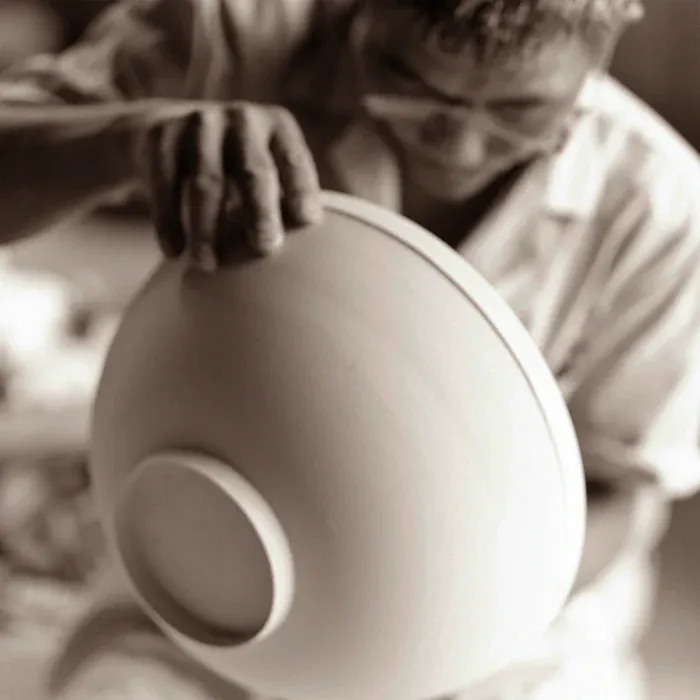
The most useful way to understand Shang Xia products is to see the brand as a lifestyle architecture.
Tea, Living Objects, and Ritual Value
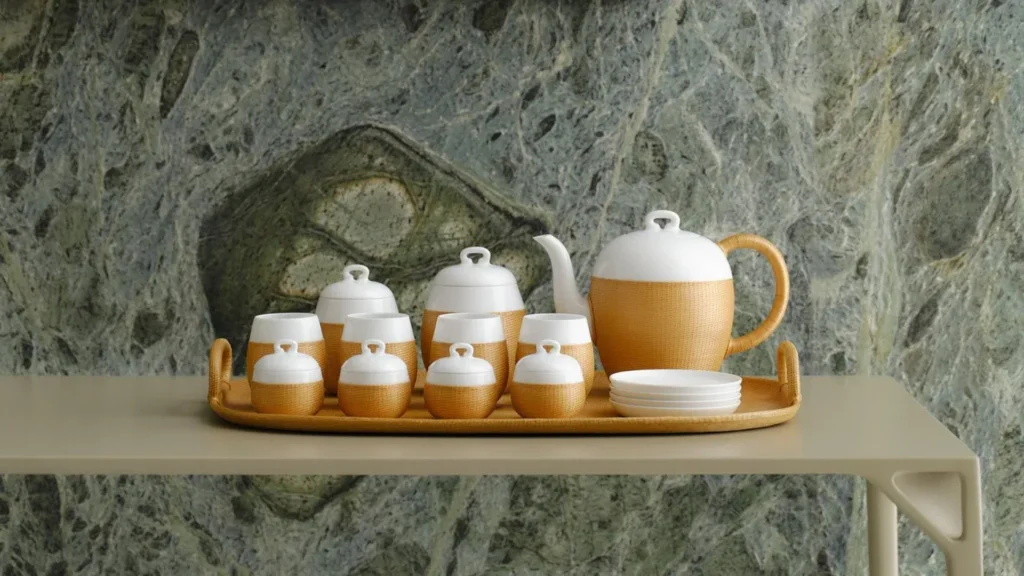
Searches for Shang Xia tea set and Shang Xia tea point to one of the brand’s strongest cultural categories. Official tea collections include porcelain and bamboo-weaving tea sets, celadon tea sets, travel tea sets, gaiwan cups, cast-iron kettles, tea trays, and tea caddies. These objects connect Chinese tea culture with collectible design.
This category teaches global luxury leaders an important lesson. Ritual can be a stronger luxury anchor than trend. Tea provides Shang Xia with a recurring cultural occasion. It also links gifting, hospitality, domestic life, and connoisseurship.
Furniture as a Collectible Chinese Design
Shang Xia furniture may be the brand’s clearest statement of craft ambition. The Da Tian Di collection draws from Ming Dynasty seating proportions while using materials such as carbon fiber and black walnut. Official craftsmanship notes say some carbon fiber chairs weigh under 4 kg and can support up to 130 kg.
That balance between Ming inspired form and advanced material gives Shang Xia a credible place in Chinese furniture design. It also allows the brand to speak to hotels, corporate projects, private residences, and collectors. This is where premium home decor becomes a strategic growth route rather than a side category.
Fashion, Clothes, Scarves, and Bags
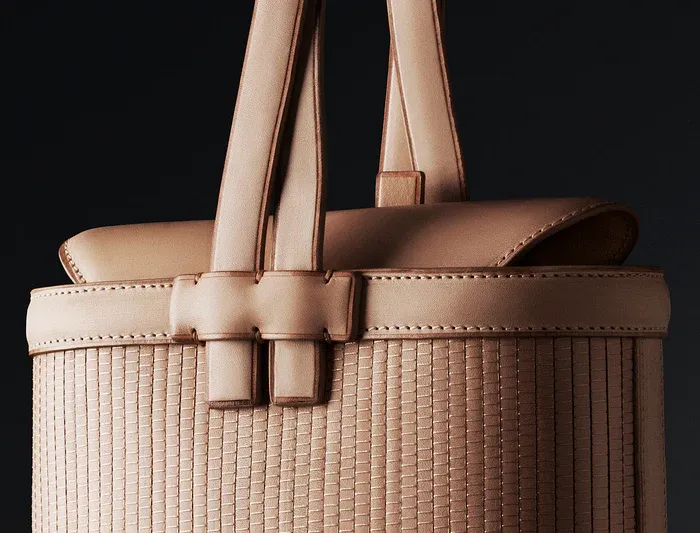
The official brand history mentions ready-to-wear, leather goods, jewelry, and accessories as part of the brand’s original art-of-life system.
The leather-woven handbags are a particularly useful example. Shang Xia says its Lan Yue Collection draws inspiration from Chinese bamboo baskets and uses first-layer cowhide strips in a three-dimensional weaving approach. This gives the shang xia bag category a craft story that differs from the codes of European leather goods.
For Chinese handbag brands, that distinction matters. A bag cannot rely only on shape and price. It needs a signature craft logic that can be remembered, explained, and compared.
The Business of Modern Chinese Luxury
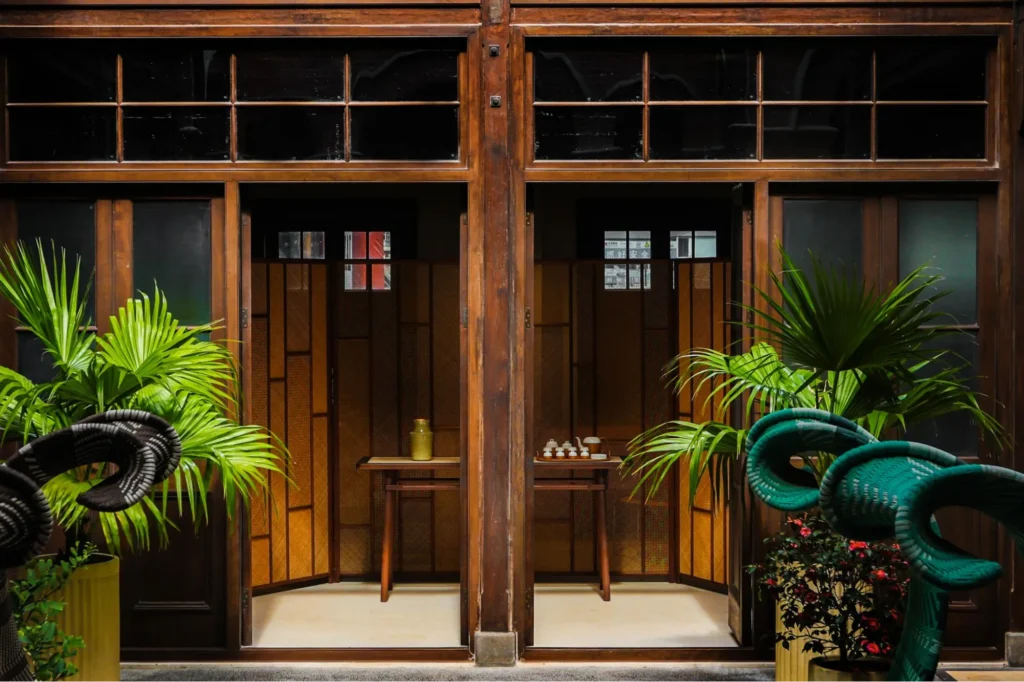
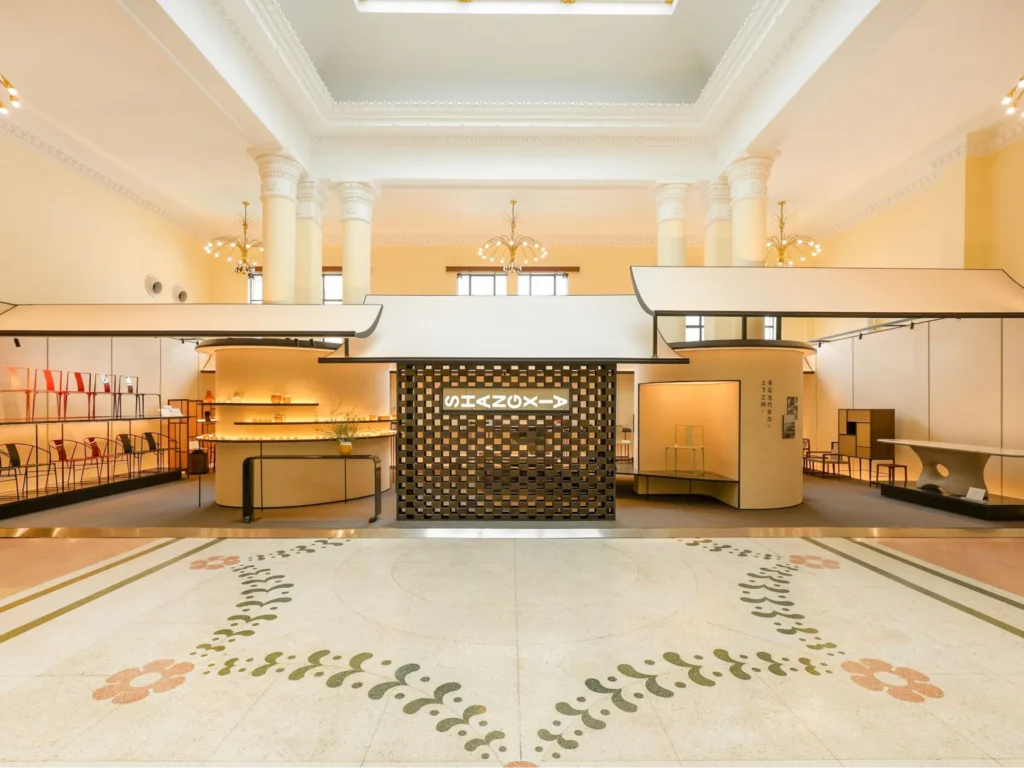
Shang Xia operates in a complex commercial environment. The brand maintains stores in exclusive locations across China, including Shanghai, Beijing, Chengdu, Hangzhou, and Shenzhen, as well as an international presence in Paris. The Shanghai flagship at 233 Huaihai Middle Road serves as both retail space and cultural institution.
In 2025, the brand presented the “Wander Through Wonder” exhibition at the Shang Xia Shanghai Maison, which ran from October to December and showcased masterpieces from museum collections.
The ownership structure reflects the brand’s hybrid identity. Exor’s €80 million investment in 2020 made it the majority shareholder. Under a tripartite ownership structure with founder Jiang Qiong’er, Shang Xia gains access to Exor’s expertise in building global luxury brands, Hermès’ operational discipline, and Jiang’s cultural authority. It is a structure that no other Chinese luxury brand can replicate.
Shang Xia has also demonstrated commercial adaptability. The brand has experimented with collaborations that extend its reach without diluting its positioning. A partnership with Pop Mart tapped into the blind box economy.
A collaboration with artist Huang Yuxing produced a limited-edition carbon fiber screen for the UCCA fundraising gala in 2025. At Design Shanghai 2026, the brand presented two distinct spaces showcasing furniture collections and collectible design.
These initiatives suggest a brand that understands the need to engage contemporary consumers while maintaining its craft luxury credentials.
Strategic Lessons for Global Luxury Competition
Shang Xia teaches global luxury leaders five things.
First, Chinese heritage design needs operational depth. Motifs are easy. A supply chain of artisans, materials, and cultural knowledge is harder.
Second, Asian craft traditions can scale when product categories share a common worldview. Shang Xia moves from tea to furniture to objects because ritual links them.
Third, local luxury brands are gaining power through cultural fluency. Bain’s 2025 China report says domestic brands captured more share through local preferences and cultural connections.
Fourth, price architecture must feel earned. A consumer comparing the Shang Xia bag price and Shang Xia prices is also judging the story, touch, scarcity, and after-sales service.
Fifth, global luxury competition in China now rewards patience. The winning brands will be those that invest in cultural memory, regional identity, and modern Chinese luxury with discipline.
The Future of Shang Xia and Chinese Luxury
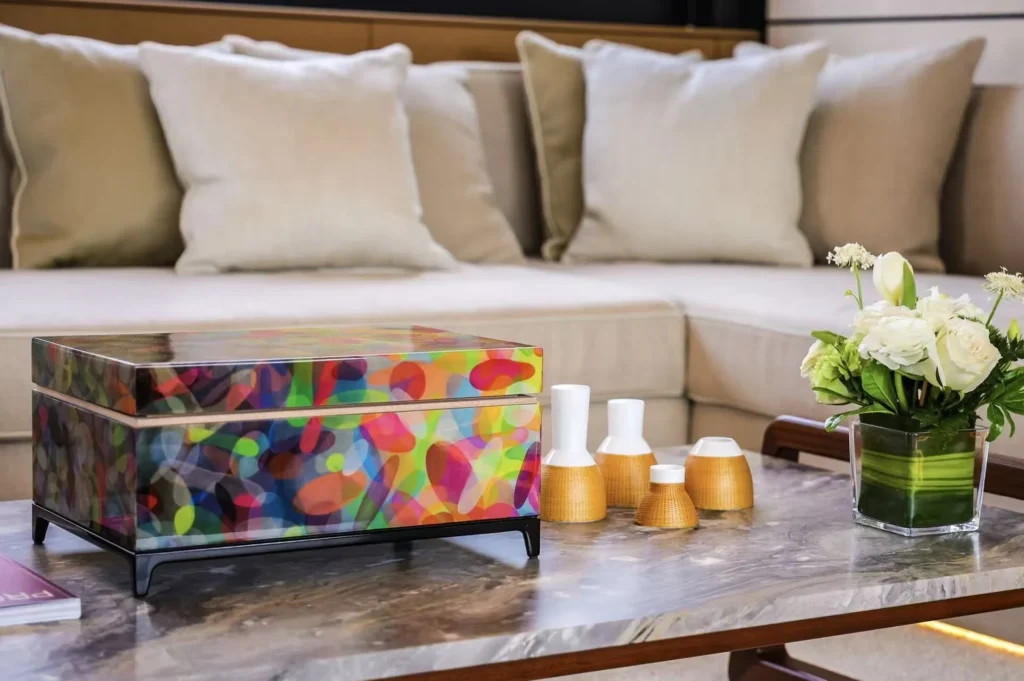
As Chinese luxury brands mature, Shang Xia will face new challenges. The domestic market is becoming more competitive. Local competitors are emerging with their own interpretations of modern Chinese luxury. The post-Guochao consumer is more sophisticated and more demanding. Shang Xia must continue to evolve without losing its foundational identity.
The appointment of Yang Li as fashion creative director suggests the brand is preparing for this next phase. His modern vision and understanding of sustainability position Shang Xia to reach a wider and younger consumer base. The brand’s participation in Paris Fashion Week and Design Shanghai 2026 indicates a commitment to global visibility.
Yet the fundamental proposition remains unchanged. Shang Xia is a Chinese handbag brand, furniture design house, fashion brand, and lifestyle curator all at once. It is also a proof point. It demonstrates that Chinese craftsmanship can stand alongside European traditions without imitation. For global luxury leaders, that is the most valuable lesson of all.
The era of Chinese luxury brands as regional players is ending. Shang Xia shows what comes next. Not a copy of the West. A conversation with it. Not heritage preserved. Heritage reimagined. Not luxury defined by origin. Luxury defined by excellence.
Final Takeaway for Luxury Leaders
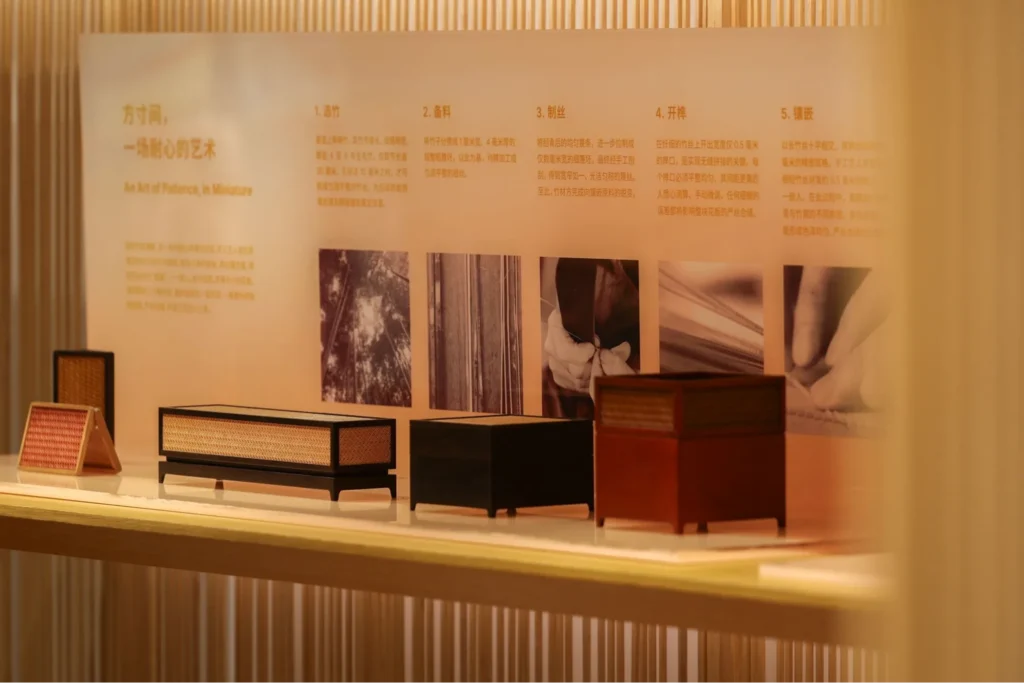
Shang Xia is a sharp reminder that China’s next luxury chapter will not be won by louder branding. It will be won by brands that understand cultural restraint, product truth, and the emotional intelligence of Chinese premium consumers.
For global houses, investors, marketers, and strategy teams, the message is simple: China is no longer just a demand market. It is a source of luxury codes, craft systems, and brand-building lessons with global relevance.
Bring China Market Intelligence Into Your Luxury Strategy
Understanding Shang Xia is only useful if your team can turn the insight into action. Ashley Dudarenok helps global brands decode China’s fast-moving consumer culture, digital ecosystems, retail innovation, and customer expectations through keynote speaking, advisory work, reports, and executive education.
As a China digital expert, serial entrepreneur, author, and speaker, Ashley works with leadership teams that need practical, commercially sharp guidance on Chinese consumers, digital transformation, customer centricity, and the future of retail.
Book a consultation with Ashley Dudarenok to explore what China’s next shifts in luxury and consumer spending mean for your brand.
FAQs about Shang Xia
Is Shang Xia A Good Luxury Gift Brand?
Yes, Shang Xia can work as a gifting brand for high-value cultural occasions. Tea sets, scented objects, and refined home pieces suit clients who want Chinese heritage design without loud branding.
Is Shang Xia still connected to Hermès?
Shang Xia was originally developed with Hermès and Jiang Qiong’er. Exor later became the key shareholder and now holds 100 percent of the economic and voting rights as of December 31, 2025.
What Does The Name Shang Xia Mean?
Shang Xia means a bridge between the past and the future in the brand’s own explanation. The name supports its wider idea of linking traditional Chinese craftsmanship with contemporary design and modern living.
How Can Buyers Check If Shang Xia Products Are Authentic?
Buyers can verify authenticity by purchasing through official Shang Xia stores, the brand’s online channels, or approved luxury retailers. For higher value items, ask for product documentation, care guidance, and boutique confirmation.
Why are Shang Xia prices hard to compare across categories?
Shang Xia prices can be hard to compare because the range spans collectible design, furniture, home objects, leather goods, and ready-to-wear. Materials, craft time, edition size, and boutique availability shape value more than category alone.
What should buyers ask before purchasing a Shang Xia bag remotely?
Before buying a Shang Xia bag remotely, ask for official photos, dimensions, material details, condition notes, invoice information, and delivery terms. For higher-value pieces, contact customer service or a boutique before payment.
Which Shang Xia clothes work best for luxury gifting?
Shang Xia clothes can work for refined gifting when the recipient values understated Chinese fashion brands. A shang xia scarf is usually safer than a shang xia dress, since sizing and personal style create less friction.
How can hotels or corporate teams use Shang Xia products?
Yes, Shang Xia products can suit hospitality projects when a space needs craft-led, premium Chinese decor. The brand’s bespoke services page cites hotels and corporate projects, as well as private residences in Shenzhen and Paris.
How is Shang Xia different from Western logo-led luxury bags?
Shang Xia relies more on craft narrative, Chinese design language, material choice, rarity, and cultural restraint than obvious logo signaling. That makes the Shang Xia bag price evaluation feel closer to collectible design than to trend fashion.
Will Chinese luxury brands like Shang Xia become more relevant globally?
Yes, Chinese luxury brands like Shang Xia are likely to gain relevance if they balance cultural specificity with global retail discipline. Bain says domestic brands gained share in 2025 through cultural connections and local preferences.