
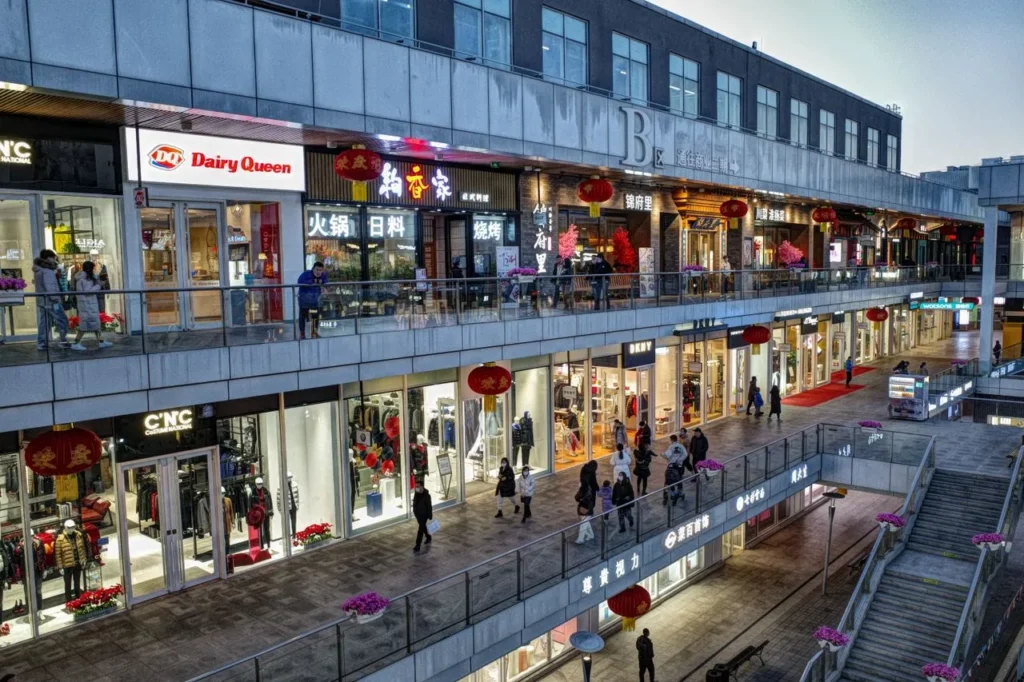
China’s malls are learning a hard lesson. Foot traffic does not return because a building adds another coffee chain or installs a glossy photo corner. Young shoppers want emotional value, social ease, and a reason to leave their phones long enough to join something.
That is why Retailtainment in China matters now. The idea has moved far beyond celebrity openings and luxury installations. In 2026, Chinese shopping malls are using absurd, low-cost competitions to turn strangers into participants.
The meaning of retailtainment is retail plus entertainment, but the Chinese version now works through humor, community, and playful consumption. The practical definition of retailtainment is simple: give people a reason to gather, laugh, compete, film, share, and come back.
Why Retailtainment In China Is Rising As Offline Retail Gets Harder
China’s retail market still has a huge scale, but growth is no longer easy. Online channels keep taking share. Consumers are selective. Department stores face pressure from digital commerce, discount channels, and cautious household spending.
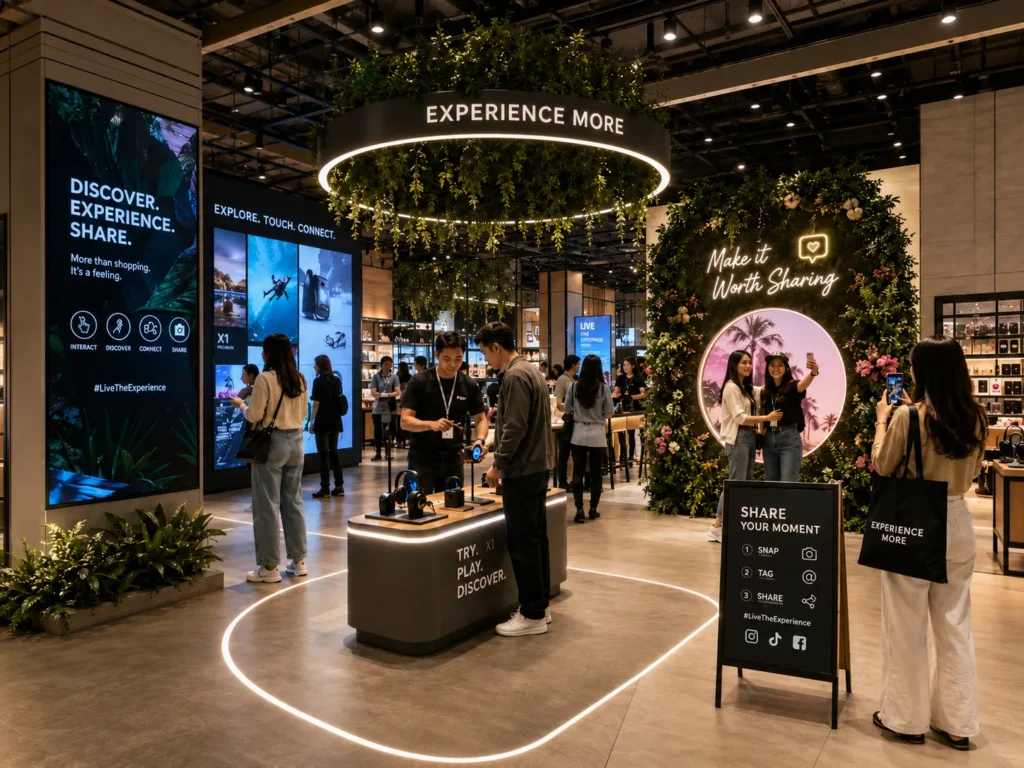
This makes offline retail a strategic problem. A mall cannot depend only on tenant mix. It must become a social engine. The strongest shopping mall marketing in China now treats the mall as a stage, a content studio, and a neighborhood meeting point.
That shift explains the rise of experiential retail. Search interest around what is experiential retail points to a real business question: how can physical retail justify the trip? In China, the answer is not always high tech. Sometimes the winning format is a table, a clock, a snack, a strange rule, and a crowd ready to cheer.
From Luxury Installations To Low Barrier Mall Competitions
For years, experiential retail stores in China were associated with flagship design, immersive art, VIP salons, cafes, and branded exhibitions. Luxury brands still use those formats. They create prestige, social content, and time spent inside the brand world.
How Ningbo Global Yintai Department Store Turned Absurdity Into Foot Traffic
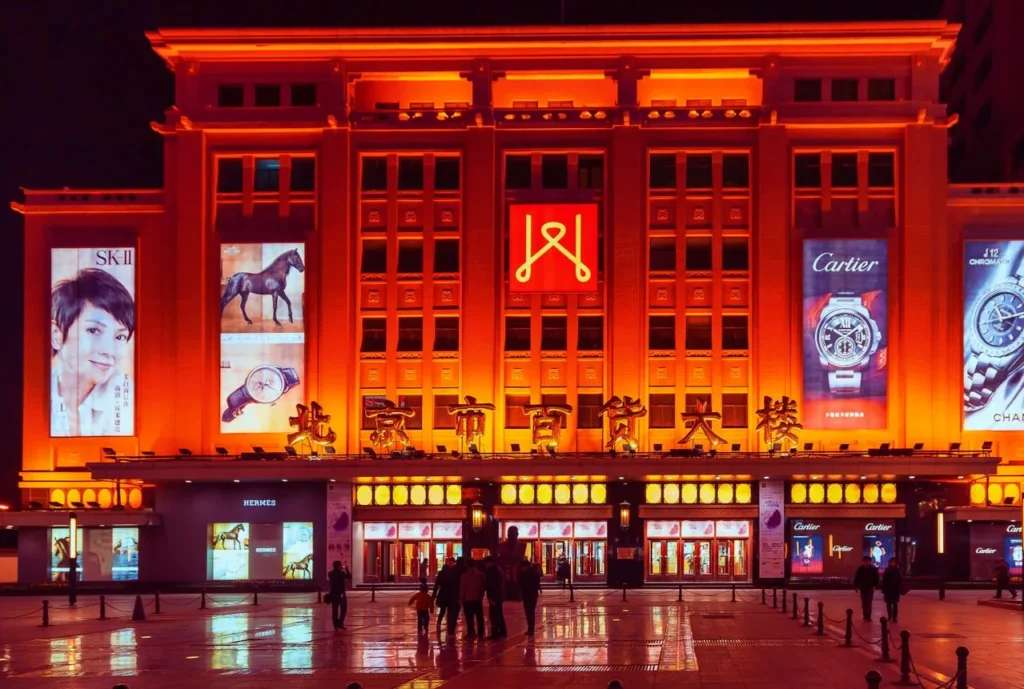
The Ningbo Global Yintai Department Store model shows another path. Its mall competitions do not require rare products or expensive sets. Competitive sunflower seed cracking is funny because it is ordinary. Screw tightening is funny because it feels like factory work turned into a public game. Stealth eating is funny because it recalls school memories, rules, punishment, and shared embarrassment.
On May 17, 2026, the mall hosted a classroom-style “Steal A Bite of Paofan” contest. More than 2,000 participants, from schoolchildren to retirees, joined the event. Contestants sat in a simulated classroom and tried to finish Ningbo-style rice soaked in soup without being caught by patrolling “teachers.” The winner received a one-gram golden rice prize worth about 1,400 yuan.
This is why bizarre mall competitions work. They are local, funny, nostalgic, low-cost, and instantly shareable. They give Chinese shopping malls the one thing e-commerce cannot replicate: collective embarrassment, laughter, and social tension in a real space.
These are strong examples of experiential retail because they reduce social risk. Anyone can join. The rules are clear. The activity is easy to understand in seconds. Spectators can enjoy the show without buying a ticket. Participants can generate their own short videos for Xiaohongshu trends and other Chinese social media channels.
This is the real unlock: bizarre mall competitions convert a passive visitor into a character inside the event.
Emotional Value, The Emotion Economy, And Young Chinese Consumers
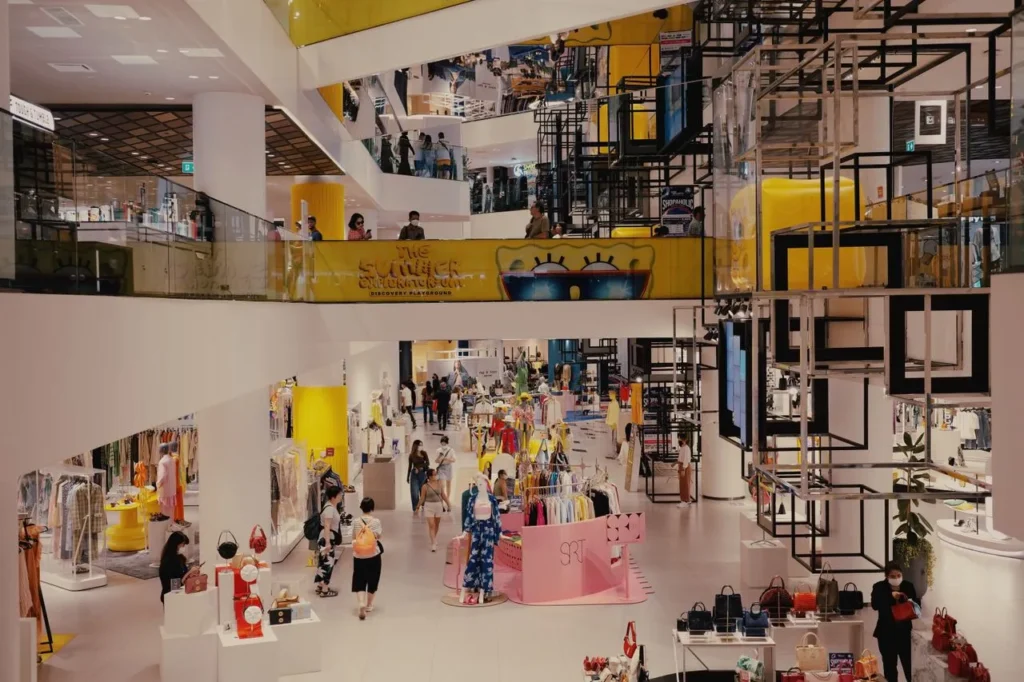
The commercial logic behind these viral mall events is emotional. A 2025 report on Gen Z emotional consumption found that over 90 percent of respondents prioritize emotional value. The same report found that 46.8 percent use emotional consumption to deal with stress and anxiety, while 43.1 percent say it helps them feel needed and seen.
That is the strategic context for the emotion economy. Young Chinese consumers are not only looking for products. They are looking for moments that break routine, create social connections, and give them a story worth posting on Xiaohongshu trends or Douyin.
This also connects to the solo economy and the rise of single-person households. China’s 2026 public discussion around solo living, youth loneliness, and changing social ties shows why malls can regain relevance as third places. When disappearing third places leave people with fewer casual social spaces, a playful mall competition becomes a simple excuse to spend 20 minutes with strangers.
Experiential Retail China Lessons For Mall Operators
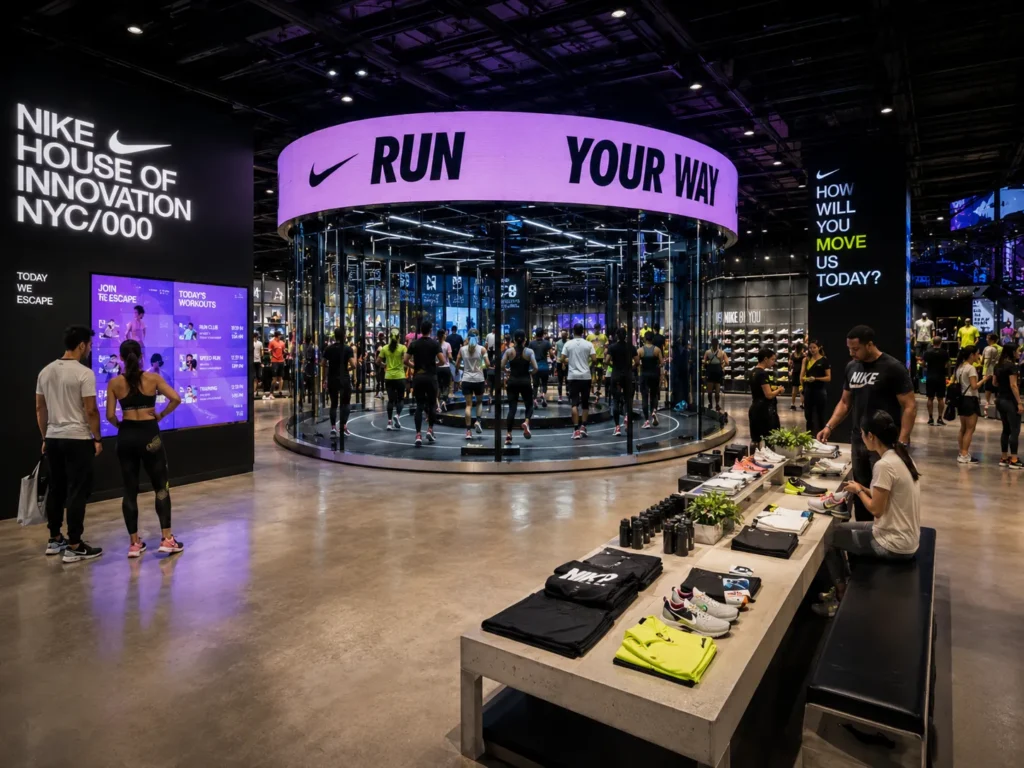
What is experiential retail in China today? It is retail designed around participation, social proof, content, sensory memory, and emotional reward. Experiential retail is no longer limited to luxury flagships with art installations or tech mirrors. In China, experiential retail stores can be expensive brand temples, but the more interesting shift is happening in mass malls through community retail and pop-up competitions.
Many young Chinese consumers in their 20s are spending more time in brick-and-mortar stores, especially redesigned malls that prioritize atmosphere and social exploration.
That makes retail experience a strategic asset. Strong experiential retail design now asks:
- Can the visitor participate within seconds?
- Can they laugh? Can they film it?
- Can they bring a friend?
- Can nearby merchants benefit from dwell time?
Some of the strongest examples of experiential retail in China are deliberately unsophisticated. A screw tightening contest has clearer participation rules than a luxury metaverse installation. A stealth eating contest has a stronger emotional memory than a seasonal sale.
These experiential retail trends suggest that China’s next retail-experience advantage may come from absurdist marketing rather than polish.
Experiential Retail Design Should Start With Behavior
Good experiential retail design in China starts with behavior, not decoration. The question is not “What can we install?” The better question is “What will people do together?”
This changes the design brief. A mall may need open sightlines, fast registration, safe crowd flow, filming zones, and nearby food tenants ready for traffic. The best retail experience blends the planned and the spontaneous. People need enough structure to join and enough freedom to make the moment their own.
In experiential retail marketing, this is critical. A brand can sponsor a challenge, provide prizes, design uniforms, or connect the activity to product trials. Experiential marketing in retail stores should feel native to the customer’s mood. Forced product scripts weaken the fun.
The best retailtainment ideas are small enough to repeat and strange enough to remember.
Shopping Mall Marketing Strategy For Executives
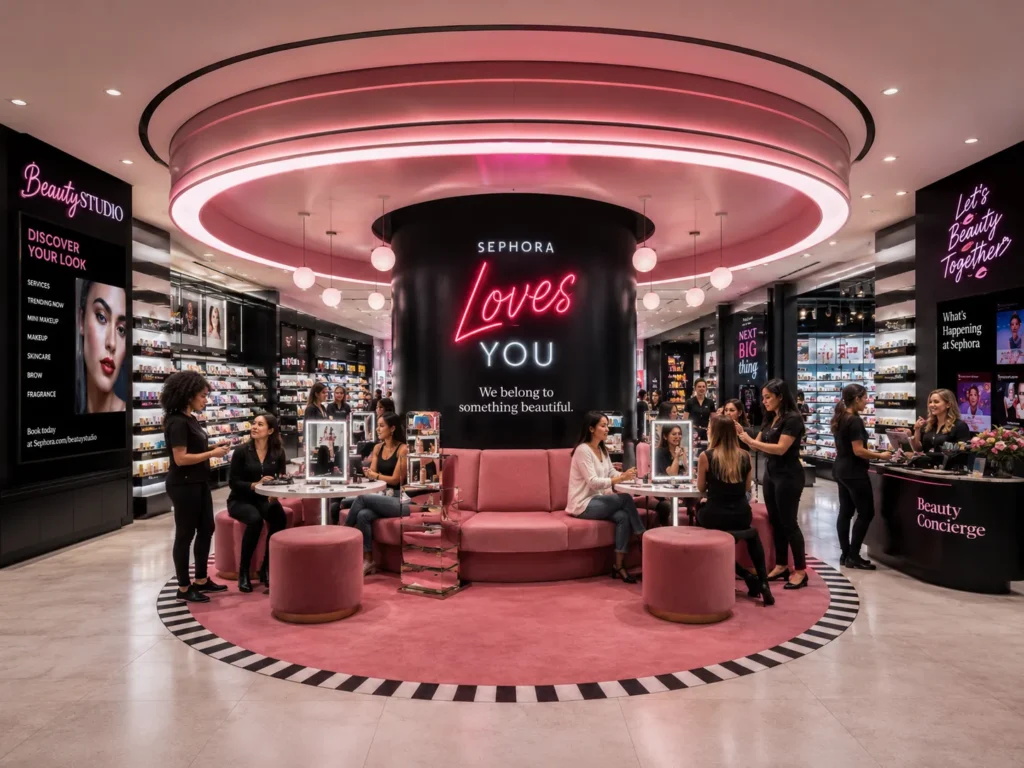
A strong shopping mall marketing strategy should treat bizarre events as part of its operating model rather than as random noise. Executives need a clear calendar, repeatable formats, merchant participation, social listening, safety planning, and data capture.
A good shopping mall marketing campaign might combine a weekly pop-up competition, tenant coupons, livestream clips, KOC previews, and member rewards. The aim is not a one-day spike. The aim is to build a ritual that shoppers associate with the mall.
Useful shopping mall marketing ideas include local snack challenges, nostalgia games, parent-child contests, ugly-outfit days, office-worker stress-relief competitions, and neighborhood talent nights. The common thread is low-barrier participation.
For investors and strategy teams, this means mall value may depend less on square meters alone and more on cultural programming capability. The mall that can generate repeatable social connections has a stronger defense against online substitution.
What Global Brands Should Learn From Retailtainment In China
Global brands should not blindly copy Ningbo. A stealth eating contest may not be a fit for every market or category. The strategic lesson is deeper.
China shows that experiential retail trends are moving from spectacle to participation. Consumers do not only want to look at a brand world. They want to enter it, play inside it, and share proof that they were there.
For beauty, that could mean funny texture challenges. For sports, it could mean micro competitions based on stamina, balance, or reaction speed. For food, it could mean speed, memory, smell, or local taste contests. For home appliances, it could mean practical games that highlight product features.
The winning retail experience is not the most expensive one. It is the one that gives consumers a social role.
Decode Retailtainment In China With Ashley Dudarenok

If bizarre mall competitions feel random, Ashley Dudarenok can help your team understand the bigger China signal behind them. Ashley is a naturalized Chinese serial entrepreneur, award-winning digital expert, bestselling author, and founder of ChoZan and Alarice. Through ChoZan, she helps global brands and Fortune 500 leaders learn from China’s digital transformation, consumer shifts, innovation culture, and fast-moving retail trends.
For executives, marketers, retail leaders, and strategy teams, Ashley brings a practical China lens to Retailtainment in China, experiential retail, social commerce, consumer behavior, and the emotional drivers reshaping offline retail.
Work with Ashley and ChoZan to turn China’s newest retail signals into smarter market strategy, sharper consumer insight, and more relevant growth ideas for your brand.
Book a consultation with Ashley Dudarenok to turn China’s latest retailtainment and consumer trends into practical strategies for growth, engagement, and innovation.
FAQs Retailtainment In China
What are the best retailtainment examples from China right now?
The strongest retailtainment examples include sunflower seed cracking, screw tightening, stealth eating, ugly product exhibitions, and playful snack contests. They work because they are easy to join, funny to watch, and naturally shareable on social platforms.
How does Retailtainment in China differ from Western experiential retail?
Retailtainment in China is more social, faster-moving, and platform-driven. Western campaigns may focus on polished brand worlds. Chinese formats reward participation, humor, local memories, and content that ordinary shoppers can post themselves.
Why do bizarre mall competitions attract young Chinese consumers?
Bizarre mall competitions attract young consumers because they offer emotional value without pressure. The activities feel playful, low-cost, and socially safe. They give people a reason to gather without needing formal clubs or expensive hobbies.
What does experiential retail mean for mall operators?
Experiential retail means designing stores and malls around action, memory, and participation. For operators, it involves programming events that increase dwell time, social sharing, tenant traffic, and repeat visits.
Can small malls use retailtainment ideas without large budgets?
Yes, small malls can use retailtainment ideas through simple competitions, local food games, neighborhood challenges, and seasonal rituals. The key is clear rules, easy participation, safe crowd flow, and strong social media packaging.
How can brands measure experiential marketing for retail success?
Brands can measure experiential marketing for retail through foot traffic, dwell time, coupon redemption, sales lift, member signups, social mentions, user-generated content, repeat participation, and tenant-level conversion after each event.
Why is the emotion economy important for offline retail?
The emotion economy matters because shoppers now value mood, identity, comfort, and connection alongside price. Offline retail can use live experiences to deliver feelings that online stores struggle to replicate.
What makes a good shopping mall marketing campaign in China?
A good shopping mall marketing campaign in China combines a memorable activity, short video potential, tenant offers, local cultural relevance, and repeat scheduling. It should turn visitors into participants rather than passive discount hunters.
Are experiential retail stores still useful if malls host events?
Yes, experiential retail stores still matter because they deepen brand engagement. Mall events bring traffic and social energy. Store-level experiences convert that attention into product trials, service moments, loyalty data, and purchases.
What are the next experiential retail trends to watch in China?
The next experiential retail trends include community competitions, ugly-cute aesthetics, solo-friendly activities, AI-assisted personalization, local nostalgia themes, and store events designed for sharing on Xiaohongshu, Douyin, and WeChat.