

Retail and brand leaders are asking a sharper question in 2026: how does TikTok make money in E-commerce, and why does its revenue model feel structurally different from traditional media platforms? The answer is not just advertising scale. TikTok monetizes attention by shaping intent algorithmically and capturing value at the moment discovery converts into action.
Advertising remains a core revenue engine inside the broader TikTok business model. However, the more strategic shift is integrating commerce directly into the content feed through TikTok Shop. This allows the platform to earn not only from media distribution but also from transaction economics.
In practical terms, TikTok generates revenue when brands pay to reach high-probability buyers and when sellers pay fees and commissions as purchases occur within the ecosystem. The model increases revenue density per user and reduces reliance on pure ad cycles.
TikTok now has over 1.9 billion active users globally, and average daily usage per user exceeds 50 minutes. That attention density creates commercial leverage. Unlike follower-based platforms, TikTok distributes content through interaction-driven recommendation rather than social graph hierarchy. Reach is determined by engagement probability, not audience size.
For retail executives, this is not a channel story. It is a structural shift in how attention becomes demand and how demand becomes captured value.
How does TikTok Make Money? The Short Answer
If someone asks you in a board meeting how does TikTok make money, the answer fits on one slide. The platform captures value at two controlled points: when brands pay for access to predicted intent and when sellers pay when discovery converts into a transaction. Everything else supports those two revenue moments.
TikTok generates revenue through:
- Advertising placements sold to brands and performance marketers
- In-feed and search ads optimized against behavioral signals
- Transaction fees through TikTok Shop
- Commissions on products sold via creators and affiliates
- Merchant services and promotional amplification inside the ecosystem
The economic framing is simple: TikTok converts attention into intent, and intent into transactions. It monetizes both stages.
Unlike legacy social platforms that depend primarily on impression volume, TikTok increases revenue density by participating directly in commerce. Advertising drives predictable revenue streams. Shop economics layer transactional upside on top of media monetization.
For retail leaders, this distinction matters. TikTok is not just selling reach. It is an engineering demand and takes a share of the outcome.
The Monetization Stack Attention → Intent → Transaction

TikTok’s revenue architecture is built as a sequence of economic layers rather than a single revenue event. The platform first captures massive attention. It then infers intent using extensive behavioral signals. Finally, it enables transactions that let it capture value directly from commerce, not just from media impressions.
At the center of this model is TikTok’s AI-driven recommendation engine, which ranks content by predicted engagement rather than follower graphs. This maximizes time spent on the platform and increases the likelihood that users will interact with or click on shoppable content.
In 2026, TikTok’s global ad revenue alone is projected at around $34.8 billion, with strong year-over-year growth and deeper integration between discovery and purchase activity — a clear sign that the attention-to-commerce funnel is working at scale.
The monetization stack can be understood in three stages:
- Attention: Users consume personalized short-form videos. High engagement fuels frequent ad exposures and improves signal quality for intent modeling.
- Intent: The platform translates behavioral patterns — watch duration, repeat views, interactions — into probabilistic purchasing signals. These signals drive ad targeting, making TikTok ads more valuable because they reach users who are closer to purchase readiness compared with broad, interest-based targeting.
- Transaction: Commerce features like TikTok Shop embed the checkout process directly inside the app. When users complete purchases, TikTok captures fees and commissions — creating revenue beyond advertising.
This structure allows TikTok to capture value earlier and closer to the point of purchase, rather than relying solely on brands’ buying power. In contrast to legacy social media that monetizes attention only through ads, TikTok’s model turns behavioral insights into transactional revenue.
Advertising Revenue — What TikTok Actually Sells
Advertising remains TikTok’s largest revenue engine in 2026, and understanding TikTok advertising cost requires understanding how the auction system actually works. TikTok operates on a bid-based model where advertisers pay based on objective: impressions, clicks, or video views. The platform optimizes delivery using real-time performance data, not fixed audience segments.
In 2026, typical CPMs (cost per 1,000 impressions) range between $4.20 and $9.00, depending on targeting, format, and competition. Average CPC (cost per click) ranges between $0.17 and $1.00. These ranges shift based on geography, demographic targeting precision, seasonality, and category demand.
TikTok also enforces minimum spending thresholds to ensure algorithmic optimization:
- $500 minimum per campaign
- $50 daily minimum at the campaign level
- $20 daily minimum at the ad group level
These thresholds are not arbitrary. They allow the system to gather enough behavioral data to optimize delivery and improve performance outcomes.
Why TikTok Ads Feel Different to Buyers
TikTok ads are integrated directly into the For You feed, appearing like native content rather than separate display placements. This changes performance dynamics. Creative quality has an outsized impact on cost efficiency because engagement signals directly influence auction competitiveness.
Ads that resemble organic TikTok content tend to generate higher watch time and lower effective acquisition costs. Highly produced, traditional-style ads often underperform because the platform prioritizes engagement velocity.
What Does Ad Pricing Signal about Demand
TikTok advertising cost is influenced by five primary factors:
- Targeting specificity
- Ad format selection
- Industry competition
- Seasonal timing
- Creative performance
Broad targeting typically results in lower CPMs. Highly specific audience targeting increases competition and raises costs. Premium formats such as TopView or Brand Takeovers command higher CPMs than standard In-Feed ads.
In practical terms, rising costs in a category often signal increased advertiser competition and stronger conversion performance. Declining costs may indicate reduced competition or weaker engagement signals.
For retail leaders, the key insight is this: TikTok does not sell static inventory. It sells algorithmically ranked distribution. Pricing reflects the competitive value of access to intent.
TikTok Shop Fees and Commissions — How Commerce Monetizes Discovery
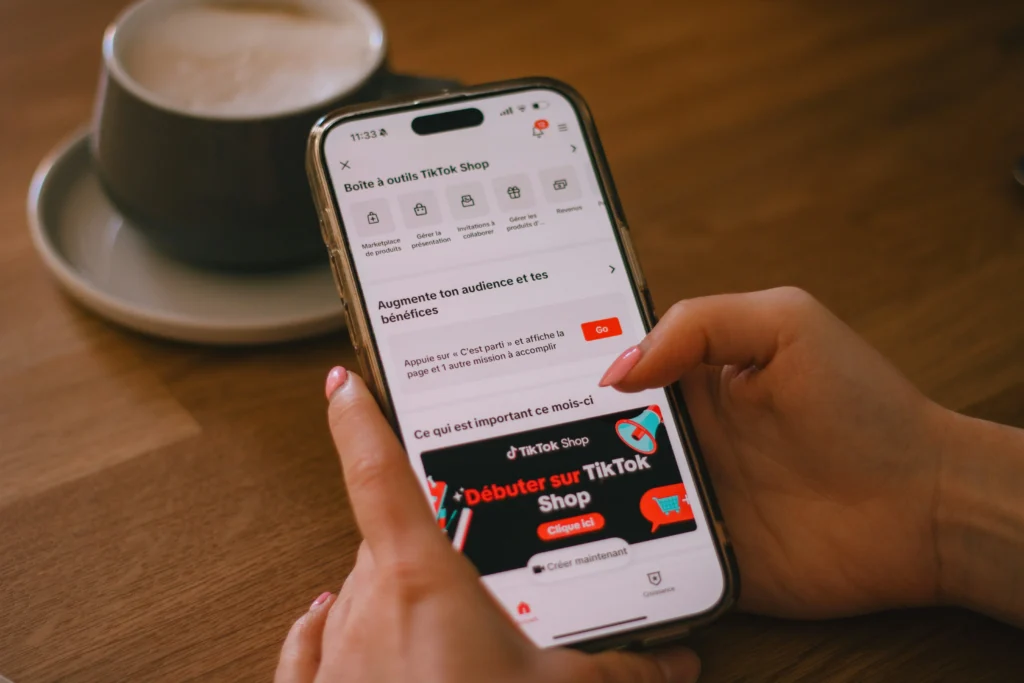
In 2026, TikTok Shop has become one of the most consequential social commerce infrastructures outside China. Instead of sending users to external marketplaces, TikTok enables end-to-end commerce inside the app, allowing product discovery, checkout, and post-purchase interactions to occur without leaving the platform. This structural control enables TikTok to capture value not just from ads but from the transaction itself.
TikTok Shop’s gross merchandise volume (GMV) has grown rapidly, making it a global social commerce force. Analysts report that total TikTok Shop GMV reached tens of billions, with estimates indicating continued steep growth as more consumers buy directly inside the app.
This means TikTok’s revenue mix now blends advertising with marketplace participation, giving the company exposure to both brand budgets and direct retail dynamics.
TikTok Shop Seller Fees — What Businesses Should Expect
For sellers, the base marketplace fee — often called the referral fee — sits around 6% of the transaction value in major markets in 2026. However, this base rate understates the true cost of selling because TikTok now layers multiple charges on top of the referral fee, including payment processing fees and fulfillment requirements that most merchants must adhere to.
These seller fees are calculated on the total value of the transaction, including platform-funded discounts, meaning sellers can see an effective take-rate higher than the headline percentage.
TikTok also requires sellers to use approved logistics networks (such as Fulfilled by TikTok or other integrated partners), which embeds fulfillment costs into the commerce stack and effectively ensures TikTok participates indirectly in delivery economics as well.
TikTok Shop Commission — What it Pays for in the System
In addition to referral fees, TikTok Shop commission structures power multiple ecosystem functions:
- Marketplace infrastructure: payment rails, checkout, and buyer protection
- Affiliate and creator commission incentives: sellers can set commission rates from 1% to 80% for affiliate programs that enable creators to promote their products, enabling flexible performance-based payouts within TikTok’s commerce engine.
- Algorithmic product distribution: TikTok uses sales and engagement performance as signals to allocate traffic, meaning products with strong conversion metrics are more likely to receive visibility.
This commission architecture makes TikTok an active participant in retail economics, rather than a passive traffic source.
Ultimately, TikTok’s Shop model aligns its economic incentives with commerce outcomes: higher transaction revenue translates to platform revenue, creator income, and stronger algorithmic signals that further fuel engagement and intent.
How TikTok Pays Creators and Why Incentives Matter
When executives ask how does TikTok pay, the wrong frame is creator lifestyle income. The correct frame is supply-side economic engineering. Creator payouts are not a side feature. They are how TikTok stabilizes and scales the content engine that powers advertising and commerce.
In 2026, creator monetization flows through four structured channels:
1. Creator Rewards Program
This replaced the earlier Creator Fund. Payouts are tied to qualified views, watch time, and engagement quality, with eligibility typically requiring longer-form content and minimum follower thresholds. Compensation is calculated on RPM logic, meaning creators earn based on revenue-generating impressions rather than raw views. This shift improves content depth and the strength of the commercial signal.
2. TikTok Shop affiliate commissions
Affiliate commerce is now central. Sellers set commission percentages for creators promoting their products. Commission rates vary widely by category and competition, ranging from single digits to aggressive performance-based tiers in highly competitive segments. Creators select products based on expected conversion probability and payout rate, which directly ties income to transaction volume.
3. Brand partnerships and Spark Ads amplification
Brands pay creators directly for sponsored content. High-performing posts can then be amplified via paid media with Spark Ads, extending reach while preserving social proof signals like comments and likes.
4. LIVE gifting and digital goods
In certain markets, creators earn from live-stream viewer gifting and virtual items, which TikTok monetizes through revenue sharing.
The structural insight is this: TikTok aligns creator earnings with platform revenue drivers. When creators earn from affiliate sales, they prioritize conversion-optimized content. When longer videos generate higher RPM, creators produce deeper engagement.
This creates a commercial feedback loop.
More creator income tied to performance → more high-quality commerce content → stronger engagement signals → improved ad targeting → higher transaction velocity → greater merchant participation → expanded affiliate opportunity.
Creator payouts are therefore not a cost center. They are capital allocation into supply growth. Without that incentive layer, the advertising and Shop monetization stack weakens. With it, TikTok strengthens the economic flywheel.
Inside TikTok’s Revenue Architecture
Understanding how TikTok makes money means seeing the economic model as a compound system rather than a series of detached features. TikTok’s monetization is powered by a closed-loop growth engine in which content distribution, commerce, and creator incentives reinforce one another — and market data show this is working at scale.
TikTok’s Flywheel is Real and Measurable
TikTok Shop is rapidly moving beyond an experimental commerce layer to a core revenue driver. Emarketer projects TikTok Shop’s U.S. social commerce sales will exceed $20 billion in 2026, capturing roughly 18.2 % of total U.S. social commerce activity, and user adoption is broadening year over year. This signals that discovery and purchasing behavior are collapsing into one platform experience.
Meanwhile, industry forecasts — such as those from Flywheel Digital’s 2026 social commerce model — estimate TikTok Shop’s global GMV could approach tens of billions in annual transactions, with expansion continuing rapidly.
These real results show the engine at work: attention → engagement → conversion → commerce growth → creator incentives → more attention.
Engagement Drives Commerce Outcomes
TikTok’s algorithm prioritizes watch time and early engagement signals, meaning content that retains users is more likely to be surfaced and monetized. This performance bias fuels discovery that converts — especially through TikTok Shop formats, where in-app checkout replaces external links, dramatically shortening the journey from interest to purchase.
This structure amplifies the cycle:
- Creators produce engaging social content.
- Engagement generates strong behavioral signals.
- TikTok’s algorithm amplifies high-quality content.
- Amplified content drives commerce (especially in TikTok Shop).
- Commerce outcomes create more opportunities for creators and platform revenue.
Commercial Performance Matters More than Impressions
Evidence from broader commerce studies shows that creator-led strategies are driving measurable outcomes: one academic review found that creator partnerships contributed a large share of TikTok commerce revenue, with brands reporting high ROI and strong conversion performance compared with traditional direct-to-consumer funnels.
This isn’t viral flash; it’s an economic mechanism enabled by feedback loops. Engagement signals sharpen intent data, which improves ad and product distribution, which in turn fuels more creator opportunities and commerce scale.
In 2026, that compounding effect has made TikTok Shop a major commerce contender within the broader social commerce landscape, not just an add-on to media revenue.
What Retail Leaders Should Copy Safely

The strategic takeaway is not “use TikTok.” It is “understand the mechanics that are reshaping demand formation.” TikTok’s growth in social commerce is not driven solely by virality. It is driven by structural integration between content velocity, performance bidding, affiliate incentives, and in-app checkout. Retail leaders can replicate parts of that architecture without copying the platform itself.
Here are the mechanisms that matter.
1. Operate Discovery as a Measurable Revenue Function
TikTok has proven that product discovery can drive transaction scale when content is optimized for engagement first and conversion second. With TikTok Shop projected to exceed $20 billion in U.S. sales in 2026, discovery is no longer top-of-funnel noise. It is a transaction infrastructure.
- Works when: merchandising and marketing teams share performance dashboards tied to watch time, product clicks, and assisted conversion rates.
- Fails when: discovery content is treated as brand awareness with no revenue accountability.
Retailers should restructure reporting so that discovery metrics are directly tied to sell-through velocity.
2. Treat Creative Production as a Performance Lever, not a Campaign Asset
TikTok’s ad auction rewards engagement signals. That is why tiktok advertising cost is highly sensitive to creative quality. Brands that iterate frequently reduce effective CPM pressure. Those that rely on polished, infrequent assets see higher acquisition costs.
- Works when: creative testing cycles operate weekly, and assets are built natively for vertical video.
- Fails when: creative remains seasonal and optimized for traditional brand consistency rather than performance adaptation.
The lesson is not aesthetic. It is economic. Engagement reduces distribution friction.
3. Use Commission Economics to Buy Distribution Intelligently
TikTok Shop allows sellers to set affiliate commission rates dynamically. Commission flexibility, ranging from low single digits to significantly higher tiers depending on competition, enables sellers to incentivize creator distribution based on margin realities.
This is a structural insight. Commission is not just a payout. It is programmable distribution spend.
- Works when: commission tiers are aligned with gross margin and inventory levels.
- Fails when: aggressive commissions are offered without contribution margin modeling.
Retailers should treat affiliate incentives as variable customer acquisition costs, not influencer marketing spend.
4. Collapse the Friction Between Inspiration and Checkout
One reason TikTok Shop is scaling is that checkout happens inside the app. There is no redirect to external pages. Each additional click in a funnel reduces conversion probability.
- Works when: product tagging, shoppable video, and simplified checkout reduce steps between content and payment.
- Fails when: mobile traffic is pushed through multi-page desktop-style experiences.
The conversion lift from friction reduction is measurable. Retail leaders should audit funnel abandonment at every step.
5. Align Inventory Exposure with Engagement Velocity
TikTok’s product ranking is influenced by engagement and conversion signals. Products that sell get more distribution. This reinforces winners.
Retailers can replicate this logic internally.
- Works when: inventory allocation and paid spend are adjusted based on real-time sell-through signals.
- Fails when: budget allocation is static despite performance variation.
Demand should dictate visibility.
6. Invest in Trust as a Conversion Multiplier
TikTok’s expansion of buyer protection policies, seller performance requirements, and logistics integration reflects a reality: low trust reduces repeat-purchase behavior.
- Works when: fulfillment reliability, transparent returns, and customer service are treated as growth investments.
- Fails when: returns friction or delivery delays erode conversion velocity.
Commerce platforms scale when trust compounds. Without trust, discovery-driven demand collapses.
Platform Strategy Insights from Ashley Dudarenok

The structural shift described in this article — where platforms collapse media, marketplace, and affiliate economics into one integrated system — has already played out at scale in China before accelerating globally. Understanding that sequence is not optional for leadership teams exposed to social commerce.
This is the analytical lens Ashley Dudarenok uses in her work. As the founder of ChoZan, she leads research and advisory initiatives examining how platforms such as Douyin, Alibaba, and emerging ecosystem players evolve from content-distribution layers into transaction infrastructure.
Her work typically spans:
- Executive briefings on China’s digital ecosystems
- Board-level strategy sessions on platform disruption
- Retail and marketplace transformation advisory
- Research reports on social commerce, AI, and consumer behavior
- Keynotes and leadership workshops focused on platform economics
- Online education programs in China’s digital business
The relevance here is structural. TikTok’s monetization logic mirrors shifts that matured earlier in China’s platform environment. Leaders who study those precedents gain earlier clarity on where margin pressure, commission dynamics, and discovery-led retail are heading next.
The question is not whether to use TikTok. It is whether your organization understands the architecture shaping the next phase of commerce.
To move from observing platform shifts to designing around them, book Ashley Dudarenok for a leadership briefing tailored to your market realities.
FAQs on How Does TikTok Make Money
Is TikTok profitable as a company in 2026?
Yes, TikTok’s profitability in 2026 is increasingly tied to diversified revenue. Advertising still drives the majority of income, but TikTok Shop and affiliate commissions are expanding margins and reducing dependence on ad cycles.
What is TikTok’s revenue model compared to YouTube’s?
The TikTok revenue model differs structurally from YouTube’s. YouTube relies heavily on ad sharing and long-form monetization, while TikTok combines auction-based advertising with integrated commerce and affiliate-driven transactions inside the app.
How does TikTok’s algorithm affect business revenue?
The TikTok algorithm for business directly influences revenue by prioritizing engagement signals. Higher watch time and interactions increase the likelihood of distribution, lowering acquisition costs and improving conversion performance for brands.
Can small businesses make money on TikTok without ads?
Yes, making money on TikTok without ads is possible through TikTok Shop and affiliate programs. Strong organic content can drive sales because distribution depends on engagement performance, not follower size alone.
What industries perform best on TikTok Shop?
Industries aligned with visual discovery perform best. TikTok Shop fashion, beauty, and lifestyle products consistently convert because short-form video effectively showcases product use, social proof, and microtrend adoption.
Does TikTok take a percentage of every sale?
Yes, TikTok takes a percentage of sales through marketplace referral fees and service charges. The exact take rate varies by region and category, but sellers should model blended costs that include commissions and processing.
When comparing TikTok vs Instagram shopping, TikTok’s recommendation engine often drives stronger discovery. Instagram relies more on follower networks, while TikTok surfaces content based on behavioral engagement signals.
What makes TikTok’s business model scalable?
The TikTok business model scalability comes from combining algorithmic distribution with transaction capture. As engagement increases, ad efficiency improves, and commerce volume grows, creating compounding revenue effects.
How does TikTok generate revenue from live streaming?
TikTok live stream revenue comes from product sales, affiliate commissions, and digital gifting. Live commerce integrates entertainment with real-time checkout, increasing urgency and boosting conversion rates.
TikTok is considered a social commerce platform because it integrates discovery, distribution, and in-app checkout. Revenue is earned from both advertising and completed transactions, making it structurally different from traditional social networks.